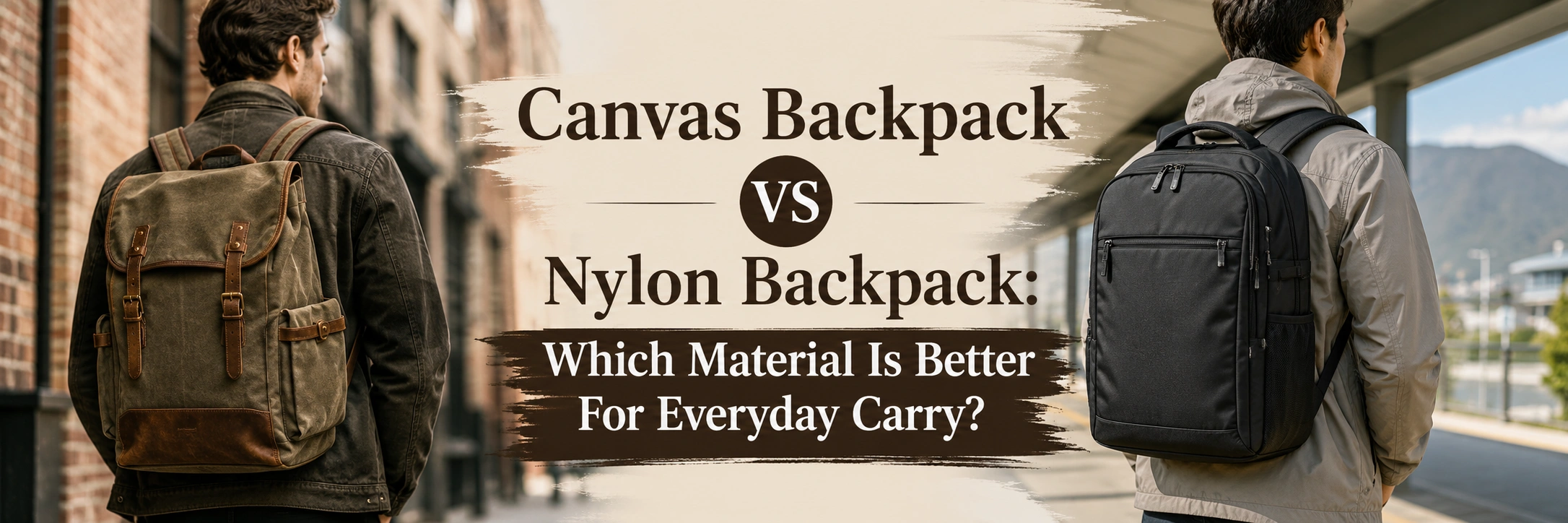
Canvas and nylon backpacks can both work for everyday carry, but they feel very different in real life — in weight, weather resistance, style, and how they age.
That's the honest starting point. Both materials are used in well-made bags. Both can handle daily use. The reason the comparison is worth making isn't to find a universal winner — it's that canvas and nylon are optimized for different things, and which one fits depends on how you actually use a bag, what you wear, and what you want it to look like a few years from now.
Nylon leans toward function. Lightweight, fast-drying, practical in wet conditions, at home in active and outdoor contexts. Canvas leans toward character. More substantial in hand, more textured in appearance, more at home with workwear, jeans, boots, and the kind of everyday styling that doesn't want to look like it came out of an outdoor retailer.
Here's where they actually differ, and how to think about which one makes sense for you.
Quick Answer: Canvas Or Nylon Backpack?
Neither material is universally better. But they point clearly in different directions depending on what you're prioritizing.
If lightweight carry, active use, and rain performance are the priorities: nylon is the more practical answer.
If everyday style, rugged texture, and a bag that develops character with use matter more: canvas is the stronger fit.
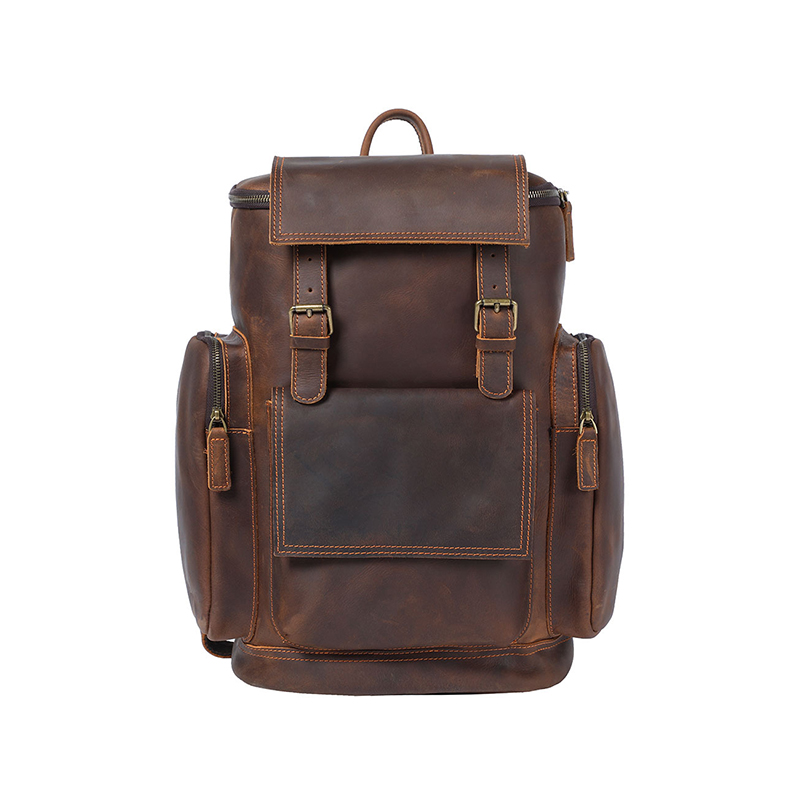
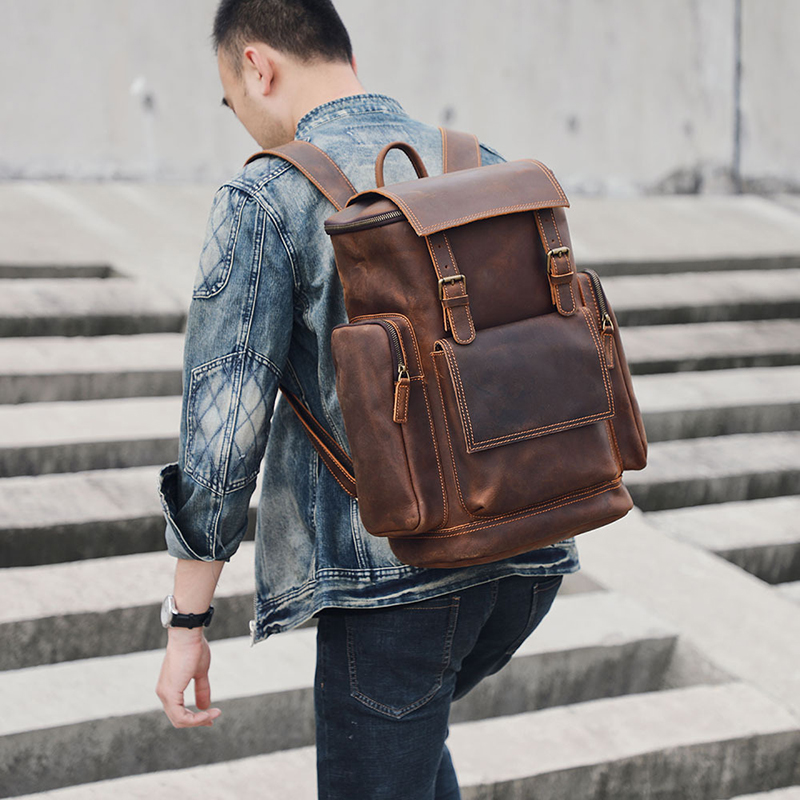
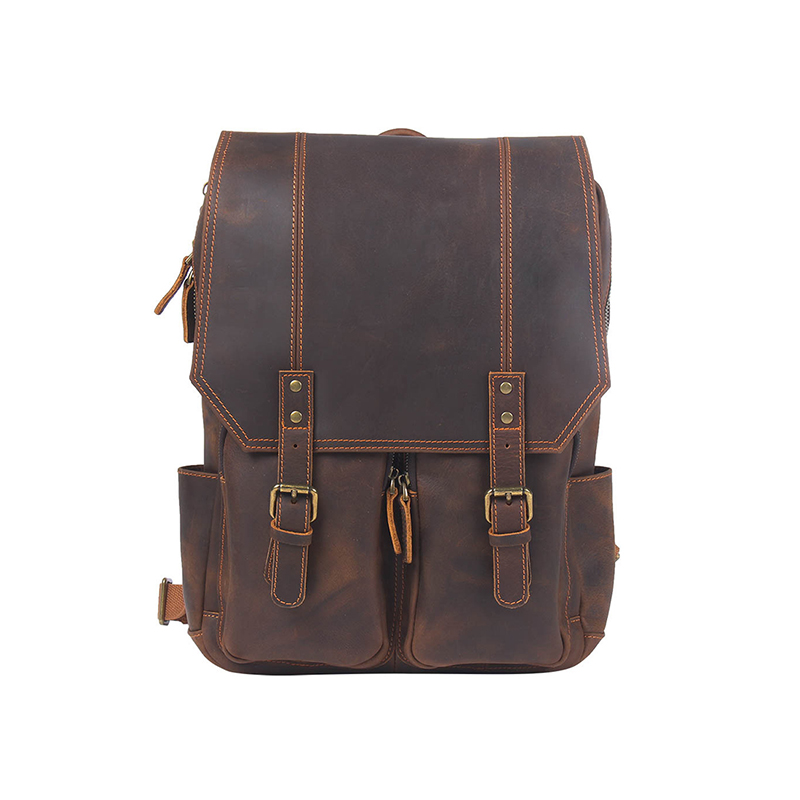
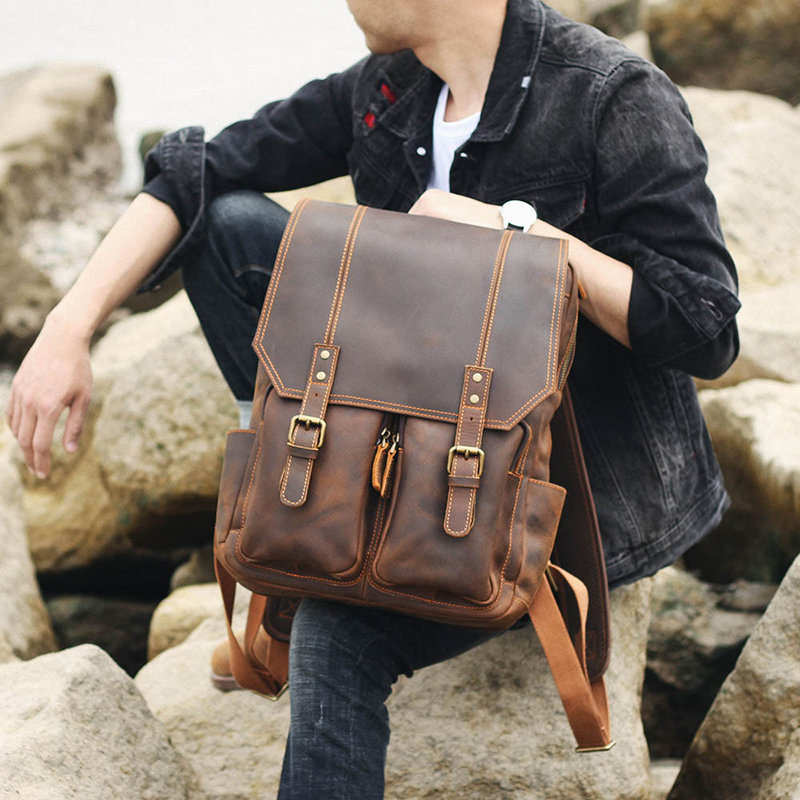
If you want a bag that works across daily commuting, weekend trips, and mixed contexts without looking too sporty or too rough: a canvas and leather backpack is usually the most versatile middle ground.
| Need | Better Choice |
|---|---|
| Lightweight carry | Nylon backpack |
| Vintage everyday style | Canvas backpack |
| Better rain performance | Nylon or waxed canvas |
| Rugged mature look | Canvas or canvas + leather |
| Sport, gym, or outdoor use | Nylon backpack |
| Workday and weekend versatility | Canvas and leather backpack |
| Lower maintenance | Nylon |
| Better aging character | Canvas |
What Is A Canvas Backpack?
Canvas is a woven fabric — usually cotton or a cotton blend — that's historically been used in everything from sails to workwear because of its durability and weight. In backpacks, it gives a thick, structured feel that synthetic materials don't quite replicate.
The look reads as rugged, vintage, and workwear-influenced. A canvas bag sits naturally with jeans, boots, a flannel shirt, or a denim jacket in a way that nylon doesn't — the material itself carries a visual weight that suits a more mature, casual aesthetic.
Waxed canvas adds another dimension. The wax treatment improves water resistance and gives the fabric a slightly richer appearance, and the bag develops creases, color variations, and a broken-in quality through use that most materials simply don't do. Over time, a waxed canvas bag often looks better than it did new — not just differently aged, but genuinely better.
The trade-off: plain canvas absorbs water more readily than nylon, and both plain and waxed canvas tend to be heavier per square inch than lightweight synthetic fabrics. For more on what waxed canvas can and can't handle in the rain, see are canvas backpacks waterproof.
What Is A Nylon Backpack?
Nylon is a synthetic fiber that's been a staple of backpack manufacturing for decades because it packs a lot of functional properties into a light material. It's strong for its weight, dries fast, and — especially in heavier denier versions or with waterproof coatings — resists rain better than most natural fabrics.
The feel is different from canvas in a way that's hard to miss. Nylon is flexible and light. It doesn't have the structural, substantial quality of canvas. That's not a flaw — it's a design choice that suits different contexts. For gym bags, hiking packs, and technical urban commuters where function is the main brief, nylon makes sense.
Where nylon is weaker is in style longevity. A nylon backpack looks the same on day one and year three — which is fine if you're indifferent to how a bag ages, but means it doesn't develop the character that canvas does. The other limitation is aesthetic context: nylon reads as sporty and technical, which works in active settings but doesn't always land in workwear or mature casual outfits.
⚠️ One thing worth noting: nylon quality varies enormously. High-denier nylon with a proper coating is a genuinely durable material. Low-quality thin nylon can pill, distort, and have its coating peel fairly quickly. "It's nylon" doesn't automatically mean durable — construction and material weight matter here just as much as the base fabric type.
Durability: Which Material Handles Daily Wear Better?
Both can last for years. The way they handle wear is what's different.
Canvas holds up well against abrasion — the daily friction of being set down on various surfaces, pushed into bags under seats, brushed against edges and doorframes. Scuffs and marks on canvas tend to blend into the material's overall character rather than standing out as damage. A well-made canvas bag that's been used hard for three years often looks more interesting than it did new, not worse. For waxed canvas, re-waxing periodically restores both the coating and the surface appearance.
Nylon resists tearing well, particularly at higher fabric weights, and it doesn't absorb stains as readily as canvas. The durability story is different though: when nylon shows wear, it tends to show it as pilling, delamination of coatings, or fraying at the seams — none of which age the same way canvas marks do. A nylon bag that's been used hard looks used hard. A canvas bag in the same condition often looks broken in.
For rugged everyday wear with daily friction and light weather exposure, canvas feels stronger and more substantial. For lightweight technical durability where the bag needs to be as light as possible and handle rain reliably, nylon has the edge. The right answer depends on which type of durability matters more for your specific use.
Water Resistance: Canvas vs Nylon In Rain
This is the category where nylon most clearly leads — with some nuance worth understanding.
Plain canvas absorbs water. That's just what it does. In light rain you might not notice, but sustained exposure will soak through and weigh the bag down. For everyday commuting where you're ducking in and out of buildings, plain canvas is often fine. For anything more demanding, it needs help.
Waxed canvas is a different situation. The wax coating sheds light rain and splashes well — water beads on the surface rather than soaking in. It's not a sealed system and heavy or prolonged rain will eventually get through, but for the everyday weather that most commutes involve, waxed canvas handles it competently. The coating also wears down with use and needs occasional refreshing to stay effective.
Nylon — particularly coated nylon — generally performs better in wet conditions than either plain or waxed canvas. The synthetic fiber doesn't absorb water the way cotton does, and waterproof coatings applied to nylon are more durable than the wax treatments used on canvas. The weak points for nylon bags in rain are the same as for canvas: zippers, seams, and the main opening, none of which are sealed in most everyday bags.
The practical takeaway: for serious rain use — cycling commutes, hiking, prolonged outdoor exposure — nylon is the more reliable choice. For the usual commute-level weather, waxed canvas handles it without drama.
Weight And Comfort For Everyday Carry
Weight is the category where nylon wins clearly, and it's worth being honest about that.
A nylon backpack at the same capacity as a canvas backpack will almost always be lighter. For long carrying days, that difference is real. Students, anyone walking substantial distances, and people who care about traveling light will consistently find nylon more comfortable to carry over hours.
Canvas has a different relationship with weight. The material itself is heavier, but it also has a kind of presence — a structural, substantial quality — that many people find more satisfying to carry. The bag doesn't feel flimsy or insubstantial. Whether that trade-off is worth it depends on how far you're carrying it and how much the extra weight bothers you.
A canvas and leather backpack sits between the extremes: heavier than nylon, noticeably lighter than full leather, with more visual and tactile substance than nylon provides. For someone who wants a bag that feels well-made without being a burden to carry, it's often the more comfortable long-term answer.
If weight is your only priority, nylon wins. If weight, style, and long-term character all matter, canvas becomes more competitive.
Style: Vintage Canvas vs Sporty Nylon
This is where the two materials genuinely diverge, and it's arguably the most important factor for everyday carry because the bag you carry every day is the bag people see every day.
Canvas reads as vintage, rugged, workwear-influenced, and mature. It suits the kind of wardrobe that includes jeans, boots, jackets, flannel, and leather accents. It doesn't look like it came from a sporting goods store, which matters in office environments, restaurants, and social settings where a technical aesthetic is a slight mismatch. A canvas bag looks intentional with a wider range of everyday outfits than nylon does.
Nylon reads as sporty, modern, and technical. It's at home in active contexts and with streetwear or athletic clothing, and in those settings it looks right. In more traditionally styled or workwear-influenced outfits, nylon can look a little out of place — not wrong exactly, but not quite matched to the clothing around it.
The aging difference amplifies this over time. A canvas bag develops patina, character, creases in the right places, a slightly deeper color at the contact points. After two or three years of daily use, a canvas bag often looks like a carefully chosen piece. A nylon bag after the same period looks like a bag that's been used for two or three years. Both are accurate descriptions — they just point toward different outcomes depending on what you care about.
Care And Cleaning: Which Is Easier To Maintain?
Nylon is genuinely easier to clean. A damp cloth handles most surface dirt, it dries fast, and it's not particularly sensitive to the cleaning process. For people who don't want to think about bag maintenance, nylon asks less of you.
Canvas requires more care, particularly waxed canvas or canvas with leather components. Spot cleaning rather than machine washing, mild soap where needed, air drying away from heat, and re-waxing periodically when the coating wears thin — it's not complicated, but it requires attention. For canvas and leather bags, the leather parts need their own care: prompt drying after rain, occasional conditioning, and keeping moisture away from the leather during cleaning.
The maintenance gap is real, but it's worth contextualizing. Canvas bags don't need attention constantly — they need appropriate attention when they get dirty or wet, which for most everyday use isn't that often. For the full cleaning process, how to clean a canvas backpack covers what actually works without damaging the fabric or leather.
Travel And Work Use: Which One Fits Your Lifestyle?
Canvas works well for: daily commuting, weekend trips, city travel, workwear and smart-casual outfits, coffee shop to office to restaurant contexts, casual travel, and anywhere you want a bag that suits varied settings without calling attention to itself.
Nylon works well for: gym sessions, hiking, active commuting in heavy weather, lightweight travel where pack weight matters, school, and any setting where function is clearly the priority over appearance.
The clearest sign you'd prefer canvas: your everyday wardrobe doesn't include much athletic wear, and you'd feel slightly self-conscious carrying a bag that looks like it belongs on a mountain when you're heading to a meeting or dinner.
The clearest sign you'd prefer nylon: you care more about weight and rain performance than visual character, and your daily life includes regular active use that canvas isn't particularly optimized for.
For the full picture on how canvas performs across different trip types, see best backpack for weekend travel.
Canvas And Leather Backpack: A Better Middle Ground?
For a lot of people, the canvas vs nylon comparison misses a third option that's often a better fit.
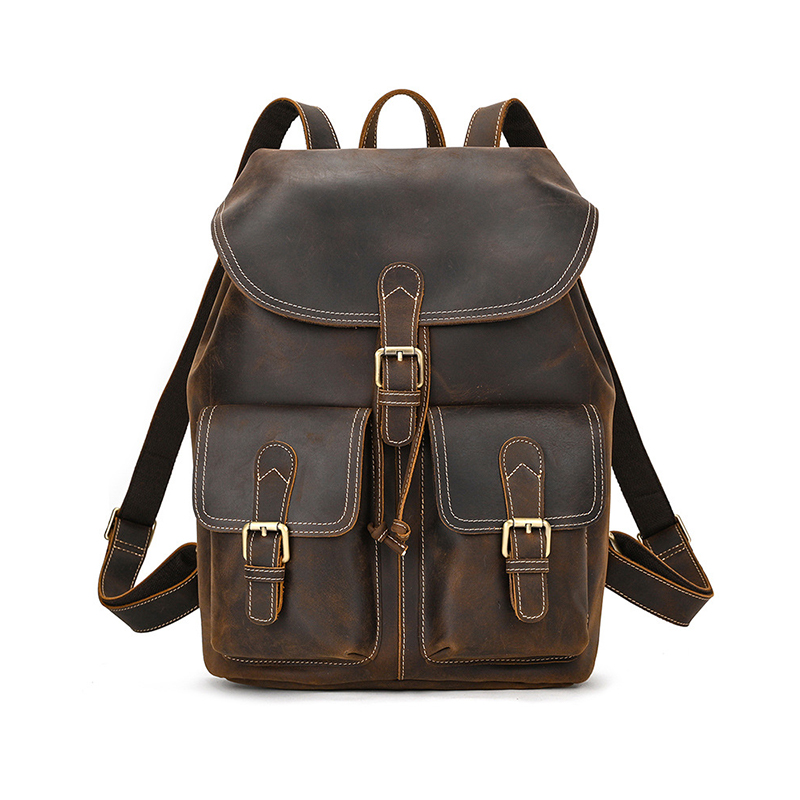
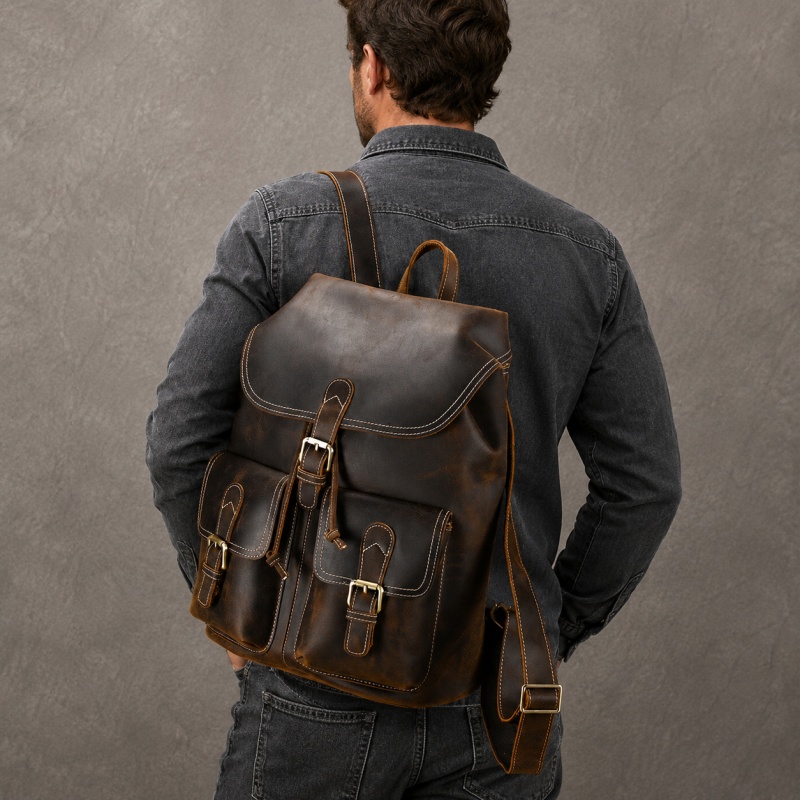
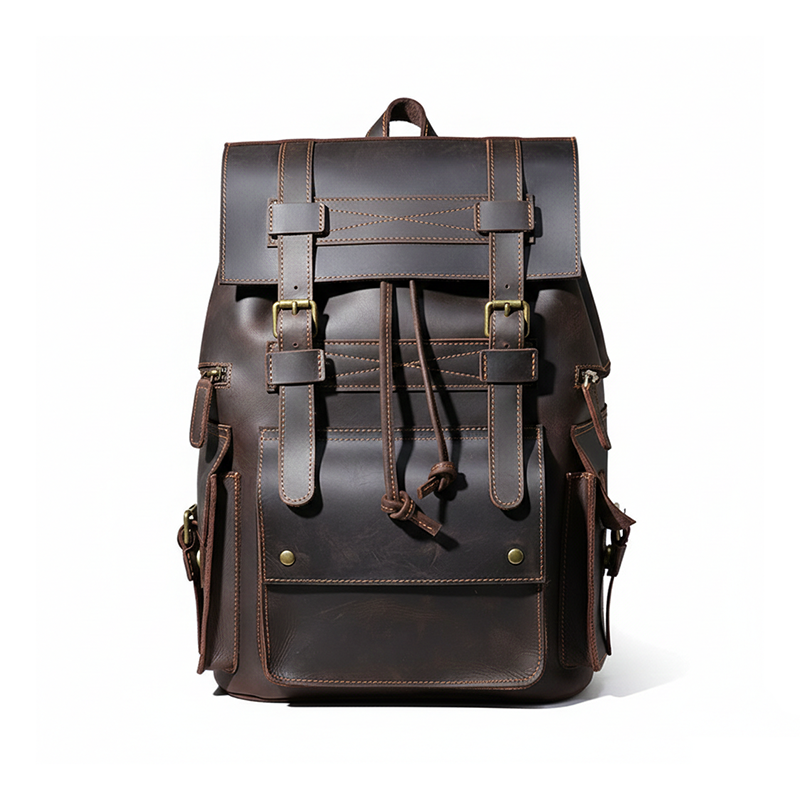
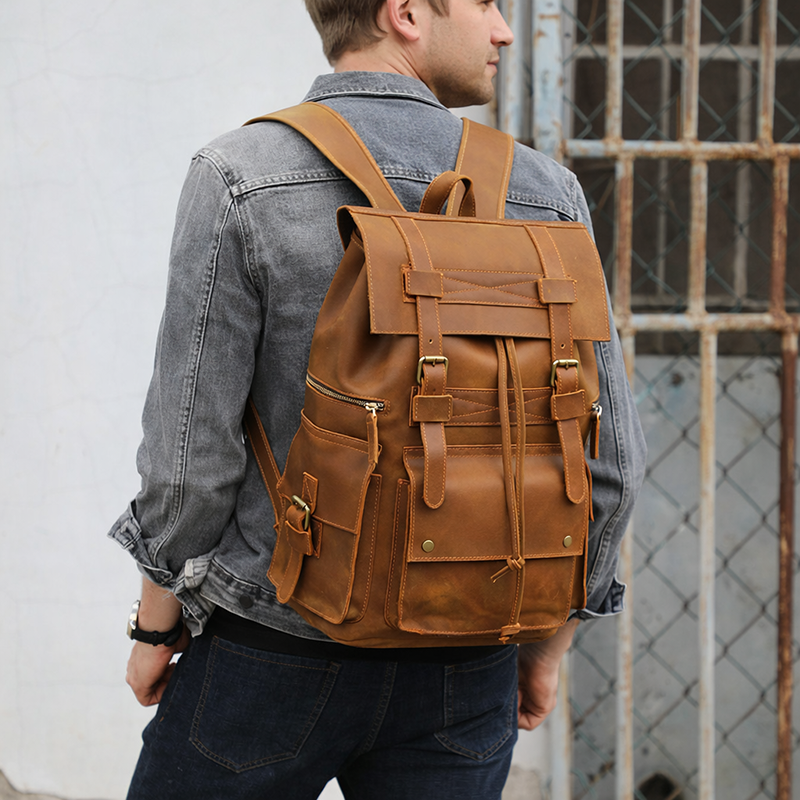
A canvas and leather backpack combines the lightweight durability of canvas with leather accents at the straps, base, and trim. The canvas body handles the weight and abrasion resistance; the leather adds structure and a more refined visual character. The result is a bag that's lighter than full leather, more stylish than plain nylon, and more versatile across daily contexts than either of the two materials on their own.
A canvas and leather backpack is often the best choice when you want everyday practicality without giving up vintage character and a more mature look. For someone whose week spans a commute, weekend trips, and casual social settings — and who wants one bag that works across all of them — it covers more ground than either canvas alone or nylon alone tends to.
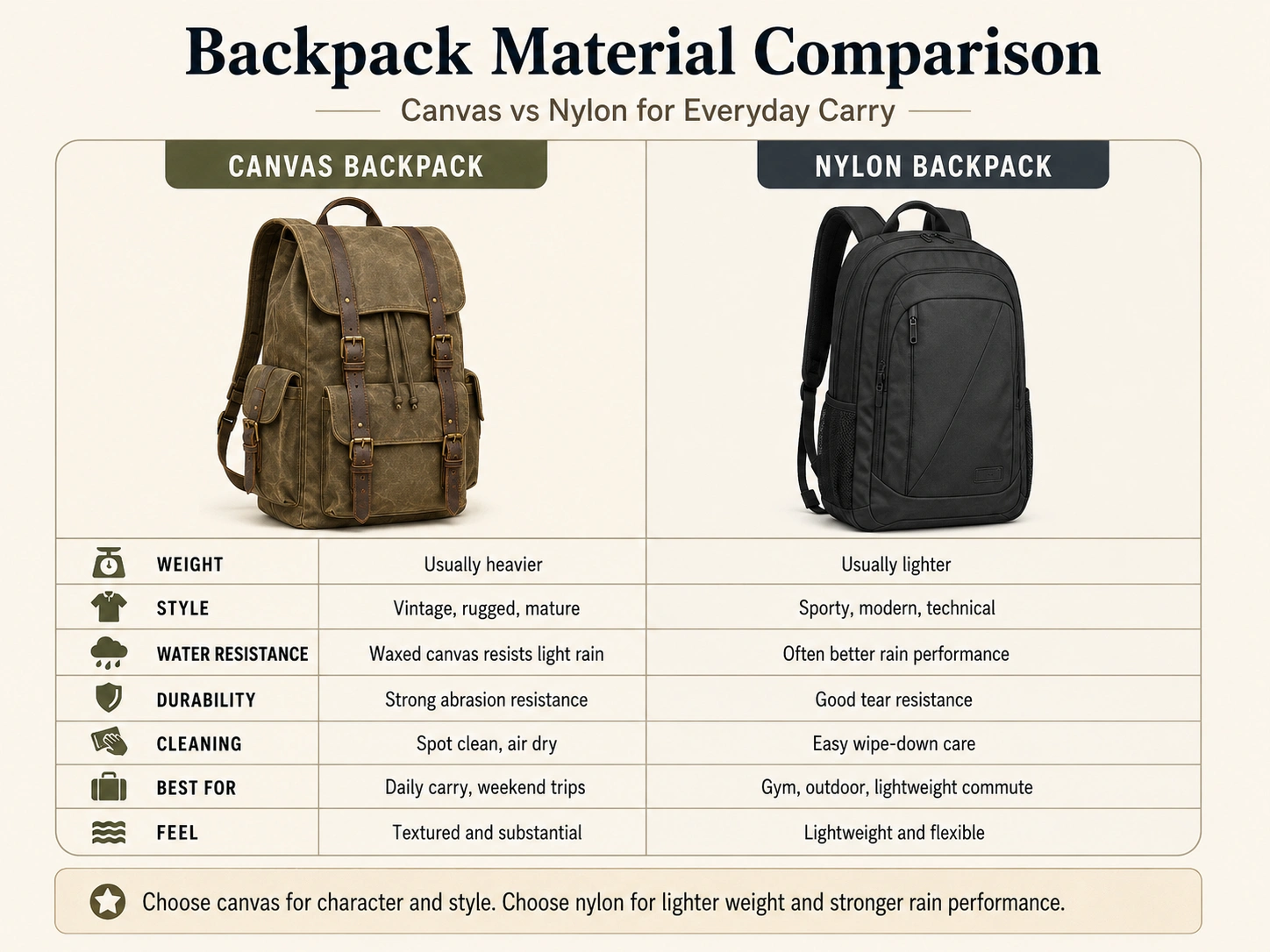
Canvas Backpack vs Nylon Backpack: Side-By-Side Comparison
| Feature | Canvas Backpack | Nylon Backpack |
|---|---|---|
| Weight | Usually heavier | Usually lighter |
| Style | Vintage, rugged, mature | Sporty, modern, technical |
| Water resistance | Plain canvas absorbs water; waxed canvas resists light rain | Often better, especially with coatings |
| Durability | Strong abrasion resistance, ages into character | Good tear resistance; wear shows differently |
| Aging | Develops patina and creases | Looks more worn rather than broken-in |
| Cleaning | Spot clean, air dry, occasional re-waxing | Easier wipe-down care |
| Best for | Daily carry, weekend trips, vintage style | Gym, outdoor, lightweight or rainy use |
| Feel | Substantial and textured | Lightweight and flexible |
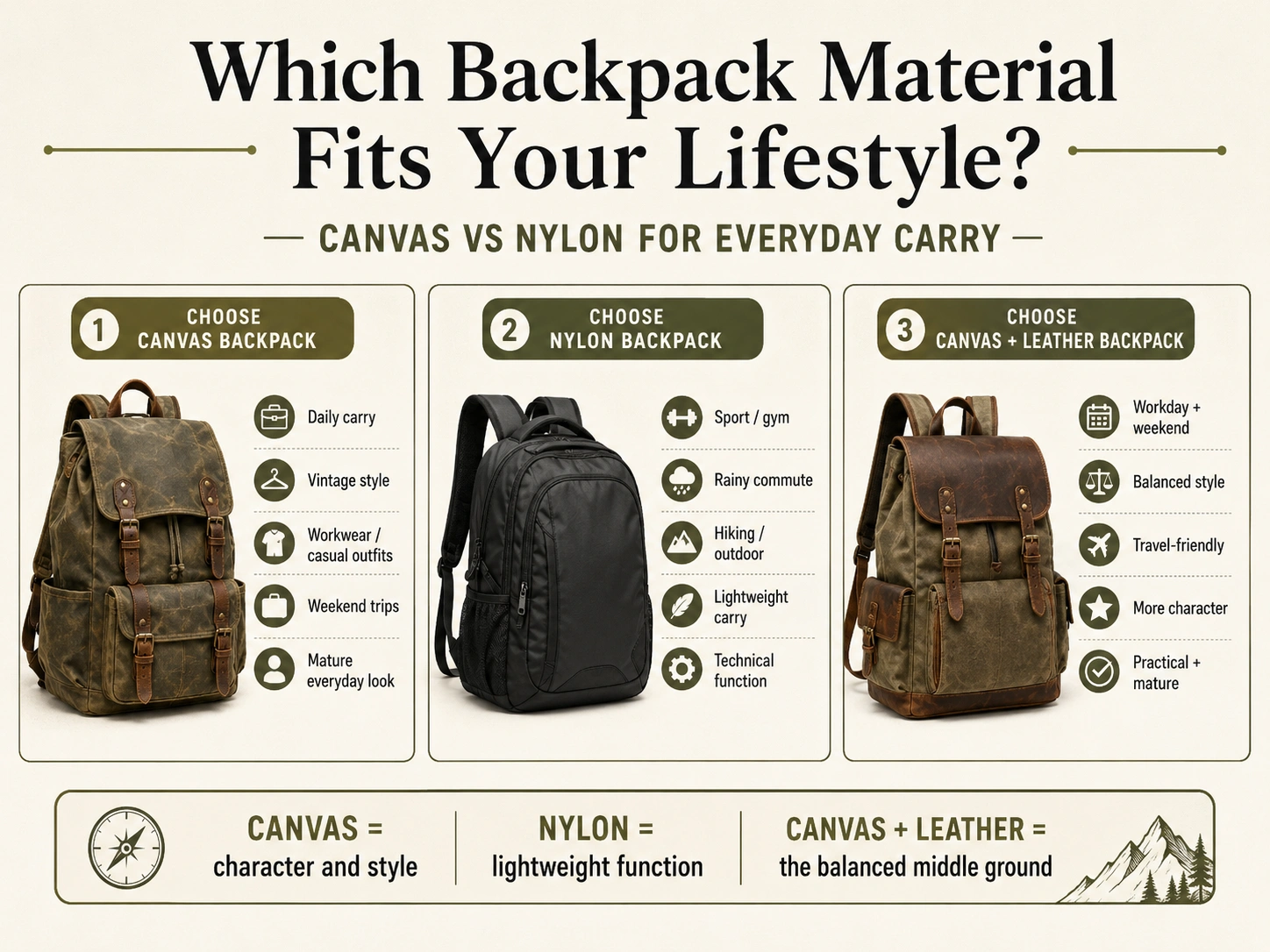
Which Backpack Material Should You Choose?
Choose A Canvas Backpack If
- You want a vintage, rugged, or mature everyday aesthetic
- You carry the bag for commuting, weekend trips, and city use
- You like materials that develop character and look better with use
- Your wardrobe runs toward jeans, boots, jackets, and workwear
- A technical or sporty look isn't what you're going for
Choose A Nylon Backpack If
- Light weight is a genuine priority for how you carry
- You regularly use the bag for gym, sport, hiking, or active commuting
- Better rain performance matters more than visual character
- You prefer a modern, functional aesthetic
- You want the simplest possible maintenance
Choose A Canvas And Leather Backpack If
- You want the balance of both materials
- You need a bag that works across workdays, weekends, and travel
- You want a more polished look than plain canvas without full leather weight
- Everyday versatility across different contexts matters
- You want a bag that ages into something better rather than just wearing out
Final Verdict: Is Canvas Or Nylon Better?
Nylon is the more practical answer when light weight, sport function, and reliable rain performance are the main requirements. Canvas is the stronger choice when everyday style, rugged character, and a bag that improves with use are what matters.
For most people whose daily life spans work, commuting, casual social settings, and occasional travel, canvas — and particularly a canvas and leather backpack — offers better long-term satisfaction. It's a bag that suits more contexts, looks more intentional with more outfits, and develops a character over years that nylon simply doesn't.
If you're looking for that kind of everyday carry, our canvas and leather backpacks are built for exactly this — durable enough for daily use, refined enough for the city, and designed to get better rather than just older.
Frequently Asked Questions
Is canvas better than nylon for backpacks?
Not universally — it depends on what you need. Canvas is more durable against abrasion, develops natural character with age, and suits vintage and mature everyday styles better. Nylon is lighter, dries faster, and generally performs better in rain. For everyday carry with style as a priority, canvas tends to be the more satisfying long-term choice. For active or functional use, nylon has practical advantages.
Is nylon more waterproof than canvas?
Generally, yes — particularly coated nylon. Plain canvas absorbs water readily; waxed canvas provides meaningful water resistance but isn't fully waterproof. Even the best nylon bags have weak points at zippers and seams, so neither material provides complete protection. For serious wet conditions, either material benefits from a rain cover.
Is canvas durable enough for everyday carry?
Yes. Canvas, especially at higher weights and in waxed versions, handles the abrasion and friction of everyday carrying well. It holds up against repeated daily use and tends to age into character rather than simply wearing out. Waxed canvas can also be re-waxed periodically to maintain both the coating and appearance.
Are canvas backpacks heavy?
Canvas is heavier than nylon per square inch of fabric, so all else being equal, a canvas bag will be heavier than a nylon bag at the same capacity. The weight difference varies by construction — a well-designed canvas bag may feel less burdensome than a poorly designed nylon one. Canvas and leather bags are lighter than full leather but heavier than nylon.
Which backpack is better for men?
For a mature, casual, or workwear-influenced wardrobe, canvas or canvas and leather tends to look more natural and intentional. For active, outdoor, or athletic contexts, nylon suits the aesthetic and function better. The honest answer is that it depends on what you're wearing and where you're going more than any inherent quality of either material.
Which backpack material lasts longer?
Both can last for years when well-made. High-quality canvas ages into character; high-quality nylon maintains its functional properties. Low-quality versions of both degrade relatively quickly. The practical difference is that canvas wear reads as patina while nylon wear reads as damage — the actual lifespan of a well-made bag in either material is comparable.
Is canvas good for travel backpacks?
Yes, for city travel, weekend trips, and short trips where the bag sees varied everyday conditions. Waxed canvas handles light rain well, resists abrasion, and suits the mixed contexts that travel involves. For heavy rain environments or extended outdoor travel where weather protection is the top priority, nylon or a rain cover provides more reliable protection.