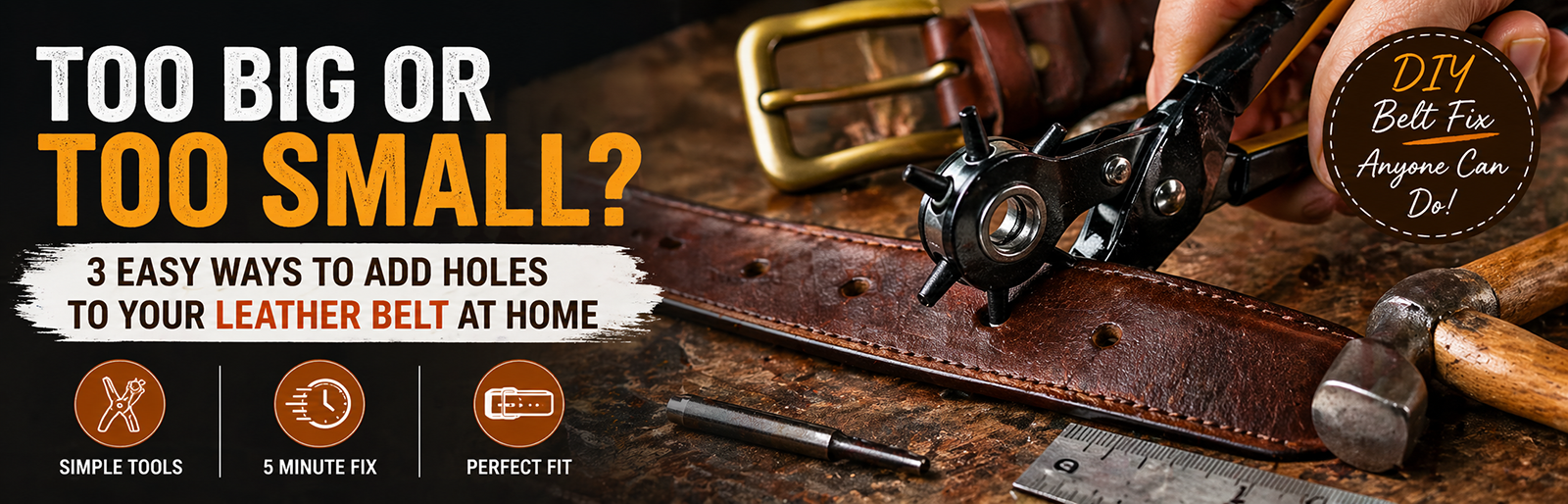
You finally put on your favorite belt — and it just doesn’t fit.
Maybe you’ve lost a few pounds and now it feels too loose. Maybe it’s the opposite, and the first hole barely closes. Either way, standing in front of the mirror trying to make it work is frustrating.
Here’s the good news: you don’t need to replace it right away. Learning how to add holes to a leather belt at home is simple, fast, and surprisingly effective.
In this guide, you’ll discover three easy ways to add holes to a leather belt, from the cleanest professional method to quick DIY fixes — so you can get the perfect fit in minutes.
Why Your Leather Belt Doesn’t Fit Properly
Common Reasons Your Belt Is Too Big or Too Small
A poorly fitting belt doesn’t always mean you bought the wrong one.
- Weight changes – Even a small shift can change which hole you need
- Sizing confusion – Many people misunderstand belt sizing vs waist size
- Different wearing styles – High waist vs low waist changes fit completely
That’s why so many people end up searching “belt too big fix” or “leather belt too tight solution.”
Signs You Need to Add a New Hole
Not sure if this is the right fix?
Here are clear signs you should add holes to your leather belt:
- You’re using the last hole and it’s still loose
- You’re stuck on the first hole and it feels tight
- The belt tail hangs too long and looks messy
If that sounds familiar, a quick DIY adjustment can make your belt feel brand new again.
Before You Start: What You Need
Basic Tools for DIY Leather Belt Hole Punch
To add a hole to a leather belt at home, you’ll need:
- A leather hole punch tool (best option)
- A hammer
- A nail or screwdriver (DIY option)
- A ruler or tape measure
- A marker or pen
- A hard surface like wood
Pro Tip: Match Existing Hole Spacing
Before you punch anything:
👉 Measure the distance between existing holes
Most belts follow:
- 1 inch (2.5 cm) spacing
Keeping consistent spacing is the key to making your DIY fix look professional — not obvious.
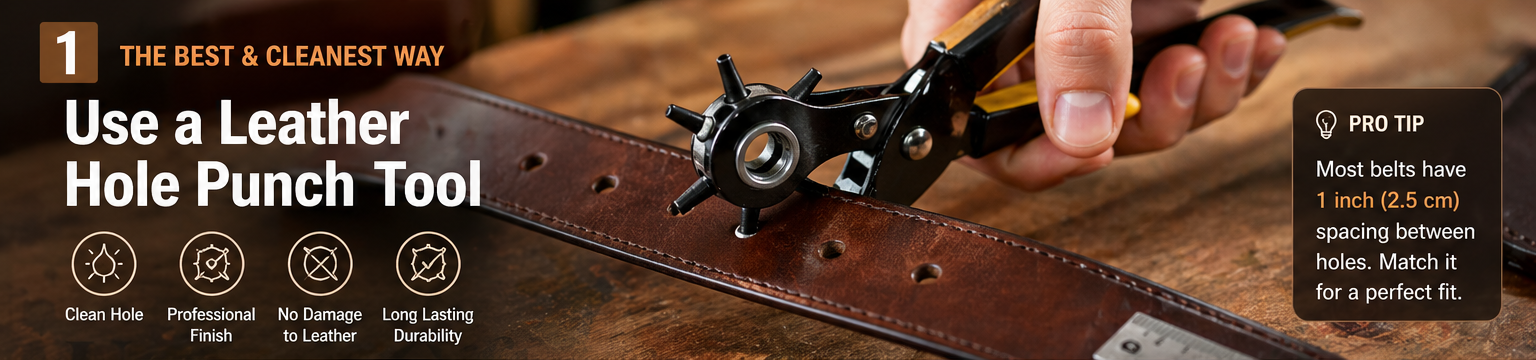
Method 1: Using a Leather Hole Punch Tool (Best & Cleanest)
If you want the best result, this is the best way to punch holes in a leather belt.
Steps:
- Mark the exact position
- Choose the correct punch size
- Align and press firmly
- Check and clean the hole
👉 Result: clean, round, factory-looking hole
Why This Method Is Worth It
A proper leather hole punch tool:
- Prevents tearing
- Keeps edges smooth
- Works perfectly on full grain leather
💡 If you adjust your belt often, it may also be a sign that the original size wasn’t ideal. Choosing the right size from the start can save time and keep your look cleaner.

Method 2: Using a Nail and Hammer (Quick DIY Fix)
Don’t have tools? This is the easiest DIY leather belt hole method.
Steps:
- Choose a nail close to hole size
- Mark your position
- Place belt on wood
- Hammer through carefully
Pros & Cons
✔ Works with items you already have
✔ Fast solution
✖ Hole edges may be rough
✖ Risk of stretching leather
👉 Best for casual belts, not premium ones.
.png?w=1536&h=356)
Method 3: Using a Drill (For Thick Leather Belts)
For thicker belts, this is the best way to add holes to a thick leather belt.
Steps:
- Use a small drill bit
- Secure the belt
- Drill slowly at low speed
- Clean edges
Best Use Case
- Thick belts
- Work belts
- Full grain leather belts
👉 This method ensures a clean hole even on heavy-duty leather.
Common Mistakes to Avoid
Even simple DIY fixes can go wrong. Avoid these:
- Not measuring spacing
- Making the hole too large
- Punching on a soft surface
- Placing holes too close to the edge
⚠️ Biggest mistake: cutting the belt shorter instead of adjusting it.
Should You Add a Hole or Buy a New Belt?
Sometimes fixing isn’t the best option.
Add a Hole If:
- You’re only off by 1–2 holes
- The leather is still in good condition
Replace the Belt If:
- You’ve already added multiple holes
- The leather is cracked or stretched
- The size is way off
👉 In many cases, investing in a well-fitted full grain leather belt is the better long-term solution.
A high-quality leather belt not only fits better — it also holds its shape and ages beautifully over time.
Final Thoughts
Knowing how to add holes to a leather belt is one of the easiest and most useful DIY skills.
To recap:
- Leather hole punch → best result
- Nail + hammer → quick fix
- Drill → best for thick belts
As long as you measure carefully and match your existing holes, your belt will look clean and intentional.
That said, the real upgrade isn’t just fixing a belt — it’s wearing one that fits perfectly from the start.
👉 If you find yourself adjusting your belt often, it might be time to switch to a better-fitting, high-quality leather belt designed for everyday use.