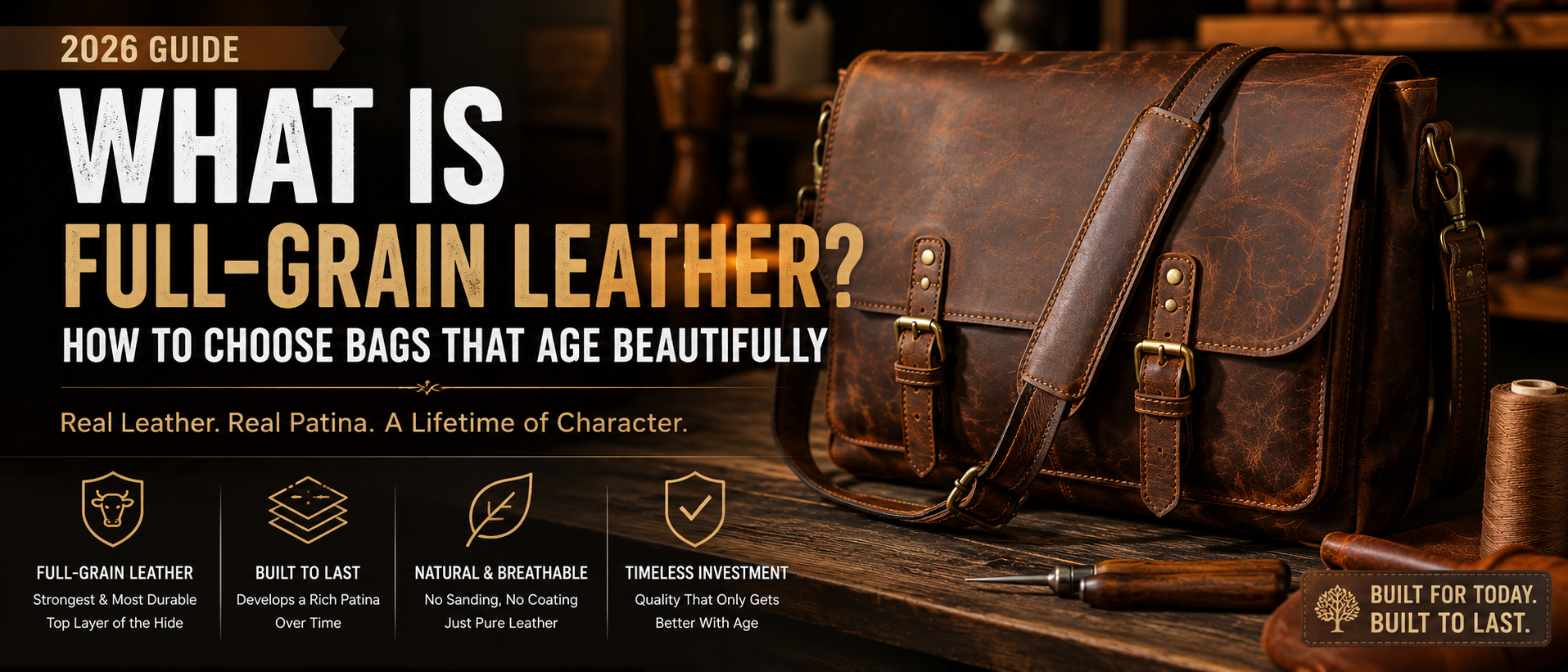
Walk into any leather goods store — or scroll through pages of bags online — and you'll see the same words repeated with quiet confidence: Genuine Leather. Premium Leather. Top-Grain Leather. These phrases feel reassuring. They feel like a promise.
They aren't.
The leather industry has its own invisible hierarchy, and the language used in product listings is carefully designed to sound better than it is. "Genuine leather" is technically accurate — it does come from an animal — but it sits near the bottom of the quality ladder. "Top-grain" sounds like it means the best grain, and in a narrow sense it does, but the process used to create it removes the very properties that make leather worth owning in the first place.
What most brands won't tell you is this: the real difference between leather that lasts a lifetime and leather that falls apart in three years has nothing to do with marketing copy. It comes down to fiber structure — the structural integrity of the hide itself.
This guide explains what full-grain leather actually is, why it's categorically different from everything below it, and how to identify the real thing when you're shopping. We'll also walk through the specific materials and construction decisions that shape how a leather bag ages — because a piece that develops character over decades isn't an accident. It's the result of choices made long before you ever picked it up.
The Hidden Hierarchy of Leather: What the Labels Don't Tell You
Most consumers encounter leather in one of four forms. From lowest to highest quality:
Bonded leather is the particleboard of the leather world. It's made from shredded leather scraps — sometimes as little as 10–20% actual leather — mixed with polyurethane and pressed onto a backing material. It looks like leather for about a year. Then it peels.
Genuine leather is real leather, but from the lower layers of the hide where the fiber structure is looser and weaker. It's sanded, embossed with an artificial grain, and coated with a surface finish to look uniform. The coating is doing most of the work.
Top-grain leather is where it gets more interesting — and more misleading. Top-grain does come from the outer layer of the hide, which is the strongest part. But because that outer surface often has natural variations and marks, it gets sanded down (buffed) to create a flawless, consistent appearance. Then a pigment coating is applied to replace the texture that was just removed. The result is leather that looks immaculate out of the box but has lost its breathability, its ability to develop a patina, and a significant portion of its long-term durability.
Full-grain leather is the only type that goes through none of that. The surface is never sanded. The grain is never corrected. The natural pore structure of the hide is left completely intact — which means the leather can breathe, absorb oils, and develop a rich, individual surface character over time. It may have subtle natural marks or slight tonal variations. Those aren't flaws. They're proof that nothing was touched.
Full-Grain vs. Top-Grain: What the Difference Actually Means
The distinction sounds technical, but its practical consequences are significant and long-lasting.
Fiber Density and Durability
The outermost layer of a hide — the part full-grain leather preserves — contains the most tightly interlocked collagen fibers of any part of the animal. This tight fiber structure is what gives hide its famous strength. When you sand that surface away to correct imperfections, you're not just removing the visual grain. You're removing the strongest part of the material.
Full-grain leather, properly cared for, has a documented service life of 50 years or more. It doesn't just resist wear — it absorbs the friction and pressure of daily use and hardens in response, growing more resilient over time rather than less. Top-grain leather, with its compromised surface and added coating, typically shows meaningful degradation within five to ten years of regular use.
Breathability and Feel
Because full-grain leather retains its natural pore structure, it breathes. Moisture vapor can pass through the material, which means the leather stays supple rather than becoming rigid and cracked. Top-grain leather's surface coating blocks this process. The leather beneath the coating may be technically present, but it's essentially encased — unable to respond to its environment the way living material should.
Patina: The Difference You Can See
This is where full-grain leather separates itself in a way that's immediately visible. Patina is the gradual surface transformation that happens as leather absorbs light, oils, and contact over time. On a full-grain piece, this process produces a deepening of color, a subtle surface sheen, and — on lighter leathers — a darkening along the edges and contact points that records the history of the object's use.
Top-grain leather, sealed under its coating, cannot develop a true patina. The surface you see when you buy it is essentially the surface you'll always have — slowly wearing rather than meaningfully aging.
KKICO's Material Philosophy: Full-Grain, and Then Some
At KKICO, full-grain leather is the starting point, not the destination. Within the full-grain category, there are meaningful differences in how the leather is tanned, treated, and finished — and those differences determine how a piece ages, feels, and ultimately becomes yours.
Crazy Horse Leather: The Vintage Enthusiast's Choice
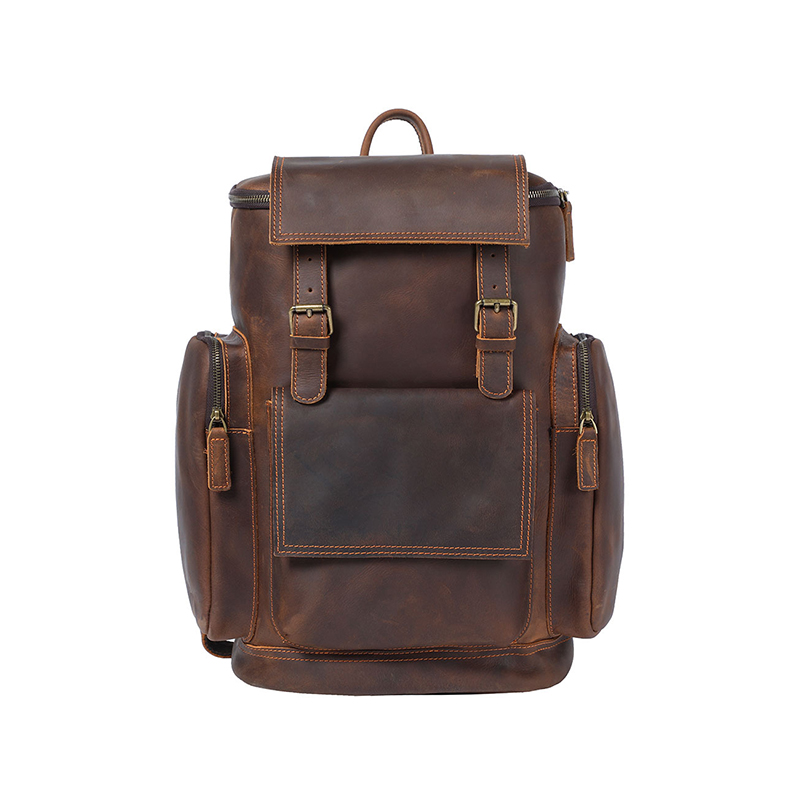
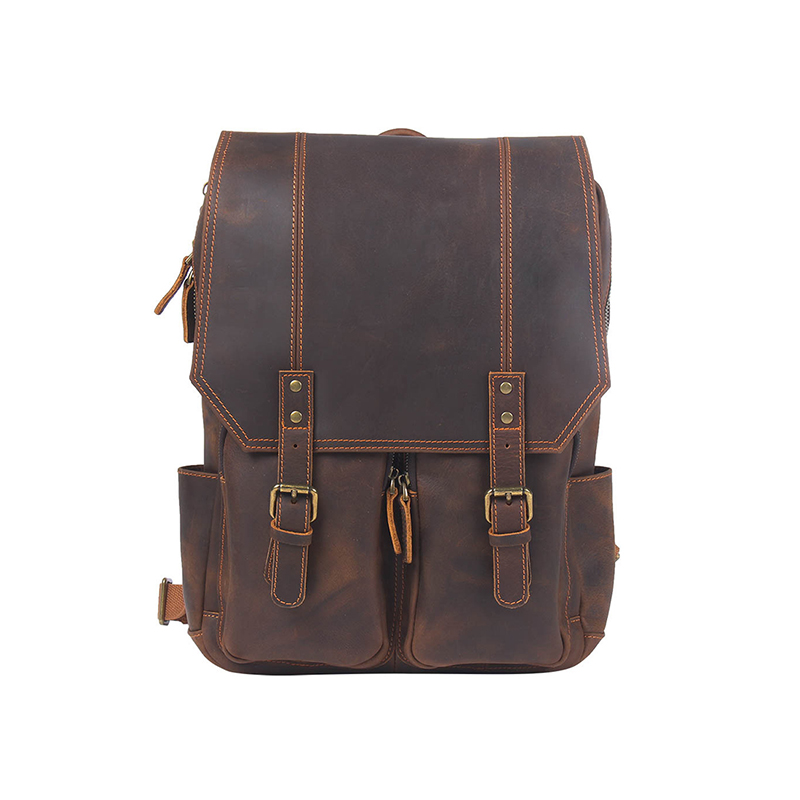
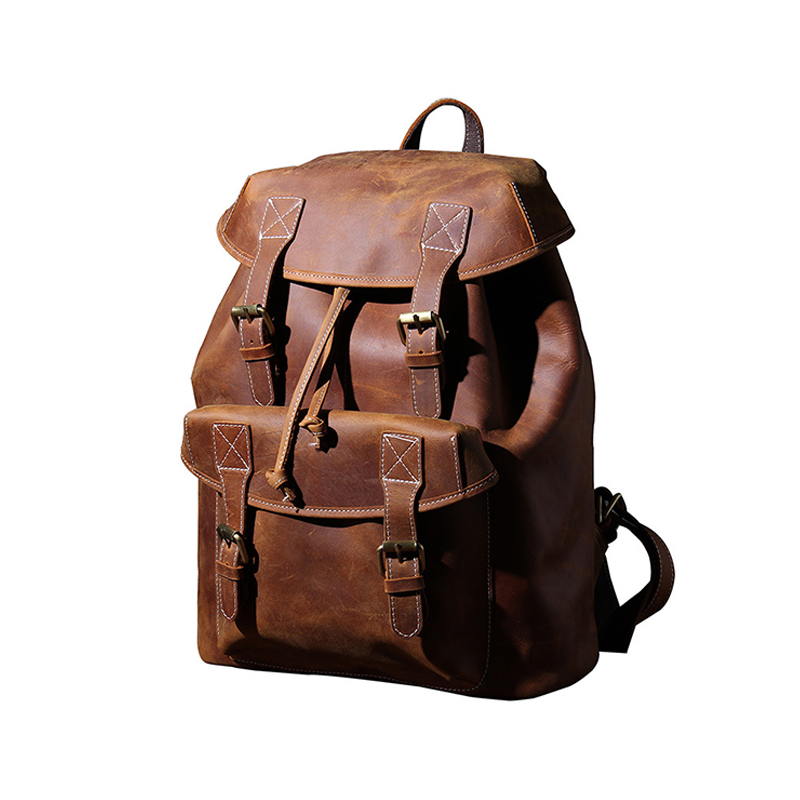
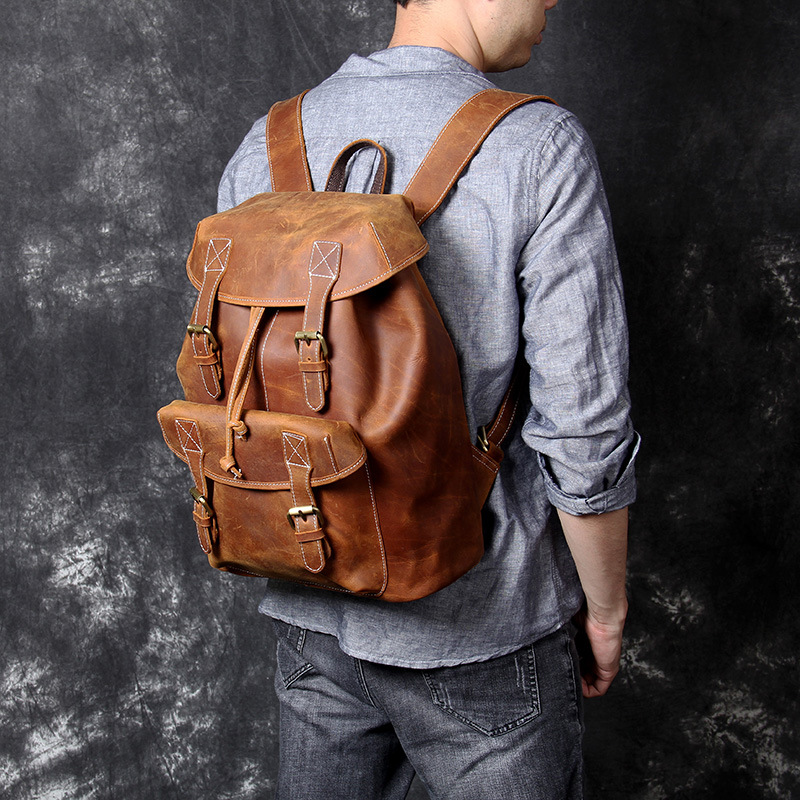
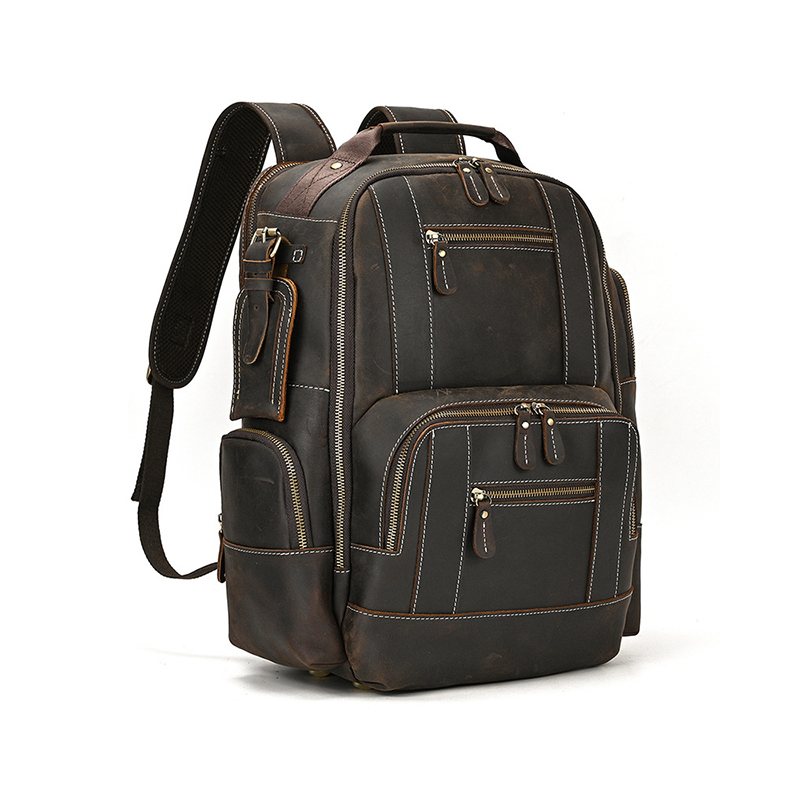
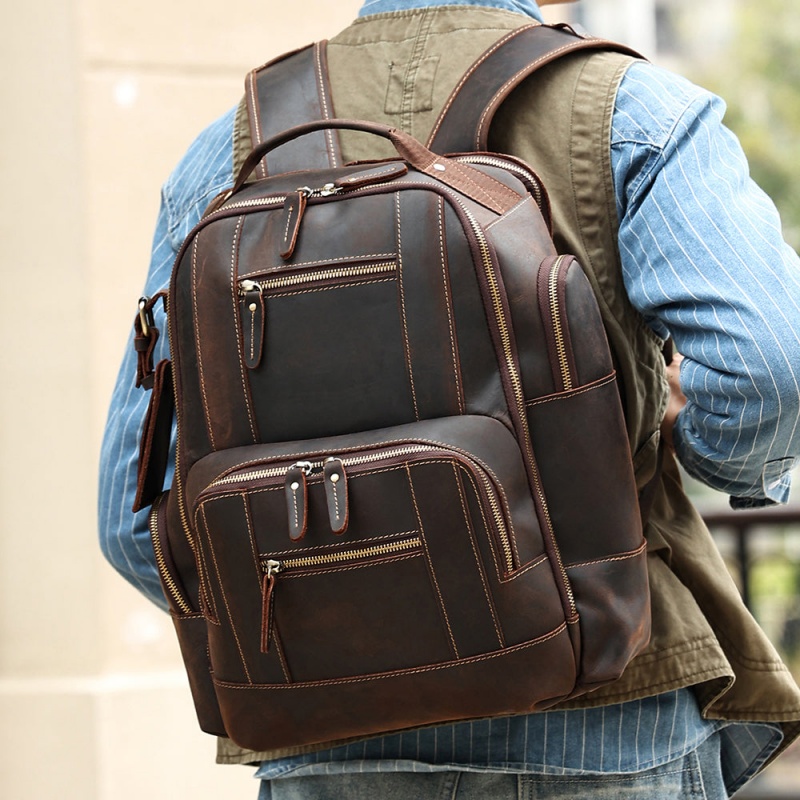
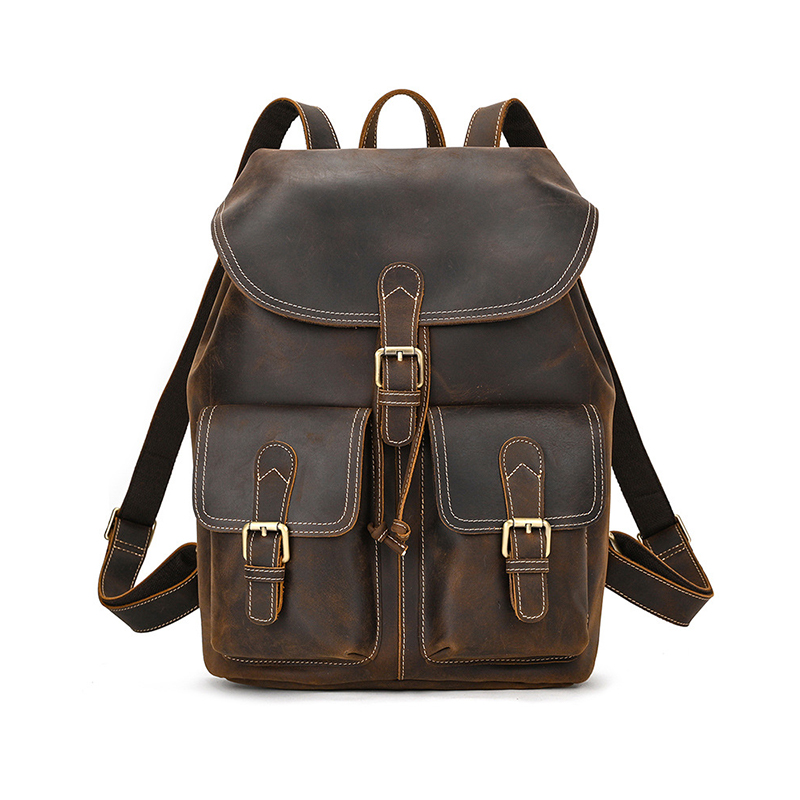
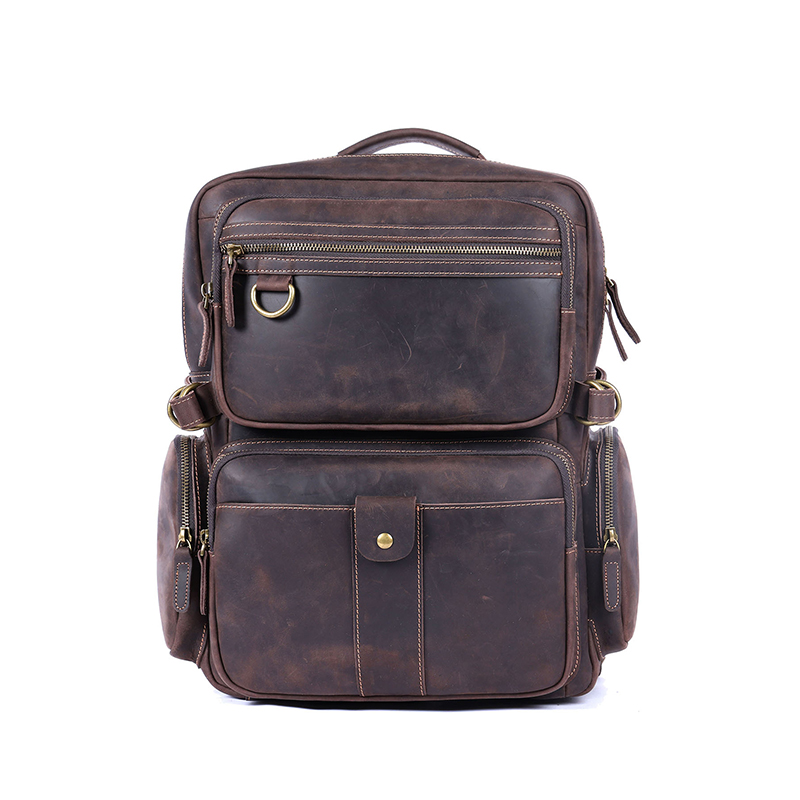
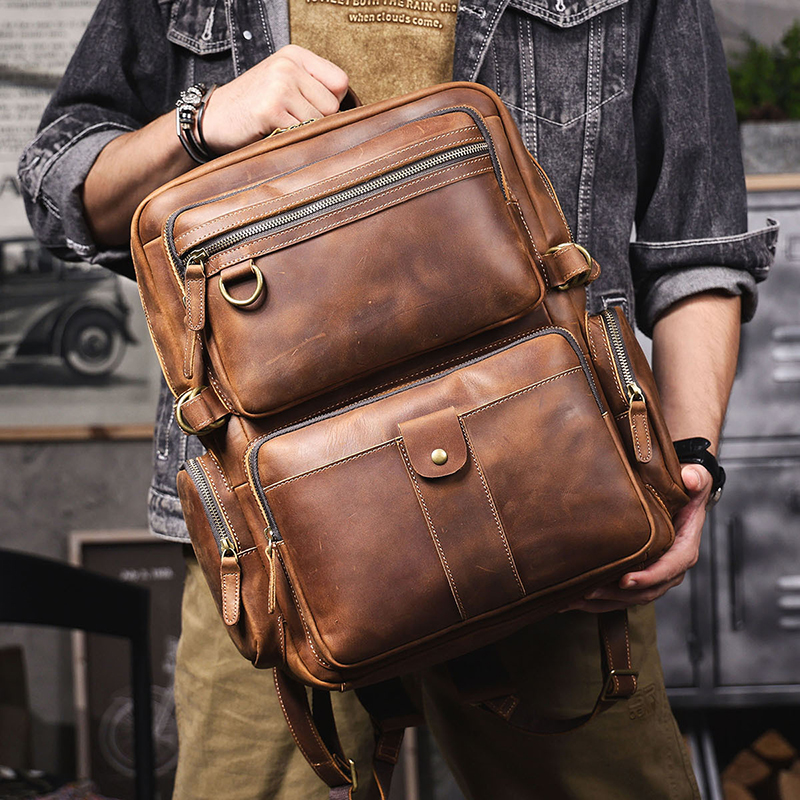
Despite the name, crazy horse leather has nothing to do with horses. It's a high-quality full-grain cowhide that has been treated with a specific blend of natural waxes and oils applied under pressure, which causes the fats to partially penetrate the fiber structure of the leather surface.
The result is a material with a distinctive, immediately recognizable property: when you scratch or press the surface, the wax redistributes and the color lightens at that point. Rub the mark with your thumb and it fades back. Over time, this effect accumulates — areas of regular contact develop a slightly different tone than areas that see less handling, creating a surface that maps the actual geography of how you use the bag.
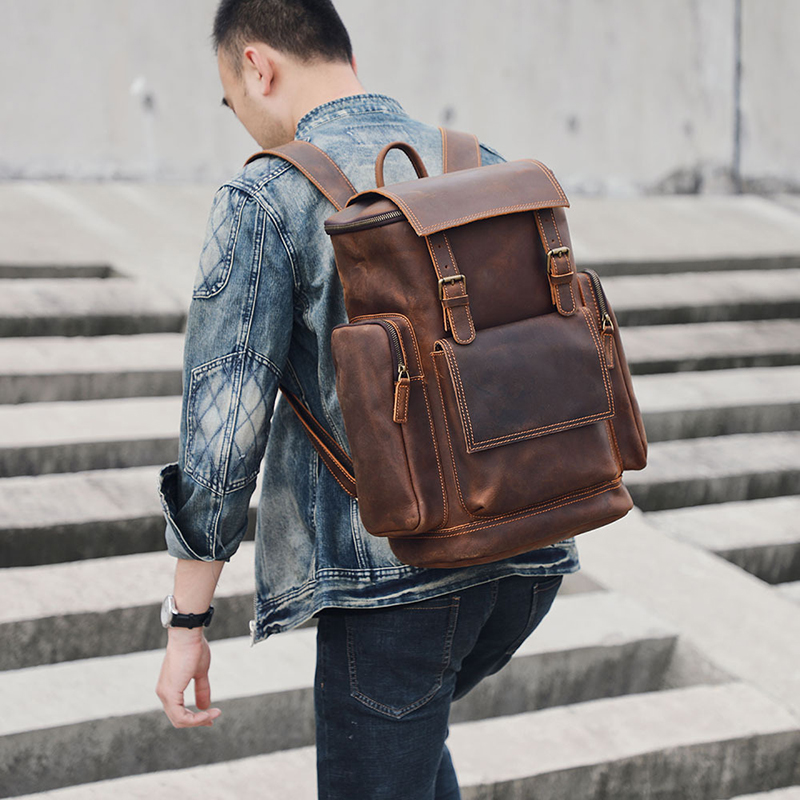
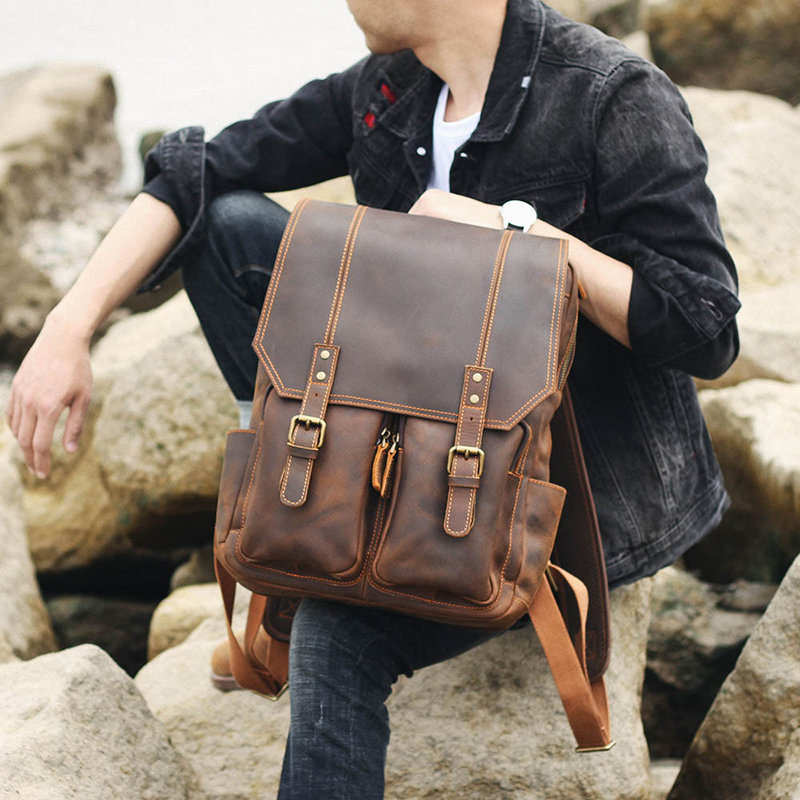
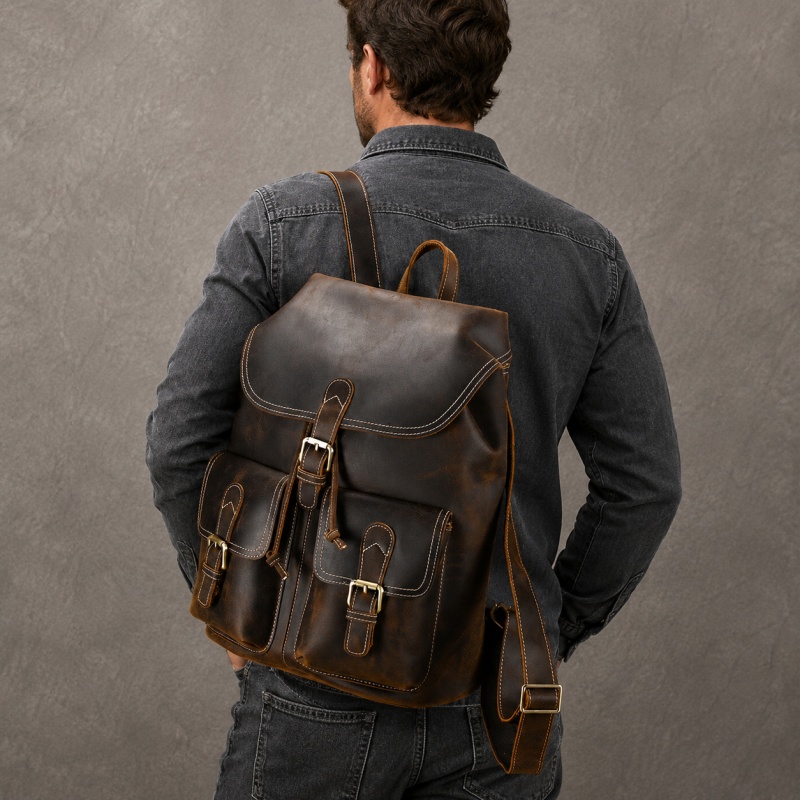
Crazy horse leather is the material of choice for anyone drawn to a vintage, worn-in aesthetic that feels earned rather than manufactured. It's visually dynamic from the first day and only becomes more so with age.
Vegetable-Tanned Leather and the Art of Patina
Most commercial leather is tanned using chromium salts — a process that's fast (taking days rather than months), inexpensive, and produces a consistent, soft result. Chrome-tanned leather is perfectly functional, but it doesn't age the way vegetable-tanned leather does.
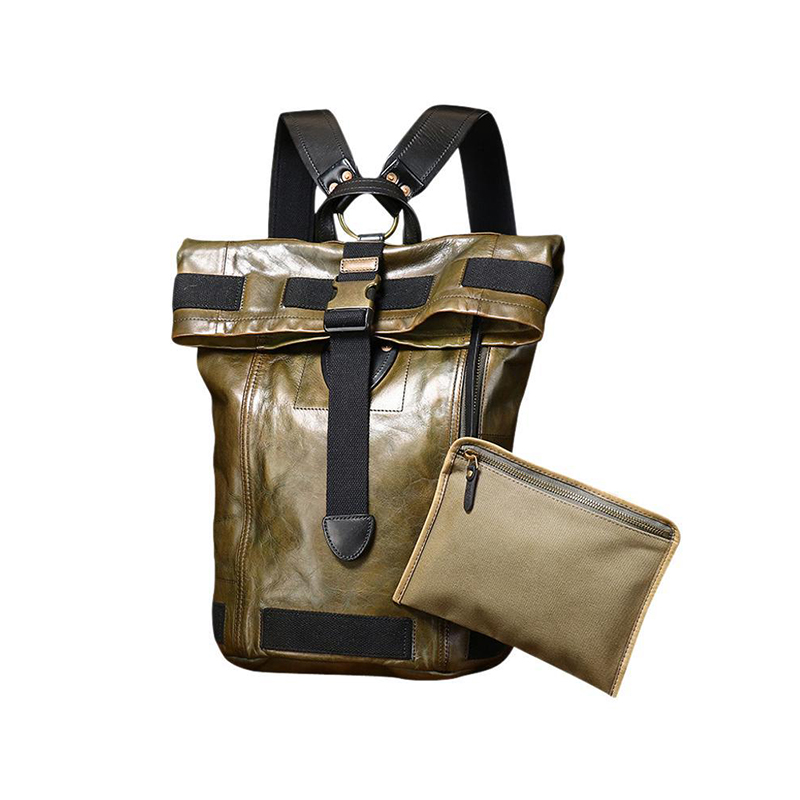
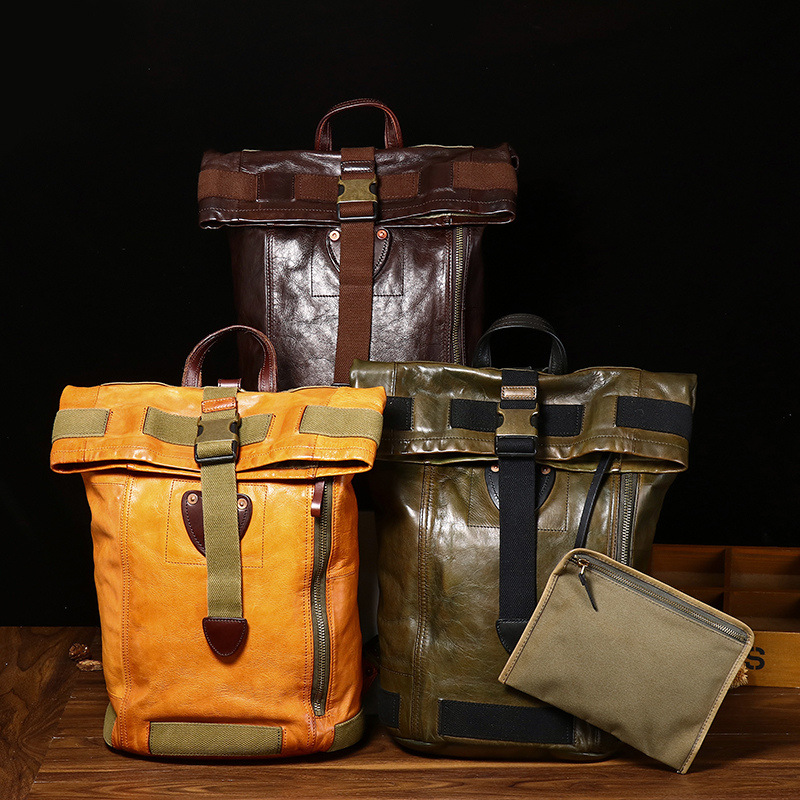
Vegetable tanning uses natural plant-based tannins — extracted from tree bark, particularly oak and chestnut — in a slow, traditional process that can take weeks or months. The resulting leather is firmer, slightly denser, and — most importantly — chemically structured in a way that allows it to respond dynamically to its environment over time.
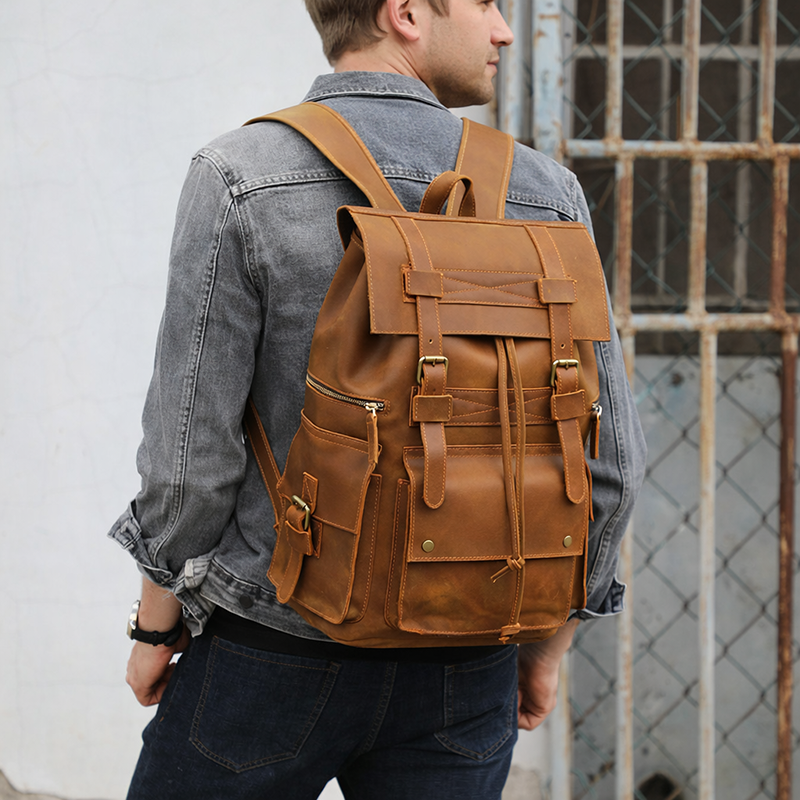
When vegetable-tanned leather is exposed to sunlight, to the oils in your skin, and to the simple passage of time, its color deepens and shifts. A piece that starts as a pale tan may darken over years into a rich amber or cognac. The areas that see the most contact age faster than those that don't, creating a gradient that's unique to how you use the piece.
This is patina in its truest sense: the marks you leave on it are the marks it keeps. No two vegetable-tanned leather bags age identically, because no two people use a bag identically. The object becomes, in a literal sense, a record of your life with it.
Solid Brass Hardware: The Detail That Completes the Commitment
Choosing full-grain leather for a bag and then fitting it with zinc alloy or gold-plated hardware is like building a house on a solid foundation and then capping it with a cardboard roof. The commitment to quality has to run through the entire piece.
Lesser bags use hardware that's plated with a thin layer of gold or silver over a base metal. Within six months to a year of regular use, the plating begins to wear through at contact points, exposing the grey or brassy metal beneath. The hardware that was meant to look distinguished starts to look cheap — and it often fails structurally as well, with clasps that weaken and buckles that bend.
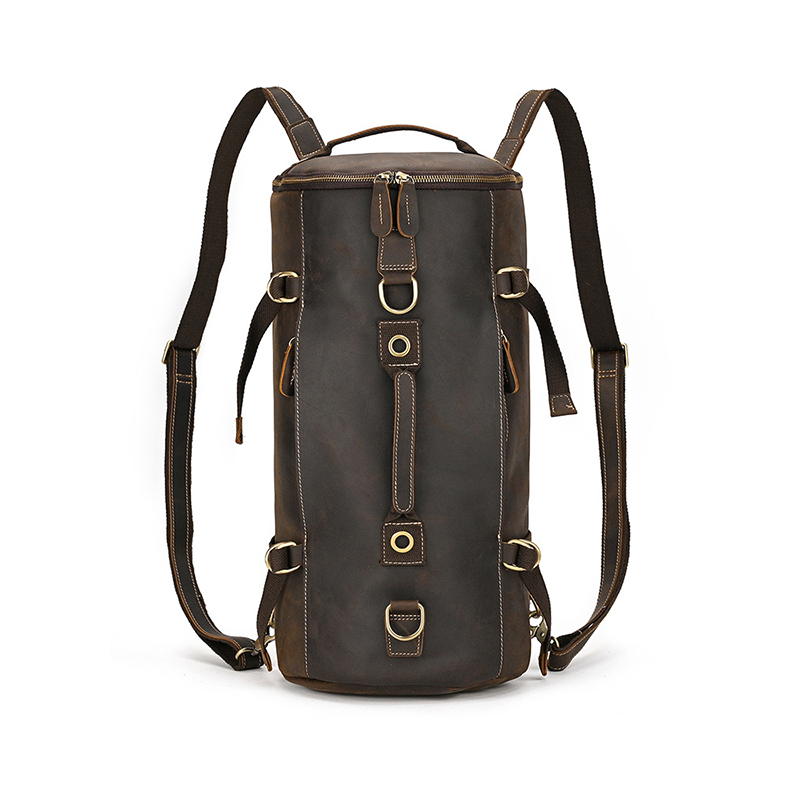
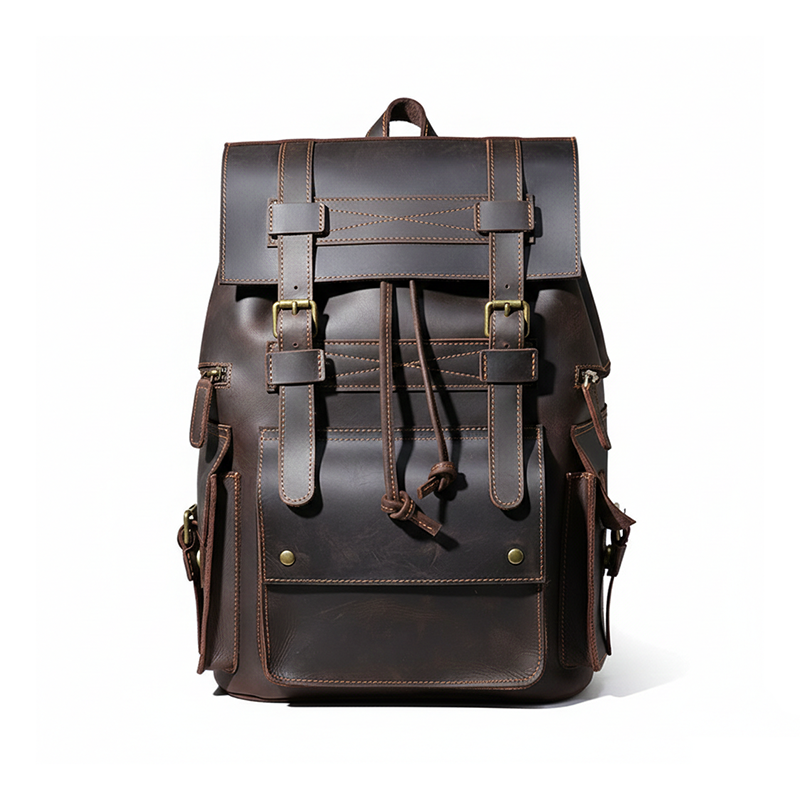
Solid brass hardware, by contrast, is the same material all the way through. There's no plating to wear off. Over time, brass develops its own surface character — a warm, slightly darkened patina that complements aged leather rather than clashing with it. The hardware ages with the bag. That's not a compromise. It's the design working as intended.
How to Tell If Leather Is Real: 3 Practical Tests
If you're shopping for leather goods — whether from us or anyone else — here are three straightforward ways to evaluate what you're actually looking at.
1. The Pore Test (Look Closely)
Genuine full-grain leather has an irregular, organic pore pattern when examined up close. The pores vary slightly in size and spacing, because they were once actual pores in an animal's skin. Synthetic leather and heavily coated genuine leather have a repeating, uniform texture pattern — it looks almost perfect, because it was stamped by a machine. If the grain looks too even, it probably is.
2. The Smell Test
Real, naturally tanned leather has a distinctive smell — warm, slightly earthy, complex. It's one of the reasons people love new leather goods. Synthetic leather typically smells plastic or chemical, particularly when warm. Heavily coated genuine leather often smells of the coating more than the leather itself. If you're handling the product in person, trust your nose.
3. The Edge Test
Look at the cut edges of the leather — the sides of straps, the rim of a pocket, the border of a panel. Full-grain and well-finished genuine leather will have edges that are either burnished (rubbed smooth and sealed) or left with a clean, tight fiber structure. Bonded leather and lower-quality materials will often show visible layering at the edge — a fabric or paper backing with a thin leather-like surface on top.
Choosing What's Right for You
Different materials suit different uses and aesthetics, and there's no single correct answer for every person.
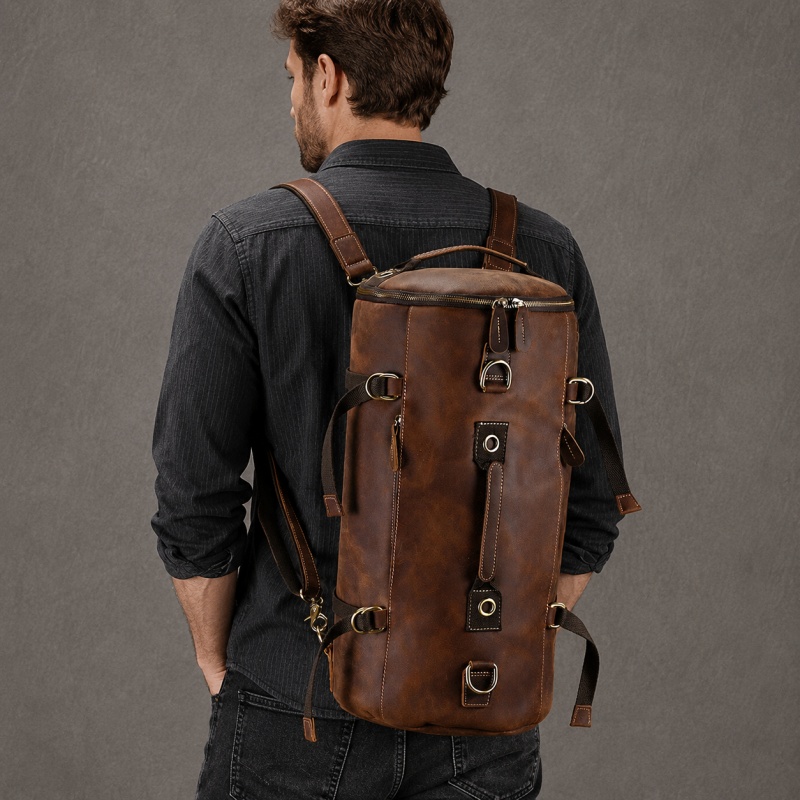
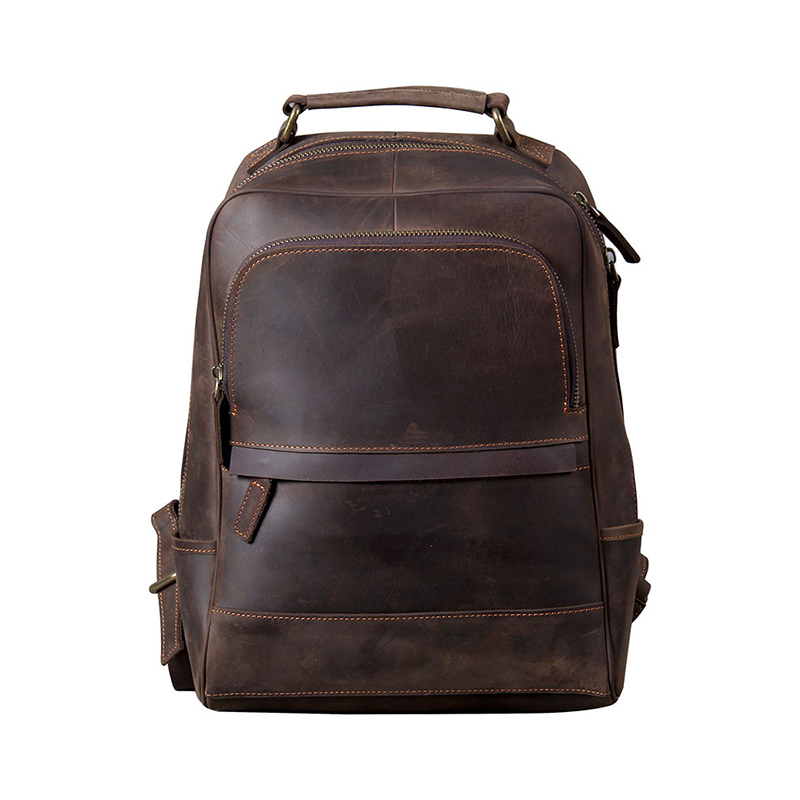
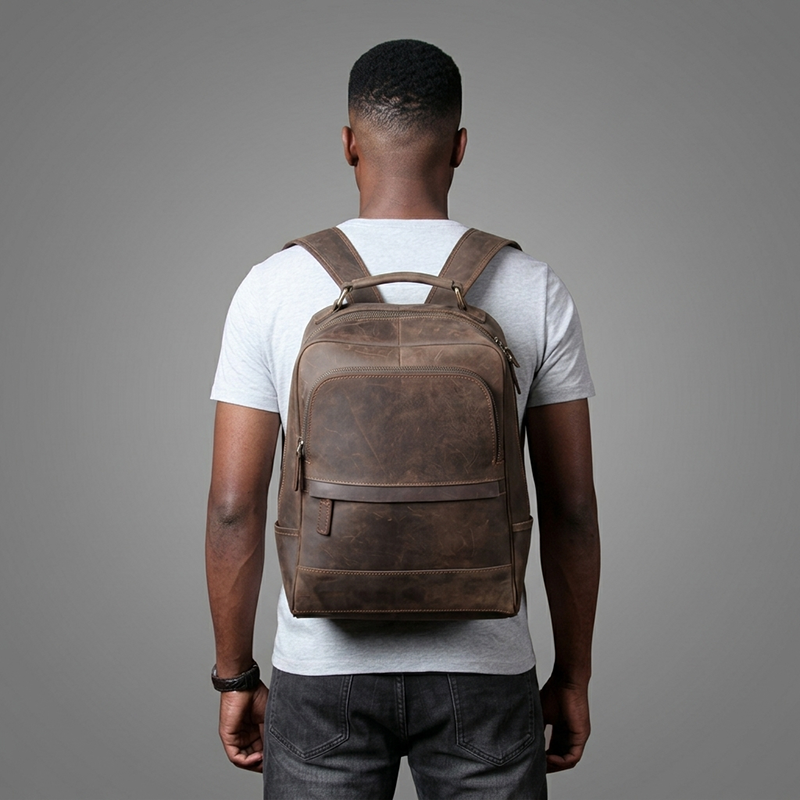
Crazy horse leather is the choice for anyone who wants a piece that looks lived-in and vintage, develops visible character quickly, and ages in a dramatically visible way. Ideal for backpacks, messenger bags, and travel accessories that see heavy daily use.
Vegetable-tanned leather suits those who prefer a cleaner, more refined starting point that deepens gradually over years. The patina is subtler and slower, but ultimately more profound. Best for pieces you'll carry for decades.
PU and coated leathers are a practical option for those who prioritize a consistent appearance, lower maintenance, or a specific price point — and for whom the aging process is less central to the appeal of the piece. If that's your priority, knowing what you're choosing is still better than being misled.
The worst outcome isn't choosing the "wrong" material. It's paying a premium for full-grain quality and receiving something that was buffed, coated, and relabeled.
A Piece That Earns Its Place
There's a particular satisfaction in owning something that improves with time rather than depreciating. Most objects we own begin declining the moment we start using them. A well-made full-grain leather bag does the opposite: the surface hardens and becomes more resistant, the color deepens and becomes more interesting, and the hardware develops a warmth that new metal never has.
That process takes years. It requires material integrity at every level — the right hide, the right tanning method, the right hardware, and the right construction. Cut any corner and the piece will show it eventually, often sooner than you'd expect.
A great leather bag isn't a purchase. It's a companion — something that travels with you long enough to become part of your story.
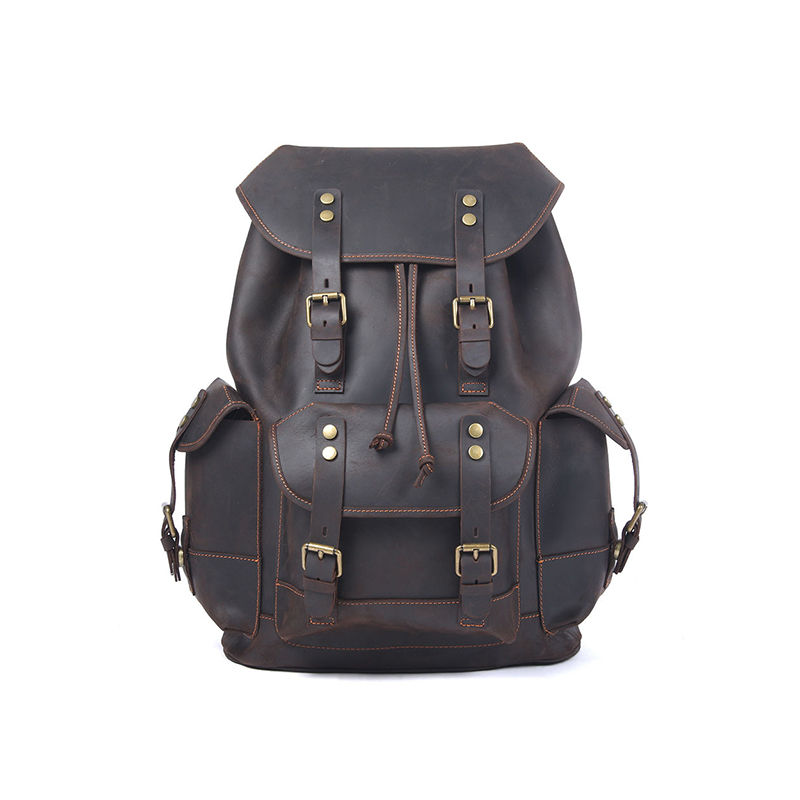
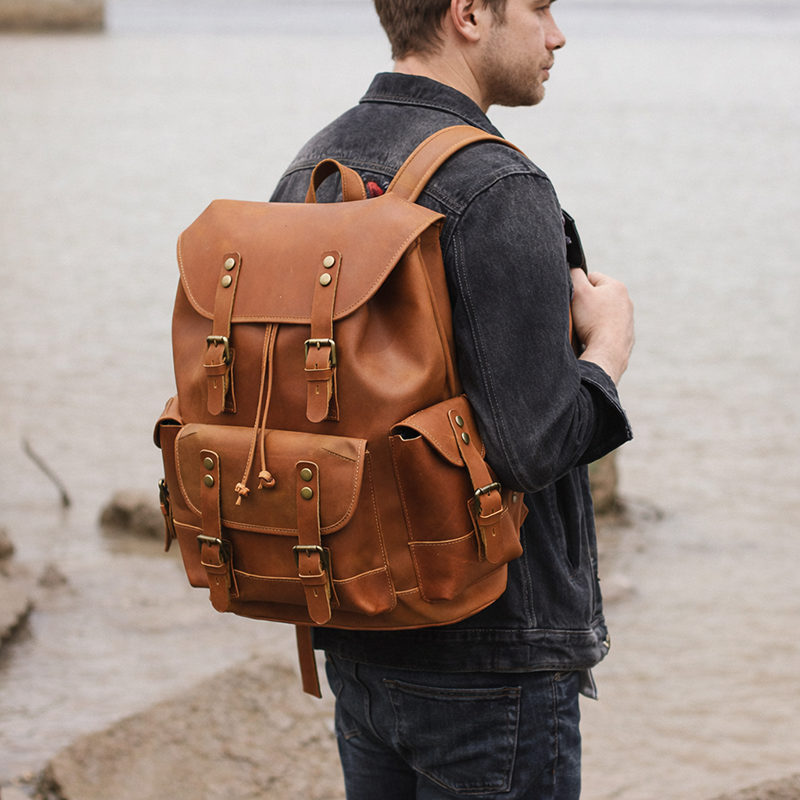
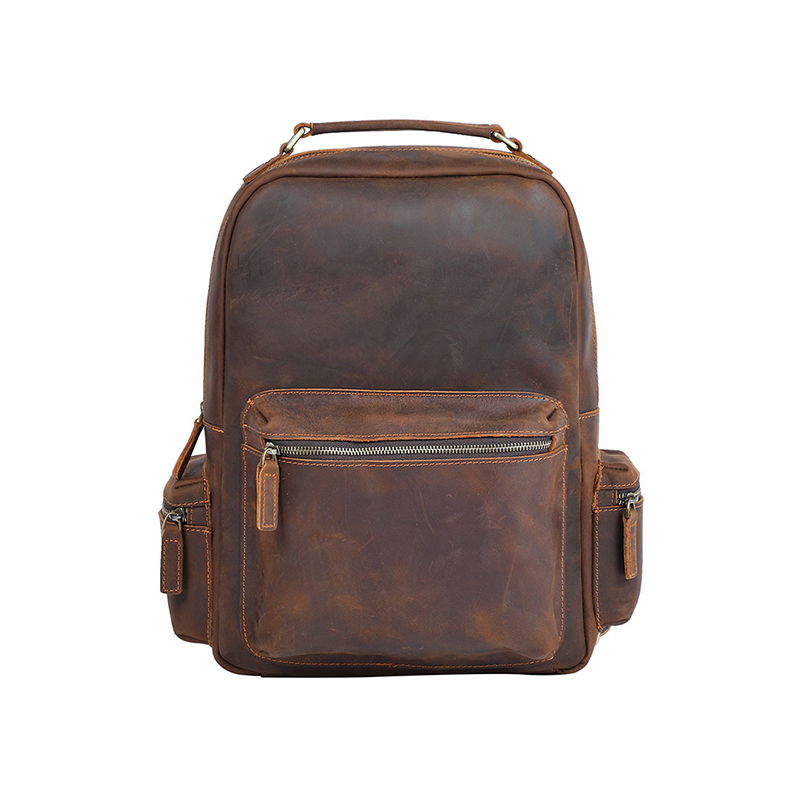
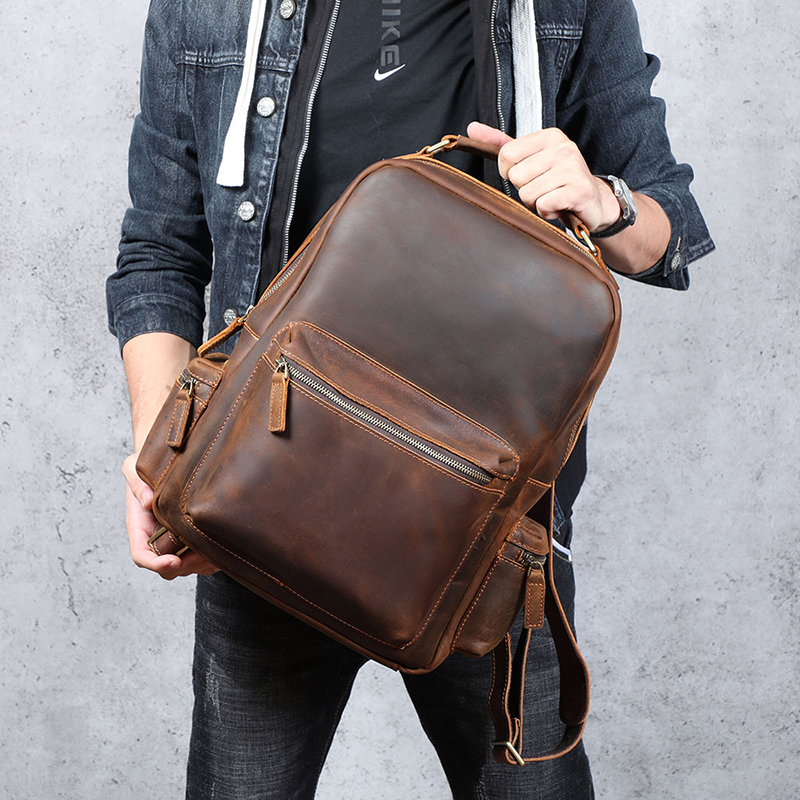
KKICO's 2026 full-grain vintage collection — spanning backpacks, travel accessories, and everyday carry pieces — is built around this philosophy. Each piece is designed to be chosen once and carried for decades, developing a patina that belongs to you alone.
Explore the collection and find the piece that will become yours.