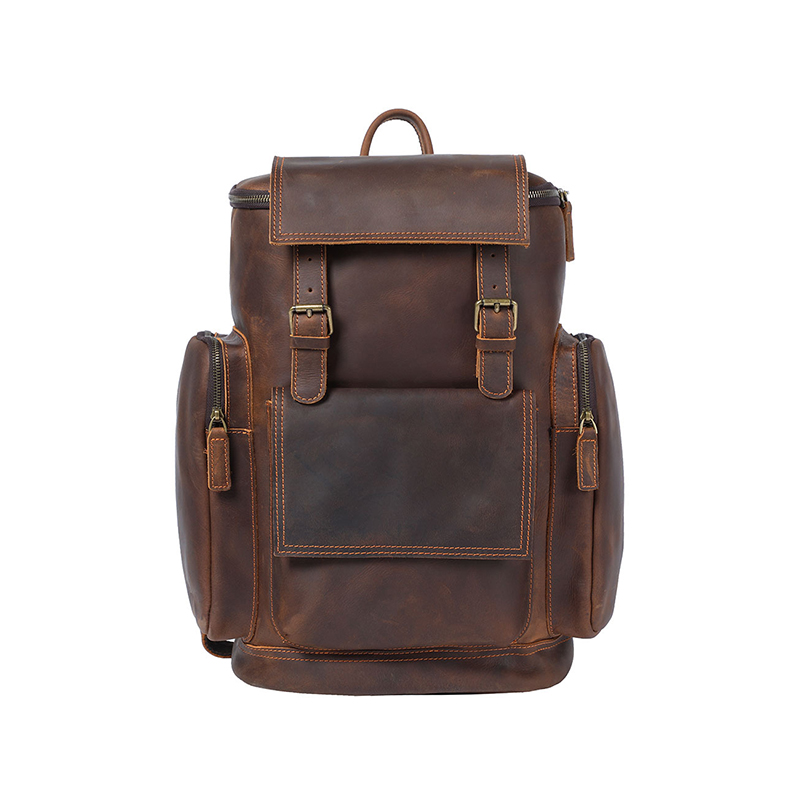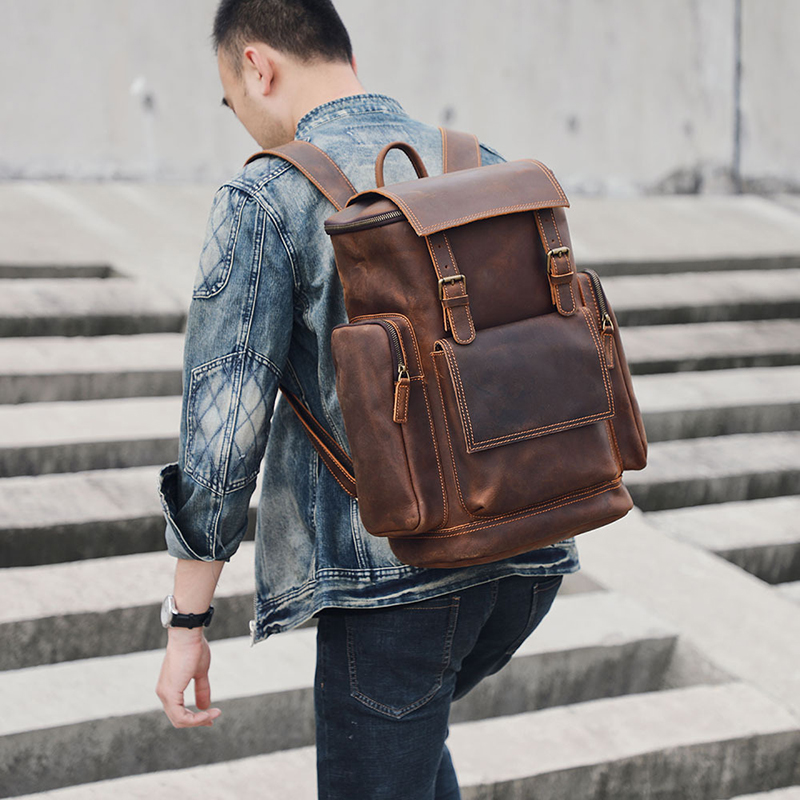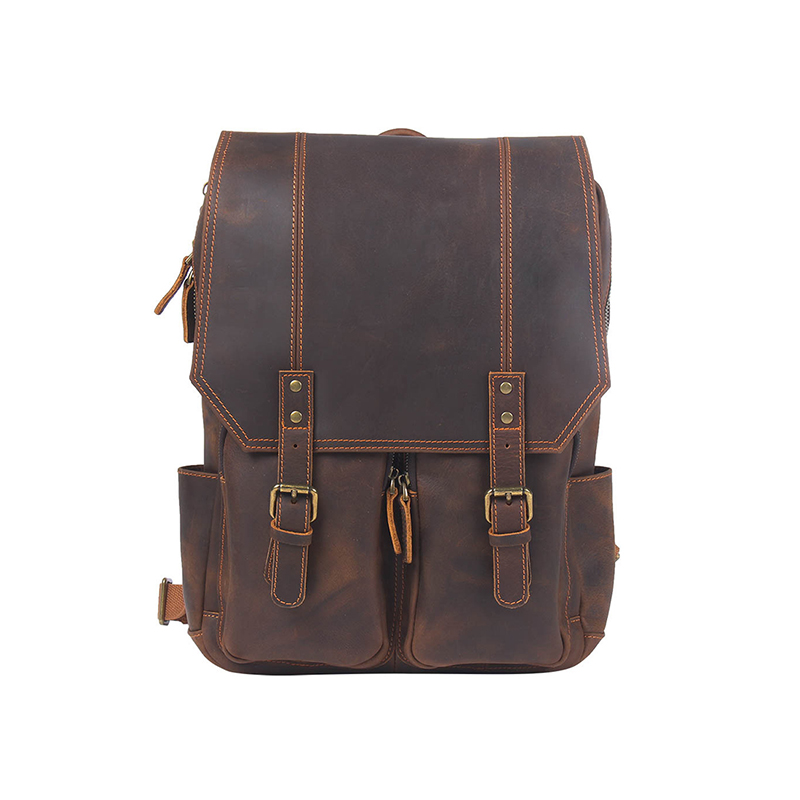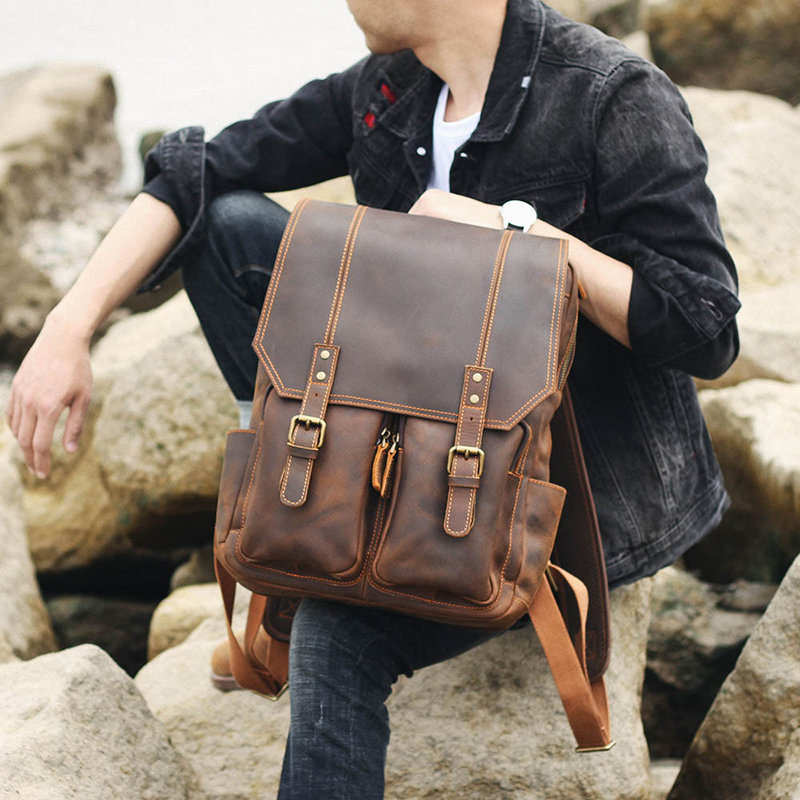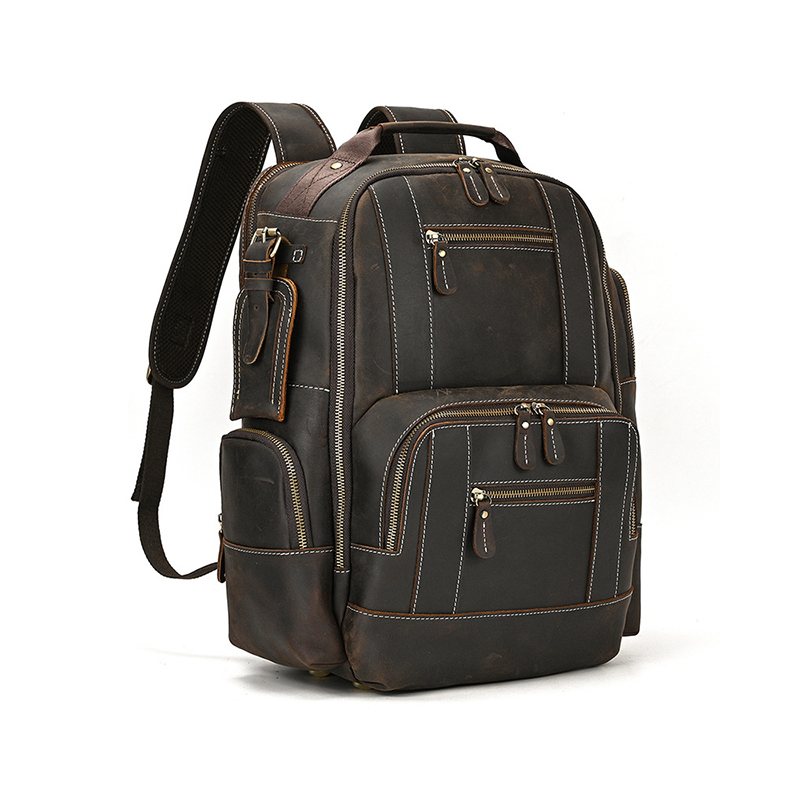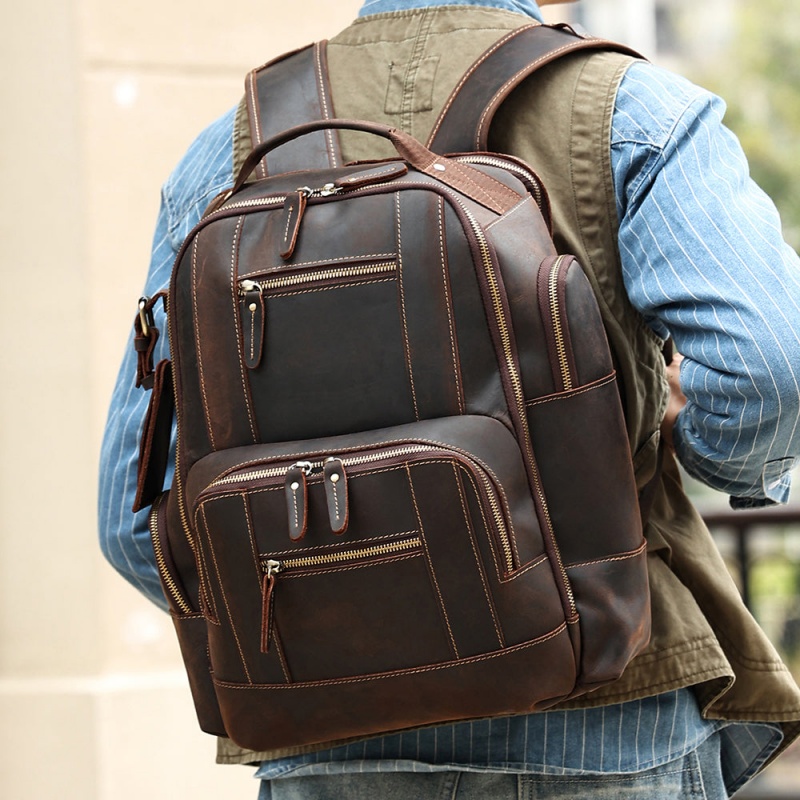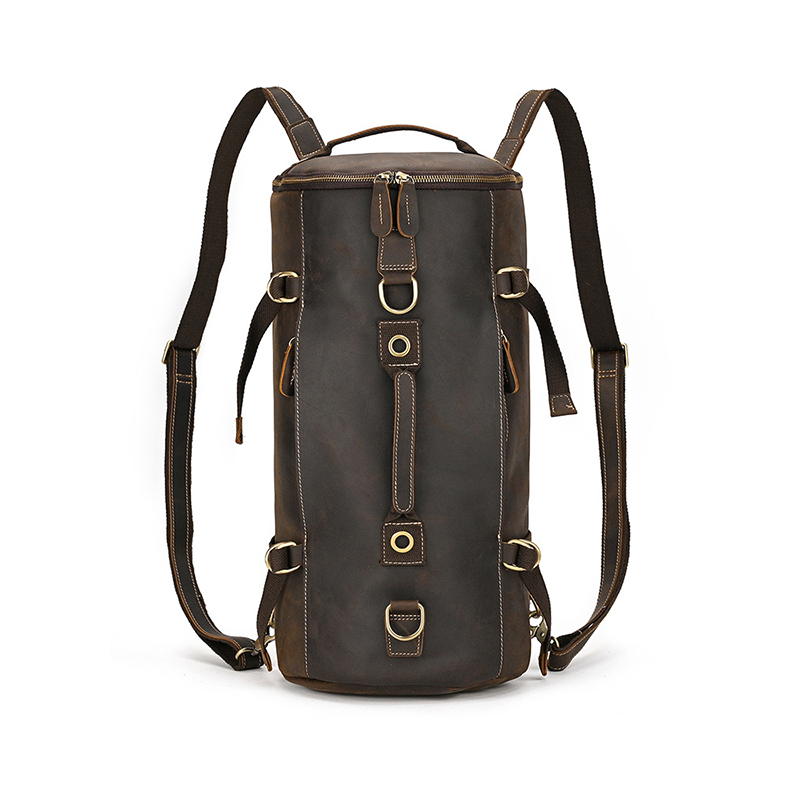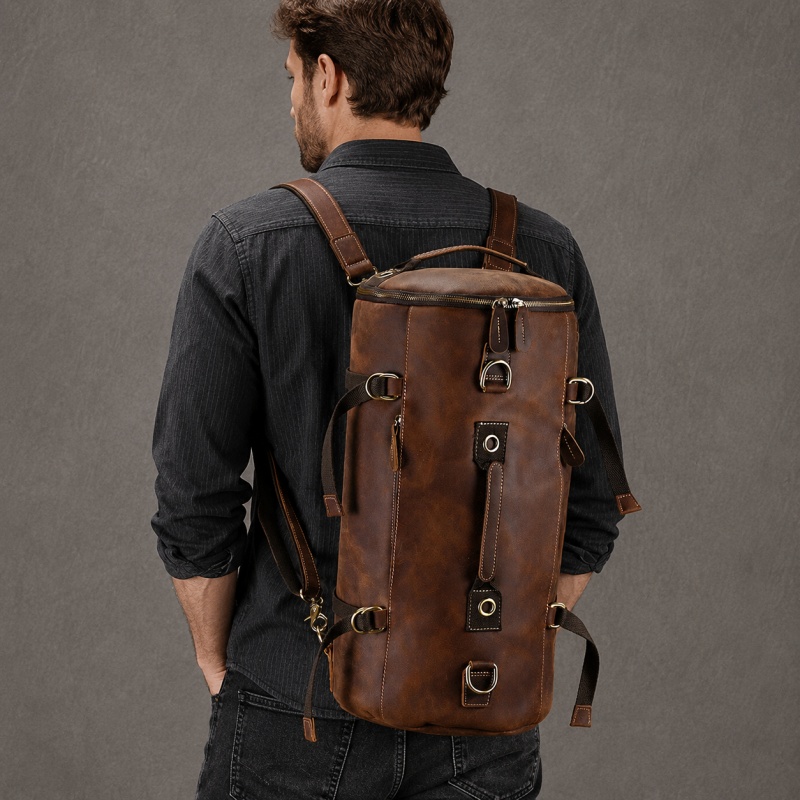
Many people see the words "genuine leather" on a product tag and assume they're looking at a premium material.
That seems logical. After all, if it's genuine, it must be good. "Genuine" is a word we associate with authenticity — a genuine diamond, a genuine signature, the genuine article.
The reality is a little more complicated.
In the leather industry, "genuine" doesn't mean what most shoppers think it means. It's not a quality rating. It's barely even a description. So what does it actually tell you — and why does a phrase that sounds so reassuring end up causing so much confusion?
A Quick Answer: What Does Genuine Leather Mean?
At its most basic, leather is the result of tanning animal hide or skin into a durable, flexible material — a process humans have been refining for thousands of years to turn something that would otherwise decay into something that lasts. That's the foundation everything else builds on.
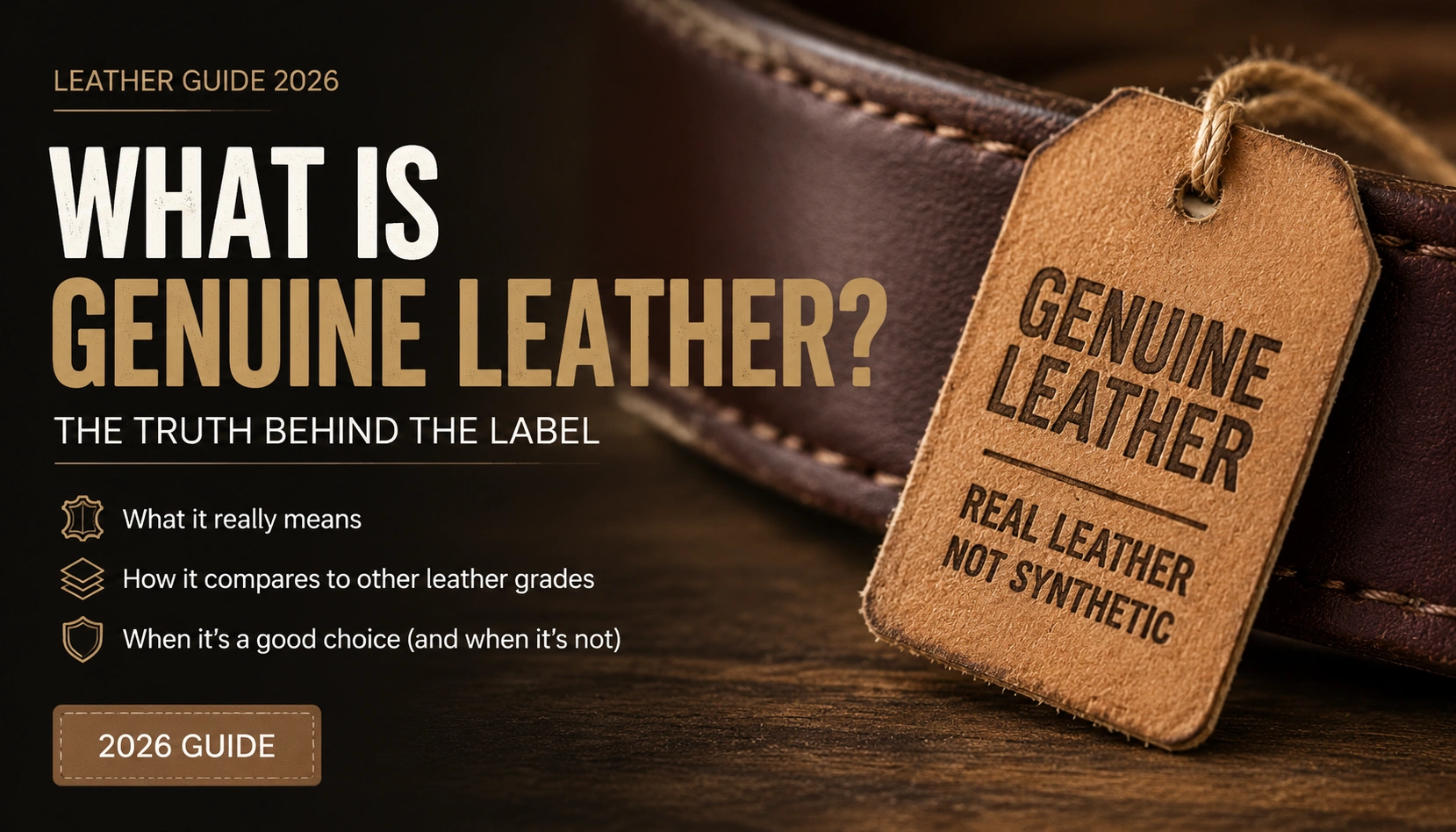
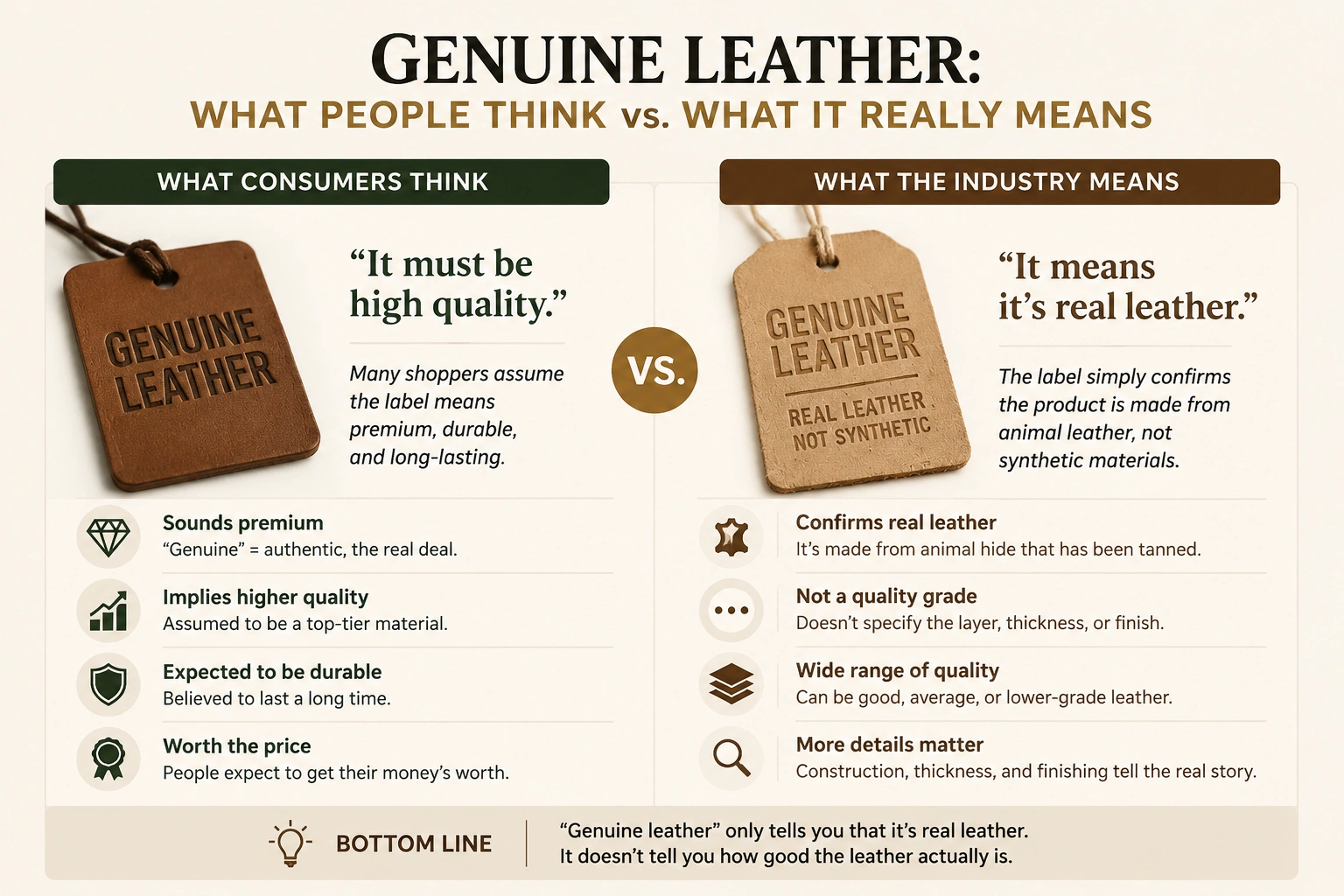
"Genuine leather" simply means the product is made from real leather, as opposed to a synthetic or fabric-based alternative. That's it. That's the whole claim.
It doesn't tell you which layer of the hide was used. It doesn't tell you how thick the material is. It doesn't tell you how it was finished, treated, or constructed. It's a statement about origin, not about grade.
Source: general definition of leather, Wikipedia – "Leather."
Why the Label Confuses So Many People
Here's where things go a bit sideways.
"Genuine" is doing a lot of emotional work in everyday English. We use it to mean authentic, sincere, the real deal — the opposite of fake. So when it shows up on a leather tag, most people's brains quietly translate it as "the good stuff."
Manufacturers, for their part, aren't lying when they use the term. Genuine leather is genuinely leather. The technical claim is accurate. But there's a meaningful gap between what the label legally needs to communicate and what consumers think it's communicating — and that gap is where a lot of disappointment lives.
It's a bit like the word "natural" on food packaging. Technically true, often used correctly, and yet consistently interpreted by shoppers as meaning something closer to "healthy" or "premium" than it actually does. Same dynamic here, different industry.
The result is that "genuine leather" has become one of those phrases that sounds like an upgrade but is, more accurately, just a floor. It tells you the material cleared a fairly low bar — it's real leather, not vinyl — without telling you anything about how high above that bar the specific product actually sits.
Is Genuine Leather Real Leather?
Yes.
This part isn't ambiguous, and it's worth stating clearly because some of the online discussion around this topic drifts into "genuine leather is basically fake" territory, which isn't accurate either.
Genuine leather contains actual tanned animal hide. It is not pleather, not PU, not a printed fabric trying to look like leather. In that narrow sense, the label is telling the truth.
What genuine leather is not is a guarantee of high grade. Real leather ≠ highest grade leather. Those are two separate claims, and the label only makes one of them. A product can be 100% accurately described as "genuine leather" while still being made from a thinner, less durable cut of hide than a product described — less commonly, and usually more deliberately — as "full grain" or "top grain."
So: real, yes. Premium, not necessarily. Both things can be true at once, and usually are.
Where Does Genuine Leather Fit Among Leather Grades?
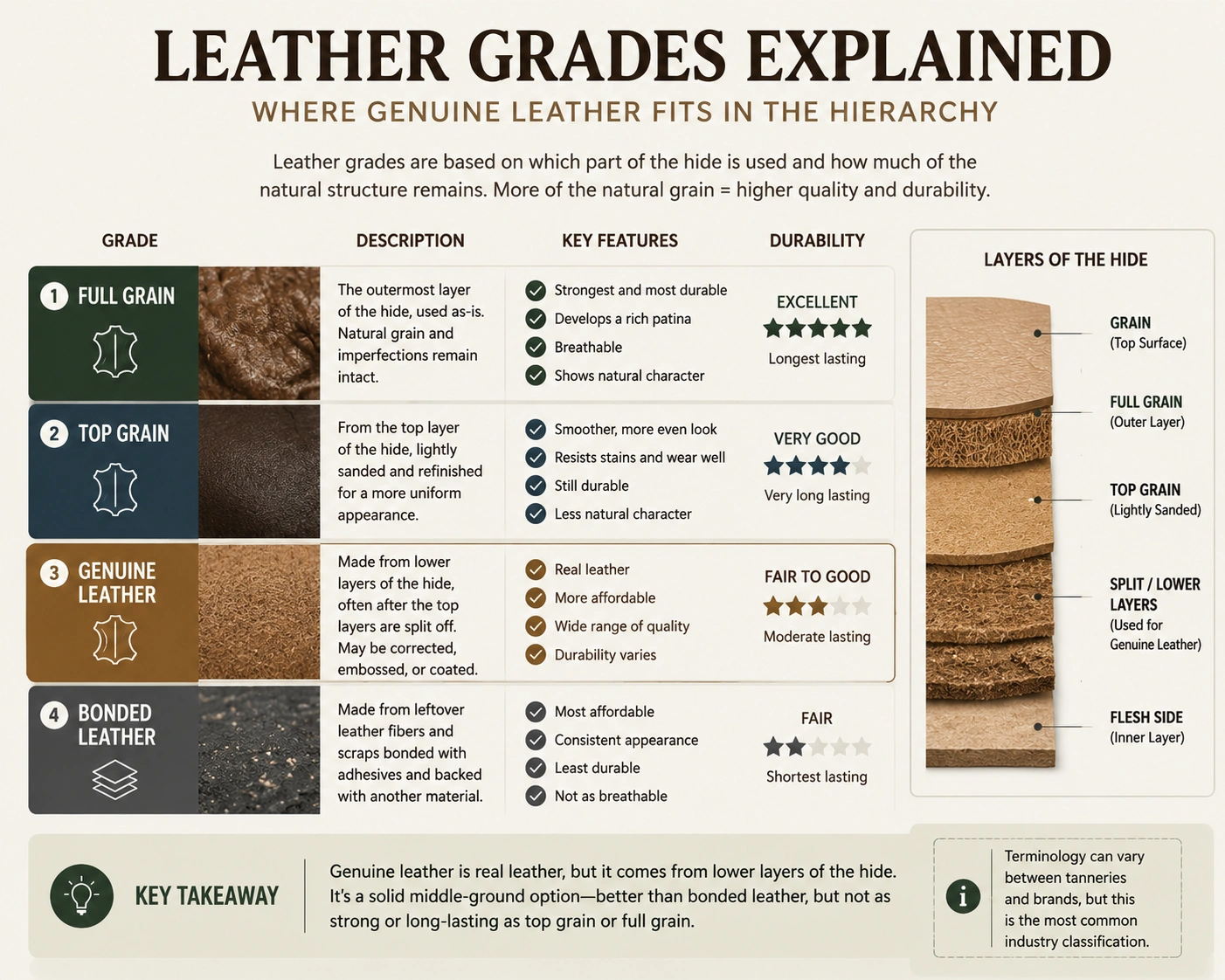
Leather doesn't come with an official, government-regulated grading system the way some materials do — there's no universal stamp that says "this is a 4 out of 5." But the leather goods industry does use a fairly consistent informal hierarchy, and understanding where genuine leather sits in it explains a lot.
Roughly, from highest to lowest in terms of how much of the hide's original structure remains intact:
Full grain leather — the outermost layer of the hide, used as-is. Natural grain, natural texture, nothing sanded or corrected.
Top grain leather — also from the upper hide, but lightly sanded and refinished for a more uniform look.
If you're comparing the two highest commonly discussed leather grades, see our full grain vs top grain leather guide.
Genuine leather — typically made from lower layers of the hide (often after the top layers have been split off for other products), sometimes corrected, embossed, or coated to create a more consistent surface.
Bonded leather — leftover leather fibers and scraps bonded together with adhesive and backed with another material. Technically contains leather; structurally behaves more like a composite.
This is a common industry classification rather than a formal standard, and there's some inconsistency in how individual brands apply these terms. But the general pattern holds: genuine leather sits in the middle of this stack. It's a real step up from bonded leather, and a real step down from full or top grain — which is exactly why the label alone doesn't tell you much. It's the broadest, least specific tier in the whole hierarchy.
How Durable Is Genuine Leather?
This is the question that actually matters to most people, and the honest answer is: it depends — more than you'd expect.
Genuine leather durability isn't a single number, because "genuine leather" isn't a single material. It's a category that includes everything from reasonably solid leather with a slightly less premium grain, to thin, heavily corrected material that's mostly held together by its finish coat.
Thickness plays a huge role. A genuine leather product cut from a thicker section of hide will hold up under daily flexing far better than one cut thin to save material.
Construction matters just as much. Is it a single piece, or multiple thinner pieces laminated together? Lamination introduces a failure point that solid construction doesn't have.
Usage matters — obviously, but it's worth saying. A genuine leather wallet that lives in a pocket experiences a completely different stress profile than a genuine leather belt that flexes at the buckle every single day.
And finish matters too. A heavy corrective coating can make thinner, lower-grade material look more substantial than it actually is — right up until that coating starts to wear, crack, or peel, at which point the underlying material is suddenly very visible.
Put it all together and you get a genuinely strange situation: two genuine leather belts can perform very differently. Not "slightly" differently — meaningfully. One might develop a nice patina and hold up for years. The other might start cracking at the buckle within a season. Both are accurately labeled. Neither label is lying. They're just describing two materials that happen to share a category name.
Genuine Leather vs Full Grain Leather
This comparison gets asked about constantly, and it's really the crux of the whole topic.
The short version: full grain leather uses the outermost, densest layer of the hide, completely unaltered. Genuine leather typically uses a lower layer — often after the more valuable upper layers have already been removed for other products — and may be corrected or finished to compensate for a less refined natural surface.
That difference in starting material translates pretty directly into differences in durability, how the surface ages, and how the product responds to years of handling. Full grain tends to develop a deep, individual patina. Genuine leather, especially when heavily finished, tends to age more like a coated surface — wearing rather than transforming.
None of this means genuine leather is "bad." It means it's a different starting point, and the gap between the two becomes more or less important depending on what you're using the leather for. For a deep, side-by-side breakdown of exactly how these two compare — including how they perform specifically in belts — see our full comparison: Full Grain Leather Belt vs Genuine Leather Belt.
Genuine Leather vs Synthetic Leather
This is a different comparison entirely, and it's worth separating clearly from the full grain conversation — because here, "genuine" actually is doing real work.
Durability. Genuine leather, even on the lower end of its range, tends to hold up better over years of use than most synthetic leathers. Synthetics can look impressive when new but often degrade in a particular way — cracking, peeling, or flaking as the coating ages — and that process tends to be both faster and more visually obvious than how real leather wears.
Appearance. New synthetic leather can look extremely clean and consistent — sometimes more so than genuine leather, ironically, because it's manufactured to a uniform spec rather than coming from a variable natural material. The trade-off shows up over time, not on day one.
Aging. This is the biggest divide. Genuine leather, being an organic material, ages — it develops some character, even if less dramatically than full grain. Synthetic leather doesn't really age in the same sense; it deteriorates. There's a meaningful difference between a material that changes and a material that breaks down.
Cost. Synthetic leather is generally less expensive to produce, which is reflected in price. Genuine leather sits at a mid-range price point — more than synthetic, less than full or top grain.
For someone deciding between a genuine leather item and a synthetic one at a similar price point, genuine leather is very often the more durable long-term choice. The label problem isn't that "genuine" oversells leather compared to synthetics — it's that it undersells the range of quality that exists within real leather itself.
When Is Genuine Leather a Good Choice?
It would be dishonest to frame all of this as "avoid genuine leather." That's not the point, and it's not true.
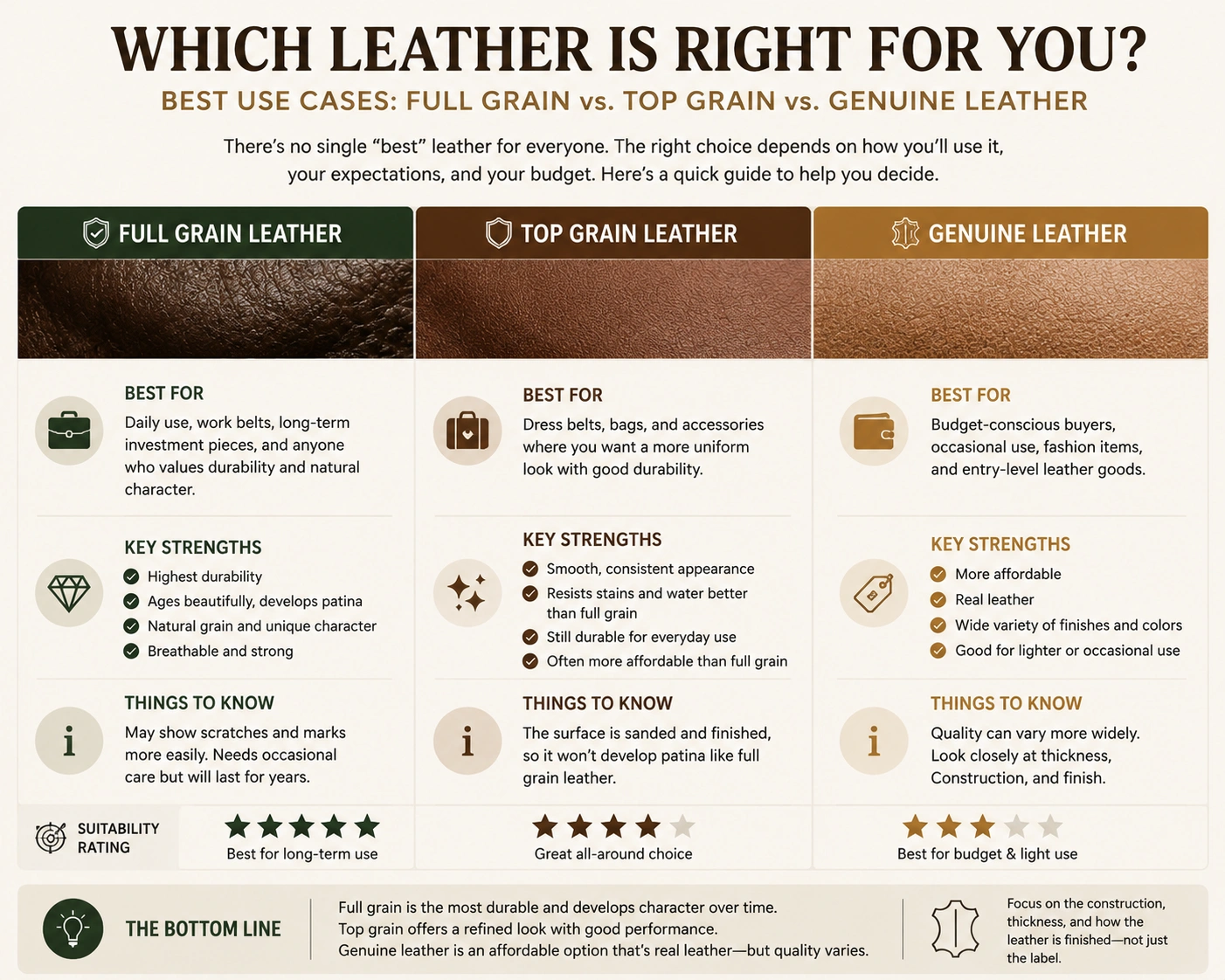
Genuine leather makes a lot of sense for budget-conscious buyers who want the feel, smell, and aging properties of real leather without paying full grain prices. It's a legitimate middle ground, not a consolation prize.
It's also a reasonable choice for occasional-use items — things that don't get put through daily mechanical stress. A genuine leather portfolio that comes out for meetings a few times a month, or a bag that's used for the occasional weekend trip, simply doesn't accumulate wear at the rate a daily-carry item does.
Fashion-forward items where the design, color, or silhouette is the main draw — and where the item is likely to be replaced as styles change anyway — are another reasonable fit. If something has a shorter expected lifespan by design, paying a premium for full grain longevity doesn't necessarily make sense.
And entry-level leather goods in general — a first leather wallet, a first leather bag for someone testing whether they even like carrying leather — genuine leather offers a real introduction to the material at an accessible price.
In all of these cases, "genuine leather" isn't a red flag. It's just a category that fits the use case.
When Might You Want Something Better?
The picture shifts for a specific category of products: things that get used every single day, under real mechanical stress, for years.
Daily belts are the clearest example. A belt that's worn five or six days a week flexes at the buckle every time it goes on and comes off, and the most-used hole experiences repeated, concentrated pressure from the buckle pin. That's not occasional stress — it's daily, cumulative, and it adds up fast.
Work belts push this further. Add tool weight, more frequent movement, and harsher environments, and the demands on the material increase accordingly.
Anything intended for long-term use — an item you're buying with the expectation of keeping for a decade, not a couple of years — benefits from starting with a denser, more durable material, simply because the gap between grades compounds over that kind of timeline.
And heavy daily wear in general — items that get gripped, flexed, rained on, sat on, thrown in bags — tend to expose the difference between genuine leather and full grain leather faster than gentler use would.
In these situations, full grain leather's denser fiber structure isn't a luxury upgrade so much as a better match for the job. The two materials aren't "bad vs. good" — they're suited to different intensities of use, and daily, high-stress items are where that distinction stops being theoretical.
If you're shopping for a belt specifically and want a fuller picture of what separates a belt that lasts from one that doesn't — beyond just the leather grade — our guide on what makes a good leather belt covers thickness, construction, and hardware in detail. And if you're curious what realistic lifespans actually look like across different leather grades, how long do leather belts last digs into that directly.
The Biggest Myth About Genuine Leather
Here's the part that's easy to miss, and it's the most important thing in this entire article.
The biggest myth about genuine leather isn't that it's fake.
It's that the label tells you everything you need to know.
It doesn't. "Genuine leather" answers exactly one question — is this real leather or not? — and stops there. It says nothing about thickness, nothing about which layer of the hide, nothing about construction, nothing about how it'll look or feel five years from now.
People don't get disappointed by genuine leather because genuine leather is inherently disappointing. They get disappointed because they read a label that sounds like a quality claim, and it isn't one. The gap between expectation and reality is the actual problem — not the material itself.
Final Thoughts
The words "genuine leather" answer one question: is it real leather?
They don't answer a more important question: how good is the leather?
Those two questions get conflated constantly, and that conflation is where most of the confusion — and a fair amount of the disappointment — comes from. Once you separate them, genuine leather stops being either a red flag or a guarantee. It becomes what it actually is: a real material, with a wide range of quality within it, that happens to share a category name across that entire range.
If you're shopping for leather goods, the label is a starting point for questions, not an answer to them. What layer of the hide. How thick. Single piece or laminated. How it's likely to age. Those are the questions that actually tell you what you're getting — and they're the ones the words "genuine leather" were never designed to answer in the first place.
Frequently Asked Questions
Is genuine leather real leather?
Yes. Genuine leather is made from actual tanned animal hide, not a synthetic substitute. The term confirms the material's origin — it is leather, not vinyl or a printed fabric — but it doesn't indicate a specific quality grade beyond that.
Is genuine leather good quality?
It depends on the specific product. Genuine leather covers a wide range — from reasonably durable material to thin, heavily corrected leather that relies on a finish coat for much of its appearance. Two products both labeled genuine leather can perform very differently, depending on thickness, construction, and finish.
Is genuine leather better than synthetic leather?
In most cases, yes, particularly for durability and aging. Genuine leather, even toward the lower end of its range, tends to hold up better over time than synthetic alternatives, which often degrade through cracking or peeling. Genuine leather also develops some natural character with use, while synthetic leather tends to simply wear out.
Does genuine leather crack?
It can, and the likelihood depends heavily on thickness, construction, and finish. Thinner genuine leather, or leather with a heavy corrective coating, is more prone to cracking — especially at flex points like a belt's buckle fold — than thicker, more solidly constructed genuine leather.
How long does genuine leather last?
There's no single answer, because genuine leather isn't a single material — it's a category with significant variation in thickness and construction. A well-made genuine leather item with reasonable thickness and solid construction can last several years of regular use. A thinner, heavily finished item may show wear considerably sooner.
Is full grain leather better than genuine leather?
For durability and long-term aging, generally yes — full grain leather uses the densest, most intact layer of the hide and tends to hold up better under repeated stress while developing a deeper patina over time. That said, genuine leather remains a reasonable choice for occasional-use items, fashion pieces, or budget-conscious buyers where the gap matters less. For a detailed comparison, see Full Grain Leather Belt vs Genuine Leather Belt.