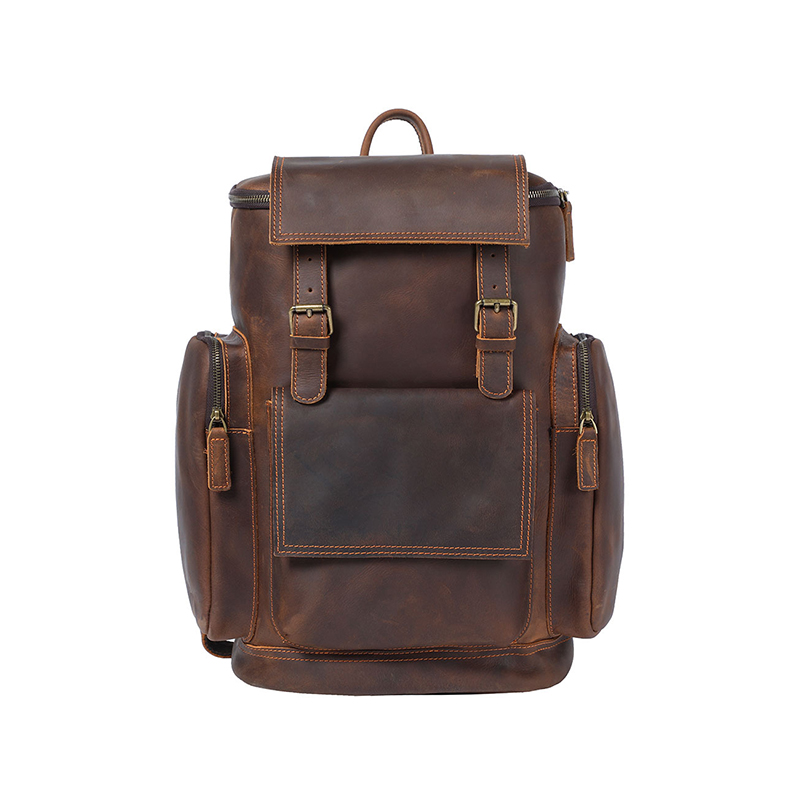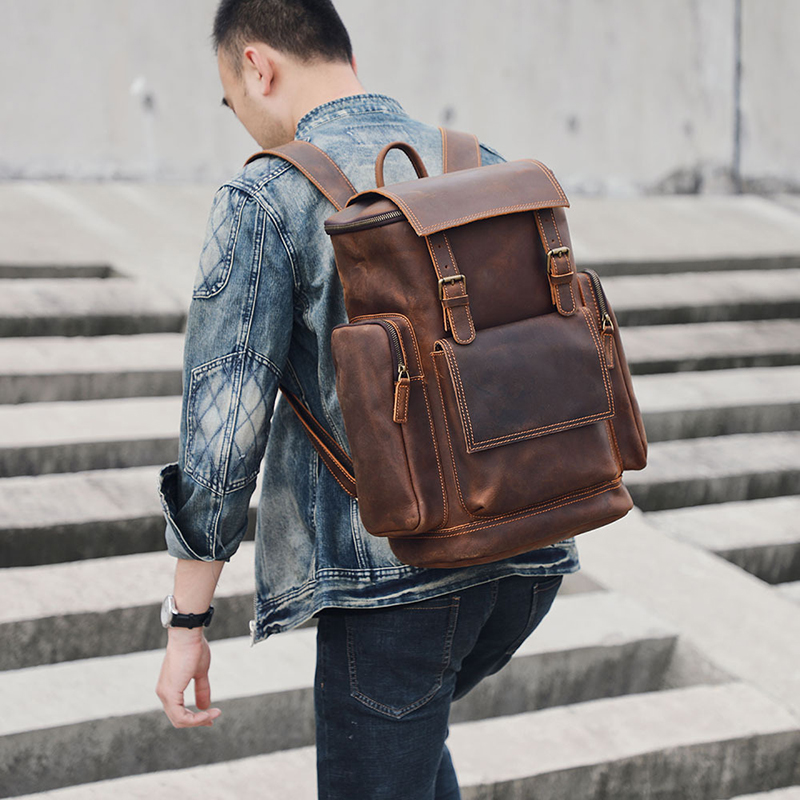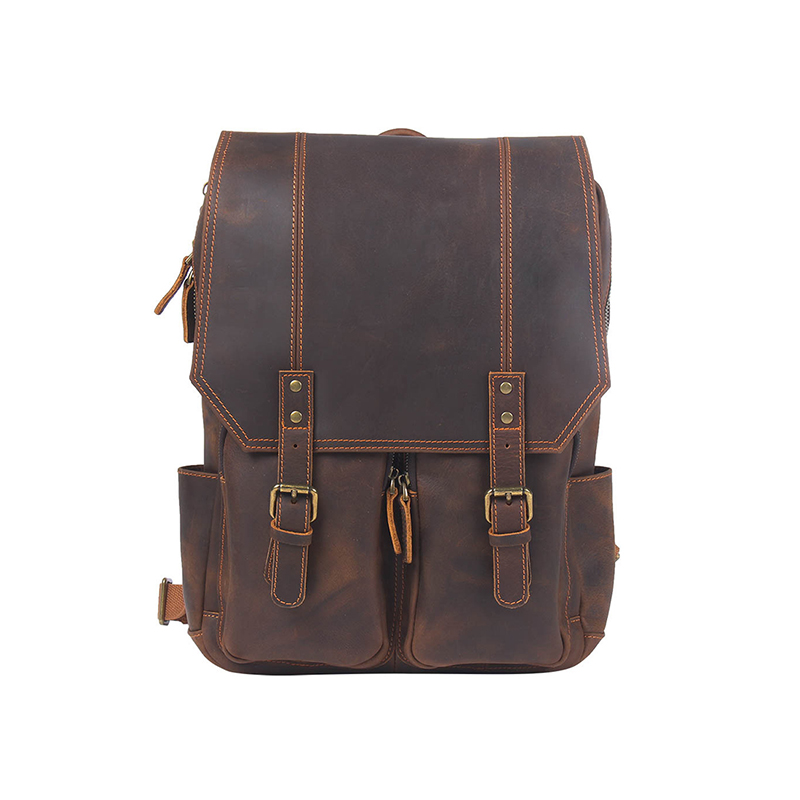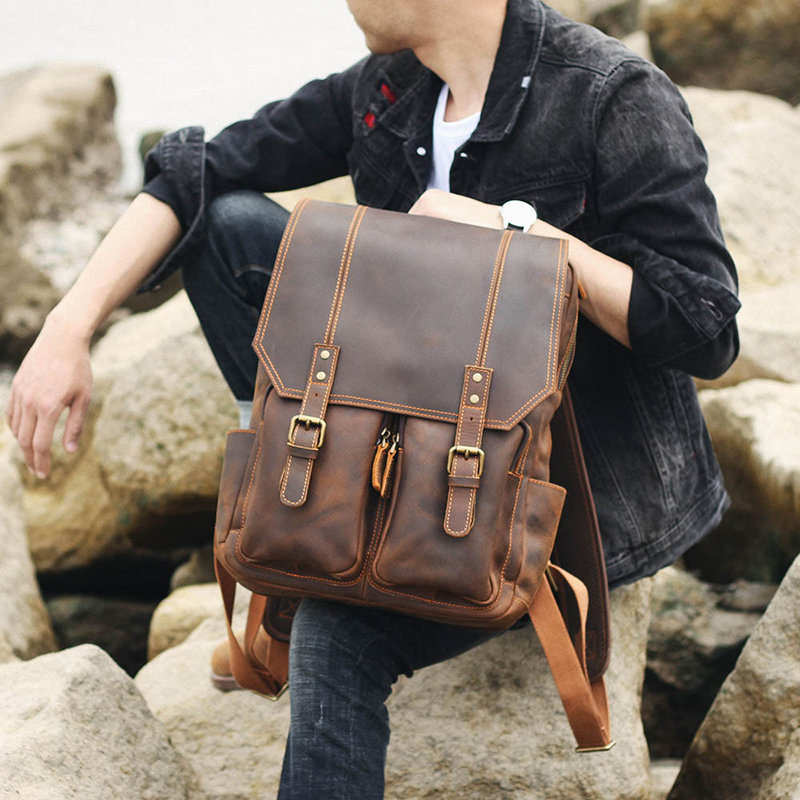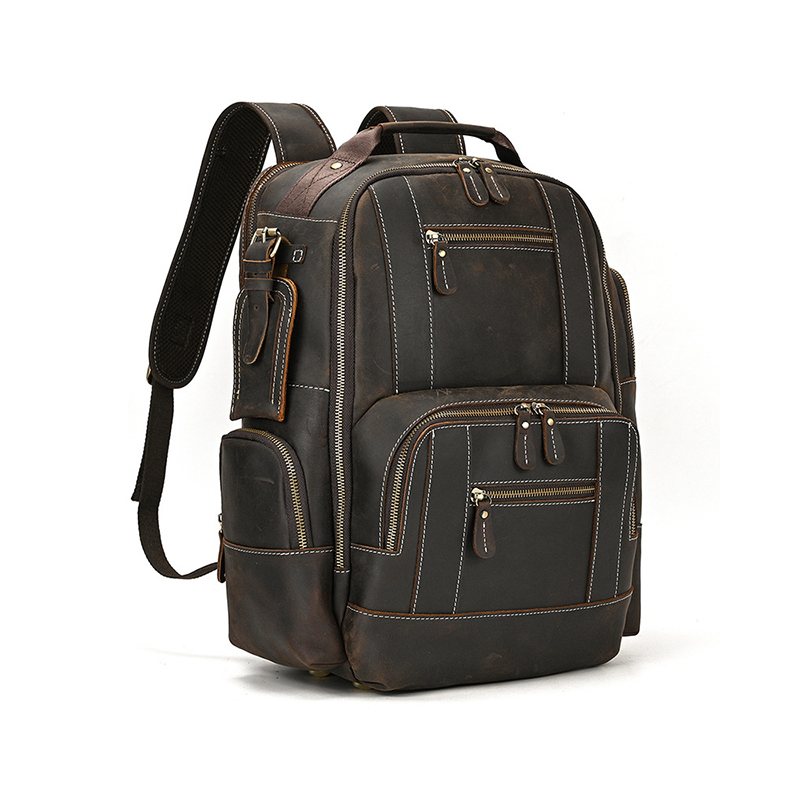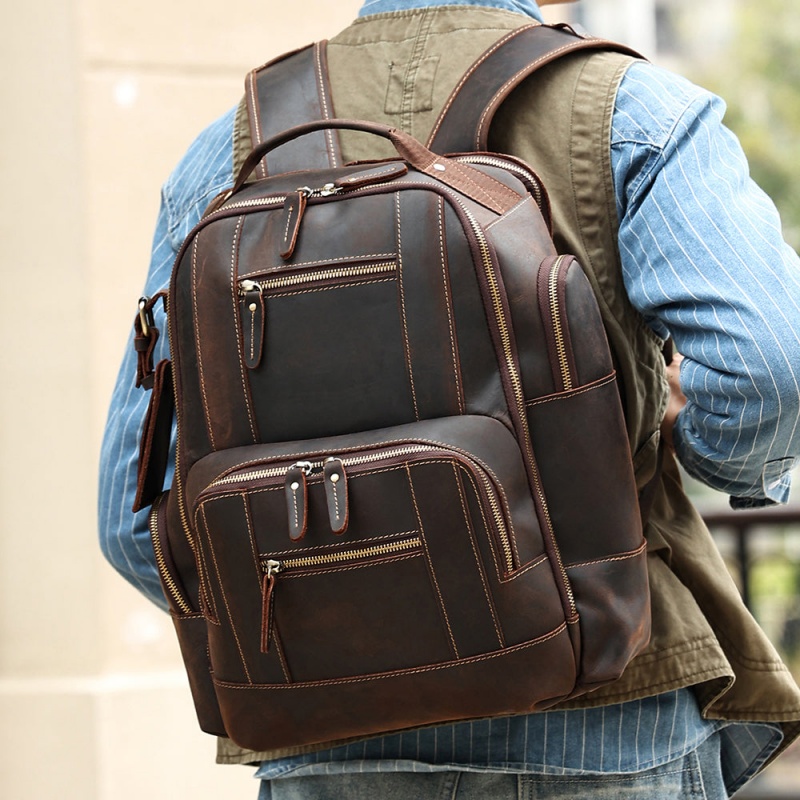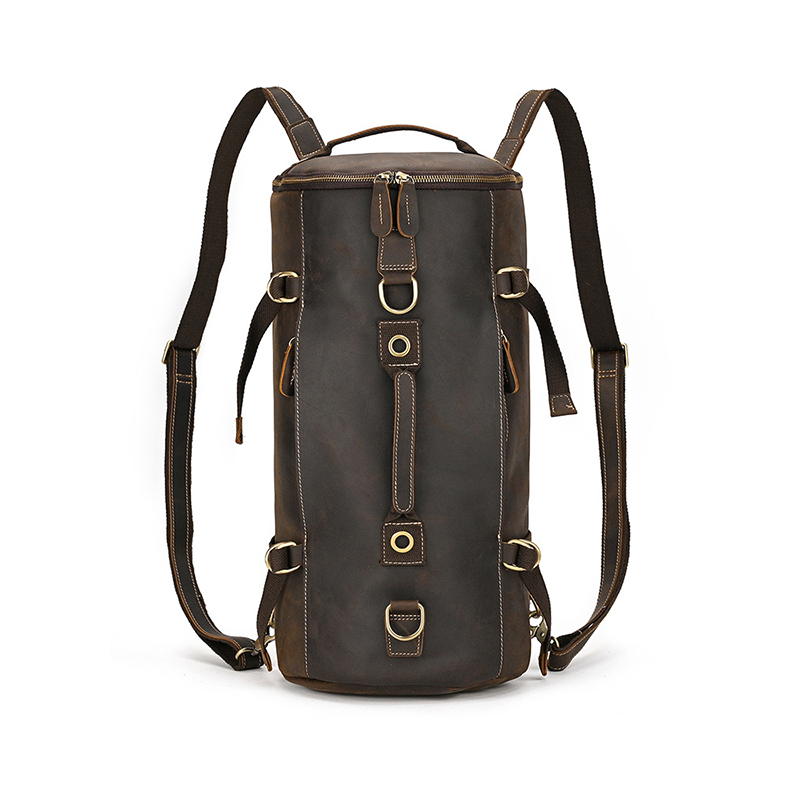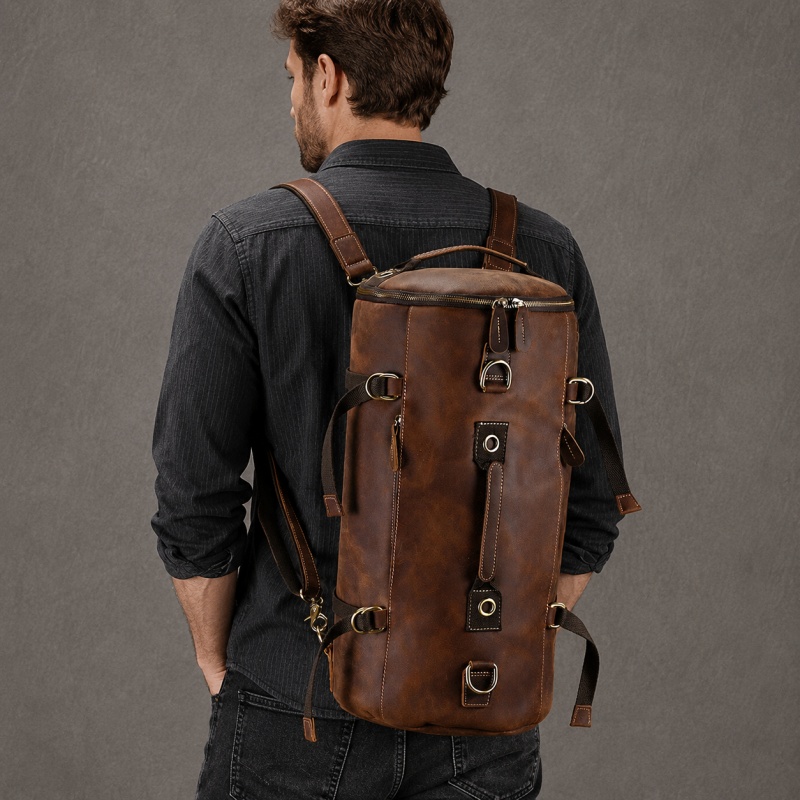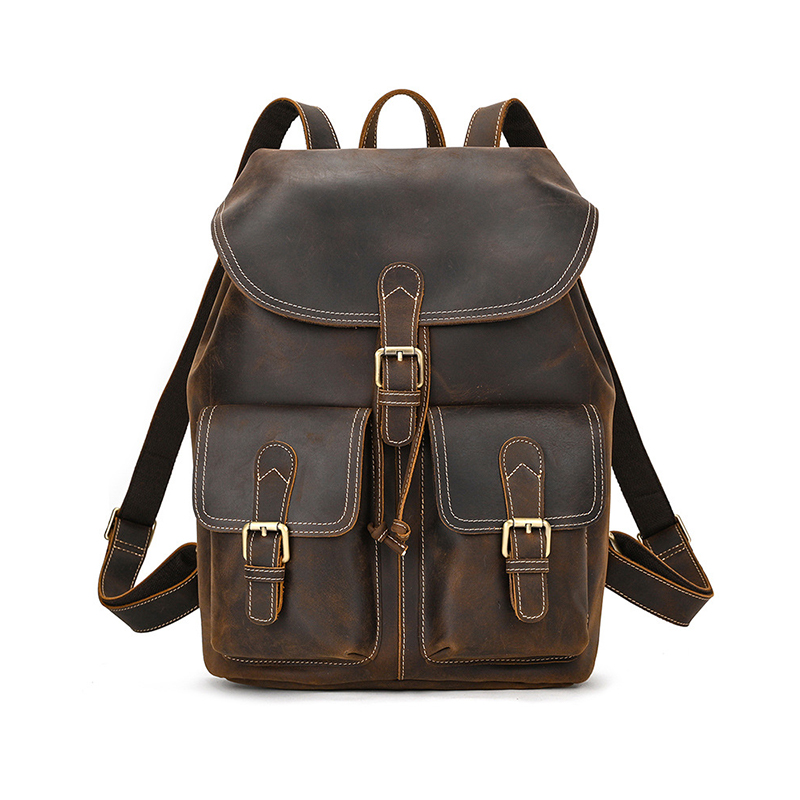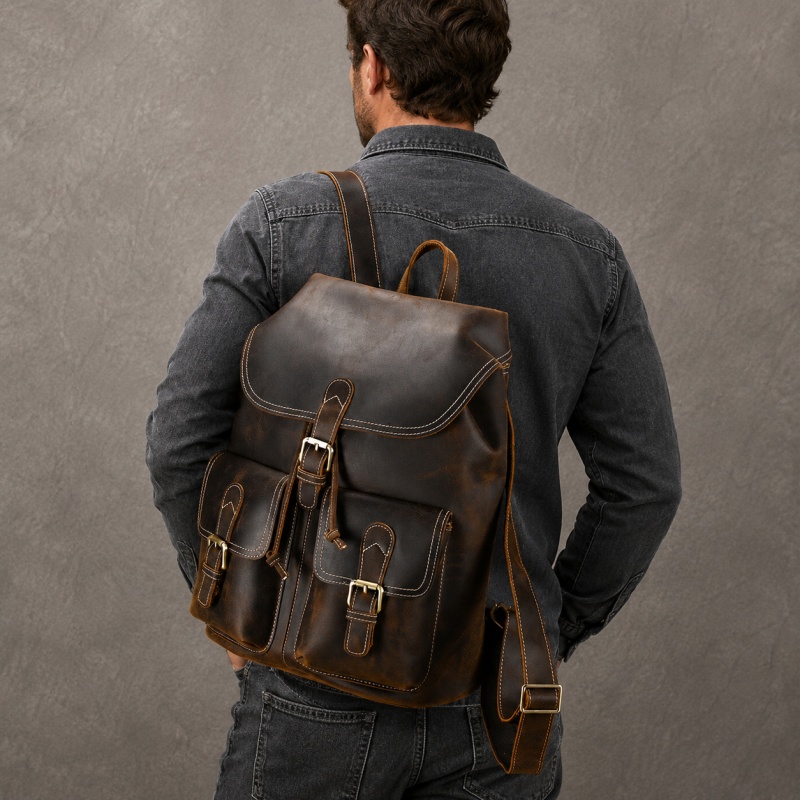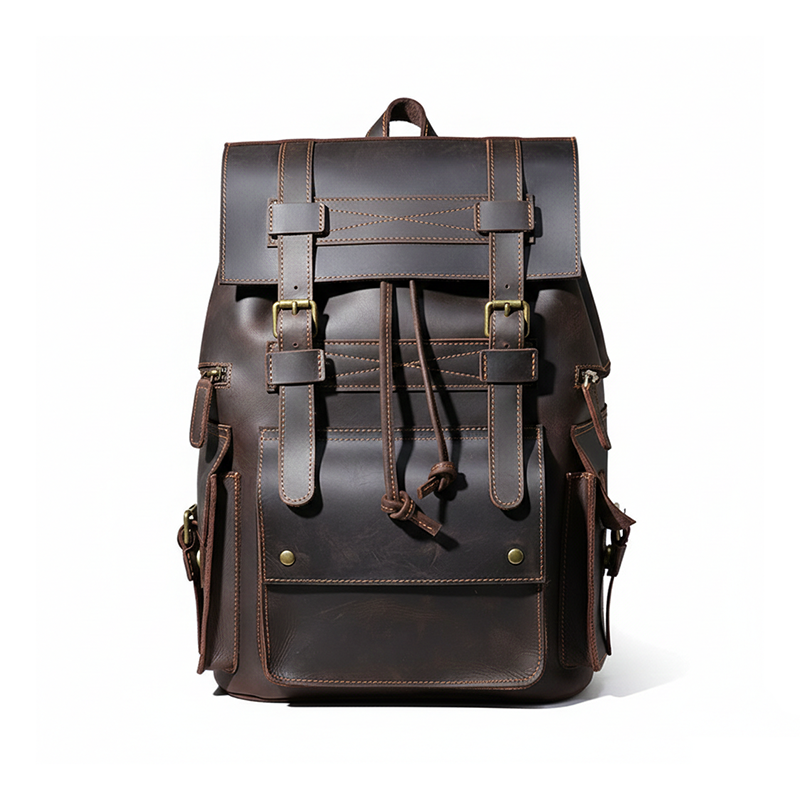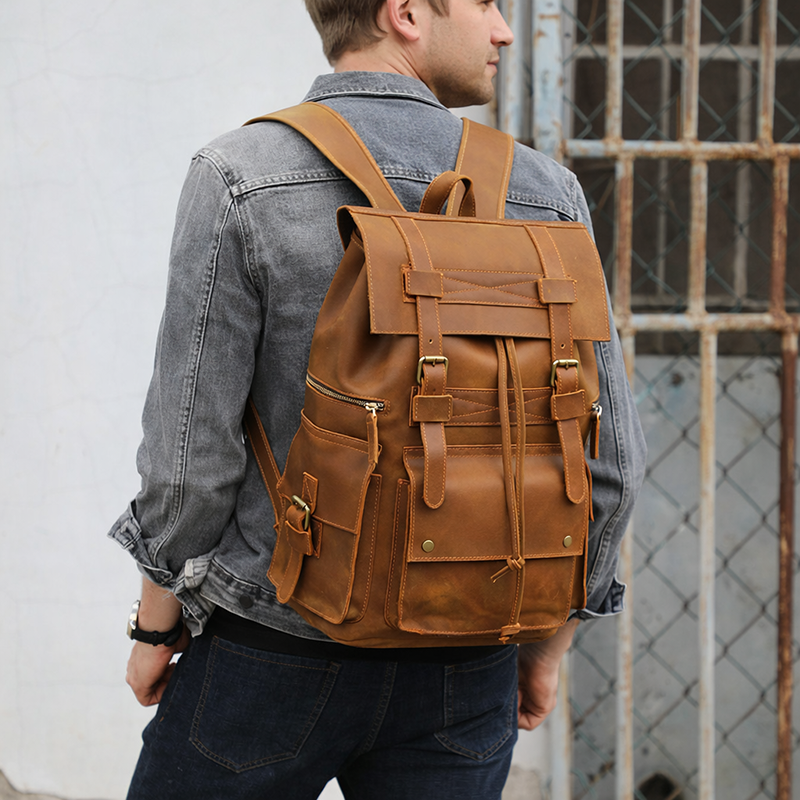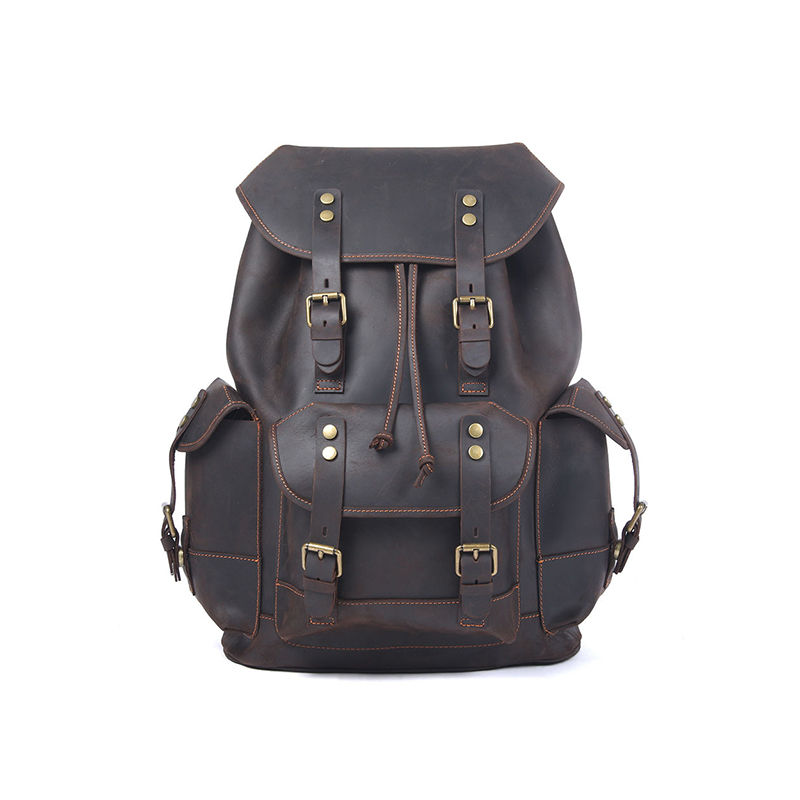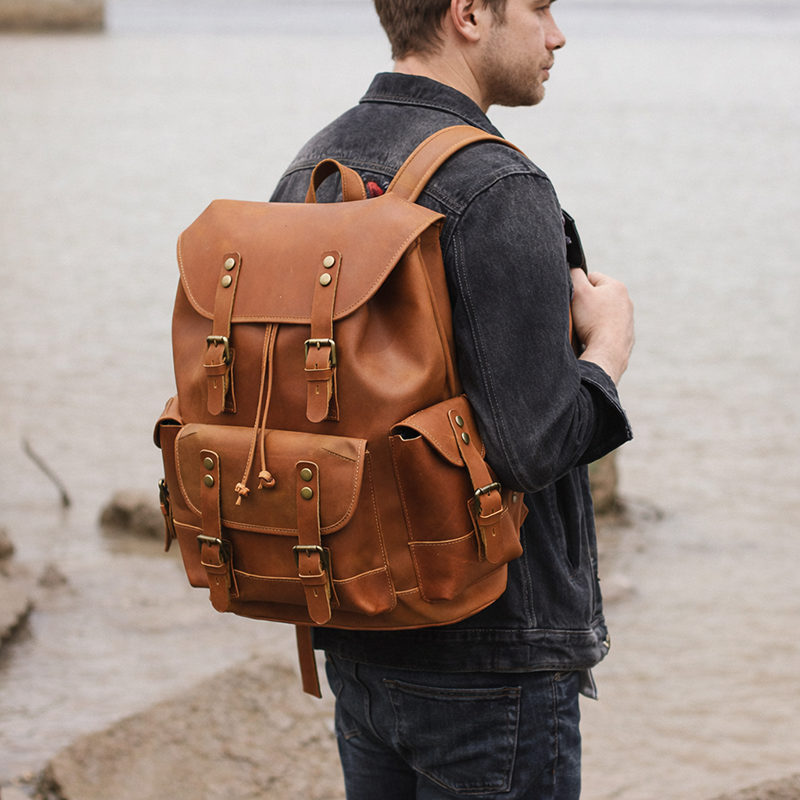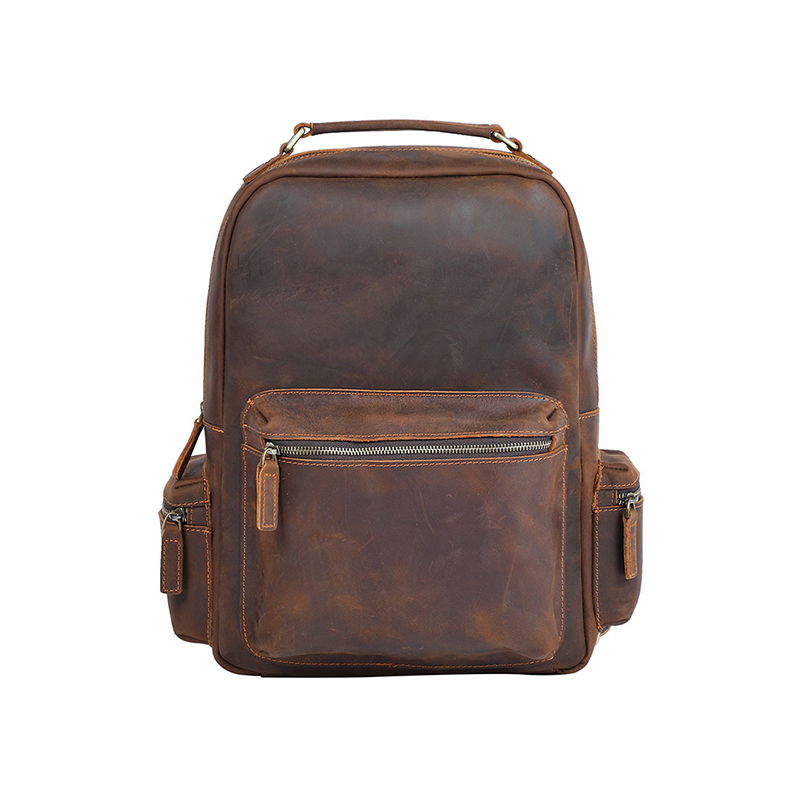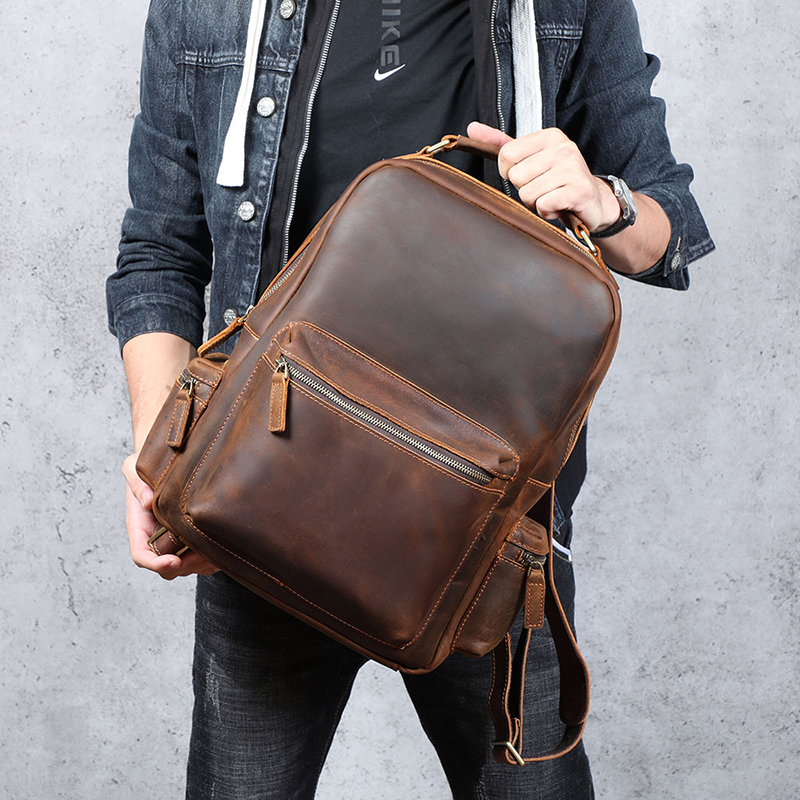

Leather products are known for their durability, timeless style, and premium feel. However, with so many synthetic materials on the market today, it can sometimes be difficult to determine whether a product is made from real leather or artificial materials.
If you're planning to buy items like a vintage leather backpack, a leather messenger bag, or a leather travel backpack, learning how to identify genuine leather will help you make a smarter purchase.
In this guide, we’ll explain the most reliable ways to tell if leather is real.
What Is Real Leather?
Real leather is made from animal hide, usually cowhide. High-quality leather products are known for their durability and natural texture.
Some of the most common types of real leather include:
-
full grain leather
-
top grain leather
-
crazy horse leather
-
vegetable tanned leather
Premium products such as a full grain leather backpack or a crazy horse leather messenger bag are made from the highest layers of the hide, which makes them extremely durable and long-lasting.
In contrast, synthetic materials like PU leather or bonded leather are made from plastic-based compounds and do not have the same durability or natural aging characteristics.
1. Check the Texture and Grain
One of the easiest ways to identify real leather is by examining the surface texture.
Real leather has natural imperfections such as:
-
small wrinkles
-
pores
-
uneven grain patterns
No two pieces of real leather look exactly the same.
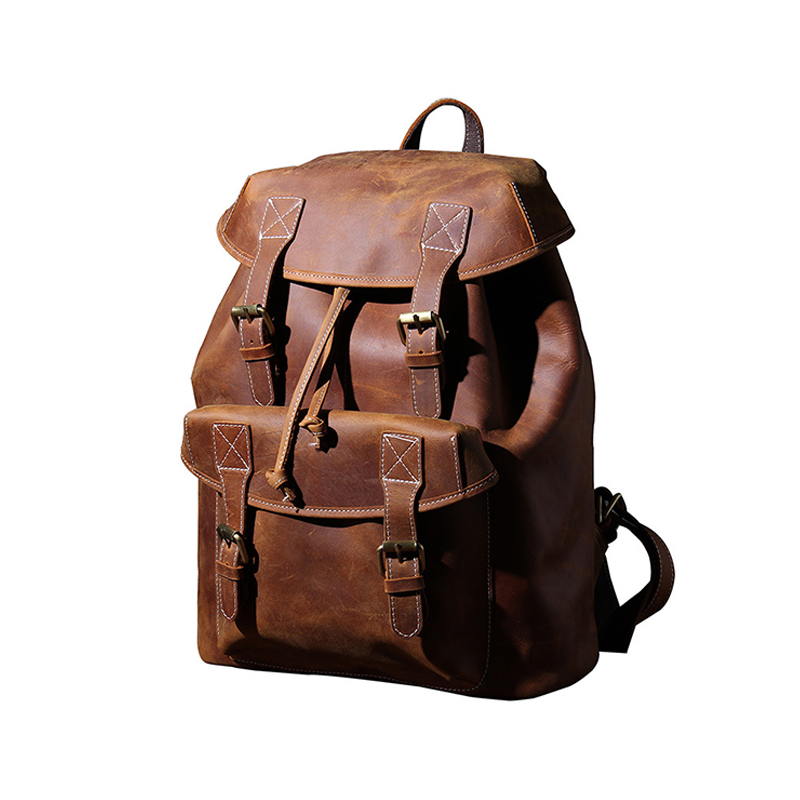
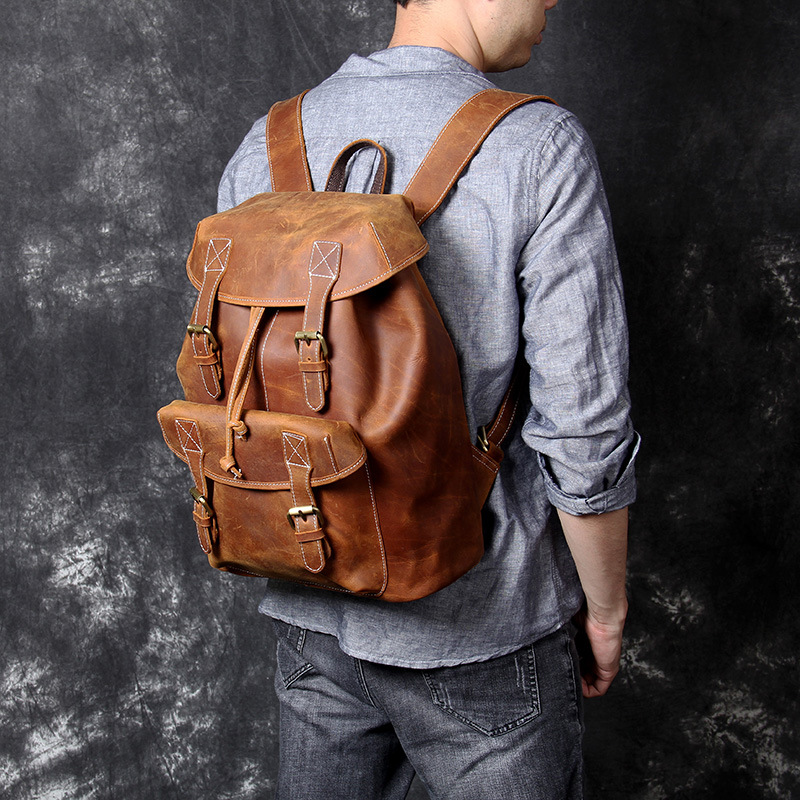
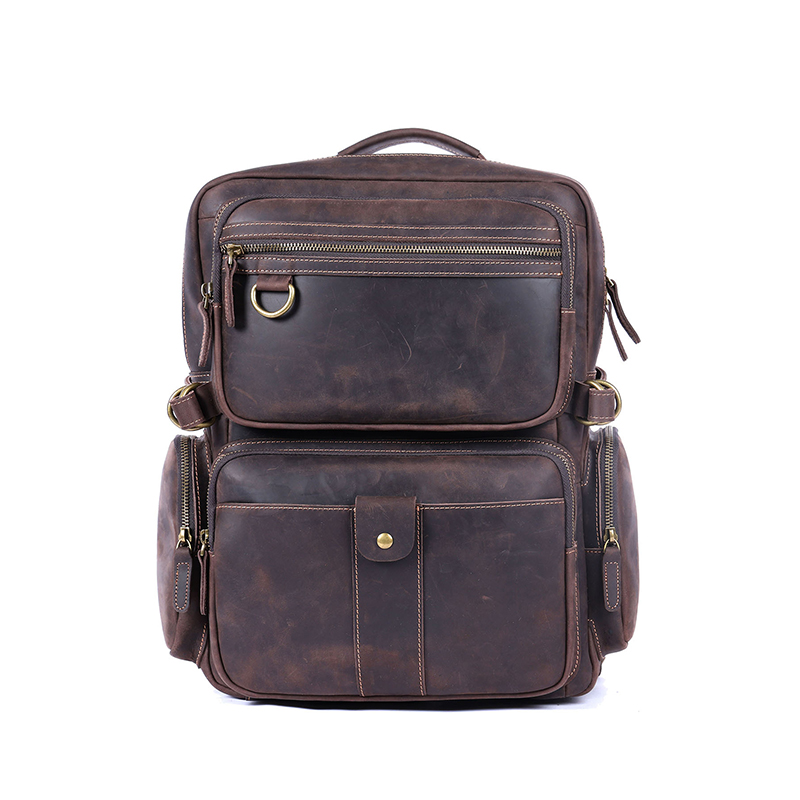
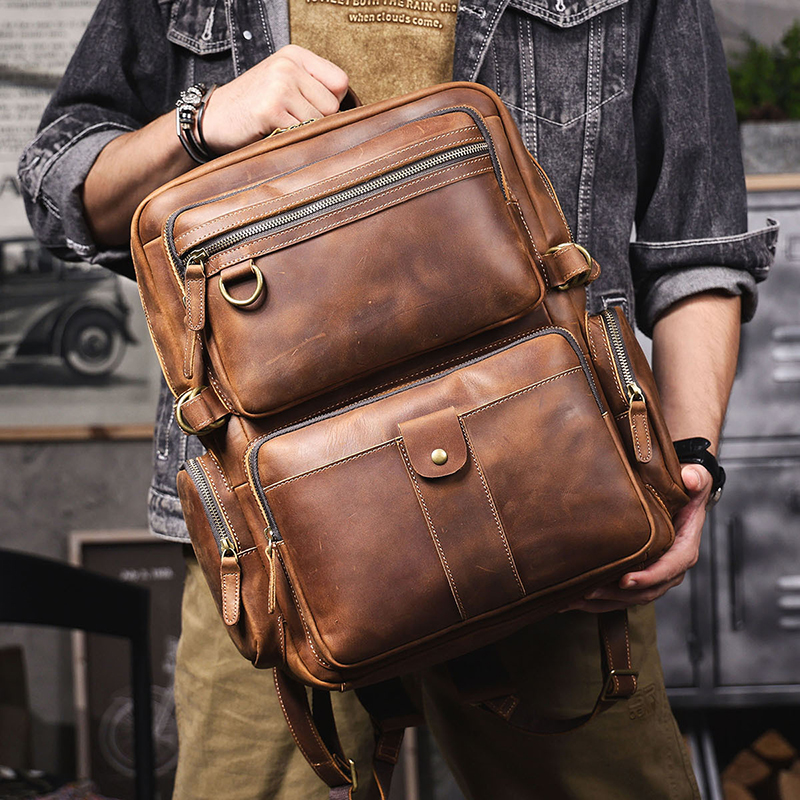
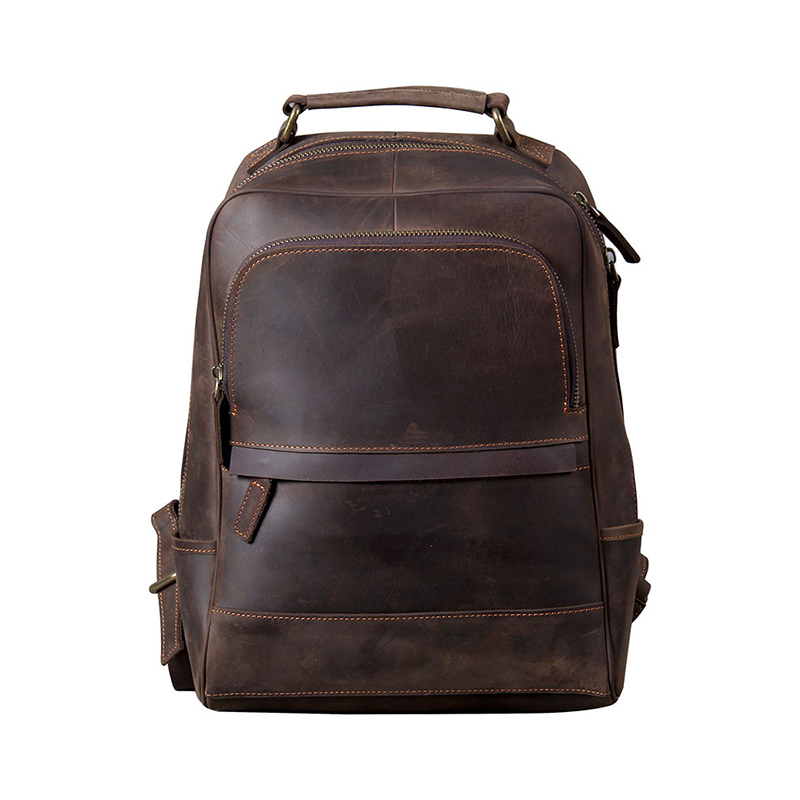
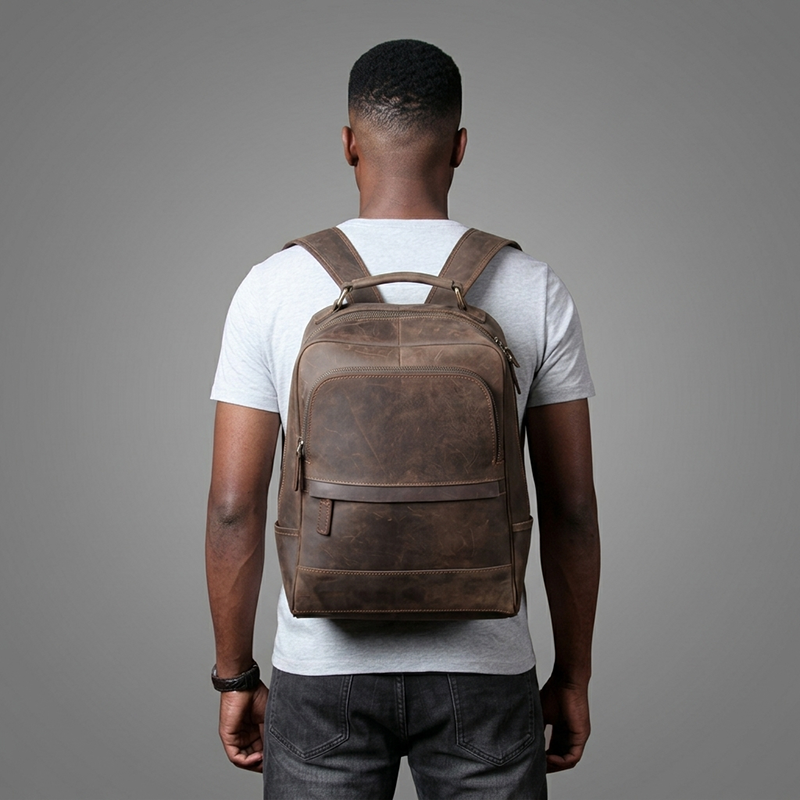
For example, a crazy horse leather backpack or a vintage leather travel bag will often have visible marks and variations in color. These natural characteristics are actually signs of authentic leather.
Fake leather, on the other hand, usually looks too perfect and uniform.
2. Smell the Leather
Real leather has a distinct natural smell that synthetic materials cannot replicate.
Genuine leather typically smells:
-
rich
-
earthy
-
slightly woody
If you smell a strong chemical or plastic-like odor, the product may be made from artificial materials.
High-quality products like a full grain leather backpack for men or a genuine leather laptop bag usually have a strong natural leather scent.
3. Check the Edges
Another way to identify real leather is by looking closely at the edges of the material.
Real leather edges often appear:
-
slightly rough
-
fibrous
-
natural
In contrast, fake leather usually has perfectly smooth edges because it is made from synthetic layers.
If you examine the edges of a leather messenger bag or a leather crossbody bag, you may notice natural fibers on the cut surfaces.
4. Perform the Water Test
Leather absorbs small amounts of moisture, while synthetic materials typically repel water.
To test this:
-
Place a small drop of water on the leather surface
-
Wait a few seconds
If the material absorbs the water slowly, it is likely real leather.
This test works well for products like a crazy horse leather backpack or a vegetable tanned leather bag, which are known for their natural absorbency.
However, always test on a hidden area first.
5. Look for Patina Development
One of the most distinctive characteristics of genuine leather is its ability to develop a patina over time.
Patina refers to the natural aging process where leather becomes:
-
darker
-
richer in color
-
more unique in appearance
For example, a vintage leather backpack or a leather travel bag will gradually develop character with use.
Synthetic leather does not age in the same way. Instead, it tends to crack or peel after extended use.
6. Check the Product Label
Many brands clearly state the type of leather used in their products.
Look for terms such as:
-
full grain leather
-
top grain leather
-
genuine leather
These labels are often found on high-quality products such as a leather laptop backpack, leather work bag, or premium leather travel backpack.
If the label says PU leather, vegan leather, or bonded leather, the material is not genuine leather.
Why Real Leather Is Worth It
Real leather products may cost more upfront, but they often provide better value over time.
Benefits of genuine leather include:
-
superior durability
-
natural appearance
-
long lifespan
-
improved aging characteristics
A well-made full grain leather backpack or leather messenger bag for men can last for many years with proper care.
In contrast, many synthetic bags need to be replaced much sooner.
Final Thoughts
Knowing how to identify real leather can help you avoid low-quality products and invest in items that will last for years.
By checking the texture, smell, edges, absorbency, and aging characteristics, you can quickly determine whether a product is made from genuine leather.
Whether you’re shopping for a vintage leather backpack, a leather laptop bag, or a crazy horse leather travel backpack, understanding the difference between real and fake leather ensures you get the quality and durability you expect.