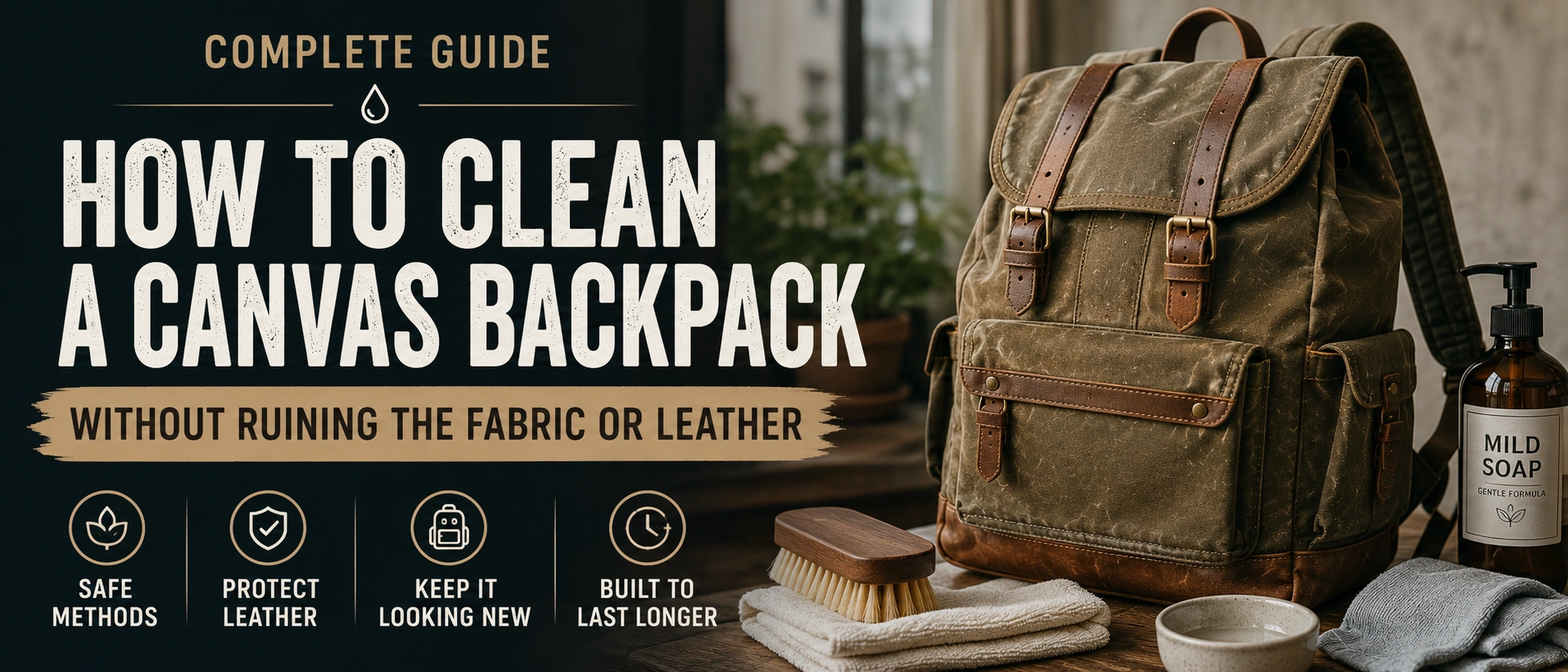
A canvas backpack is tough, but it is not meant to be treated like a gym towel.
Canvas holds up well to daily wear — the scuffs, the friction, the general roughness of being actually used. What it doesn't hold up as well to is the wrong kind of cleaning. A wax coating stripped by strong detergent. Leather trim stiffened from soaking. A buckle that rattled against the drum of a washing machine for forty minutes. These are self-inflicted problems, and they're common ones.
The impulse to just toss a dirty bag in the wash makes sense. But for a canvas backpack — and especially for waxed canvas or any bag with leather trim — a little restraint upfront saves a lot of regret later.
Here's how to clean one properly, what to do about specific stains, and which mistakes are worth knowing in advance.
Quick Answer: What Is The Safest Way To Clean A Canvas Backpack?
The safest method is spot cleaning: remove dirt gently, clean only the affected areas, and let the backpack air dry naturally.
In practice, that means:
- Empty the bag completely before doing anything else
- Use a soft brush or dry cloth to clear loose dust and surface debris
- Clean problem spots locally rather than soaking the whole bag
- Use a slightly damp cloth and mild soap for anything that needs more than brushing
- No bleach, no harsh cleaners, no hot water
- Air dry naturally — no dryer, no hair dryer, no direct sun
- For waxed canvas, the coating may need refreshing after more aggressive cleaning
- For leather trim and straps, a lightly damp cloth only — never soak
Can You Wash A Canvas Backpack?
It depends on what kind of canvas bag you have.
Plain Canvas Backpack
Untreated canvas can tolerate light hand washing or spot cleaning reasonably well. It's more forgiving of water than waxed canvas, though soaking the whole bag for extended periods isn't great for the shape or the hardware, and any leather components still need to stay dry.
Waxed Canvas Backpack
Waxed canvas and water-heavy cleaning don't mix well. The wax coating — the thing that makes the fabric water-resistant and gives it its characteristic texture — breaks down when it comes into contact with detergent and sustained soaking. Deep washing doesn't just clean the fabric; it strips what makes the fabric functional.
Canvas And Leather Backpack
A bag that combines canvas and leather trim is the hardest to clean thoroughly, because the two materials need to be treated differently — and what's fine for the canvas is often not fine for the leather. The leather straps, base panels, buckles, and accent pieces cannot be submerged, and they need to dry carefully and promptly if they get wet.
Most canvas backpacks should be spot cleaned rather than fully washed.
Can You Machine Wash A Canvas Backpack?
Usually, no.
The washing machine might seem like the efficient solution, but the risks are real and specific:
The bag's structure can distort in the drum. The wax coating on waxed canvas can be stripped entirely by the heat and detergent. Leather trim stiffens, discolors, or cracks. Metal hardware — buckles, D-rings, zipper pulls — rattles against the drum and can bend, scratch the fabric, or damage the machine. The lining inside can shrink or pucker. The spin cycle stresses straps and seam joins in ways daily use doesn't.
Even if the canvas itself survives the washing machine, the backpack's shape, hardware, lining, wax coating, and leather parts may not.
Spot cleaning is slower. It's also the difference between a bag that lasts a decade and one that looks done after a couple of wash cycles.
What You Need Before Cleaning
Keep it simple. You don't need specialized products for most canvas cleaning — you need the right tools used gently.
Use these:
- Soft cloth (microfiber or clean cotton)
- Soft-bristled brush
- Mild soap (plain dish soap or a gentle fabric soap)
- Cool or lukewarm water
- Dry towel
- Cotton swabs for getting into seam lines and corners
- Leather conditioner — for leather parts only, after drying, if needed
- Wax dressing — for waxed canvas only, after cleaning, if the coating has thinned
Avoid these:
- Bleach of any kind
- Harsh multi-purpose cleaners or laundry detergent
- Alcohol-based cleaners (especially on waxed canvas or leather)
- Hot water
- Washing machine
- Dryer
- Hair dryer
- Stiff wire brush or anything abrasive
Step-By-Step: How To Clean A Canvas Backpack Safely
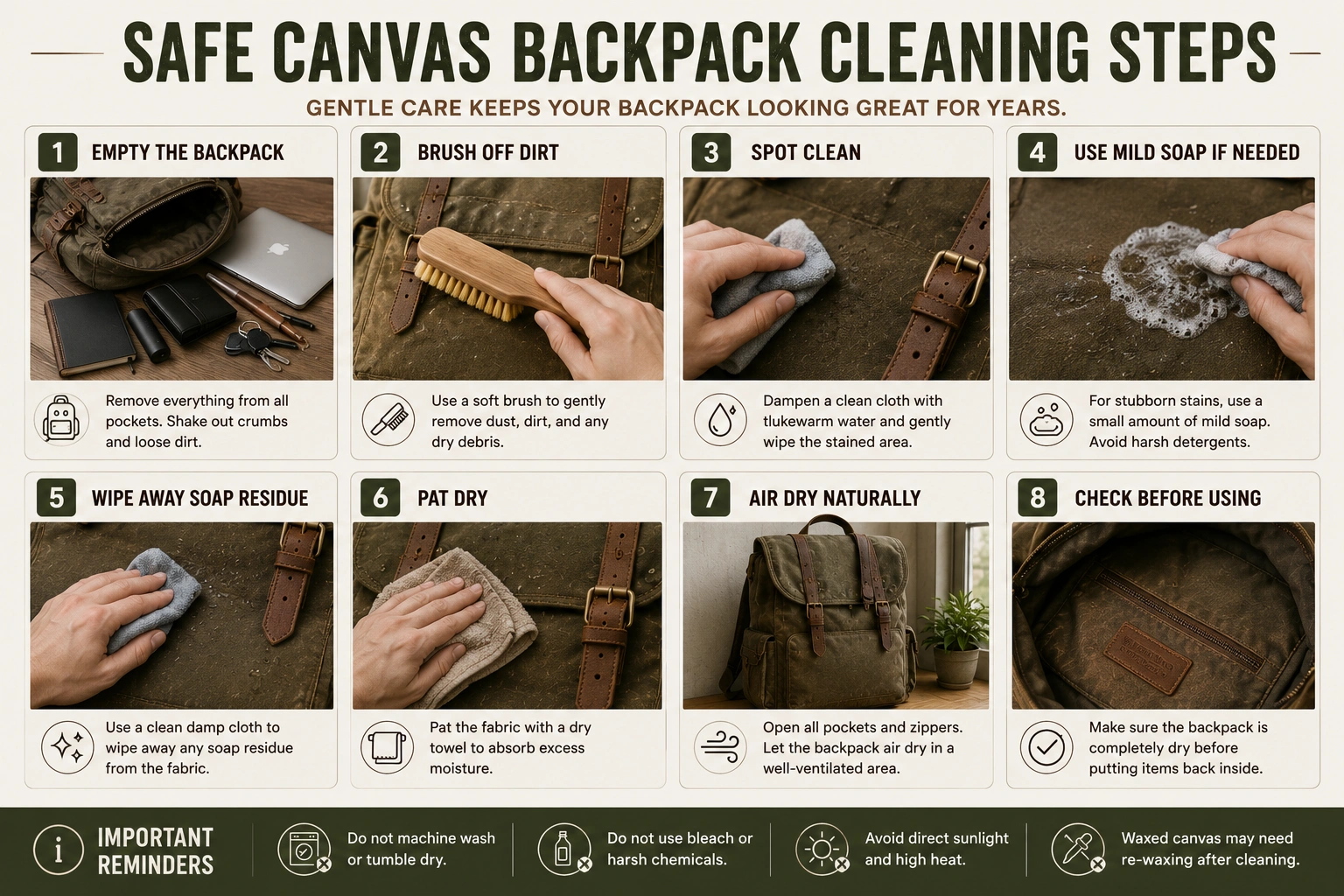
Step 1: Empty The Backpack Completely
Go through every compartment and pocket — laptop, papers, keys, coins, crumbs, the earphone cable you forgot about. Cleaning over whatever's inside is both ineffective and a good way to damage things that shouldn't get damp.
Step 2: Shake Out Dust And Debris
Turn the bag upside down and give it a firm shake. What falls out is stuff that doesn't need scrubbing — it just needs gravity.
Step 3: Brush The Surface Gently
Use a soft-bristled brush to sweep away dry mud, dust, and loose surface grime. Do this before introducing any moisture — wet brushing grinds dry debris into the fabric rather than lifting it off.
Step 4: Spot Clean With A Damp Cloth
Dampen a soft cloth with cool or lukewarm water — damp, not dripping — and work over the dirty spots. The goal is cleaning specific areas, not wetting the whole bag.
Step 5: Use Mild Soap Only If Needed
For anything that doesn't come off with water alone, put a very small amount of mild soap on the cloth and work it gently into the spot. Don't apply soap directly to the fabric and don't scrub hard. Let the soap do the work, not the pressure.
Step 6: Wipe Away Soap Residue
Soap left in the fabric can leave a residue that attracts more dirt later. Use a clean, lightly damp cloth to wipe away any remaining soap before it dries.
Step 7: Pat Dry With A Towel
Press a dry towel against the cleaned areas to absorb surface moisture. Don't rub — press and lift.
Step 8: Air Dry Naturally
Open every zipper and pocket, shape the bag gently so it holds its form while it dries, and set it somewhere with good airflow. Room temperature, out of direct sun. That's the whole step.
How To Clean A Waxed Canvas Backpack
Waxed canvas needs a lighter touch than plain canvas — the goal is to clean the surface without disturbing the wax coating that makes the material what it is.
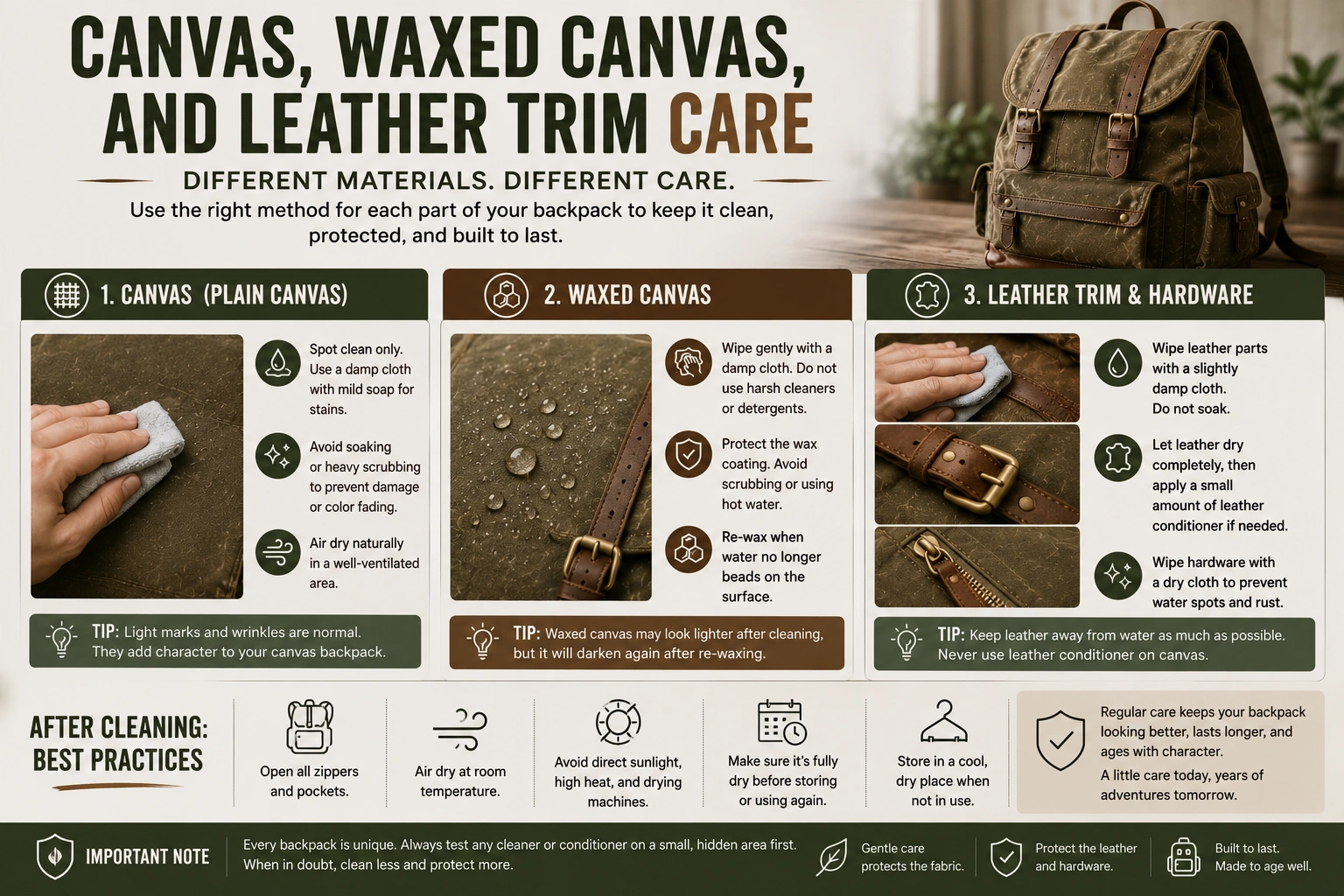
Start with a dry soft brush or cloth to lift off as much dirt and dust as possible before any moisture gets involved. For anything that needs more, a lightly damp cloth used gently on the specific spot is the right tool. Don't rub hard, don't let the fabric soak, and don't use soap beyond a very small amount for stubborn stains.
What to specifically avoid: machine washing, soaking, strong detergents, and any cleaners with alcohol or solvents. All of these attack the wax coating.
When To Re-Wax After Cleaning
Even careful cleaning can thin the wax coating over the areas you worked on. Look for these signs that the coating needs refreshing:
- Water no longer beads on those areas — it absorbs instead
- The surface looks noticeably lighter, drier, or more faded than the rest of the bag
- The high-wear spots — base corners, strap joins — feel less waxy to the touch
- The color of the cleaned area looks different from the untouched sections nearby
Re-waxing is straightforward: warm the fabric slightly, apply wax dressing in small amounts, work it in, and let it absorb. The coating doesn't need to look perfect immediately — it evens out with warmth and use.
For more on how waxed canvas handles rain and when water resistance fades, see are canvas backpacks waterproof.
How To Clean A Canvas And Leather Backpack
The complication with a canvas and leather bag is that the two materials need to be handled separately, and what's appropriate for one can actively damage the other.
For the canvas body: spot cleaning as described above. Keep moisture localized, work gently, and don't let any part of the bag soak.
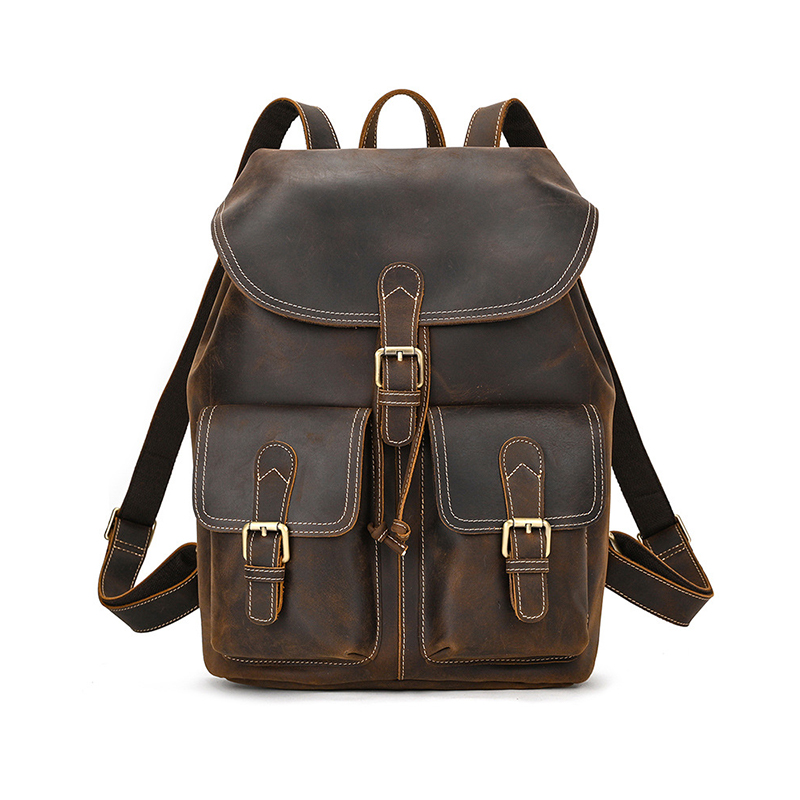
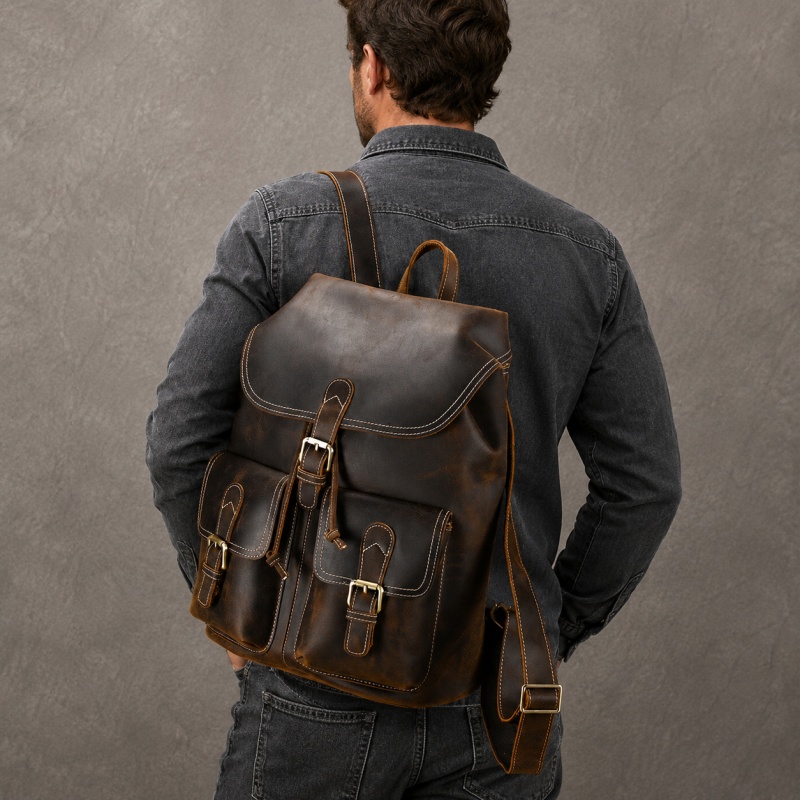
For leather trim, straps, and base panels: a lightly damp cloth only. No soap unless the leather is visibly stained — and even then, very little. Don't rub leather hard when it's wet, because wet leather is softer and more vulnerable to surface damage than dry leather. Pat it, don't scrub it.
After drying: once the leather is fully dry, check how it feels. If the leather has stiffened or feels noticeably dry compared to its normal state, a small amount of leather conditioner applied with a cloth and buffed off will help restore its flexibility. Apply conditioner only to leather — it doesn't belong on canvas or waxed canvas.
For hardware: metal buckles, D-rings, and zipper pulls should be wiped dry promptly. Water sitting on metal hardware over time can lead to surface oxidation or staining on the fabric around the fitting.
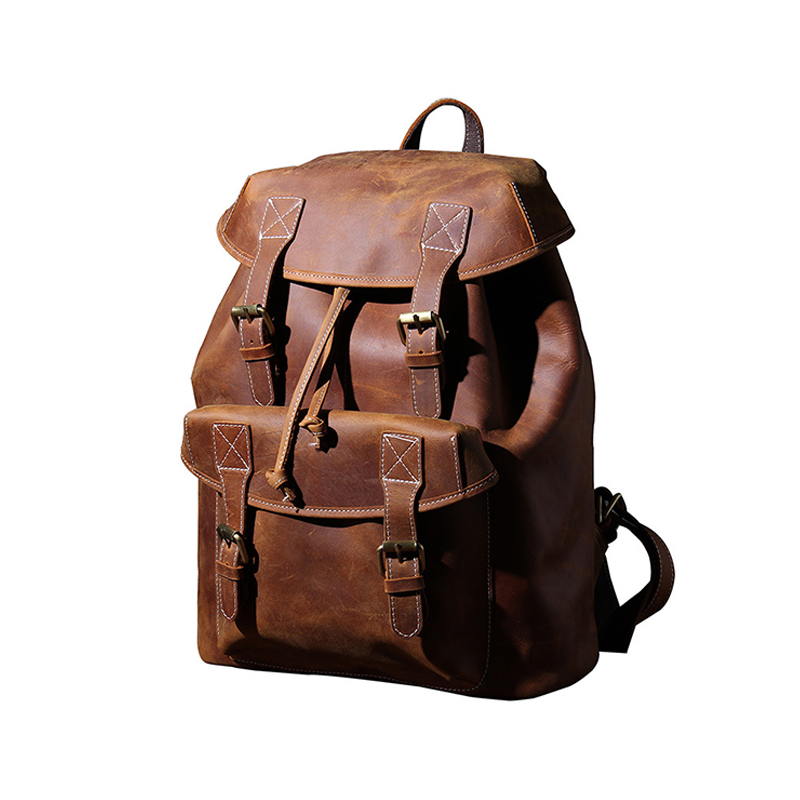
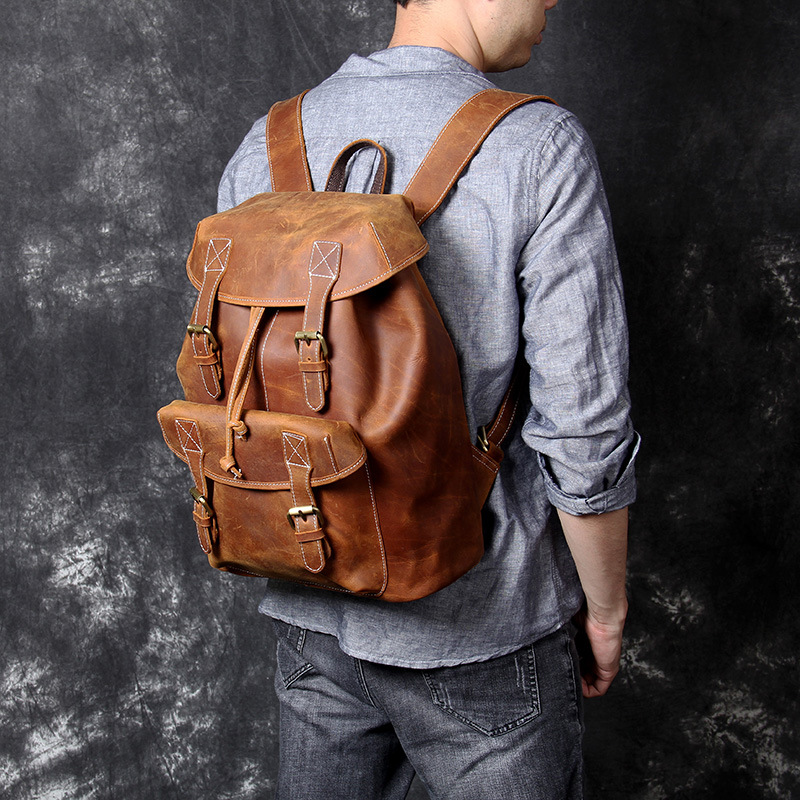
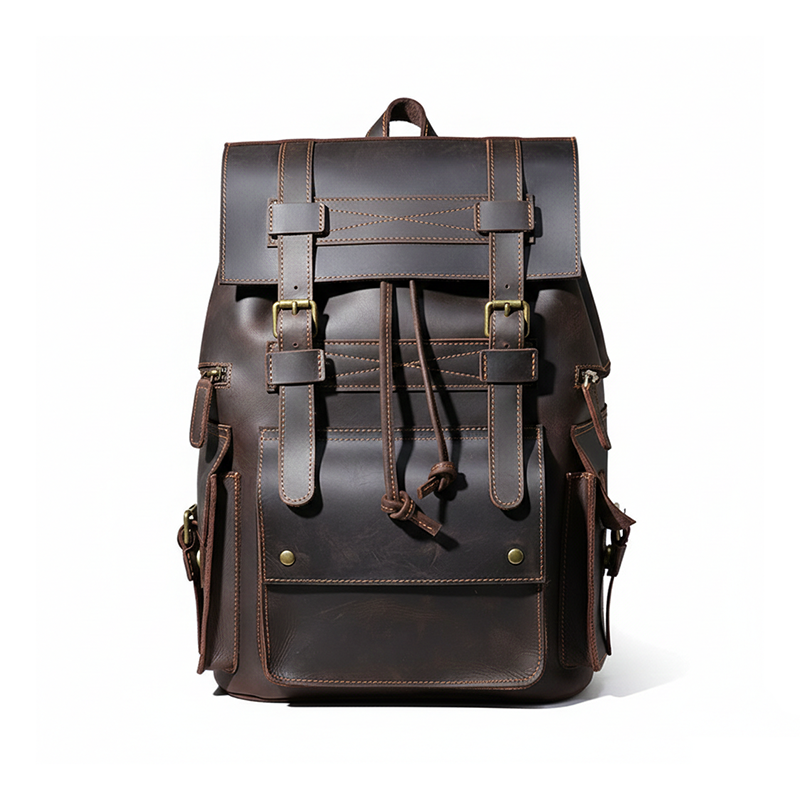
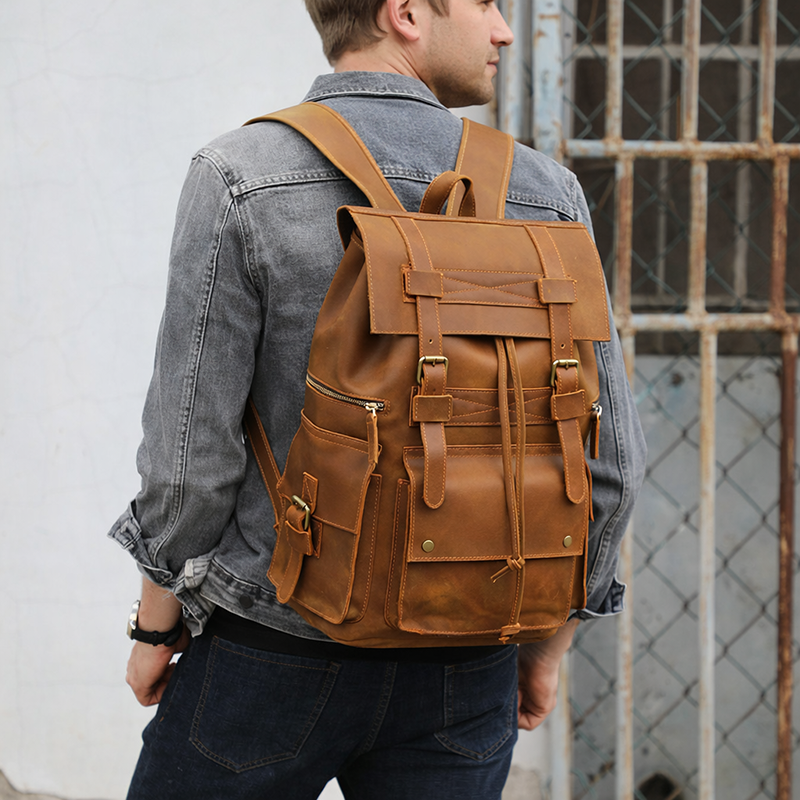
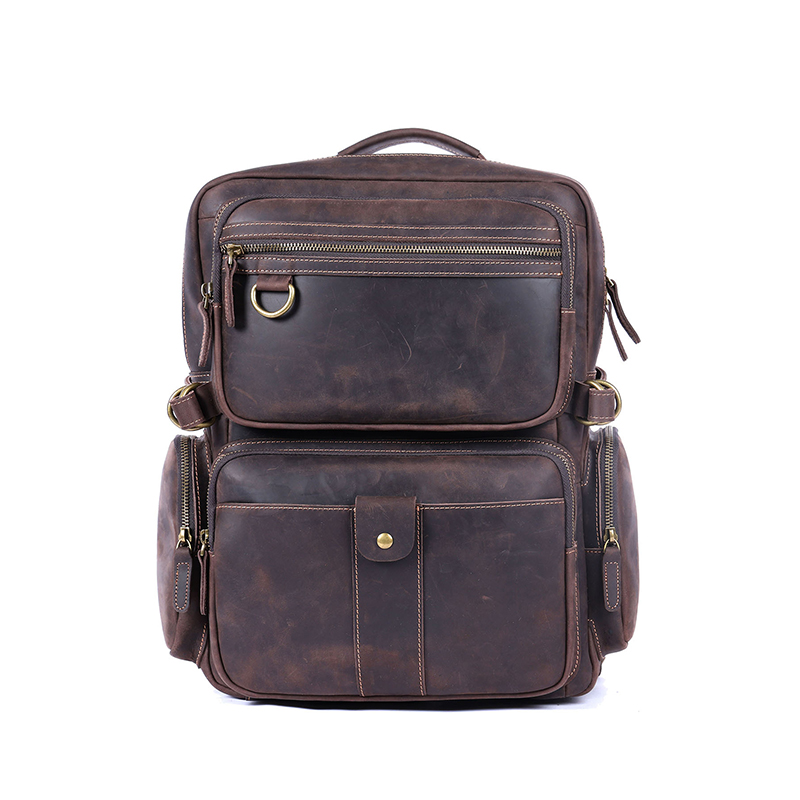
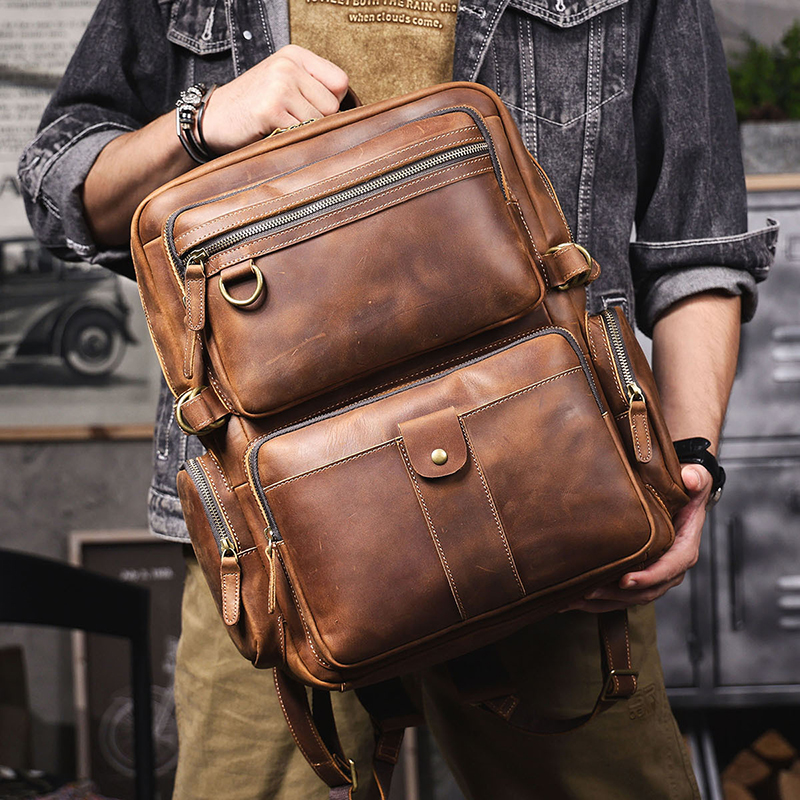
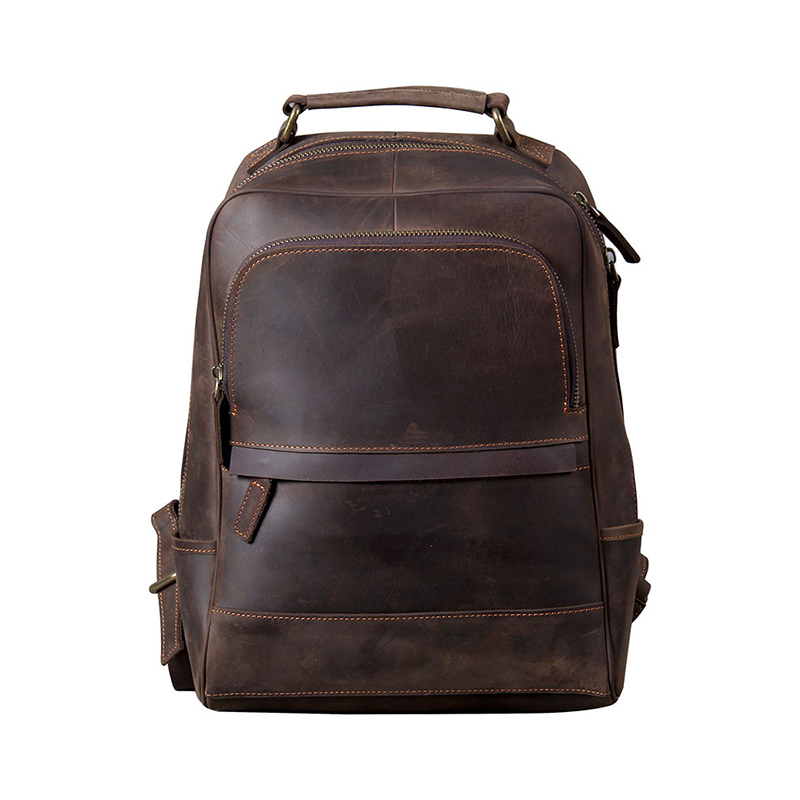
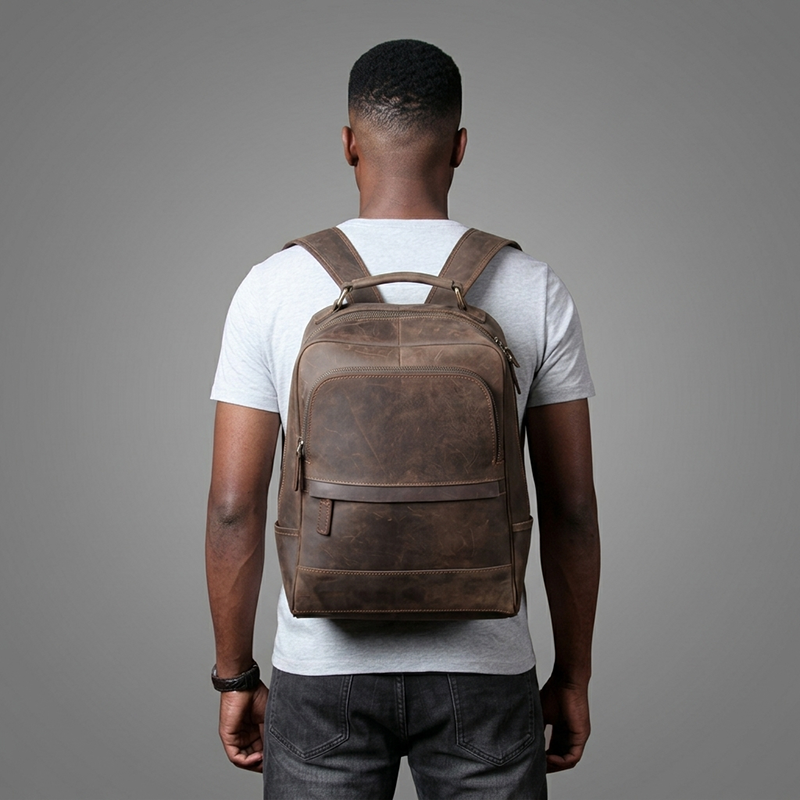
Our canvas and leather backpacks are built for daily use, and basic care like this keeps them in shape for the long haul.
How To Remove Common Stains From A Canvas Backpack
Dirt And Mud
Let the mud dry completely before touching it. Wet mud smears; dry mud brushes off. Once it's dry, use a soft brush to clear the bulk of it, then follow with a lightly damp cloth for anything that remains.
Food Or Drink Stains
Act quickly — blot with a dry cloth to absorb as much as possible before the stain sets. Don't rub; that spreads the stain and drives it deeper into the weave. Once you've absorbed what you can, use a damp cloth with a small amount of mild soap on the spot.
Oil Or Grease
Press a dry cloth against the stain to absorb the oil — don't rub or you'll spread it. Grease in canvas can be stubborn, and it may not come out completely. Work gently and accept that some traces may remain; aggressive treatment risks damaging the fabric more than the stain does.
Ink Stains
Resist the impulse to use alcohol, solvents, or anything you've read works on upholstery — these can cause the ink to bleed outward or can strip the wax coating and alter the canvas color. Try a damp cloth first, applied very gently. For significant ink stains, professional leather and fabric cleaning is a more reliable option than home remedies.
Sweat And Odor
The straps, back panel, and interior lining are where sweat accumulates. Wipe straps with a damp cloth and let the bag air out with all pockets open — this handles most odor. If the inside lining has a persistent smell, a lightly damp cloth wiped through the interior followed by thorough air drying usually resolves it. Avoid spraying deodorizers inside the bag; they can leave residue and the smell tends to return.
How To Clean The Inside Of A Canvas Backpack
The interior gets ignored until it's obviously dirty, and by then it usually needs more than a quick wipe.
Empty every pocket thoroughly — including the small ones where receipts, crumbs, and forgotten items accumulate. Use a soft brush or the brush attachment on a vacuum to clear debris from the corners and seam lines without getting the lining wet.
For the lining itself, a lightly damp cloth wiped across the surface handles most grime. Don't pour water in or let moisture pool at the base of the interior. For odor that persists after cleaning, the real solution is thorough ventilation — leave the bag open in a well-aired space for several hours, which does more than any spray.
Let the interior dry completely before using or storing the bag. Trapped moisture inside a closed bag is how mildew starts.
How To Dry A Canvas Backpack After Cleaning
Open All Zippers And Pockets
Airflow is what dries a bag, not just time. Opening everything up — main compartment, front pockets, side pockets, internal dividers — lets air circulate through the whole bag rather than leaving the inside to stagnate.
Shape The Backpack While It Dries
Gently reshape the bag so it holds its intended form. A bag that dries in a slumped or twisted position can hold that shape once it sets, especially if there's leather involved.
Air Dry At Room Temperature
A ventilated room, out of direct sun, at normal indoor temperature. That's it. Leave it until it's genuinely dry — inside and out — not just dry to the touch on the exterior.
Avoid Direct Heat
Hair dryer, dryer, radiator, direct sun — all of these dry canvas unevenly and too fast. For waxed canvas, heat can melt or redistribute the wax coating. For leather, rapid heat causes stiffening and can lead to cracking. Slow and natural is always better here.
Do Not Store It Before Fully Dry
A damp bag stored away is a bag developing a mildew problem. Musty smell, interior staining, and degraded materials are all possible results. Wait until it's completely dry.
Cleaning Mistakes That Can Ruin A Canvas Backpack
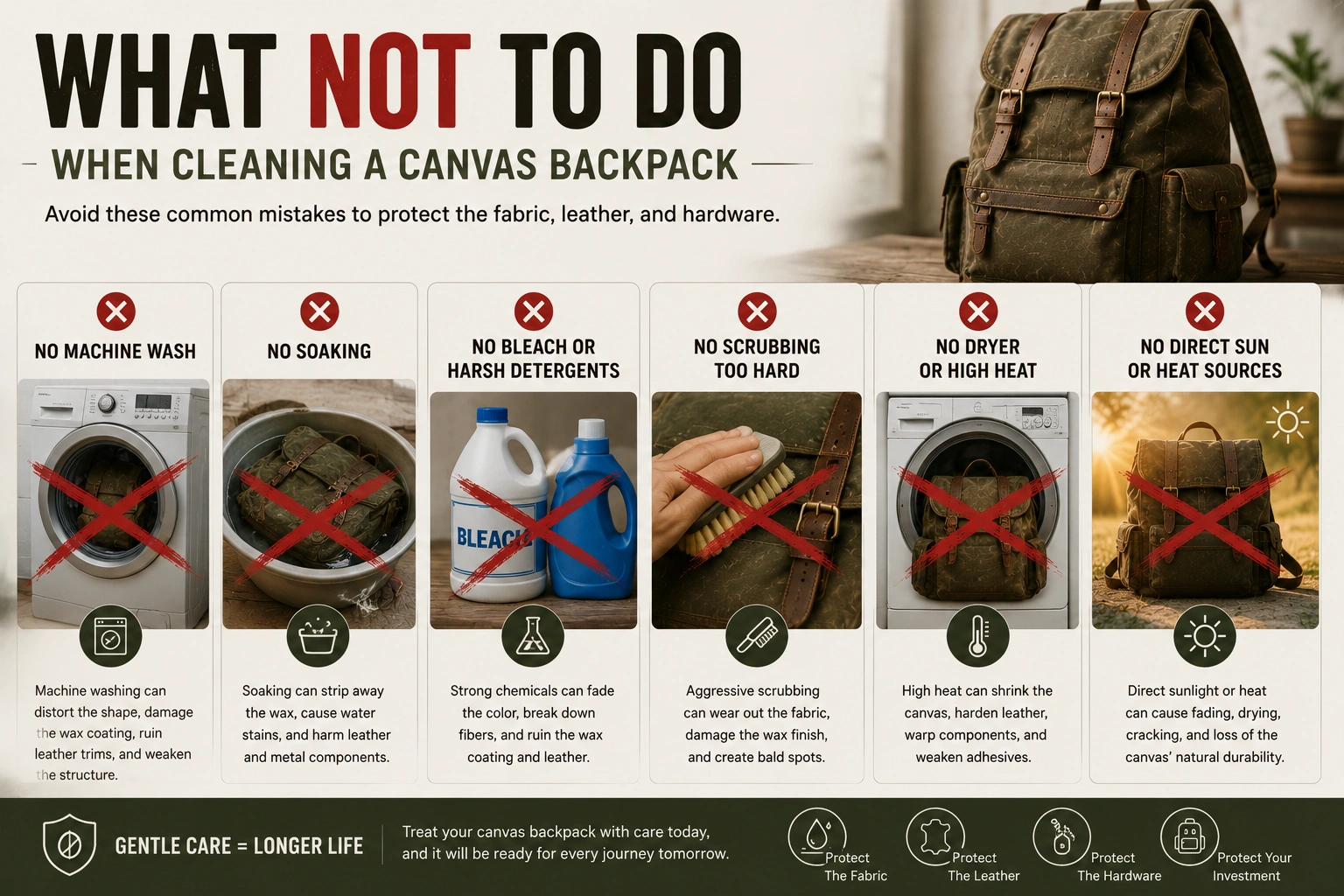
Machine Washing The Backpack
Covered above, but worth repeating: the drum, the heat, the spin cycle, and the detergent are all working against a canvas bag simultaneously. The canvas might survive; everything else probably won't.
Soaking The Whole Bag
Particularly bad for waxed canvas and any bag with leather components. Soaking strips wax, saturates leather, and forces water into seams and corners where it takes a long time to dry out — if it dries fully at all before being stored.
Using Bleach Or Harsh Detergent
Bleach can permanently alter canvas color and weaken the fibers. Harsh detergents strip wax coatings, leave residue, and can make the canvas feel stiff and rough after drying. The canvas cleaning job isn't tough enough to need these.
Scrubbing Too Hard
Hard scrubbing on canvas creates localized wear that shows up as a lighter, fuzzy patch against the rest of the fabric. On waxed canvas, aggressive scrubbing removes wax from specific areas while leaving the surrounding fabric intact — which creates visible inconsistency in color and texture.
Drying With Heat
Heat shrinks canvas, stiffens leather, and redistributes or melts wax coating. None of those outcomes are reversible. Air drying is slower and requires no special effort — it's also the only option that doesn't risk permanent damage.
Conditioning The Canvas Like Leather
Leather conditioner is for leather. Applying it to canvas changes the fabric's color and texture in ways that aren't easily undone. If a bag has both materials, keep the conditioner strictly to the leather parts.
How Often Should You Clean A Canvas Backpack?
Less often than people think, and more consistently than most people manage.
Day-to-day, a soft brush or dry cloth to clear surface dust is all the maintenance most canvas bags need between genuine cleaning sessions. A waxed canvas bag in daily use can often go months between anything more intensive, as long as obvious dirt and stains get addressed promptly rather than left to set.
Deep cleaning — anything involving water and soap — should be triggered by visible grime, odor, or a stain that spot cleaning hasn't handled. Not by a schedule.
Clean less aggressively, but more consistently. The bag that gets brushed off every week and spot cleaned when needed will outlast the one that gets machine washed twice a year.
How To Keep A Canvas Backpack Looking Good Longer
Brush Off Dirt Early
Dry dirt is far easier to remove than mud or grime that's had time to set into the fibers. A quick brush after a dusty day costs nothing.
Store It In A Dry Place
Humidity is hard on both canvas and leather over time. A dry, ventilated space is better than a sealed bag in a damp closet.
Avoid Overloading
Chronically overpacking stresses the stitching, the straps, and the seams in ways that accumulate over time. Most bags have a point past which the stress is doing real, slow damage.
Keep Leather Parts Conditioned When Needed
Not on a schedule — when the leather feels dry or looks less supple than usual, a small amount of conditioner keeps it from drying out between uses. Don't over-condition; too much softens the leather past where it holds its shape well.
Re-Wax Waxed Canvas When It Needs It
The signs are in the fabric: water absorbed instead of beaded, faded patches at the high-wear spots, a dry feel where it used to be waxy. Those signals are more reliable than any calendar.
Use A Rain Cover In Heavy Weather
When real rain is involved — not drizzle but actual sustained downpour — a rain cover is more dependable than the wax coating alone. The canvas handles everyday weather; the rain cover handles the rest.
For a full comparison of how waxed canvas performs against leather as a daily carry material, see waxed canvas backpack vs leather backpack.
Final Verdict: What Is The Best Way To Clean A Canvas Backpack?
Spot clean. Air dry. Protect the wax coating on waxed canvas. Keep water away from leather trim.
That's essentially the whole answer. The method isn't complicated — it just requires resisting the impulse to reach for the washing machine.
A well-made waxed canvas backpack is built for daily use, but the right cleaning habits help it age better and last longer. The character that develops over years — the natural patina, the worn-in creases, the depth of color — comes from being used and cared for properly, not from being treated as disposable.
Frequently Asked Questions
Can you wash a canvas backpack?
Plain canvas can handle light hand washing or spot cleaning. Waxed canvas and canvas-and-leather backpacks shouldn't be submerged or deeply washed — the wax coating and leather components don't respond well to soaking. Spot cleaning is the right method for most canvas bags.
Can you machine wash a canvas backpack?
Generally, no. Machine washing can distort the bag's shape, strip the wax coating on waxed canvas, damage leather trim, and stress hardware through the drum. Even if the canvas itself survives, the rest of the bag may not come out in good shape.
How do you clean a waxed canvas backpack?
Use a dry soft brush or cloth first to remove loose dirt. For anything that needs more, use a lightly damp cloth on the specific area — gently, without soaking the fabric. Avoid soap where possible, and avoid machine washing, bleaching, or anything with alcohol or solvents. If the wax coating looks thin or water stops beading afterward, re-waxing restores it.
How do you clean a canvas and leather backpack?
Treat the two materials separately. Spot clean the canvas with a damp cloth and mild soap as needed. For leather trim and straps, use a lightly damp cloth only — no soaking, no scrubbing. Once the leather is fully dry, apply a small amount of leather conditioner if it feels dry. Keep conditioner away from the canvas.
How do you remove stains from a canvas backpack?
Method depends on the stain. Let mud dry before brushing it off. Blot food and drink stains immediately — don't rub. Press dry cloth against oil stains to absorb rather than spread. Avoid alcohol and solvents on waxed canvas or leather. Mild soap and a damp cloth handles most stains; stubborn or ink stains may need professional cleaning.
Can you dry a canvas backpack in the sun?
Short periods in indirect light are fine for speeding up natural drying, but prolonged direct sun is hard on both the canvas and any leather components. The safest approach is room-temperature air drying in a ventilated spot, away from direct sun and heat sources.
How often should you clean a canvas backpack?
There's no fixed schedule. Day-to-day maintenance with a brush or dry cloth keeps most canvas bags in good condition without needing deeper cleaning. Use soap and water only when there's visible grime, an obvious stain, or a noticeable odor — not on a calendar-based routine.