Leather Belts
-
Belt Size Chart: How to Measure Your Belt Size Correctly (2026 Guide)
9. Jun 2026
KKICO
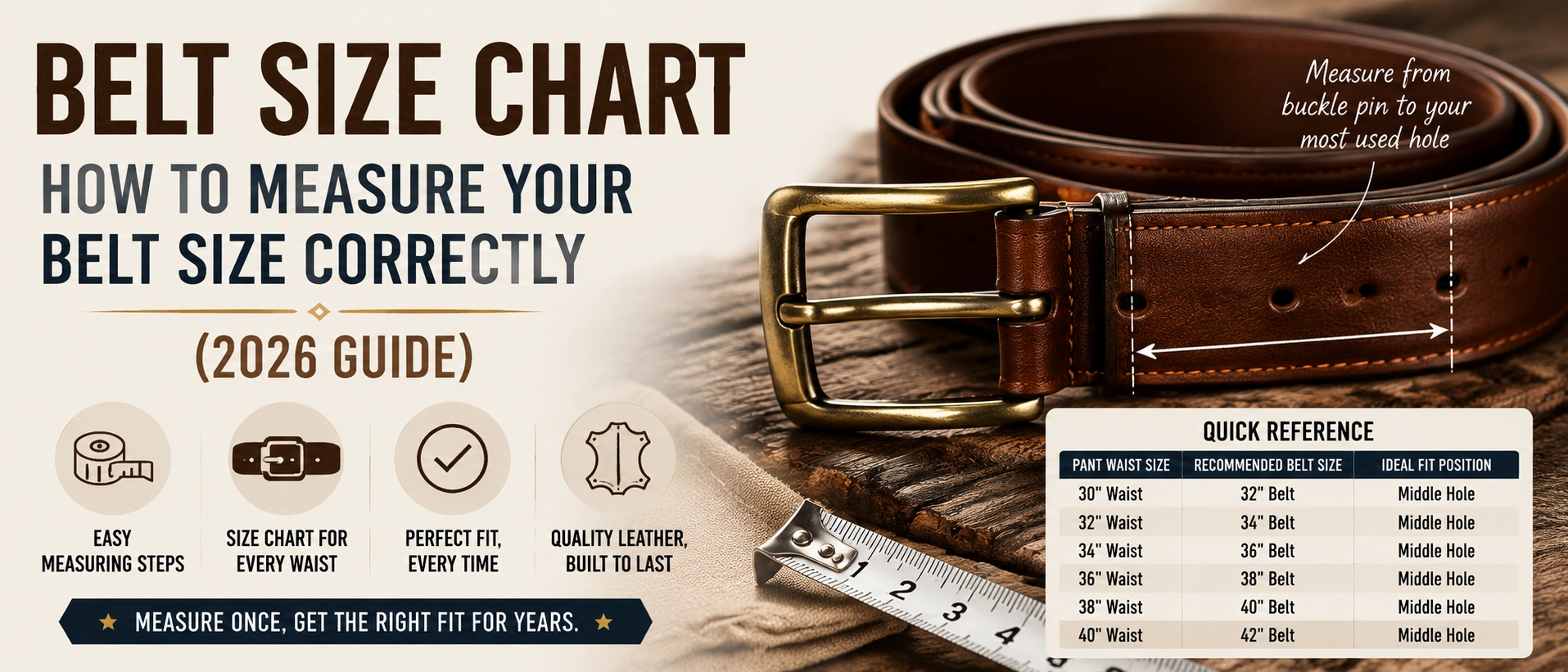
To find your correct belt size, measure from the buckle pin to the hole you use most often on a belt that already fits, or choose a belt approximately two inches larger than your pants waist size. The goal is simple: your belt should fasten comfortably near the middle hole, leaving room for future adjustment.
-
Do Leather Belts Stretch? What to Know Before You Buy (2026 Guide)
9. Jun 2026
KKICO
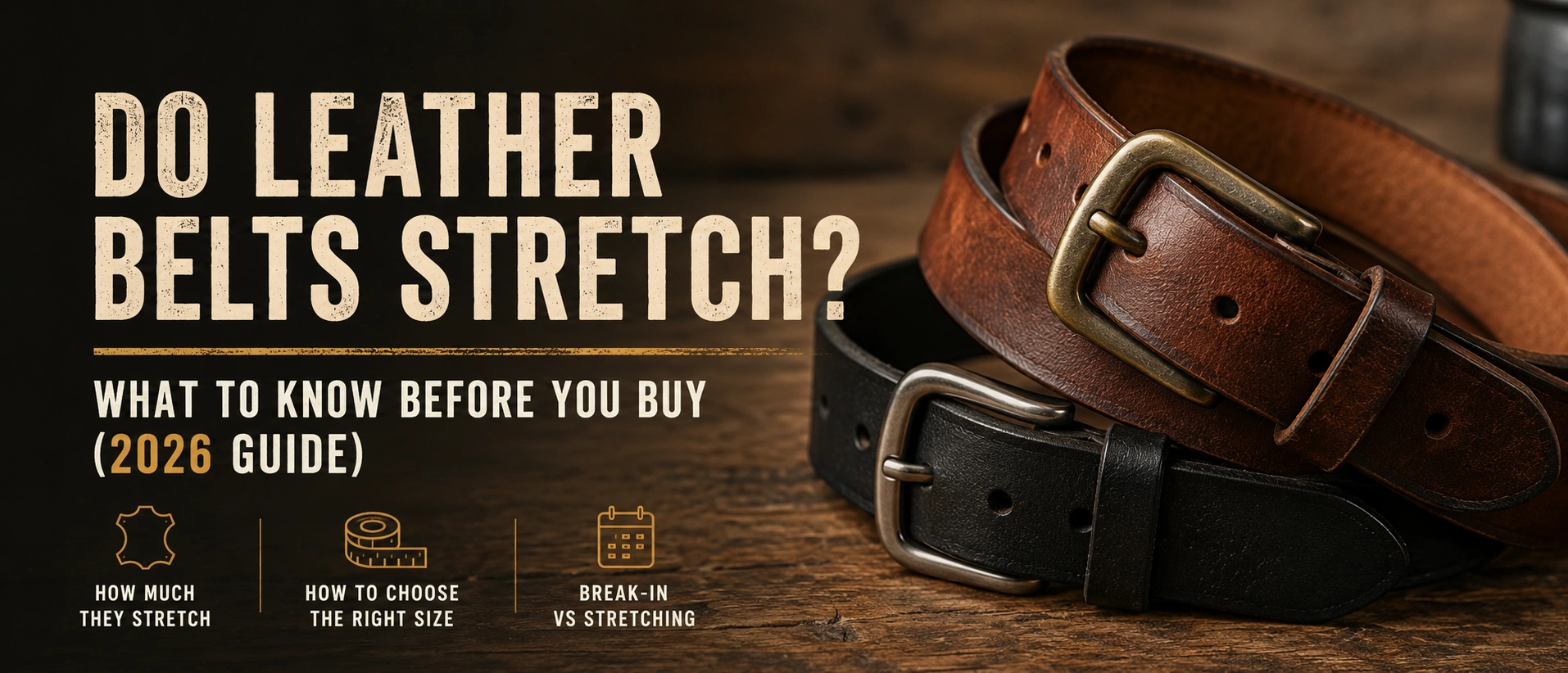
Yes, leather belts can stretch slightly over time — but the more accurate word for what happens to a quality belt is break in, not stretch. A well-made leather belt changes after months of regular wear. It softens. It becomes more comfortable. It molds subtly to the shape of your body. But the actual physical length — the distance from the buckle pin to the hole you fasten — changes very little on a properly made belt. If you're hoping to buy a belt that's too tight and wait for it to loosen into the right size, that strategy usually doesn't work the way you expect. Understanding the difference between breaking in and genuinely stretching is the key to choosing a leather belt that fits correctly from the start and stays comfortable for years.
-
How Long Should a Belt Be? Proper Belt Length Explained (2026 Guide)
10. Jun 2026
KKICO
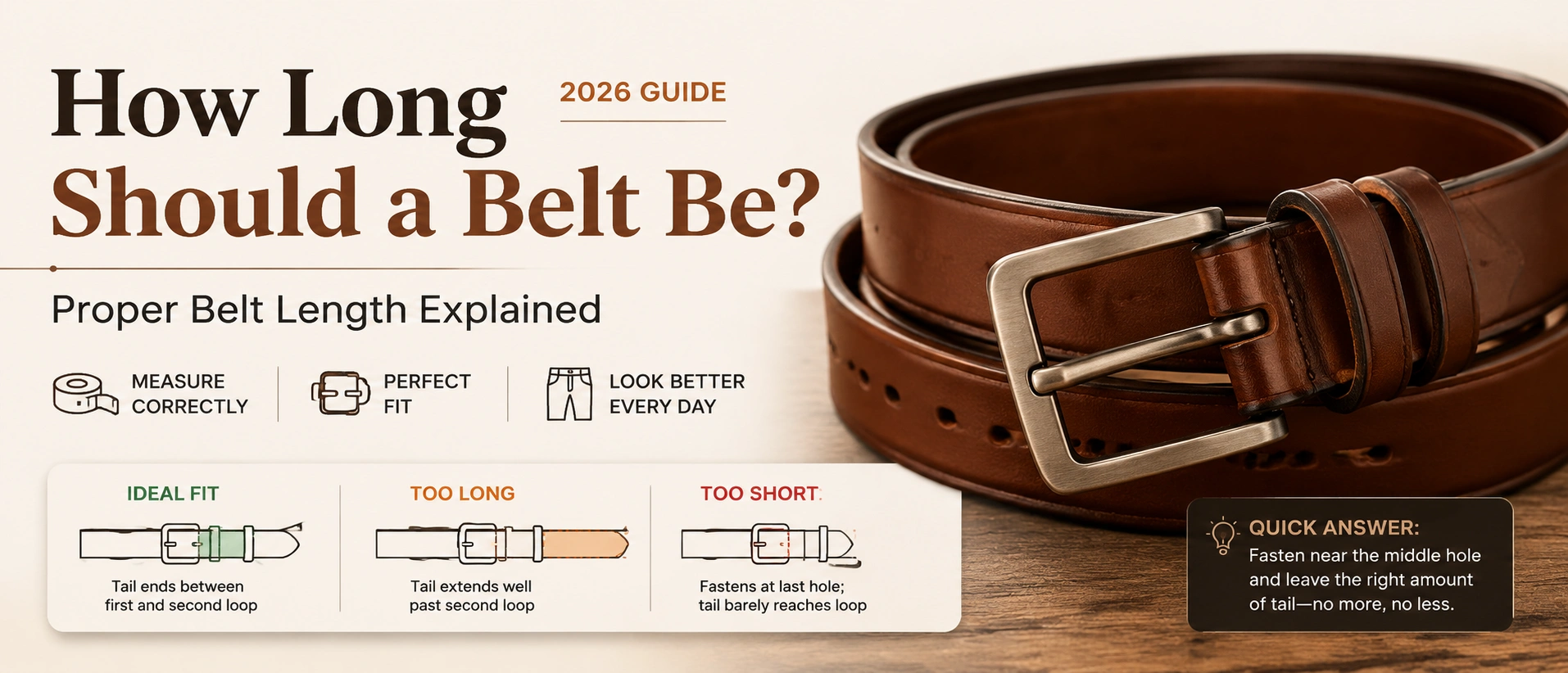
A properly fitting belt should fasten near the middle hole and leave enough tail to pass through the first belt loop comfortably — without the excess hanging past the second loop or flopping awkwardly against your pants. That's the short answer, and for most people it's all they need. But belt length trips up a surprising number of buyers, including people who've been wearing belts for decades. The confusion usually starts because belt length and belt size aren't the same measurement, the tail that sticks out after fastening is easy to misjudge when shopping online, and most product listings don't give you a clear picture of how the belt will actually look on your body. This guide explains how long a belt should be, why the tail length matters, how to tell when a belt is too long or too short, and how to measure for the right fit before you buy.
-
What Size Belt Do I Need? A Simple Guide for Every Waist Size (2026 Guide)
10. Jun 2026
KKICO
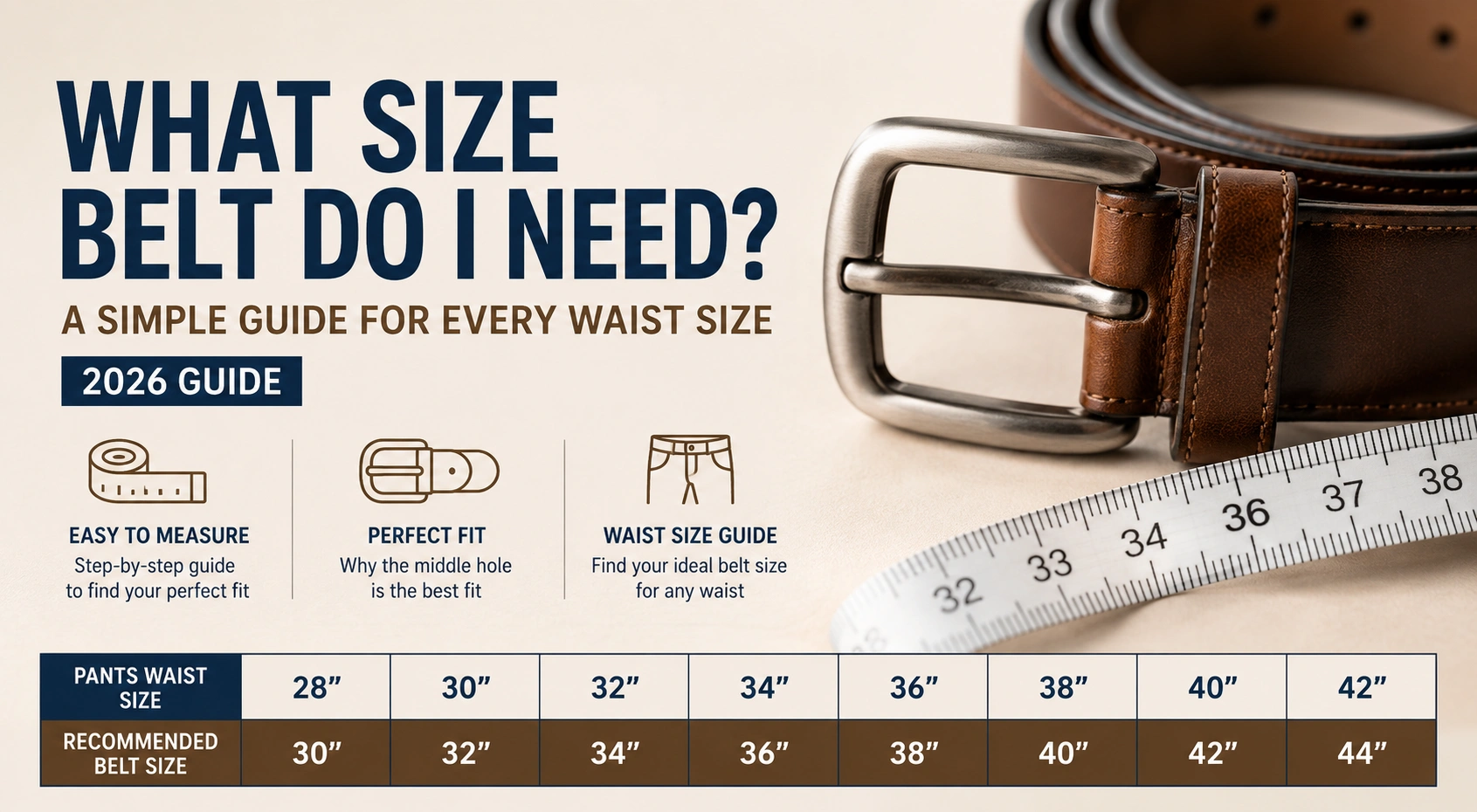
Most people need a belt size about two inches larger than their pants waist size. If your pants are a 34-inch waist, start with a 36-inch belt. If you're a 36-inch waist, look at a 38-inch belt — and so on. That rule gets most people close. But "close" isn't the same as correct, and belt sizing has enough variation across brands that guessing can still get you a belt that fits awkwardly — too long, too short, or fastening at the wrong position. The most accurate method is measuring a belt you already own, which takes about two minutes and eliminates the guesswork entirely. This guide covers how belt sizes actually work, how to measure for the right fit, and answers the specific waist-size questions that come up most often. If you've ever opened a box to find a belt that technically closes but still feels or looks wrong, the explanation — and the fix — is here.
-
What Belt Width Should I Wear? A Complete Men's Belt Width Guide (2026)
11. Jun 2026
KKICO
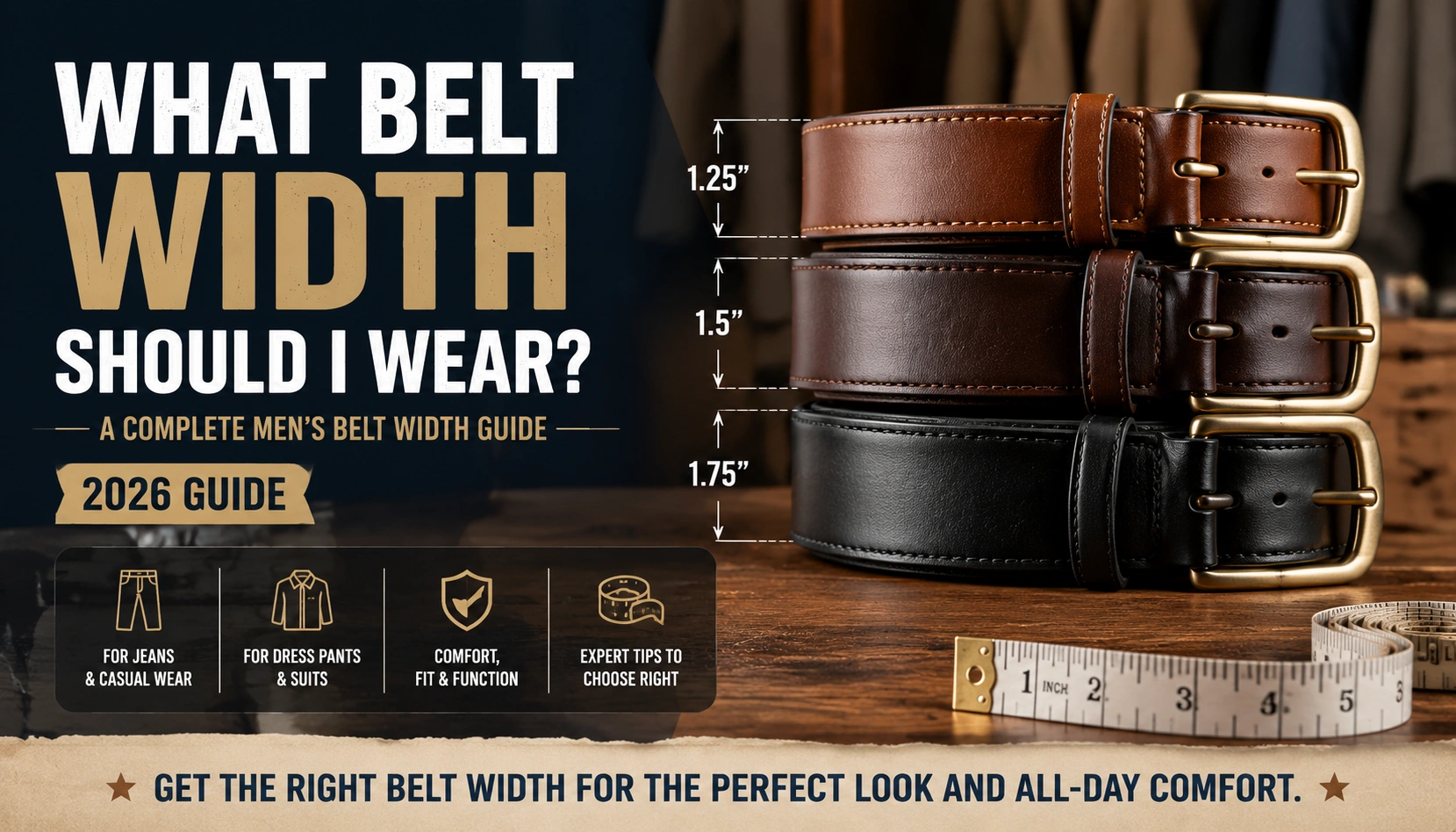
For most men, a 1.5-inch belt width is the right starting point. It fills standard jean loops properly, works with chinos and casual trousers, and carries enough visual weight to look intentional without being bulky. If you're dressing up — tailored trousers, dress pants, a suit — step down to 1.25 inches. If you're doing hard physical work and need a belt that holds up under real load, a 1.75-inch belt makes sense. Most people shopping for a leather belt think about color first, then the buckle, sometimes the leather grade. Width is usually an afterthought — or not a thought at all. But width is the specification that determines whether the belt looks right on your body, fits your belt loops without forcing or floating, and carries the visual weight appropriate for how you're dressed. Get everything else right and choose the wrong width, and the belt still looks slightly off. This guide explains why, and how to get it right.
-
Full Grain Leather Belt vs Genuine Leather Belt: What's the Difference? (2026 Guide)
11. Jun 2026
KKICO
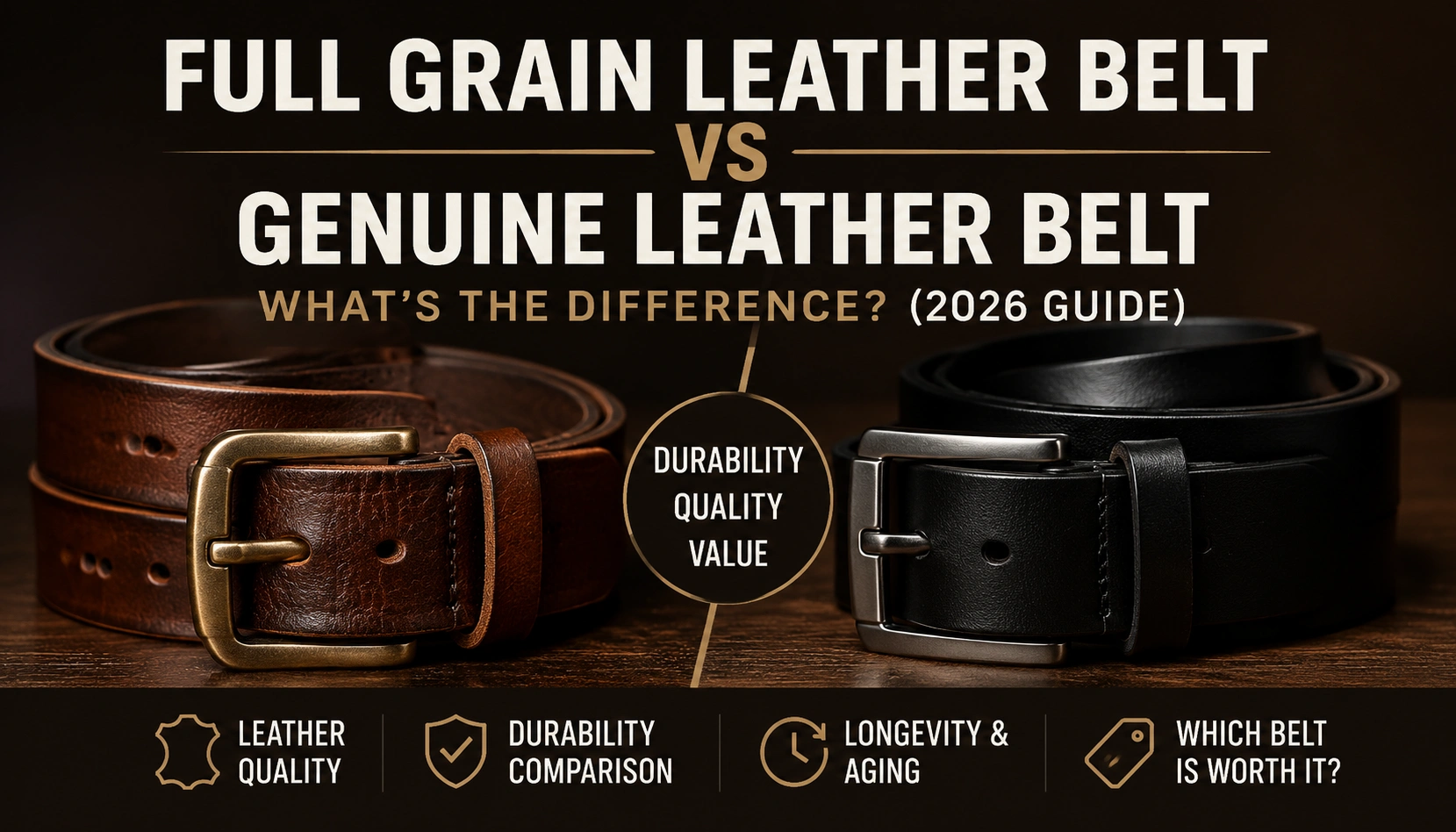
A full grain leather belt is generally considered higher quality than a genuine leather belt because it uses the outermost layer of the hide — the strongest part — with the natural fiber structure left intact. Genuine leather is still real leather, but the term covers a wide range of grades, including processed and lower-grade leather that may look similar to full grain on the shelf and behave very differently after a year of daily wear. Here's the confusion that sends most people searching for an answer: they bought a belt labeled "100% genuine leather," and within six to eighteen months it started cracking along the fold points, peeling at the surface, or splitting at the holes. The label said real leather, the price wasn't cheap, and the belt still failed. What happened?