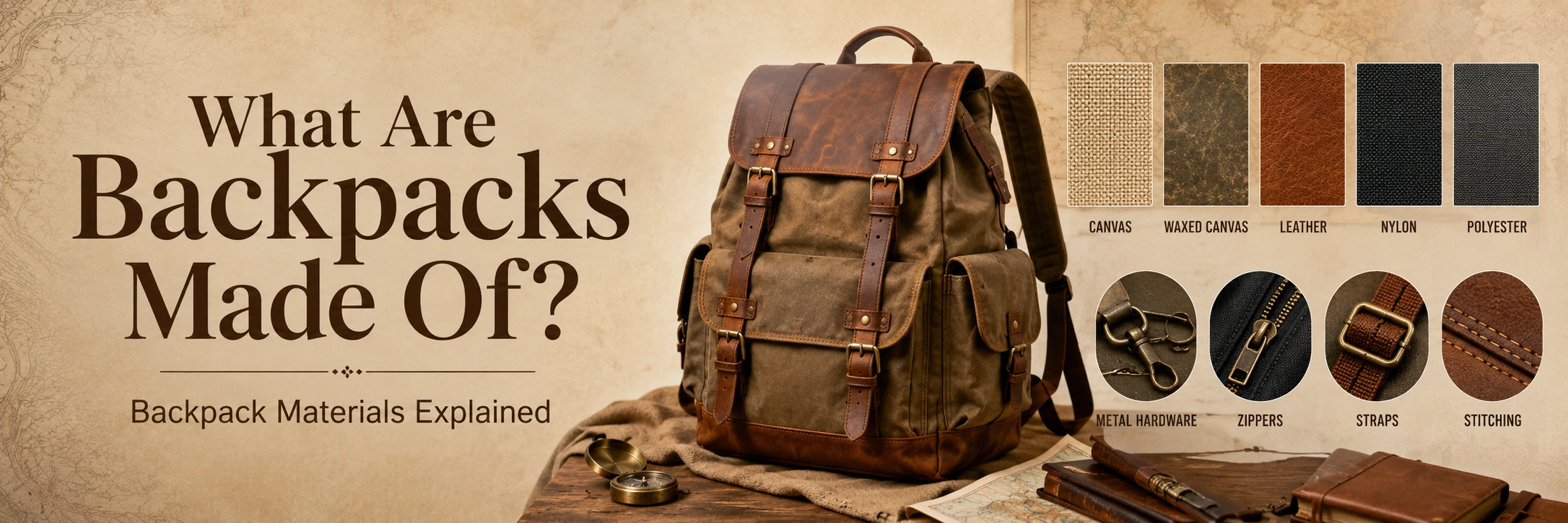
A backpack is not made from just one material — it is a combination of fabric, lining, hardware, stitching, straps, and reinforcements that all affect how it feels, lasts, and performs.
Most people think about the outer fabric when comparing backpacks. That's the most visible part and the one most listed in product descriptions. But two backpacks made from identical outer fabric can feel and last completely differently depending on their lining, their hardware, how the straps are attached, and how the stress points are reinforced. The outer material is the starting point, not the whole story.
Here's what backpacks are actually made from — and why each part matters more than most buyers realize before they purchase.
Quick Answer: What Are Backpacks Usually Made Of?
Most backpacks combine several materials working together:
| Backpack Part | Common Materials | Why It Matters |
|---|---|---|
| Outer shell | Canvas, nylon, polyester, leather | Durability, style, water resistance |
| Lining | Polyester, cotton blend, nylon | Interior protection and cleaning |
| Straps | Canvas, nylon webbing, leather, padding | Comfort and load support |
| Hardware | Metal, brass, alloy, plastic | Durability and daily usability |
| Zippers | Nylon coil, metal zipper, coated zipper | Access and long-term reliability |
| Stitching | Polyester or nylon thread | Strength at stress points |
| Padding | Foam, mesh, synthetic padding | Comfort and laptop protection |
Most backpacks are made from an outer shell material, an inner lining, zippers or buckles, shoulder straps, padding, stitching, and reinforced stress points. Understanding each one changes how you evaluate any bag you're considering.
Why Backpack Material Matters
The outer fabric is the most discussed variable in backpack buying decisions, but it's really the starting point for a longer set of considerations.
Material affects weight — a canvas backpack and a nylon backpack of the same size will feel noticeably different on the shoulder. It affects durability — specifically which kind of durability, because canvas resists abrasion differently from how nylon resists tearing. It affects water resistance, style, cleaning, how the bag ages, and ultimately how long it stays in rotation before getting replaced.
Two backpacks that look similar at a glance can be very different objects. The material decides whether a backpack feels rugged, lightweight, polished, sporty, or cheap — and that impression doesn't change over time the way initial impressions of other features do. The fabric is what you interact with every time you use the bag.
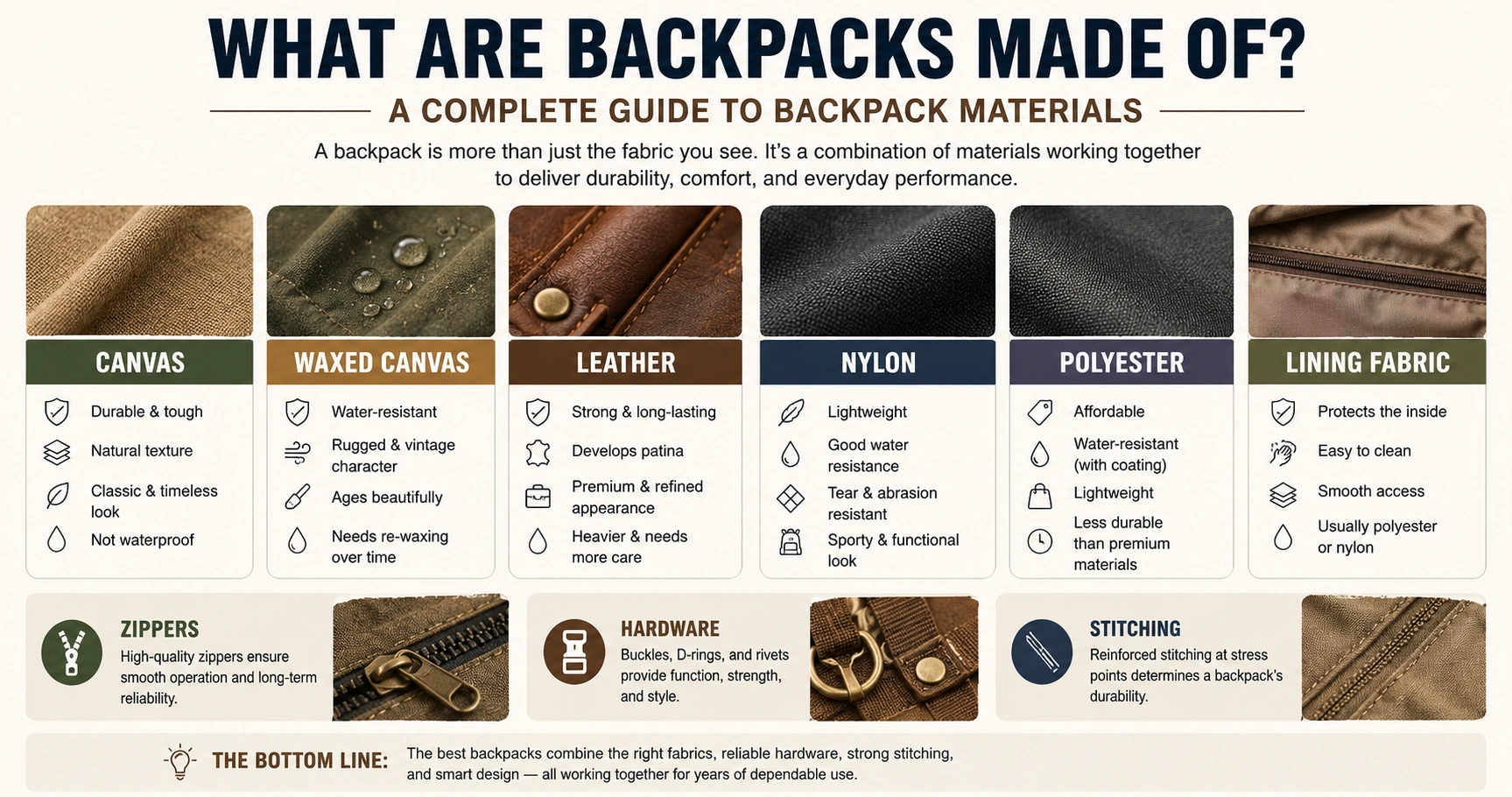
Canvas: Rugged, Durable, And Built For Daily Use
Canvas is a woven fabric — usually cotton or a cotton blend — that's been used in workwear, military gear, and everyday carry for generations because of its durability and texture. In backpacks, it produces a thick, structured feel that synthetic materials don't fully replicate.
The look is distinctly its own: rugged, vintage, workwear-influenced. A canvas backpack sits naturally with jeans, boots, and jackets in a way that nylon doesn't quite manage. It also ages differently — scuffs and creases on canvas tend to blend into the material's character rather than standing out as damage. Over a few years of daily use, a canvas bag often looks more interesting than it did new, not worse.
What canvas does well: abrasion resistance, everyday durability, aging with character, pairing with mature everyday clothing styles.
Where it's limited: plain canvas absorbs water more readily than synthetic fabrics. In light rain and everyday use, this is rarely a real problem. In sustained rain, it becomes one — which is where waxed canvas comes in.
Best for: vintage style, rugged daily carry, commuting, weekend travel, workwear and casual outfits, anyone who wants a bag that develops character with use.
For a head-to-head comparison of canvas and nylon in everyday carry, see canvas backpack vs nylon backpack.
Waxed Canvas: Canvas With Better Water Resistance
Waxed canvas starts as regular canvas and gets treated with a wax coating that changes how the fabric responds to moisture. Water beads on the surface and tends to roll off rather than soaking in — meaningful protection against the light rain and incidental moisture that everyday carry involves.
The coating also gives waxed canvas a slightly different visual character from plain canvas — a richer, slightly darker appearance that becomes more pronounced as the bag develops creases and wear patterns in use. The broken-in quality that waxed canvas develops is part of what makes it appealing: it looks more deliberate and more genuinely used than most other materials do after a few years.
One distinction that's worth stating clearly: waxed canvas is water-resistant, not waterproof. It handles light rain, splashes, and everyday moisture well. It's not a sealed system, and heavy or prolonged rain will eventually get through. The wax coating also wears down with use, particularly at high-friction areas, and benefits from re-waxing when it starts to thin.
Best for: daily commuting with occasional rain, weekend travel, city use, vintage aesthetic with practical water resistance.
For a detailed look at what canvas can and can't handle in the rain, see are canvas backpacks waterproof.
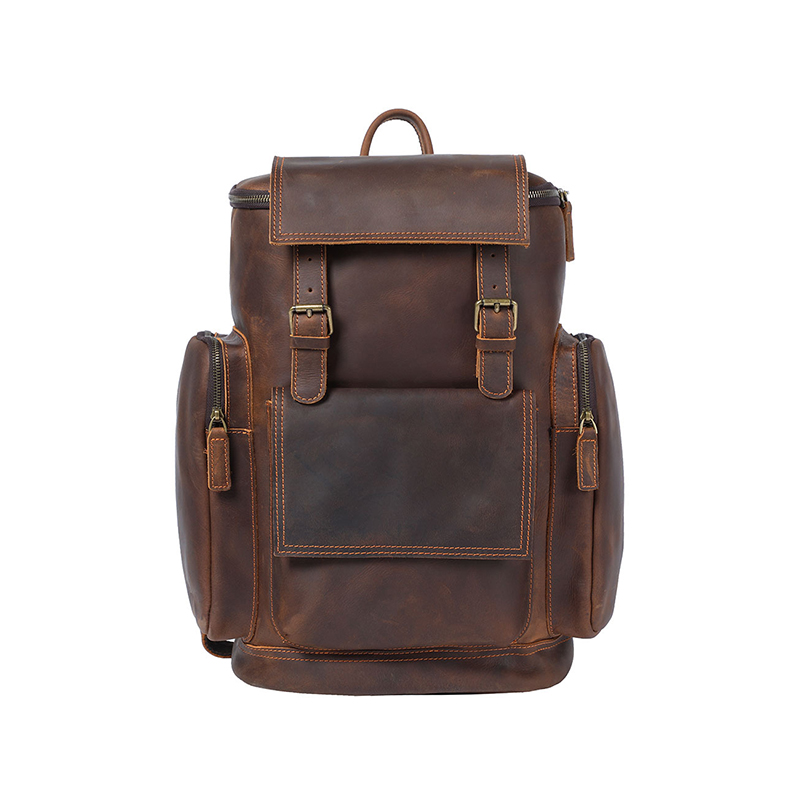
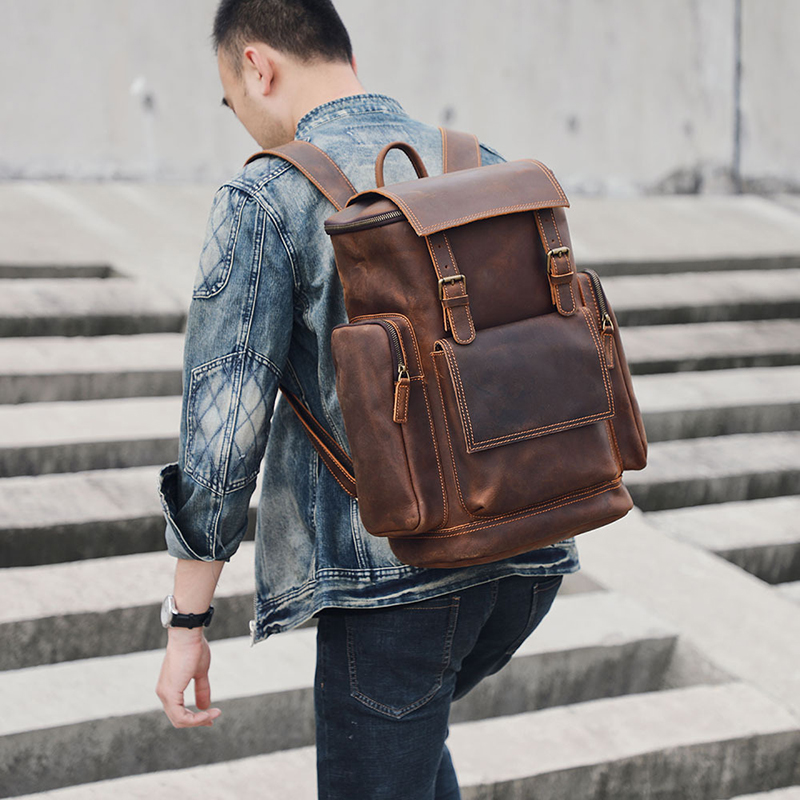
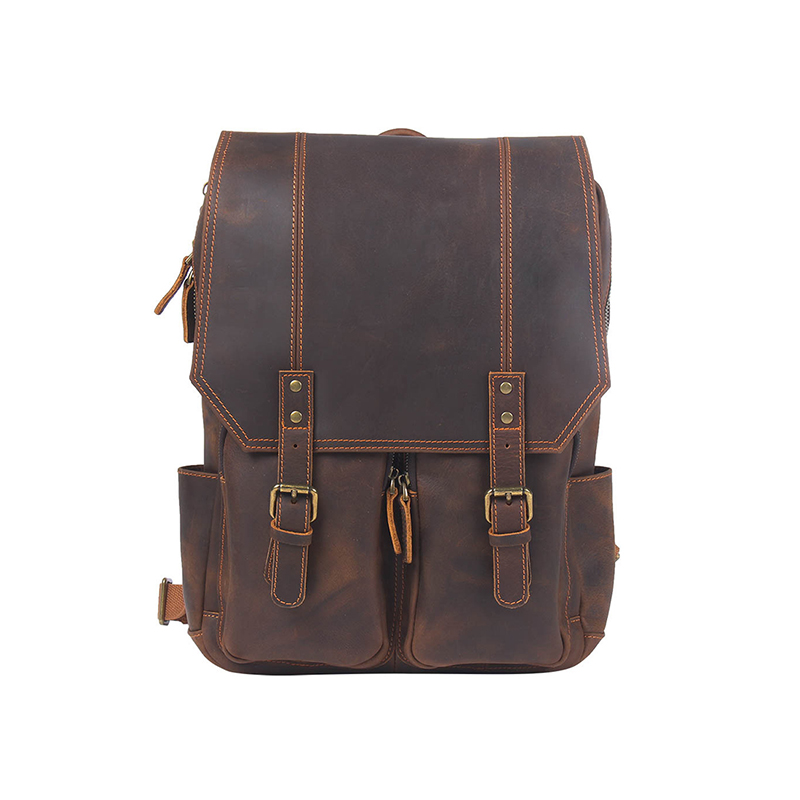
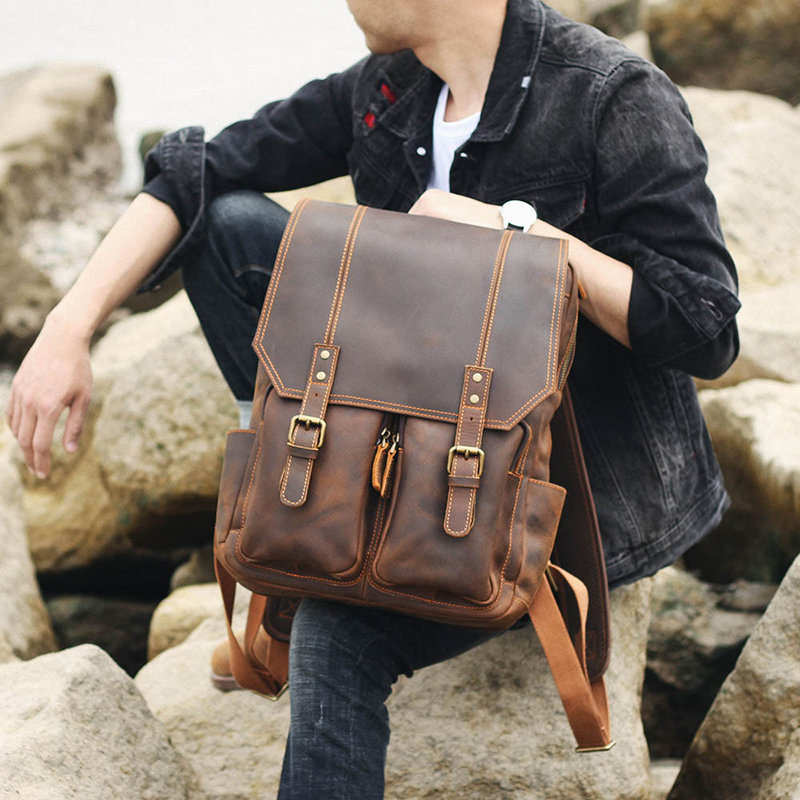
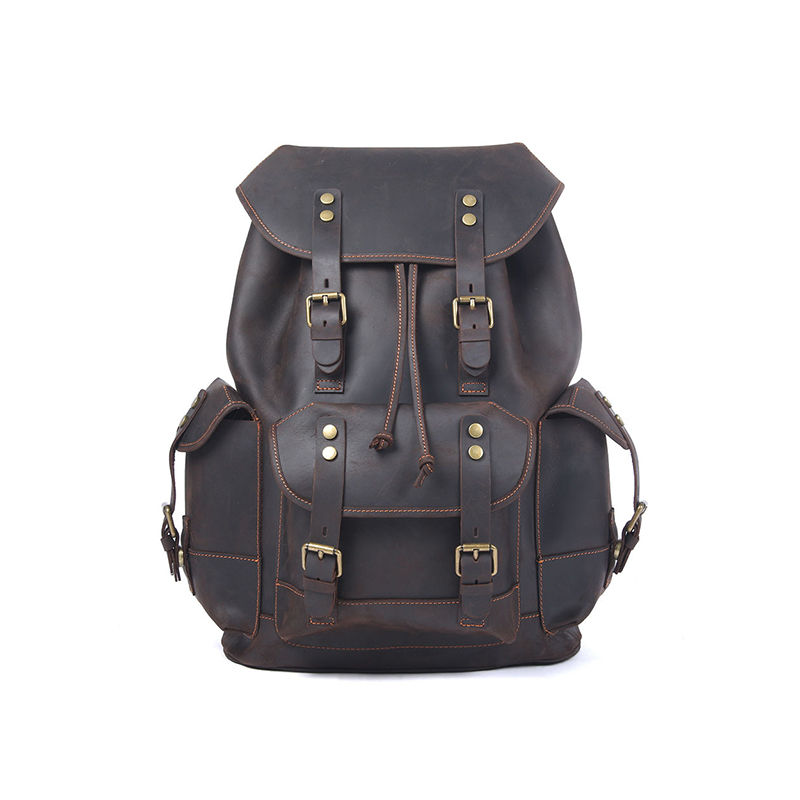
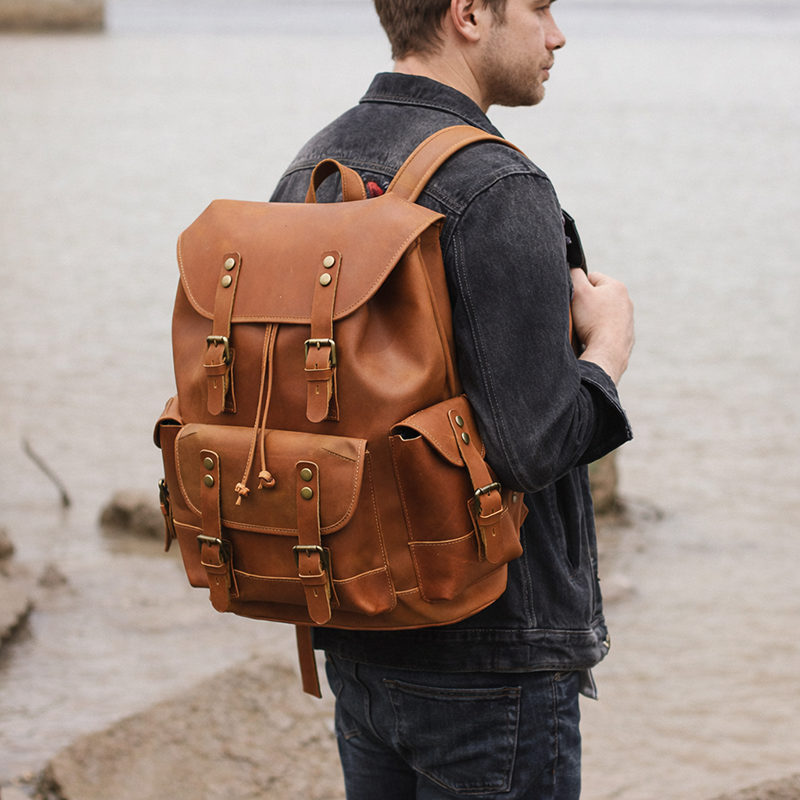
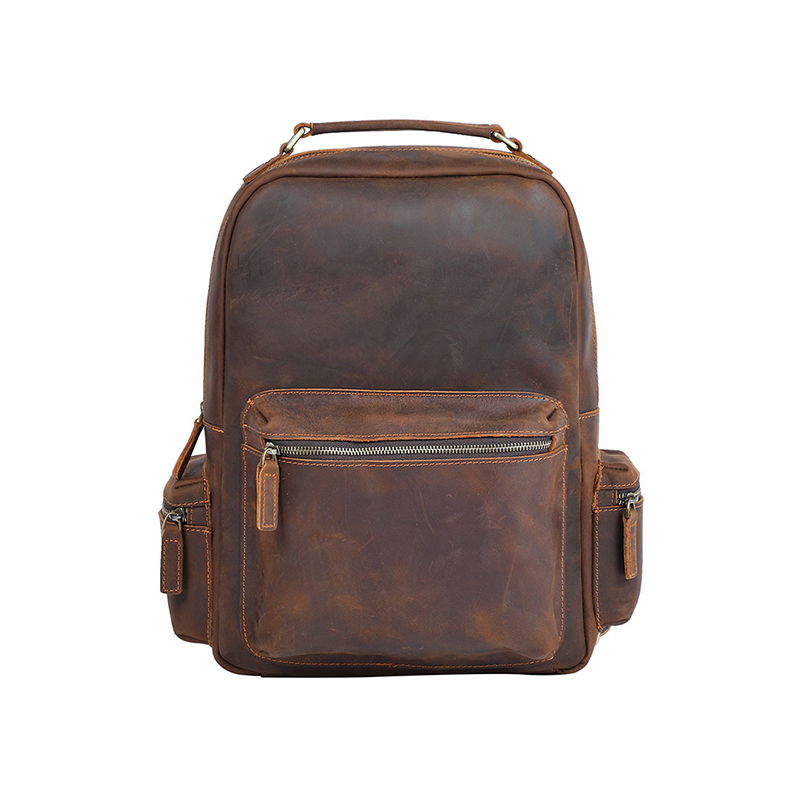
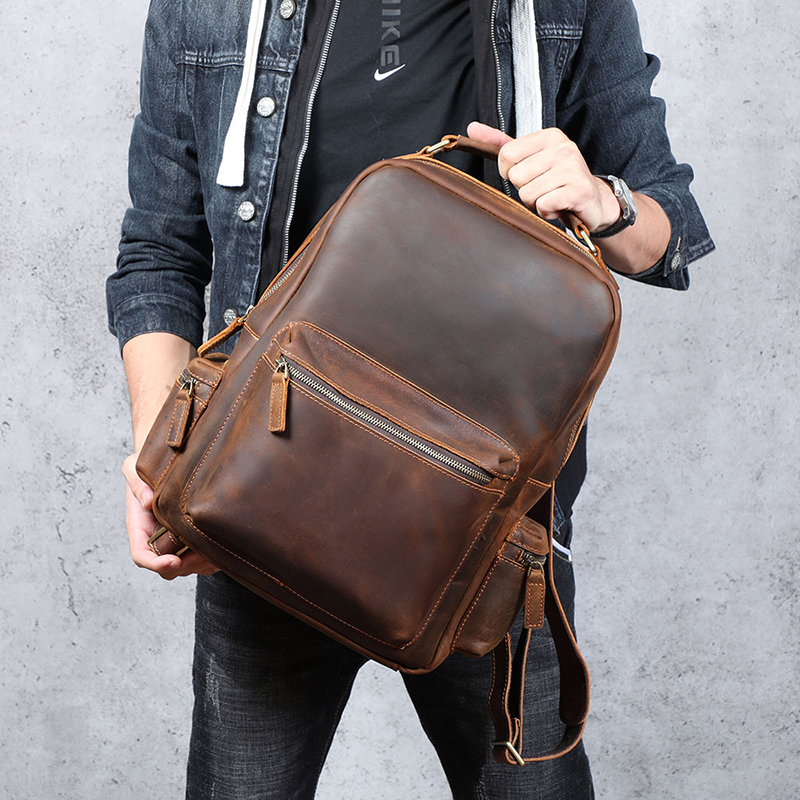
Leather: Structure, Character, And A Refined Look
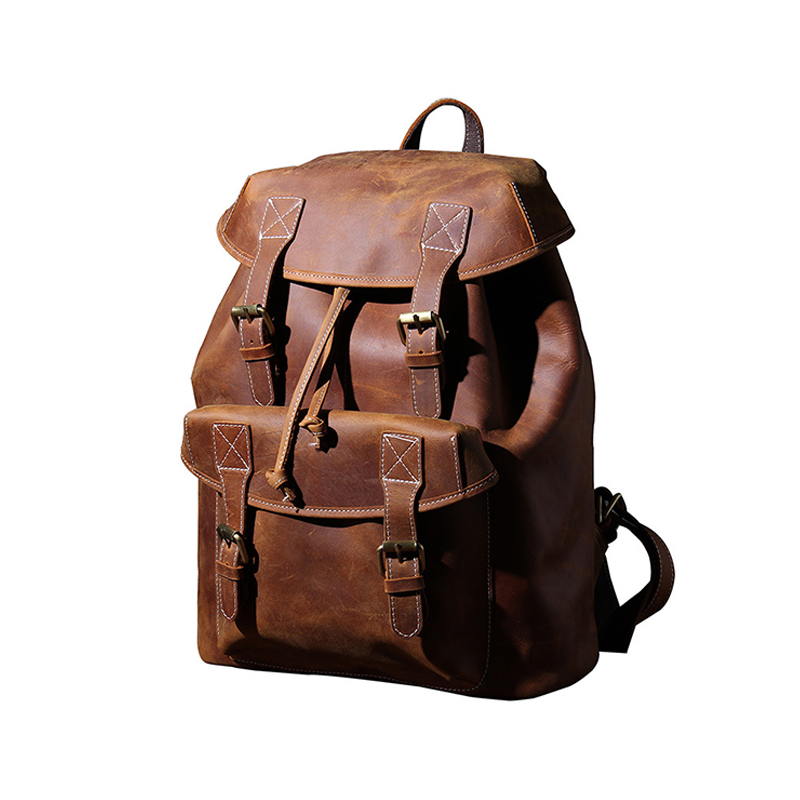
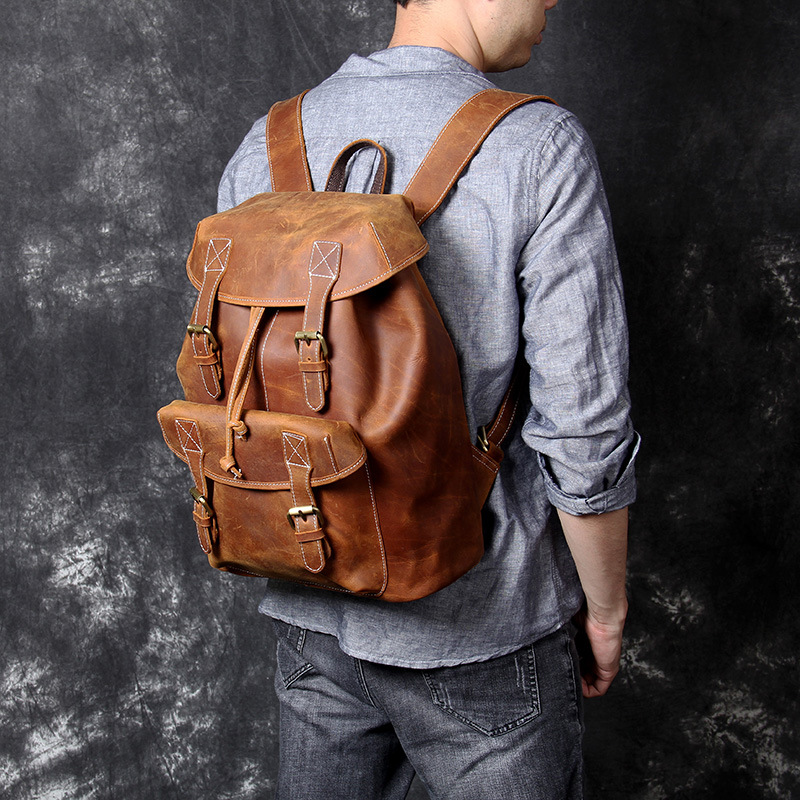
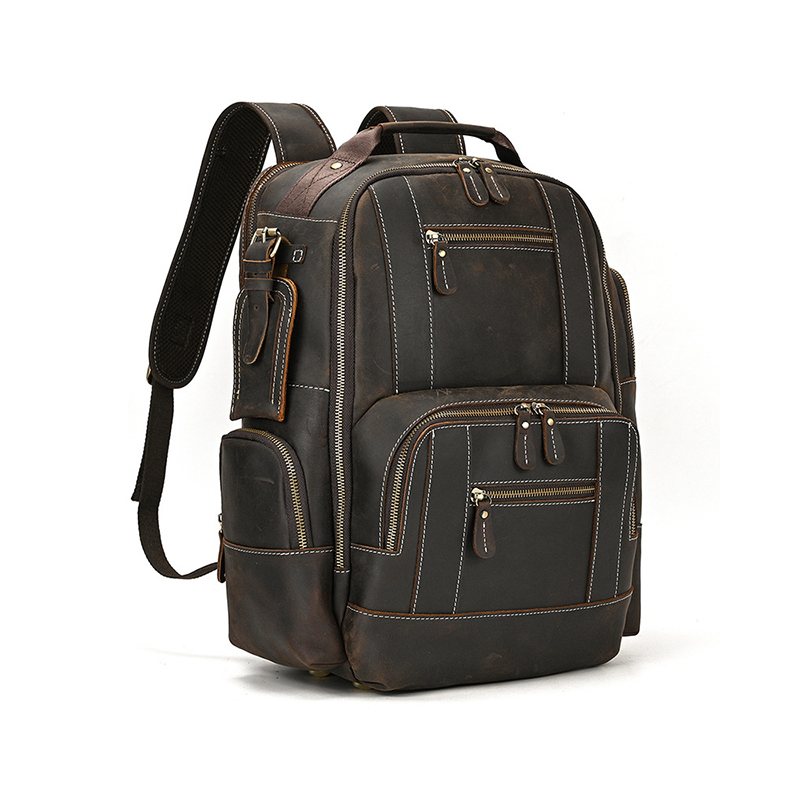
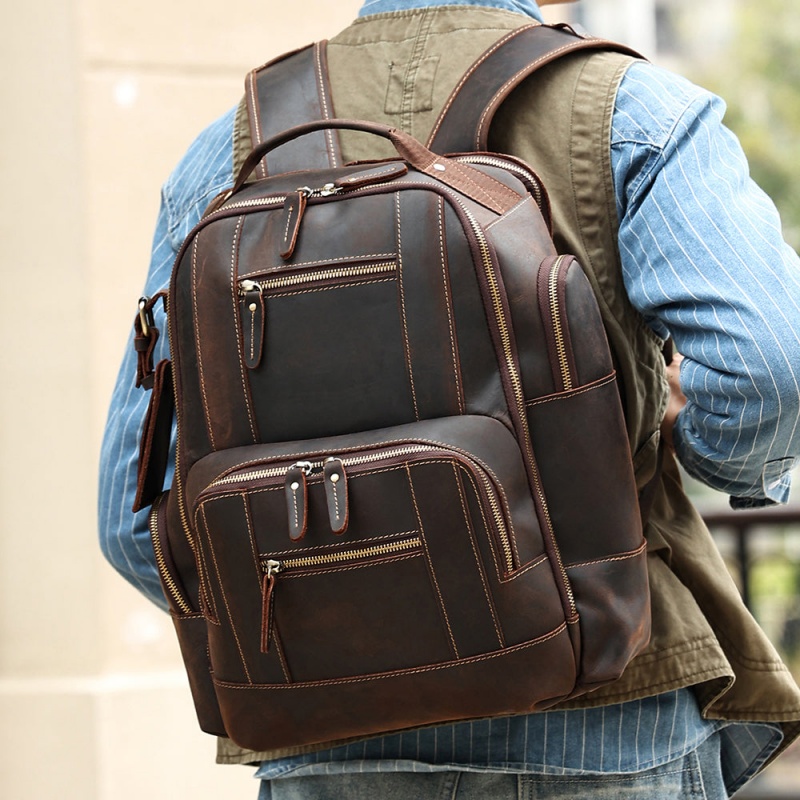
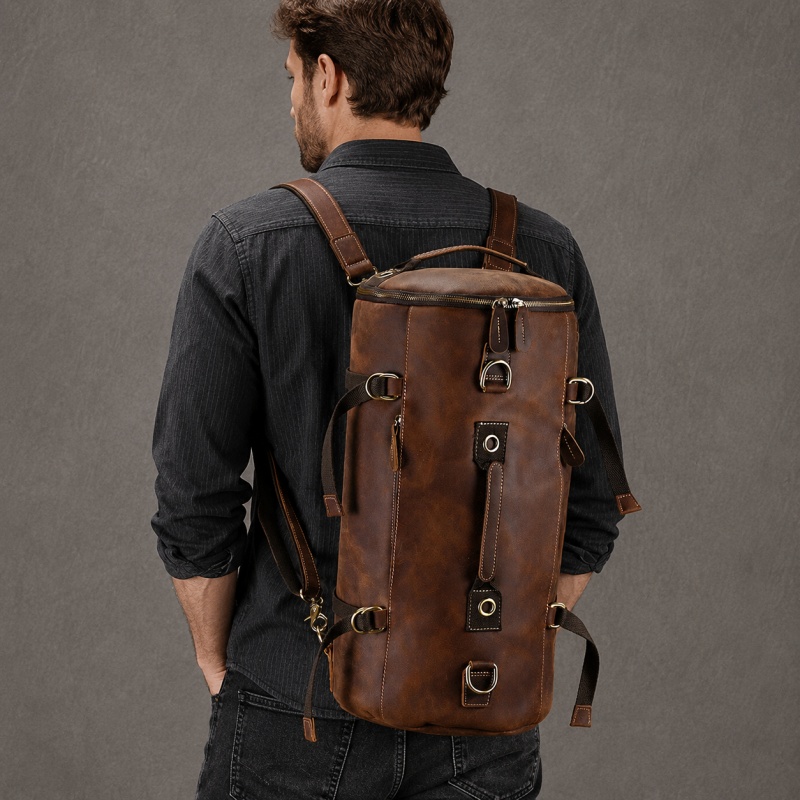
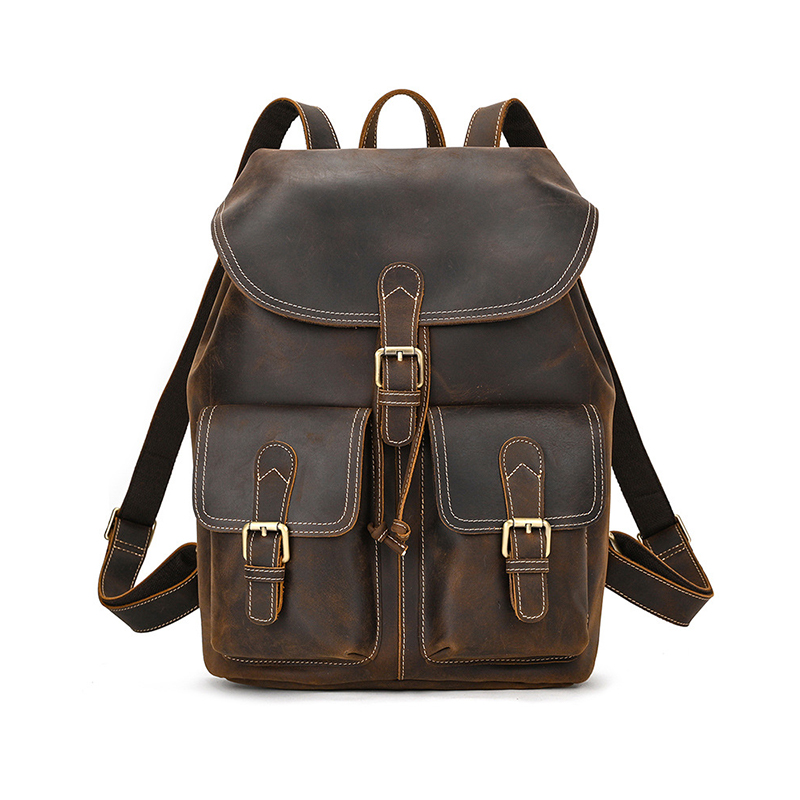
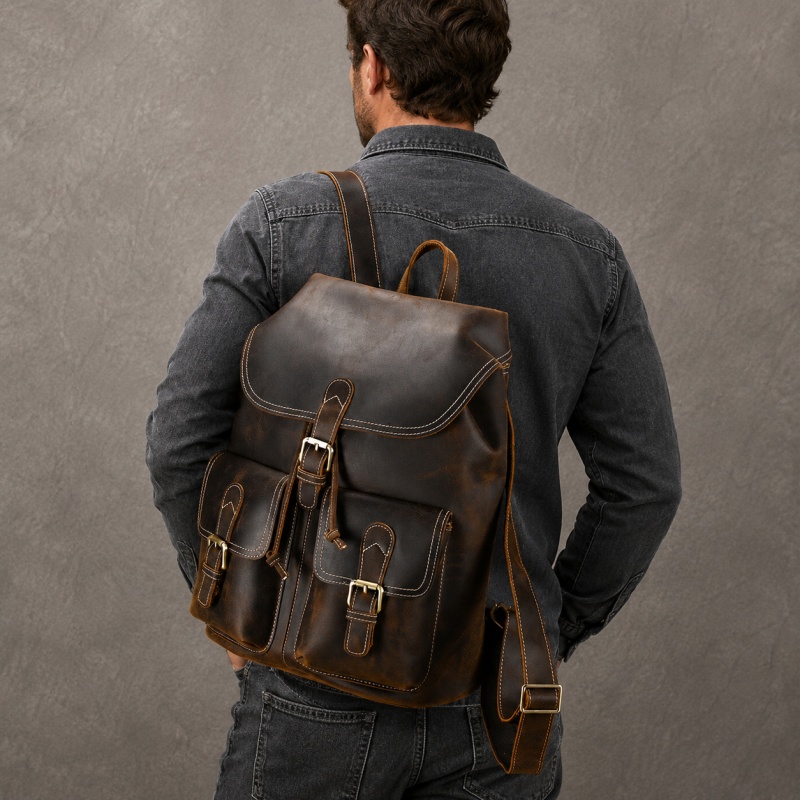
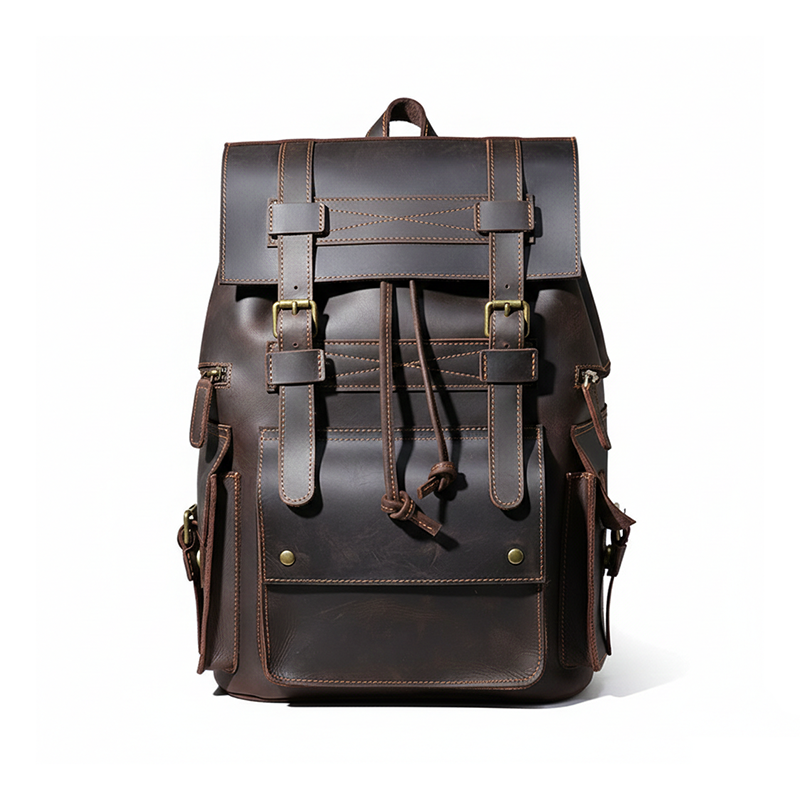
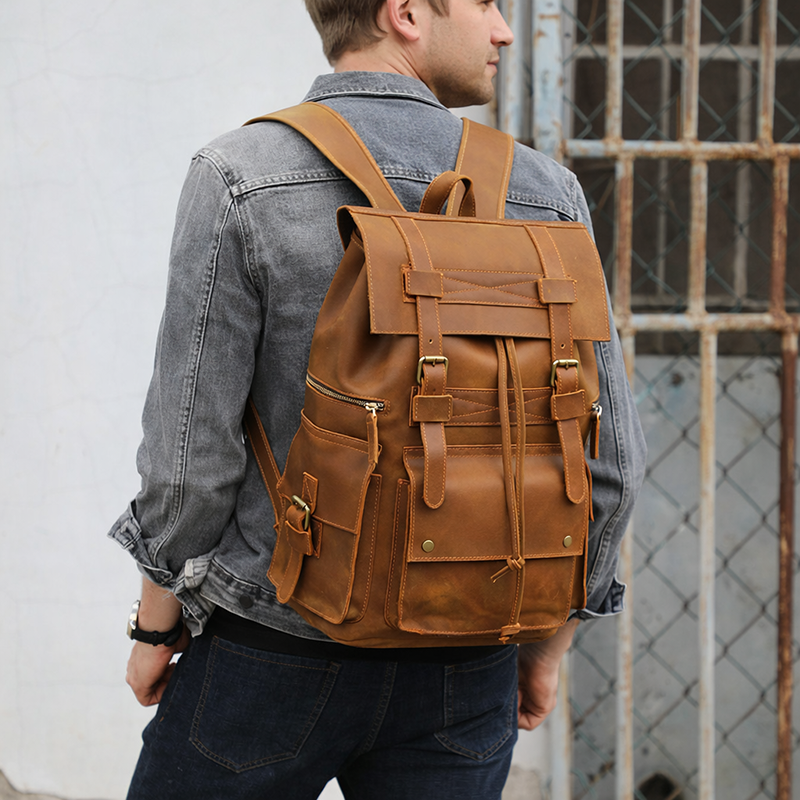
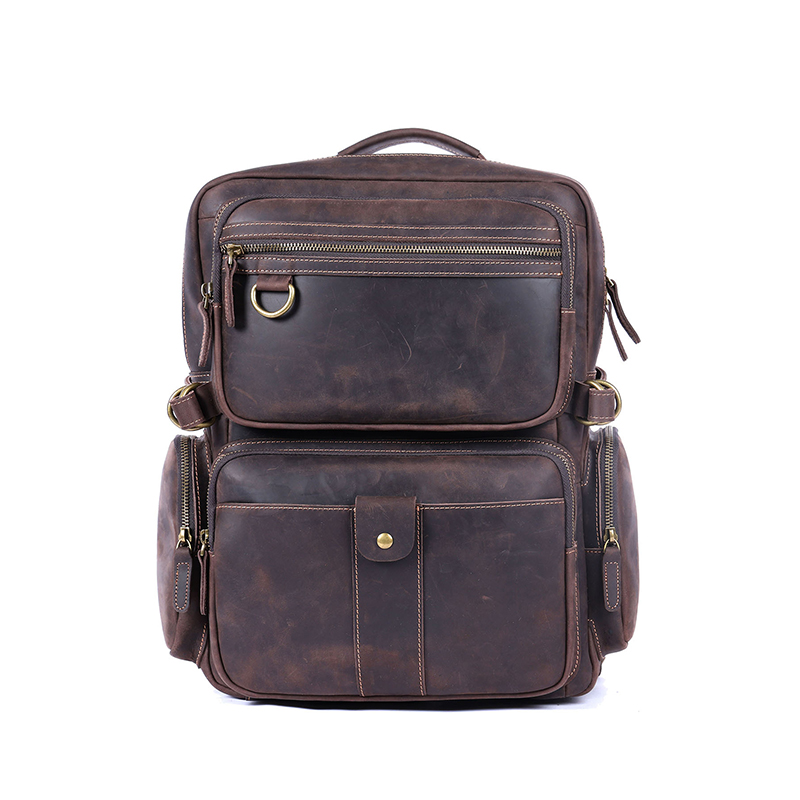
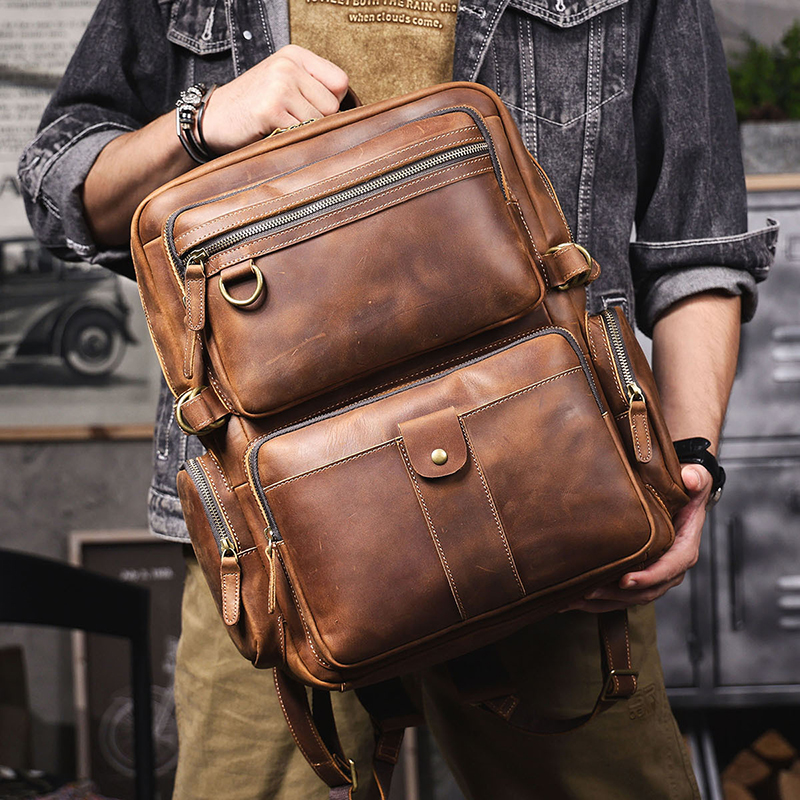
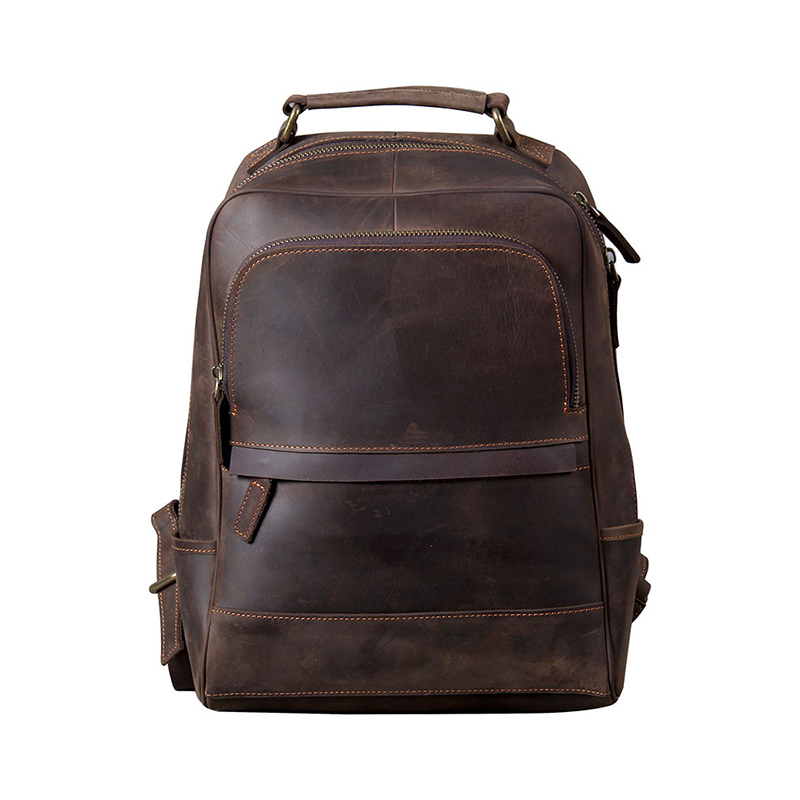
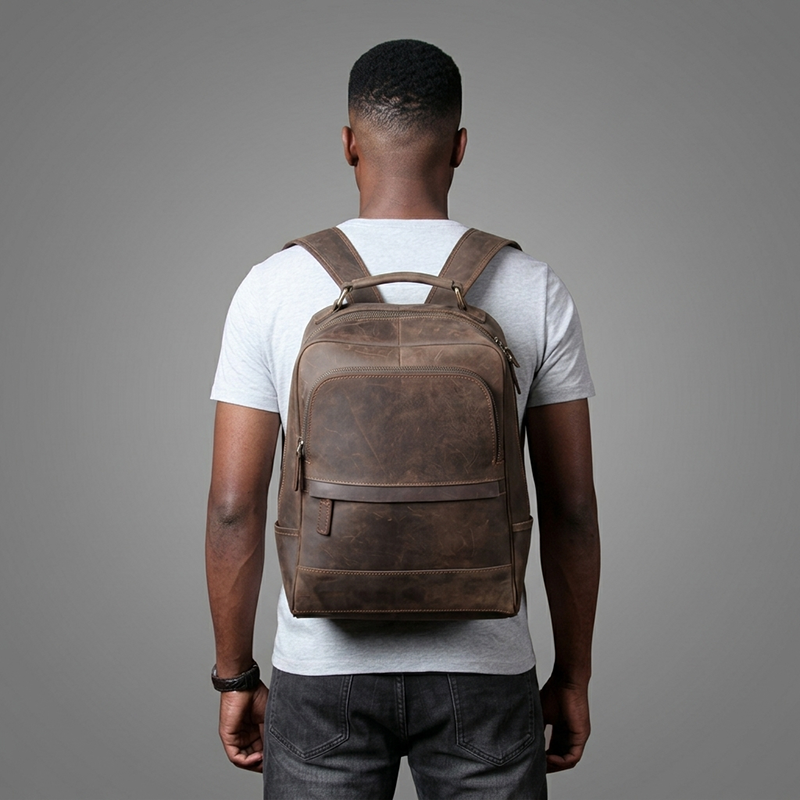
Leather shows up in backpacks in two ways: as the primary outer material in full leather bags, and as accents — straps, base panels, trim, handles, zipper pulls, and buckle straps — in bags that combine leather with canvas or other fabrics.
As a full outer material, leather produces a polished, premium look with a weight and structure that synthetic materials don't have. High-quality leather develops a distinctive patina over years of use — a deepening and richening of the surface that looks genuinely better over time rather than just differently worn. This is one of leather's main draws for people who value how objects age.
Where leather shows up as accents:
- Leather trim at the edges and flap closures
- Leather shoulder straps
- Leather base panels that protect the bag's underside
- Leather carry handles
- Leather zipper pulls
- Leather buckle straps and adjustment tabs
As an accent material, leather adds visual refinement and structure to a canvas bag without the weight penalty of full leather construction. A canvas body with leather trim captures what makes leather appealing without making the bag heavier than necessary.
Best for: business casual settings, city commuting where appearance matters, anyone who values the way quality materials age and develop character.
For how leather and waxed canvas compare across real daily use, see waxed canvas backpack vs leather backpack.
Nylon: Lightweight And Functional
Nylon is a synthetic fiber that's been a backpack staple for decades because it delivers high performance-to-weight ratio. It's lighter than canvas and leather, resists tearing well at higher fabric weights, and dries fast after getting wet — which matters in active and outdoor use where the bag is regularly exposed to moisture.
The performance story varies significantly with quality. High-denier nylon with a proper coating is genuinely durable and handles rain well. Low-weight nylon with minimal coating can pill, deform at the seams, and have its coating separate over time. "It's nylon" is not itself a durability claim — construction and fabric weight determine how long it actually lasts.
What nylon does well: lightweight carry, active and outdoor use, drying fast after exposure to rain, technical functionality.
Where it's limited: nylon reads as sporty and technical, which suits active contexts well but sits less naturally with mature everyday clothing. The material also ages in a less attractive way than canvas — it shows use rather than developing character.
Best for: gym, hiking, rainy commutes, lightweight travel, school use, active lifestyles where function is the clear priority over style.
The point about nylon is worth stating fairly: it's not a lesser material than canvas — it's a different material optimized for different things. For sport and active use, nylon is the more sensible answer. For vintage everyday style and mature daily carry, canvas tends to serve better.
Polyester: Common, Affordable, And Practical For Basics
Polyester is one of the most widely used materials in backpacks, largely because it's inexpensive to produce and comes in a wide range of weights and finishes. Many entry-level backpacks, school bags, and promotional items use polyester as their primary fabric.
At its best, polyester can be reasonably durable and handles moisture better than untreated cotton fabrics. Water-resistant coatings applied to polyester improve its performance in light rain. At its most basic, though, polyester has an appearance and texture that reads as inexpensive — it doesn't have the visual weight or material quality of canvas or leather, and it tends to look distinctly more worn after sustained use rather than developing character.
Best for: budget carry, school use, lightweight basic daily use, promotional and casual-purpose bags.
Where it falls short: polyester doesn't suit applications where the bag's appearance and material quality matter. For everyday carry that spans workdays, weekends, and casual outings, polyester usually undersells what the bag is supposed to be doing.
Lining: The Inside Material Most Buyers Overlook
The interior lining doesn't get mentioned in most buying decisions, but it affects the daily experience more than most people expect.
A well-made lining is smooth enough that items don't catch on it when reaching in or pulling things out. It resists tearing over years of use. It doesn't transfer color to lighter-colored items. It's easy to wipe down when something spills inside the bag. And it has enough structure to maintain its shape rather than collapsing into folds that make interior organization harder.
A poorly made lining does the opposite of all of that — and since the lining is what you interact with every time you open the bag, its quality shows up constantly.
Common lining materials:
- Polyester lining: most common, usually adequate, quality varies widely
- Nylon lining: slightly more durable, slightly better feel
- Cotton blend lining: softer to the touch, less common in modern bags
- Padded laptop lining: dedicated soft padding around the laptop sleeve
- Mesh pockets: separate small items, allow visibility into pockets
A backpack may look durable outside, but a weak lining can make it feel cheap every time you open it.
Zippers, Buckles, And Hardware
Hardware is where the daily experience of using a bag either works or doesn't, and it's an area where quality differences are immediately apparent.
Zippers
A zipper that operates smoothly and reliably is one of those features you never think about until it doesn't work. Zippers that catch, stick, or require effort to move become a minor irritant that repeats itself every single time you open the bag. For main compartments and laptop sleeves where the zipper carries the most use, quality matters significantly.
Coated zippers offer some water resistance but don't make the bag waterproof — they reduce the risk of water entering through the zipper track, but the bag's overall water resistance still depends on the fabric and seam construction.
Buckles
Metal buckles are heavier and more expensive than plastic ones, but they hold tension better and don't crack or deform the way plastic buckles eventually do under sustained stress. Leather buckle straps add a visual quality that suits canvas and vintage-style bags particularly well.
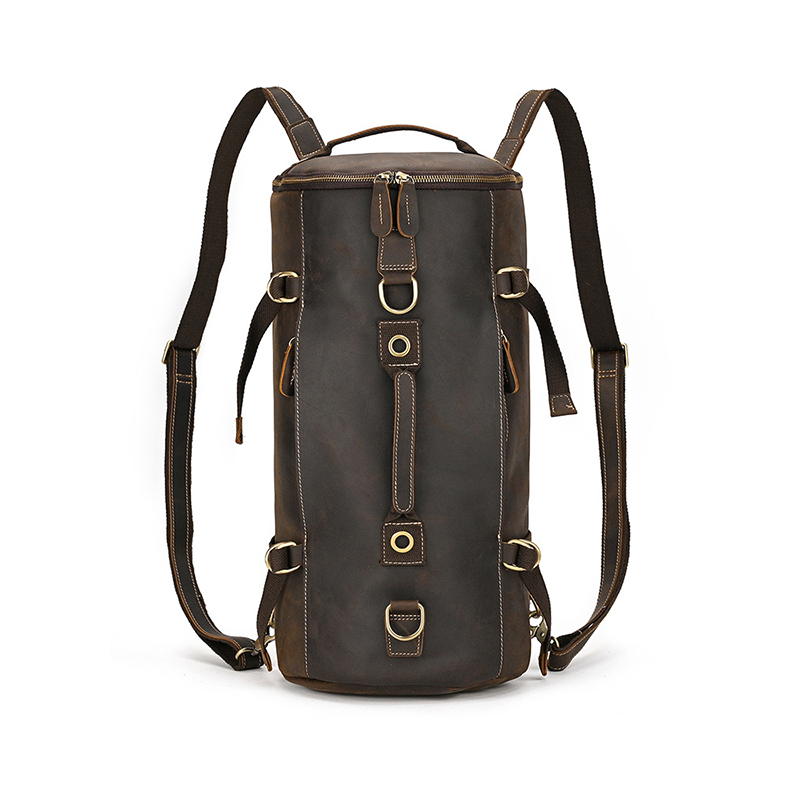
Rivets And D-Rings
Rivets reinforce attachment points — the places where a strap joins the bag body, or where a handle is attached. A rivet at these points distributes stress over a larger area than stitching alone, which is why well-made bags use both rather than relying on one.
D-rings provide attachment points for accessories, keychains, and additional straps. Solid metal D-rings are meaningfully more durable than the cast alloy versions commonly found on lower-cost bags.
A Note On Brass vs Alloy vs Plastic
Brass hardware has a warmth and weight that suits leather and canvas bags well, and it develops its own patina over time that complements aged leather and worn canvas. Alloy hardware is more common, costs less, and performs adequately in most everyday use. Plastic hardware is lightest and suits sport and outdoor bags where weight is the priority.
Stitching And Reinforced Stress Points
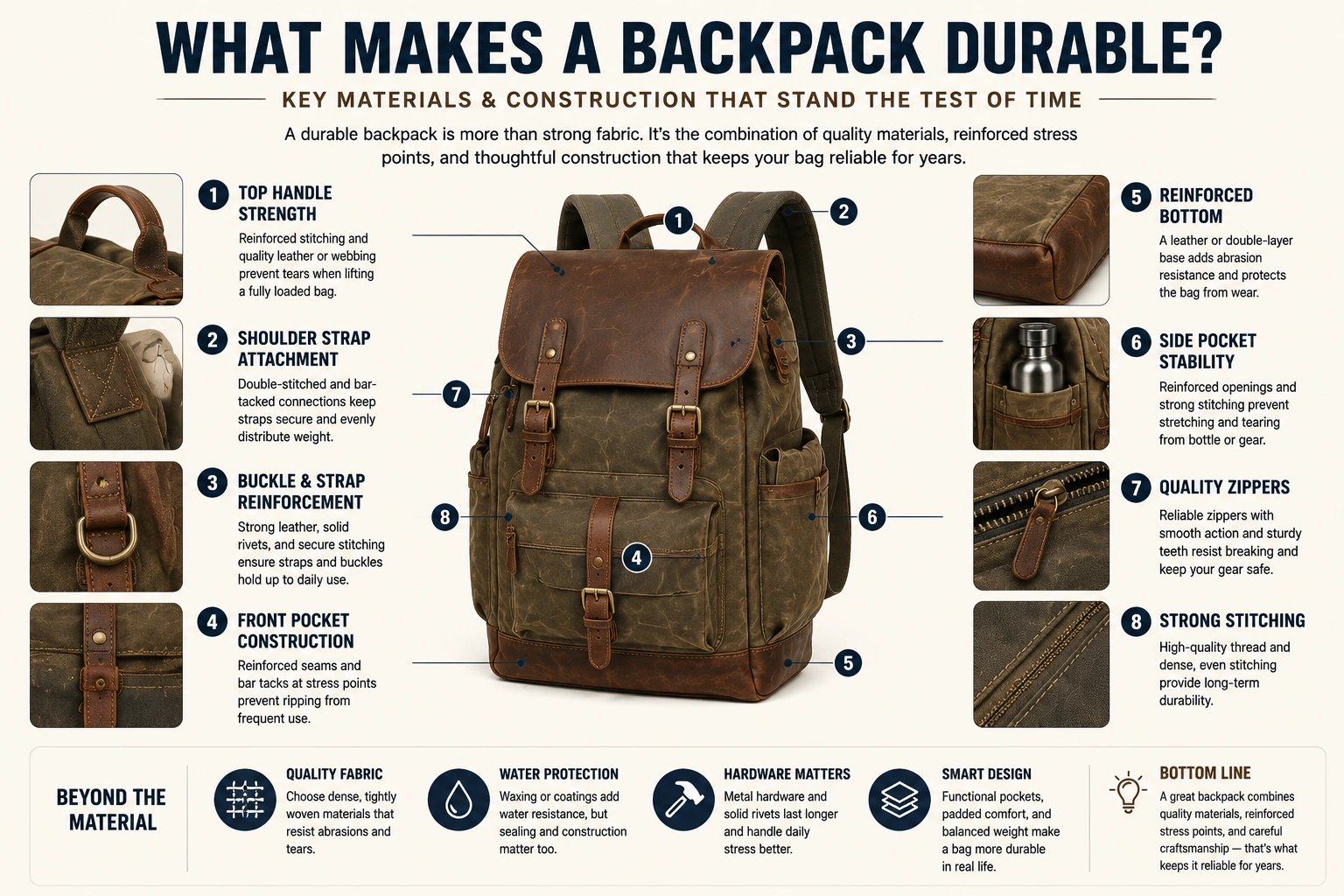
The fabric of a bag is only as strong as the stitching that holds it together — and the stitching is most critical at the places that take the most stress.
The locations worth checking:
- Where shoulder straps attach to the bag body (the highest-stress point on most backpacks)
- The top carry handle
- Bottom corners, which contact surfaces constantly
- Front pocket seam joins
- Zipper ends, where thread pulls are most likely to start
- Buckle strap attachment points
Good stitching at these locations is tight, even, and reinforced with additional passes or bar-tacking at the specific points where stress concentrates. Poor stitching is loose, uneven, and fails first at these same locations — usually within months of regular use rather than years.
A strong fabric means little if the stitching fails at the shoulder straps. When comparing bags, turning them over and examining the strap attachment points is one of the most reliable indicators of overall construction quality.
Padding And Shoulder Strap Materials
What a bag is made of on the outside determines how it looks. What the straps are made of determines how it feels over any real carrying distance.
Strap materials and their trade-offs:
Canvas straps have a textured, workwear character that suits vintage bags well. They're durable but don't have the built-in padding that softer materials do.
Leather straps add visual quality and structure. Leather that's properly conditioned develops a softness over time, but initial break-in can be stiffer than canvas.
Nylon webbing is lightest and most functional, adjusts easily, and suits active and outdoor use well. It doesn't have the visual character of canvas or leather.
Padding matters more than most people check: thin shoulder straps concentrate weight in a small area, which becomes uncomfortable quickly when the bag is loaded. Well-padded straps distribute load across a broader surface and make a real difference over any commute of more than a few minutes. Mesh padding adds airflow, which suits active use; foam padding is more common and provides consistent cushioning.
Laptop protection inside the bag involves its own padding layer — typically a foam-backed sleeve with a soft lining that prevents the laptop from being scratched by other contents or damaged by impacts to the bag's exterior.
Waterproof Coatings And Treatments
Water resistance in backpacks comes from several different things that are often lumped together, and the distinctions matter.
Wax coating — applied to canvas, creates water beading. Effective against light rain, wears down over time, can be reapplied.
PU and TPU coatings — polyurethane coatings applied to synthetic fabrics to improve water resistance. More durable than wax for synthetic materials.
DWR treatment (durable water repellent) — a finish applied to the fabric surface that causes water to bead rather than soak in. Effective when new, wears down with washing and use.
Waterproof zippers — reduce water entry through the zipper track specifically. The rest of the bag's resistance still depends on fabric and seam construction.
Sealed seams — required for genuine waterproofing. Most everyday backpacks don't have sealed seams, which means they're water-resistant at best, not waterproof.
Rain cover — a separate accessory that provides a complete outer barrier when weather demands it. The most reliable solution for sustained heavy rain regardless of the bag's primary material.
The important distinction: water-resistant and waterproof are not the same thing, and most bags marketed with water-resistant features are specifically not waterproof. For a detailed breakdown of what canvas specifically can and can't handle in rain, are canvas backpacks waterproof covers the specific distinctions.
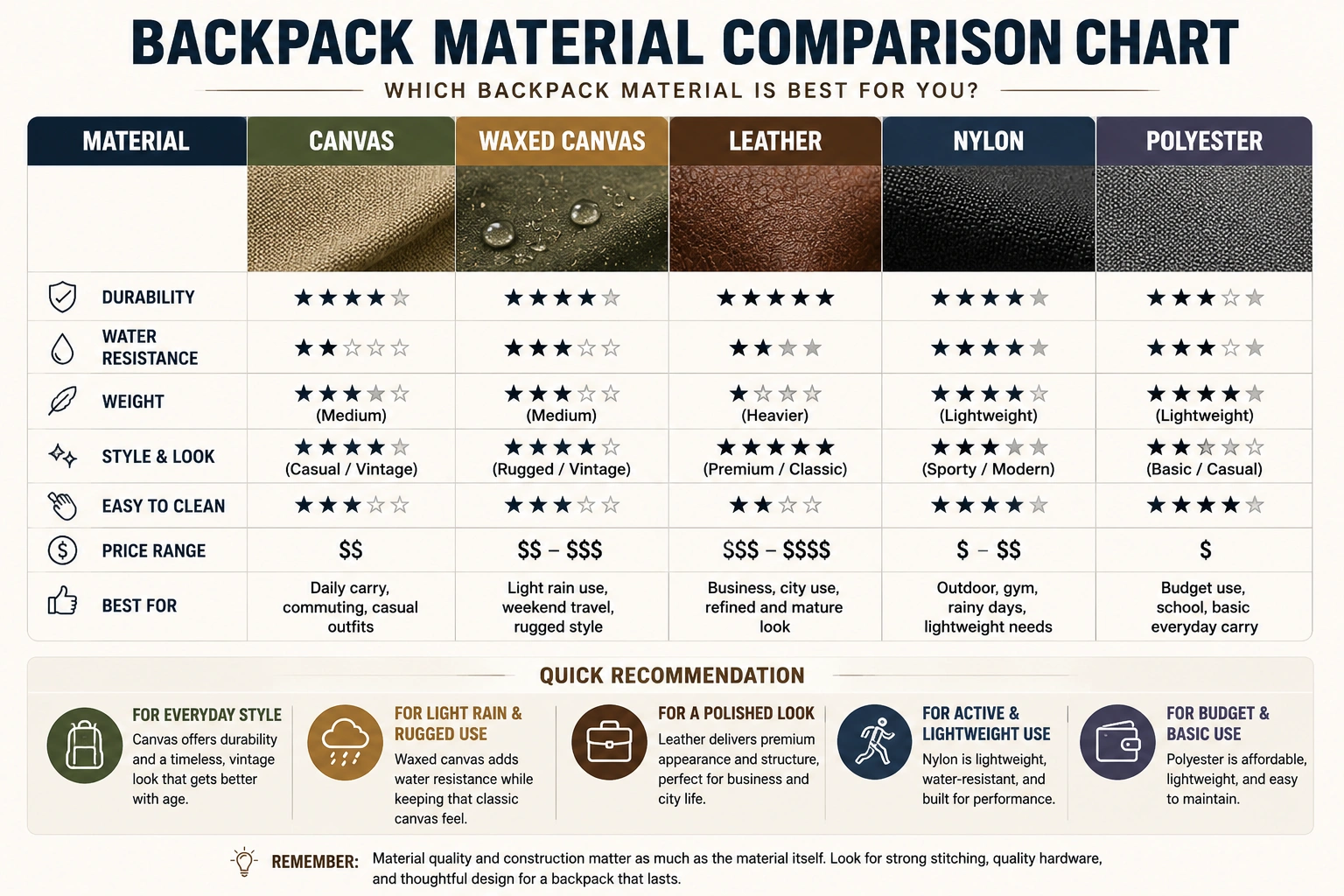
Which Backpack Material Is Best For Daily Use?
| Use Case | Best Material Choice | Why |
|---|---|---|
| Daily commute | Canvas, waxed canvas, nylon | Balanced durability and comfort |
| Mature everyday style | Canvas and leather | Rugged but refined |
| Rainy commute | Nylon or waxed canvas | Better water resistance |
| Business casual | Leather or canvas + leather | More polished look |
| Gym or sport | Nylon or polyester | Lightweight and easy to clean |
| Weekend travel | Waxed canvas or canvas + leather | Durable and versatile |
| Budget use | Polyester | Affordable and common |
| Vintage style | Canvas or waxed canvas | Ages with character |
For guidance on keeping a canvas bag clean without damaging the fabric or leather trim, see how to clean a canvas backpack.
Canvas And Leather Backpacks: A Balanced Material Choice
The combination of canvas and leather is worth calling out specifically, because it represents a practical answer to what most people are actually looking for in an everyday backpack.
The canvas body provides durability, lighter weight, and natural aging character. Leather trim — at the straps, base panels, handles, and accent details — provides the structure, visual quality, and refined finish that canvas alone doesn't always achieve.
The result is a bag that's lighter than full leather but more characterful than plain nylon, that suits a wider range of everyday contexts than either material alone, and that ages into something more interesting rather than simply looking more worn.
For people who want one bag for commuting, short trips, and everyday outfits, canvas and leather backpacks offer one of the most practical material combinations available. The trade-offs of each individual material are balanced by the strengths of the other.
Final Verdict: What Backpack Material Should You Choose?
The answer depends on what you're prioritizing, and being clear about that makes the decision straightforward:
Nylon is the right choice when light weight, sport function, and rain performance are the top priorities. Practical, functional, and without pretension about being anything else.
Polyester suits budget-conscious and basic everyday use where material character isn't a priority.
Leather is right for formal and business contexts where a polished, premium appearance is the main requirement.
Canvas and waxed canvas are the strongest choice for vintage everyday style, rugged daily carry, and anyone who wants a bag that develops real character with use.
Canvas and leather covers the most ground for men who want one bag that works across workdays, weekends, and travel — durable and practical enough for daily use, refined enough for the city, and built from materials that age in a direction worth carrying.
Frequently Asked Questions
What are most backpacks made of?
Most backpacks are made from an outer fabric — canvas, nylon, polyester, or leather — combined with an interior lining, zippers, buckles, shoulder straps, foam or mesh padding, stitching, and reinforced hardware at stress points. The outer fabric is the most visible component, but the hardware, stitching, and lining all affect how the bag performs and how long it lasts.
Is canvas a good material for backpacks?
Yes. Canvas is durable against everyday abrasion, develops natural character with use, and suits vintage and mature everyday styles well. It's heavier than nylon and absorbs water more readily than synthetic materials, but for daily carry and weekend use where rain isn't the primary concern, it's a very capable material.
Is nylon better than canvas for backpacks?
It depends on the use case. Nylon is lighter and typically performs better in rain, making it the stronger choice for active, outdoor, or wet-condition use. Canvas is better if the priorities are rugged everyday appearance, vintage style, and a material that develops character with use rather than just showing wear.
What is the most durable backpack material?
There's no single answer. Heavy canvas, waxed canvas, high-denier nylon, and full-grain leather can all be exceptionally durable when well-made. Construction quality — stitching, hardware, reinforcement at stress points — matters as much as the outer fabric in determining how long a bag actually lasts.
Are leather backpacks durable?
Quality leather backpacks are very durable and can last for many years with proper care. The trade-offs are weight — leather backpacks are heavier than canvas or nylon — and maintenance requirements around moisture and conditioning. For daily carry where weight and ease of use matter, canvas and leather combinations often work better than full leather.
What is waxed canvas used for?
Waxed canvas is used for backpacks, duffle bags, messenger bags, jackets, tool rolls, and outdoor-style goods because it combines natural fabric character and rugged texture with meaningful water resistance. The wax coating sheds light rain and moisture while maintaining the visual character and aging properties of regular canvas.
What backpack material is best for everyday use?
For everyday carry across commuting, casual outfits, and occasional trips, canvas and waxed canvas are strong choices for anyone who values vintage style and material character. Canvas and leather is a strong choice for men who want one bag that covers daily carry, workdays, and weekends without looking too sporty or too formal.