You ordered a leather belt online. It looks exactly right — the leather, the buckle, the color. You try it on and the fit is off. The belt is too loose at every available hole, the tail hangs past the second loop, and you're stuck between returning it and wondering if there's a faster fix.
The faster fix you're thinking about: punch another hole.
Can you do it? Yes. Should you always do it? That depends on a few things the belt itself will tell you.
A Quick Answer: Yes — But Not Always
You can punch extra holes in most leather belts, and when done correctly, it's a clean, permanent fix that doesn't meaningfully affect the belt's function or lifespan.
The qualification matters though. Whether punching a hole is a good idea depends on the quality of the leather, the thickness of the belt, how far off the fit is, and what tools you're using. Get those factors right and a new hole is essentially invisible. Get them wrong and you can cause real, irreversible damage to a belt that might otherwise have lasted years.
🔑 Quick Summary:
- Punching extra holes in leather belts is safe when the leather is good quality, the belt is at least 3–4mm thick, and you use the right tool
- A proper rotary or single-post leather hole punch produces a clean hole; a knife or screwdriver does not
- If the belt is more than 2 holes off from where you need it, punching may not be the right solution — resizing or exchanging the belt is worth considering
- The biggest risk isn't the hole itself; it's using the wrong tool or placing the hole too close to the belt edge
Is It Safe To Punch Extra Holes In A Leather Belt?
For most quality leather belts, yes — punching an additional hole is a safe modification that thousands of people do without issue. The leather doesn't "weaken" in any meaningful structural sense from a single clean hole, especially when there's sufficient material surrounding it.
The situations where it's not safe are more specific:
Thin leather — belts under 3mm — have less material surrounding each hole to begin with. Add another hole too close to the existing ones and the web of leather between them becomes narrow enough to be at risk of tearing under normal wear tension.
Bonded leather or heavily layered construction is where punching gets genuinely risky. Bonded leather's composite structure doesn't punch cleanly — the layers can separate at the punch point, and the hole edges are more prone to fraying and tearing than solid leather would be.
Wrong tools cause more damage than the hole itself would. A blunt instrument pushed through leather doesn't cut — it tears and stretches the fibers in an irregular pattern, producing a ragged hole that will continue to worsen under use. This is the most preventable form of hole-punch damage, and it comes down entirely to what you're using.
Best Tools To Punch Belt Holes
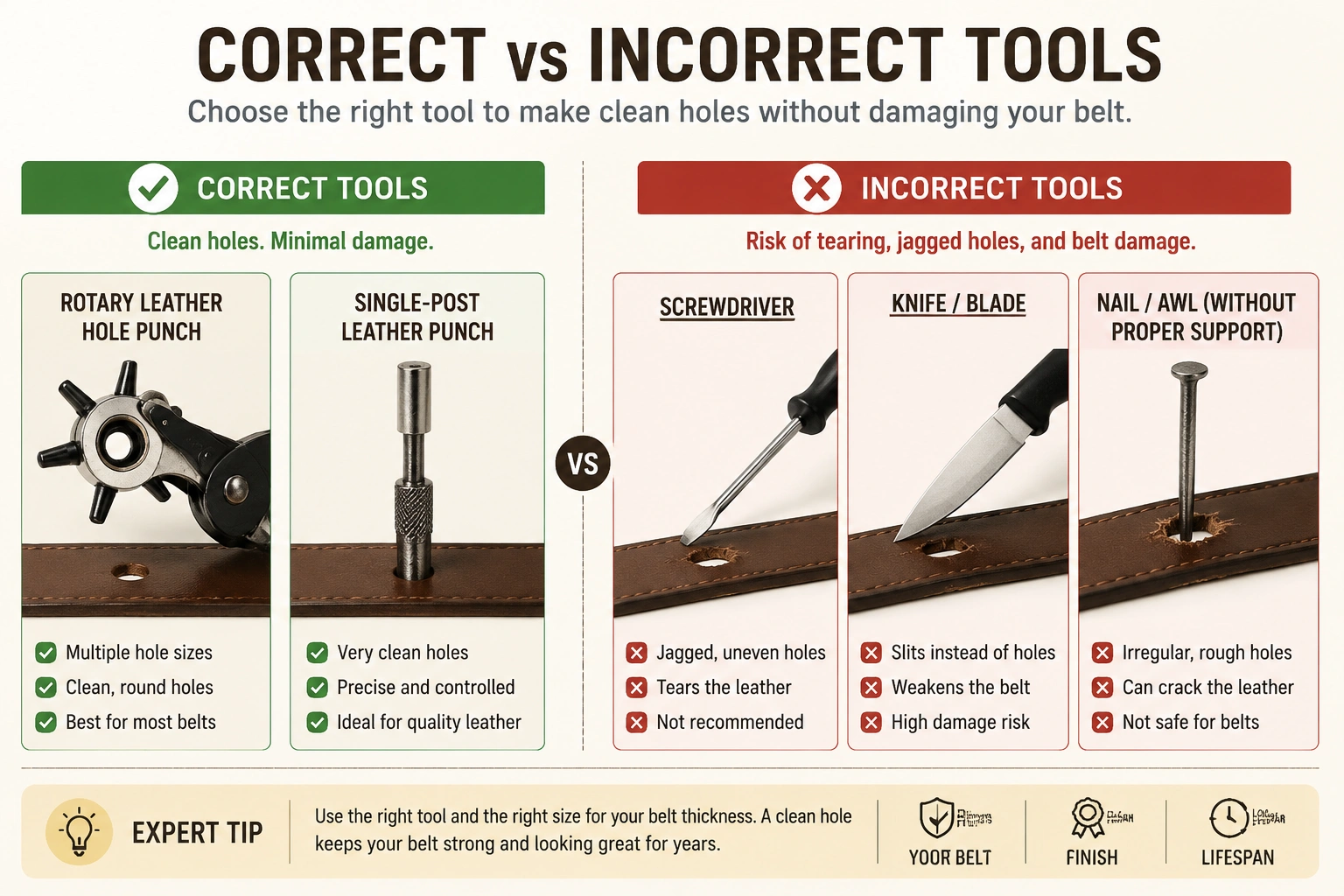
The tool determines the outcome almost entirely. A good hole looks like it was always there. A bad hole looks like exactly what it is.
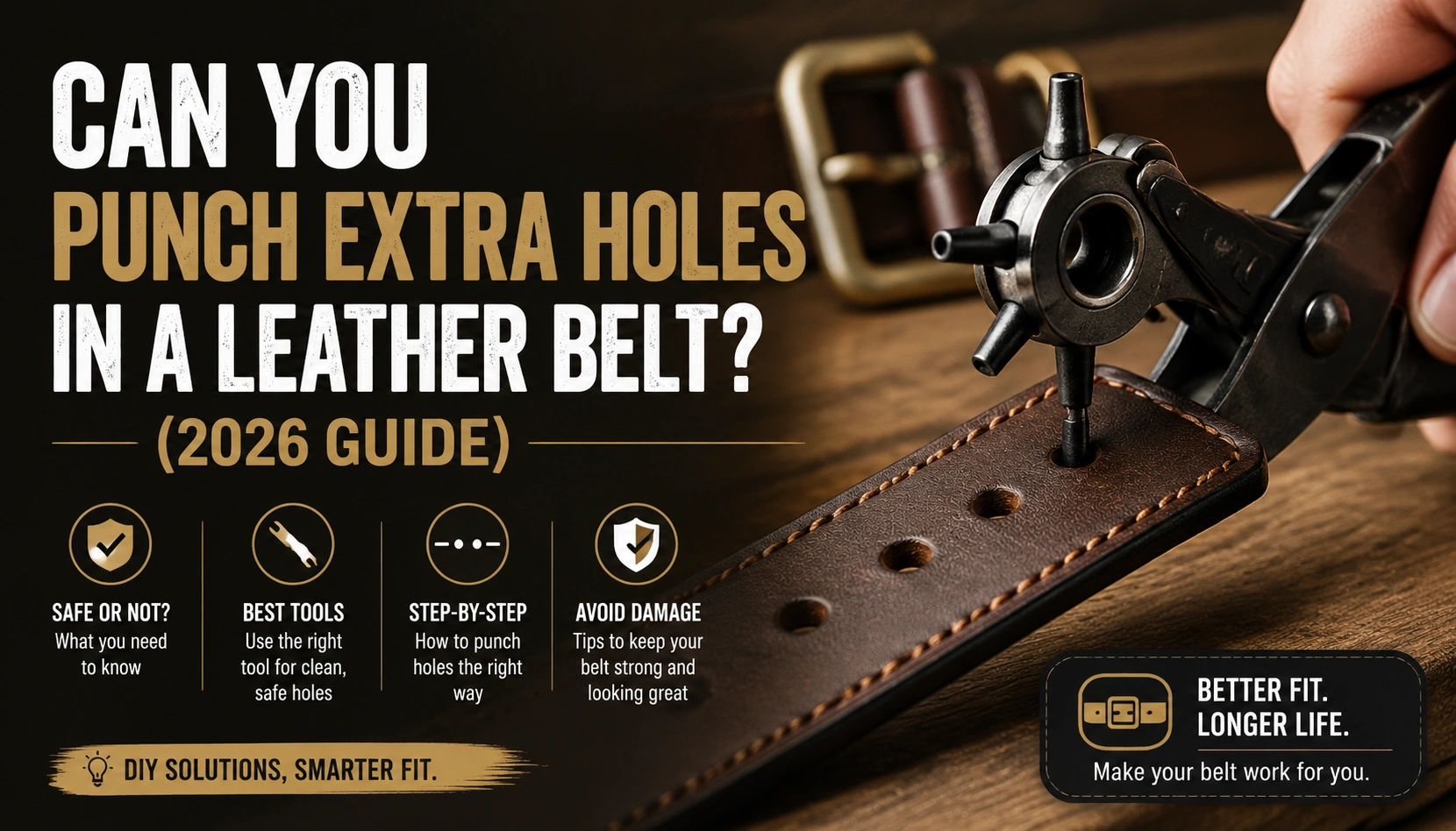
Rotary leather hole punch — the best all-around option for home use. It works like a pliers, with a rotating head that lets you select from multiple tip sizes. You align the tip, squeeze, and get a clean round hole in one motion. No hammer required, minimal skill involved, widely available for under $15. I'd recommend this as the default tool for anyone punching belt holes at home.
Single-post punch and mallet — the more traditional method. A sharp steel post is set against the marked position and struck with a mallet or hammer. This produces an excellent hole when done correctly, and is often preferred for thicker leather because the mechanical advantage from a firm strike gets through denser material more cleanly than squeeze pressure alone. The main downside is that you need a solid surface underneath (a piece of scrap wood works well).
Leather awl — a pointed tool that pierces rather than removes material, creating a hole by pushing leather fibers aside rather than cutting them out. Serviceable in a pinch, but produces a less clean result than either punch type. The hole tends to be slightly irregular and the edges aren't as tidy.
❌ What not to use: A knife, scissors, or screwdriver. These create tears rather than holes — the material around them doesn't separate cleanly. A screwdriver in particular stretches and stresses the fibers in an irregular pattern that won't tighten back up. The hole looks bad immediately and gets worse under use.
⚠️ Note: Always punch against a piece of scrap wood or a cutting board, not directly against your work surface. This gives the punch tip somewhere to go through cleanly and protects the belt edge on the opposite side.
How To Punch A Hole In A Leather Belt
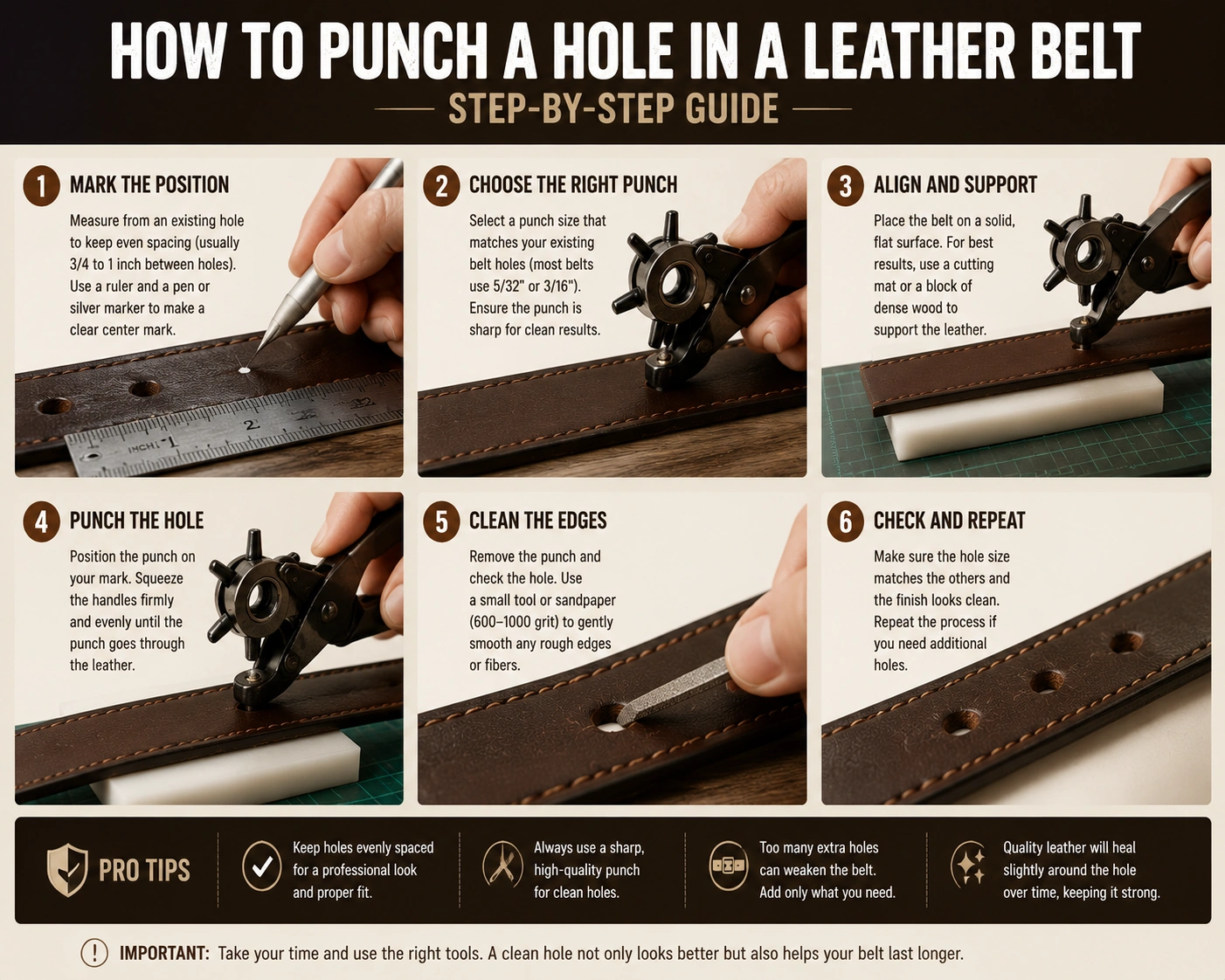
Step 1: Mark the position accurately. Lay the belt flat. Measure the spacing between existing holes — standard is 1 inch (25mm) apart, but measure your specific belt rather than assuming. Mark the new position with a pen or chalk marker. Double-check it's centered widthwise on the belt, not drifting toward one edge.
Step 2: Check the spacing from the belt edge. The new hole should be at least ½ inch from the nearest belt edge. Less than that and the leather between the hole and edge may tear under load. If your marking puts the hole closer than that, reconsider the position.
Step 3: Select the right punch size. Match the diameter of your punch tip to the existing holes. Most standard belt holes are 4–5mm in diameter. When in doubt, go slightly smaller — you can open a hole up slightly but you can't reduce it.
Step 4: Punch with even, decisive pressure. Place scrap wood under the belt at the marked position. For a rotary punch, align the tip precisely on your mark and squeeze firmly in one motion. For a single-post punch, hold the post straight (perpendicular to the belt surface) and strike once with confident force. A single clean strike produces a better hole than several tentative taps.
Step 5: Inspect and clean the edge. Remove the punch and examine the hole. It should be clean and round, with no fraying at the edge. If there's a small flap of leather, press it flat with a pen tip. A very light application of leather conditioner around the new hole helps seal the edge fibers and prevents fraying over time.
When You Should NOT Punch Extra Holes
Knowing when not to punch is as important as knowing how to do it.
The belt leather is already cracking or brittle. A belt showing surface cracks, particularly around the buckle fold or existing holes, has compromised fiber structure. Punching into compromised leather doesn't produce a clean hole — it tears further into material that's already stressed. If the belt is in poor condition, a new hole won't save it; it'll accelerate the problem.
The belt is thinner than 3mm. Below this thickness, the material surrounding each hole doesn't have enough fiber depth to handle the load of daily use over time. Punching a new hole close to an existing one in thin leather creates a narrow bridge between them that may eventually tear. The leather belt thickness guide covers why thickness matters at the hole specifically.
The new hole would be too close to the belt edge. The standard minimum is ½ inch from the nearest edge. If your size adjustment requires a hole position that falls closer than that, the belt edge is at real risk of tearing under tension. This situation usually means the belt is too far off in size to fix with a hole.
The belt is made from bonded leather. Bonded leather's layered construction doesn't punch cleanly the way solid leather does. The composite layers can separate at the punch point, and the resulting hole edges are unstable. For a belt you care about, this is a situation that calls for a different solution than punching.
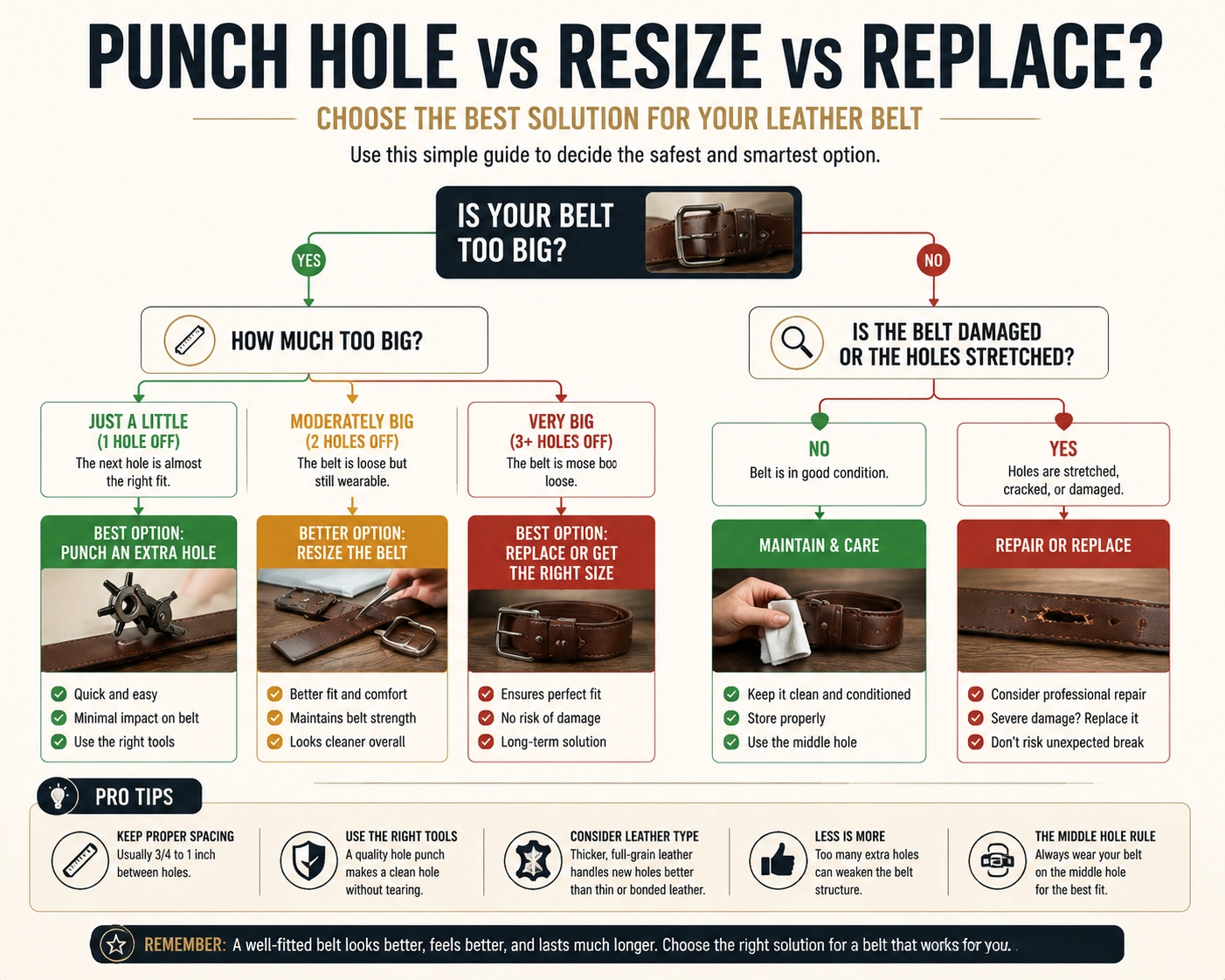
You'd need more than two new holes to make it fit. If the belt is more than two holes off from a comfortable fit, the fit problem is too large to solve cleanly with punching. The tail will still be too long, the buckle position will still be off, and the overall proportion of the belt will still look wrong. This is when resizing or exchanging the belt makes more sense.
Better Alternatives To Punching New Holes
Sometimes punching isn't the right answer, and it's worth knowing what else is available before committing to a modification that can't be undone.
Exchange the belt for the correct size. If the belt is significantly too large — more than two inches off — this is almost always the cleaner solution. A properly sized belt fastens at the middle hole, looks proportionally correct, and requires no modification. Understanding what size belt you need before ordering prevents this situation in the first place.
Shorten the belt from the buckle end. For a belt that's moderately too long — meaning the tail is excessively long even when the buckle is in the right position — removing material from the buckle end is a more complete fix than adding a hole toward the tail. This requires the belt to have a removable buckle (most quality belts do), and the modification is clean and essentially invisible when done correctly. This is covered in detail in the belt shortening guide.
Use the middle hole principle to choose correctly next time. The most common reason people need extra holes is ordering the same size as their pants rather than adding the standard two inches. If a 34-inch waist is ordering a 36-inch belt and finding the middle hole too loose, the belt is probably sized correctly — the expectation needs adjusting, not the belt. The belt size chart is useful here.
Will Punching Extra Holes Damage The Belt?
A single well-placed hole punched with the right tool into quality leather of appropriate thickness does not meaningfully damage the belt. The structural impact is negligible — one more circle of removed material in a belt that already has five.
What does cause damage:
Wrong tool. As covered above, a blunt or inappropriate instrument tears rather than punches, and the resulting hole is genuinely weaker than a properly punched one.
Too close to existing holes or edges. The material between two close holes is the structural element at risk. Keep holes at least 1 inch apart and ½ inch from the belt edge, and the surrounding leather stays sound.
Punching into already-compromised leather. A belt with existing cracks or structural weakness will respond to punching differently than healthy leather — the force redistributes into those weaknesses rather than cleanly through the material.
Punching repeatedly in the same area. Adding one or two holes is unremarkable. Continuing to add holes as the fit changes over years — moving the effective hole position progressively toward one end of the belt — gradually reduces the structural integrity at the heavily-punched area. This is the version that correlates with the belt developing the kind of wear described in why do belt holes stretch.
One hole added correctly: fine. Ongoing modification over the life of the belt: worth monitoring.
How To Avoid Needing Extra Holes In The Future
Most belt hole punching situations come from one source: the wrong size was ordered.
Use the correct sizing method before purchasing. The most reliable approach is measuring a belt you already own — from the buckle pin connection point to the hole you use most. That number is your belt size. Alternatively, measure your waist through your belt loops and add two inches. Both methods are explained in the belt size chart guide.
Understand the middle hole principle. A properly sized belt should fasten at or near the middle hole — the third of five. If you're consistently on the first or last hole on any belt you own, the belt is the wrong size for you. This is worth knowing before ordering a new one.
Don't equate pants size with belt size. A 34-inch waist needs approximately a 36-inch belt. Ordering your pants size in a belt is the single most common source of a belt that's too small — and ordering too large to compensate often produces a belt that needs a new hole rather than just a different one.
Consider a belt with a removable buckle if you're between sizes. The ability to shorten from the buckle end means a belt that arrives slightly too large can be corrected without punching, and without returning it.
Frequently Asked Questions
Can I punch extra holes in a leather belt?
Yes. Punching an additional hole is a common and safe modification for most leather belts when done with the right tool — a rotary leather hole punch or a single-post punch and mallet. The result is a clean, permanent hole that functions identically to the original ones. The main conditions where it's not advisable are thin or bonded leather, belts already showing structural damage, or fits that are too far off to correct with one or two additional holes.
Will punching holes weaken leather?
A single well-punched hole in quality leather of appropriate thickness doesn't meaningfully weaken the belt. Using the wrong tool — a knife or screwdriver — does cause damage, because it tears rather than cuts through the leather. Multiple holes added over time in the same area can gradually reduce structural integrity at that section, particularly in thinner leather.
What tool is best for belt holes?
A rotary leather hole punch is the most practical option for home use — inexpensive, easy to use, and produces a clean round hole in one motion. A single-post punch and mallet is preferred by some for thicker leather. Avoid using anything that's not specifically designed for leather punching; improvised tools produce ragged holes that worsen under use.
How far apart should belt holes be?
Standard belt hole spacing is 1 inch (25mm). When adding a new hole, maintain this spacing from the nearest existing hole. The new hole should also sit at least ½ inch from the nearest belt edge to avoid creating a weak point that could tear under tension.
Can cobblers add belt holes?
Yes — and for a belt you care about, this is a reasonable option. A cobbler or leather repair shop has the correct tools and can punch a hole that matches your existing ones precisely in size and placement. The cost is usually minimal, and the result is typically cleaner than most DIY attempts. Worth considering for any belt where the fit matters enough that you want it done right.
Is it better to punch or replace the belt?
It depends on how far off the fit is. If the belt is one hole off and the leather is in good condition, punching is faster and perfectly adequate. If the belt is more than two holes off, the overall proportions are wrong even after punching — the tail will still be too long or the buckle will sit in the wrong position. In that case, exchanging for the correct size produces a better result than modifying a belt that's genuinely the wrong size.