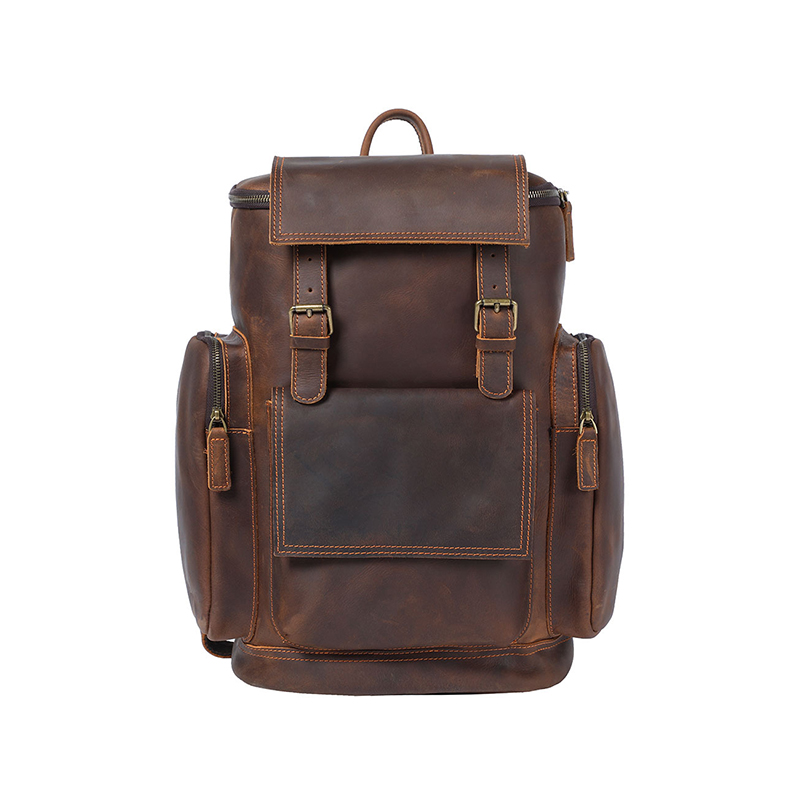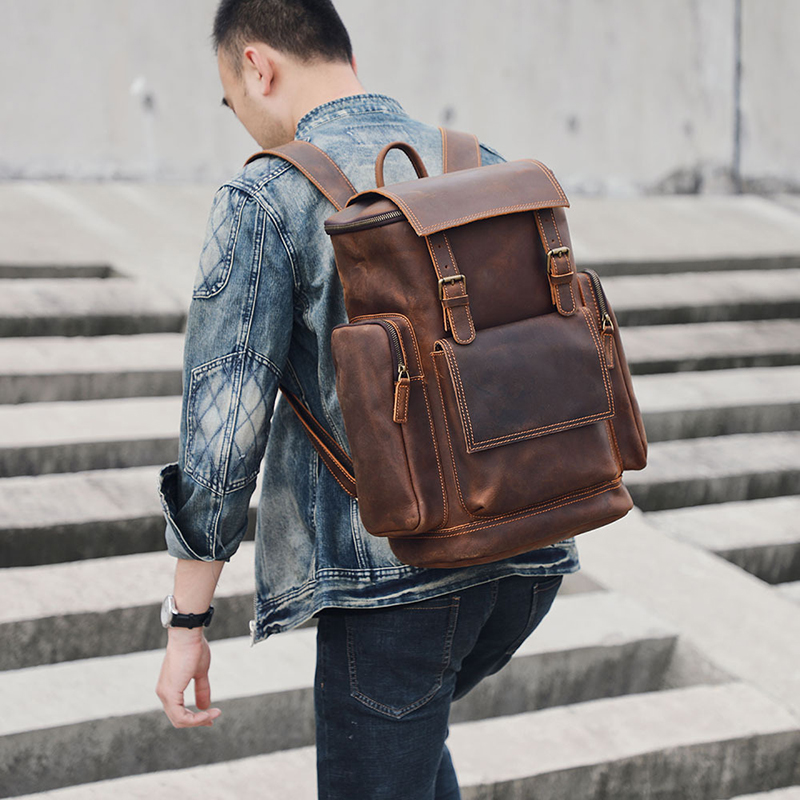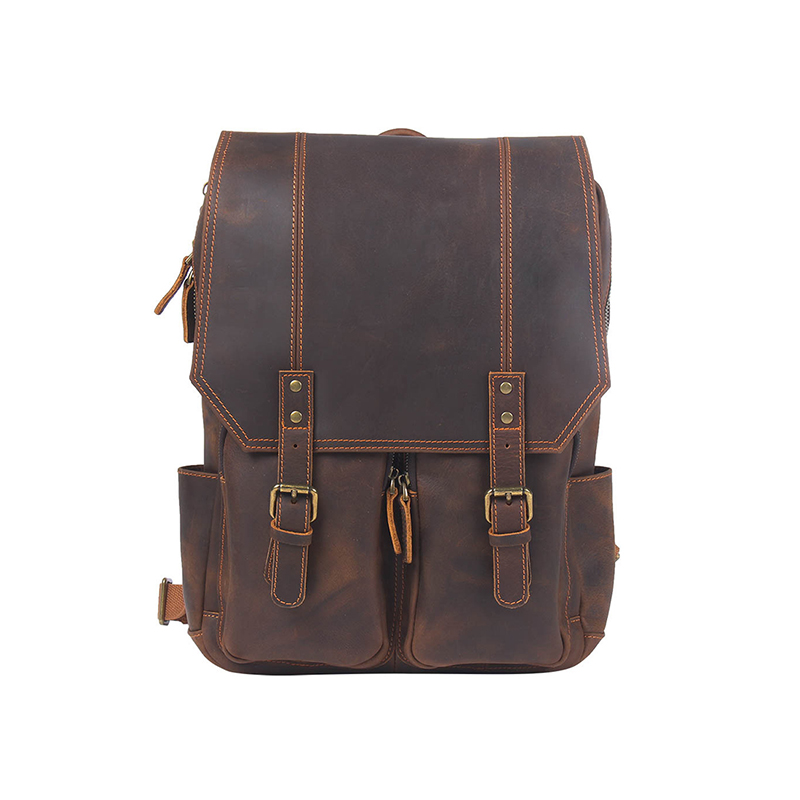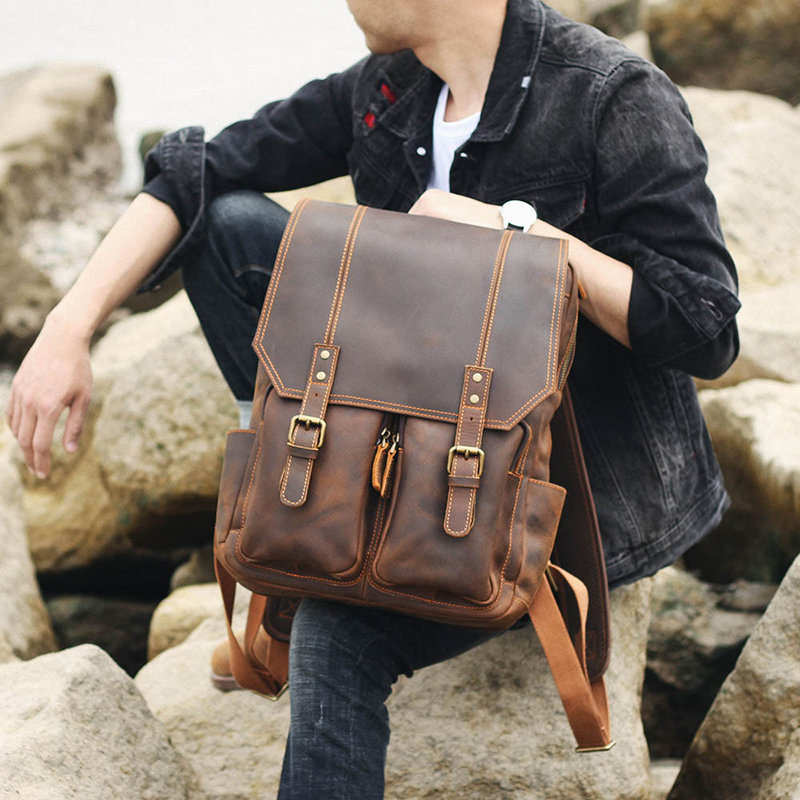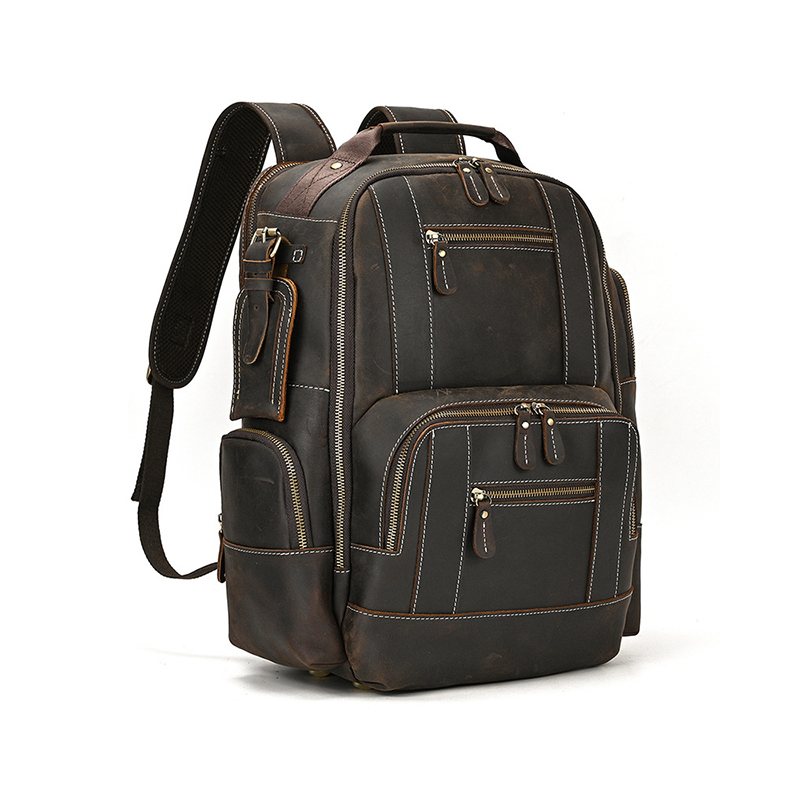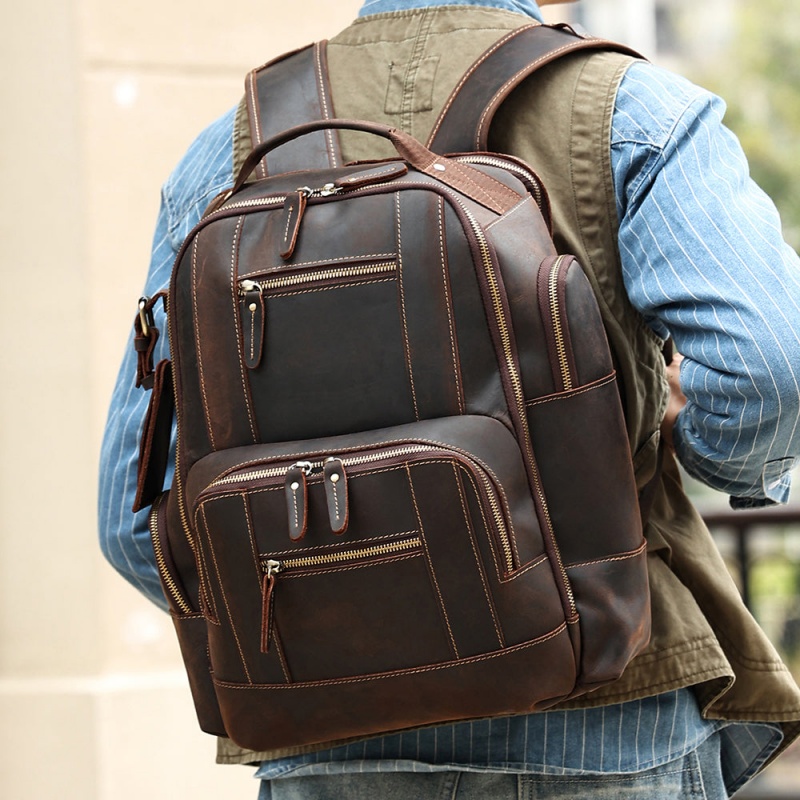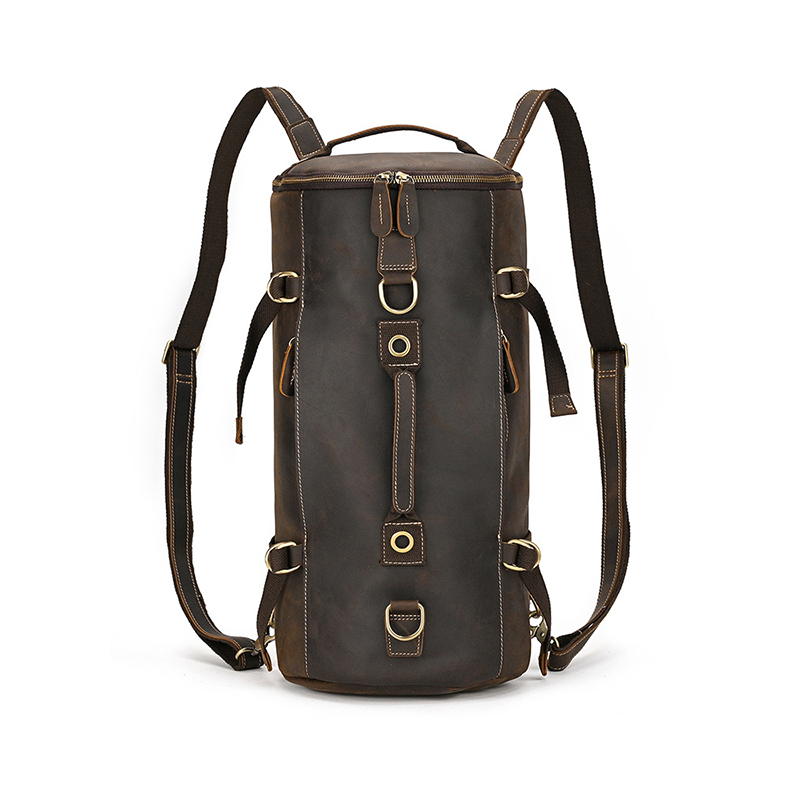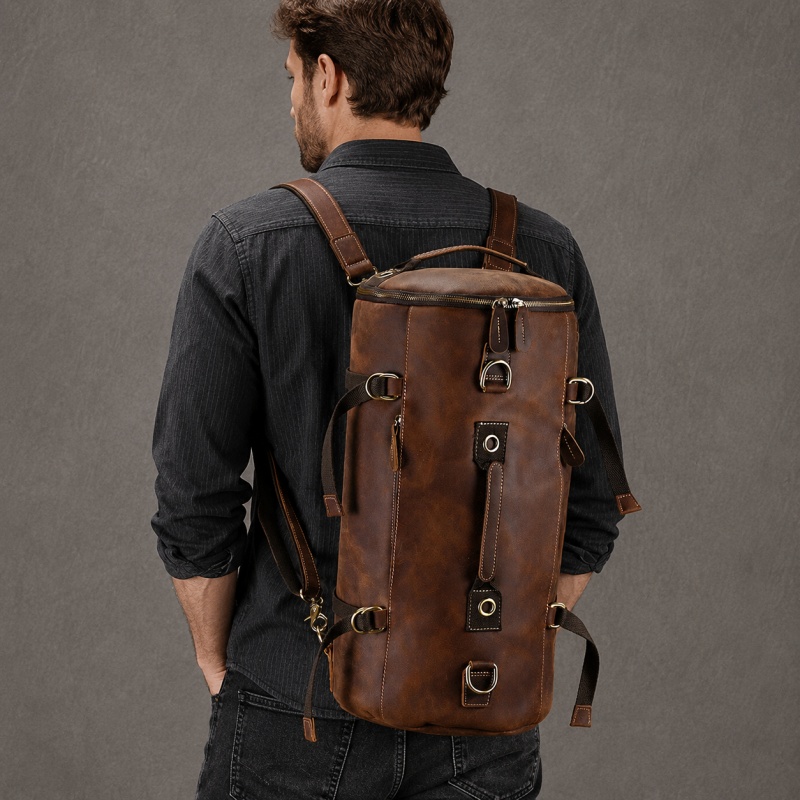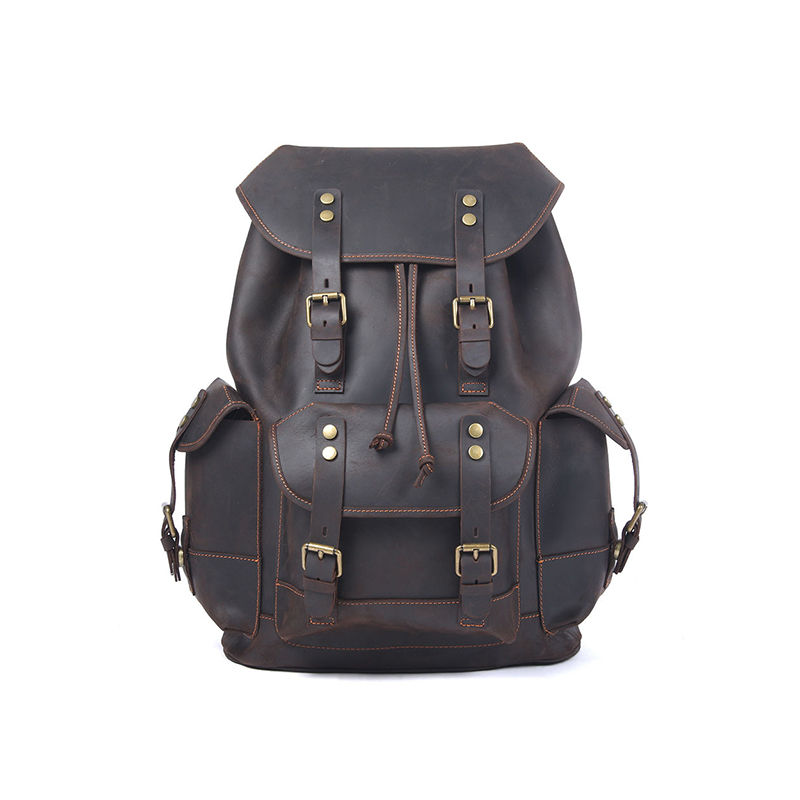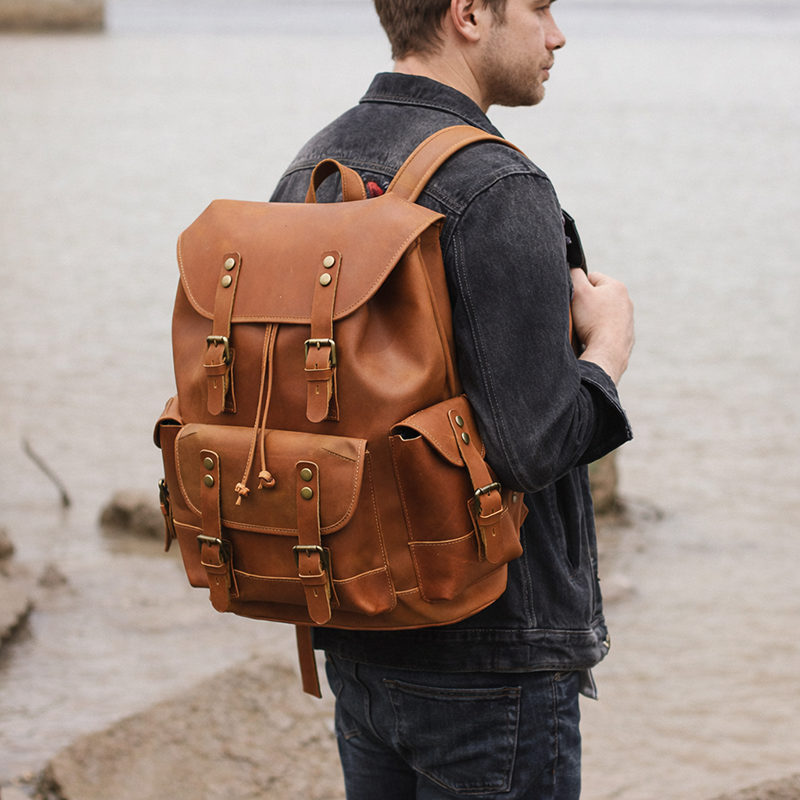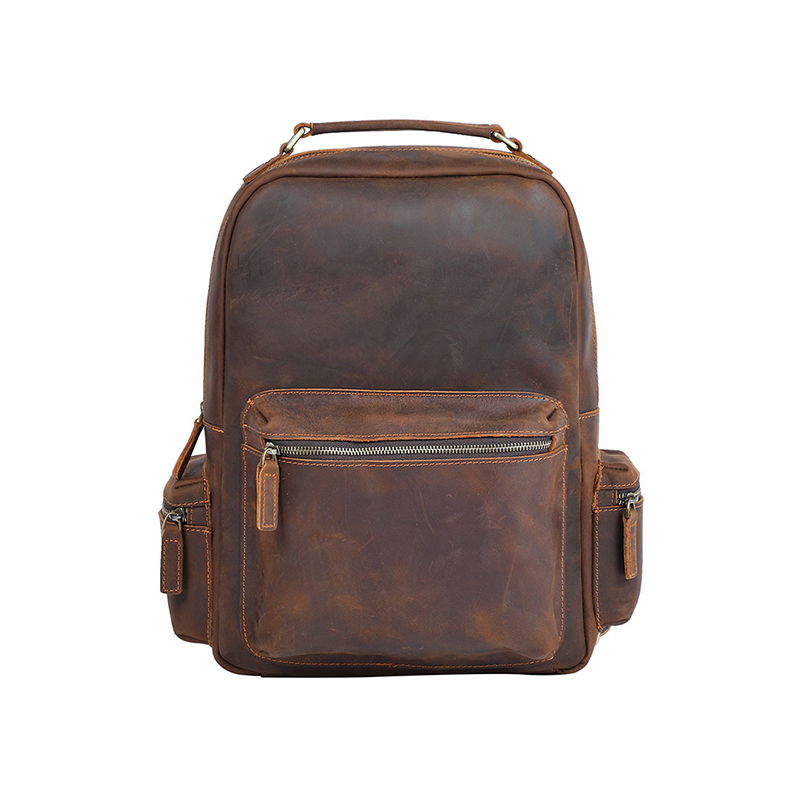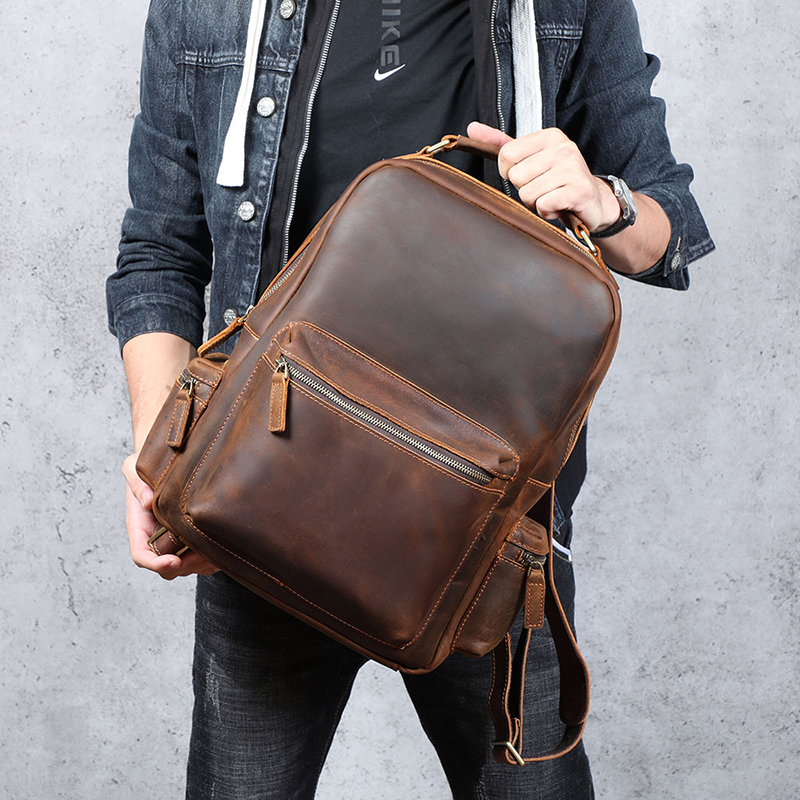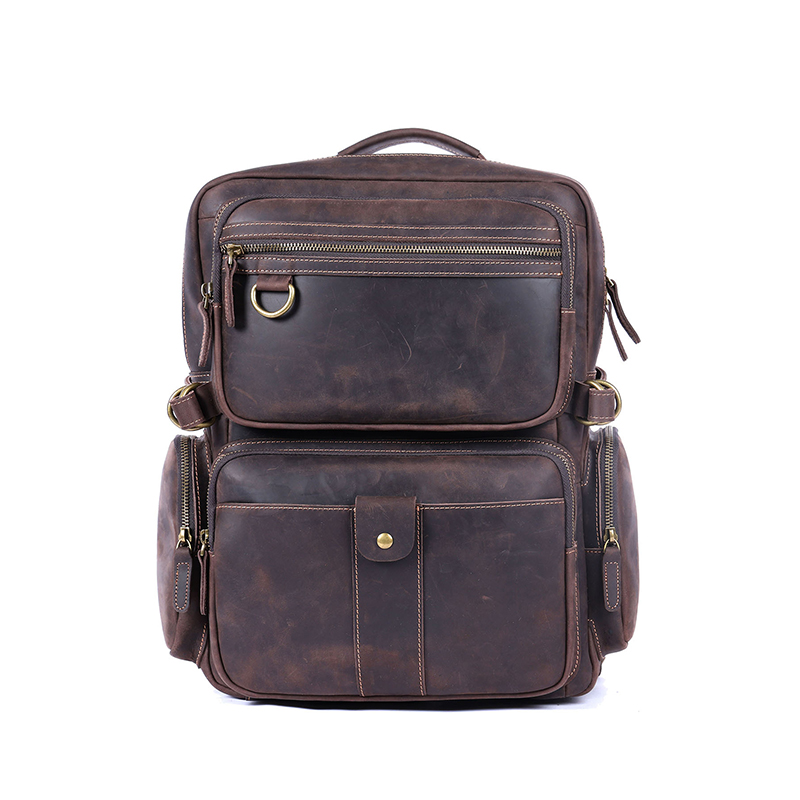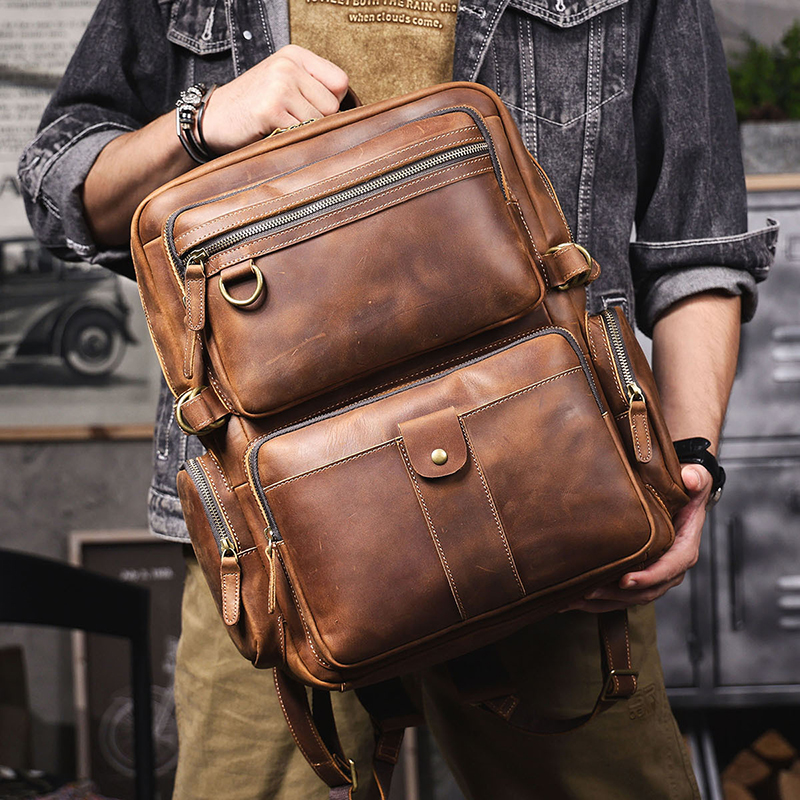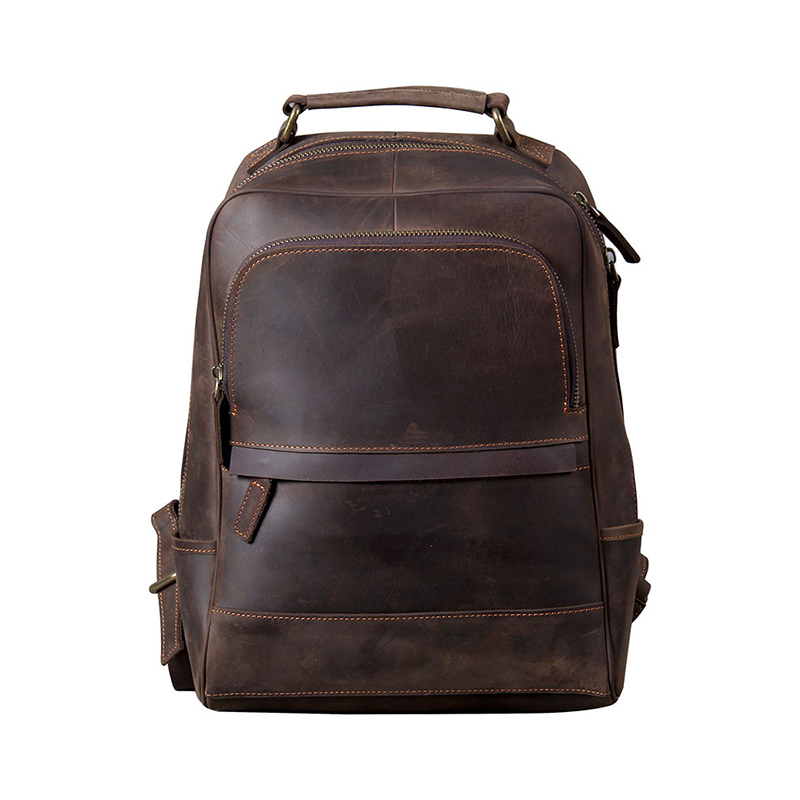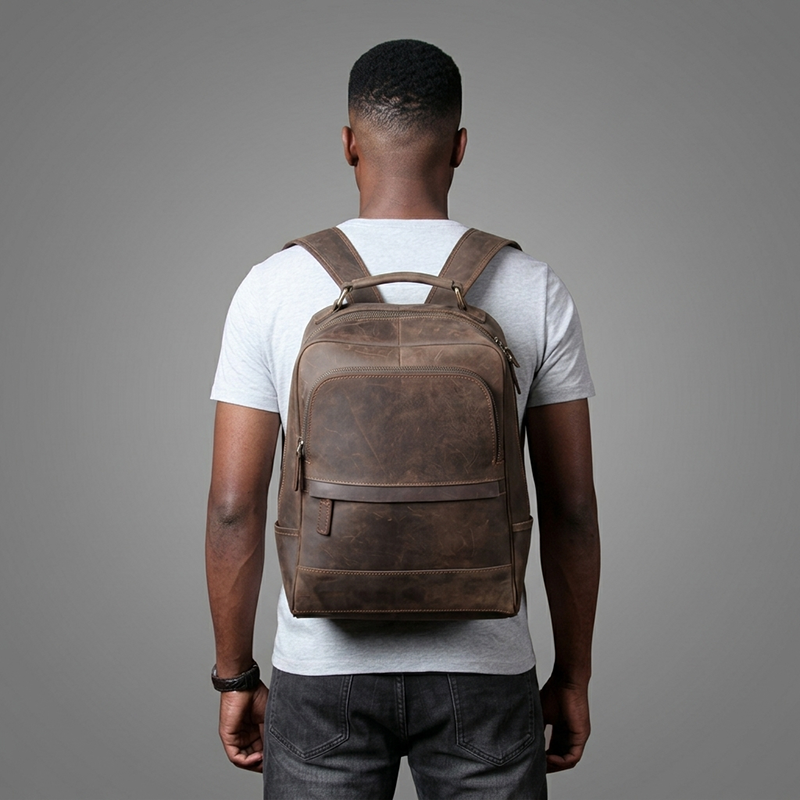
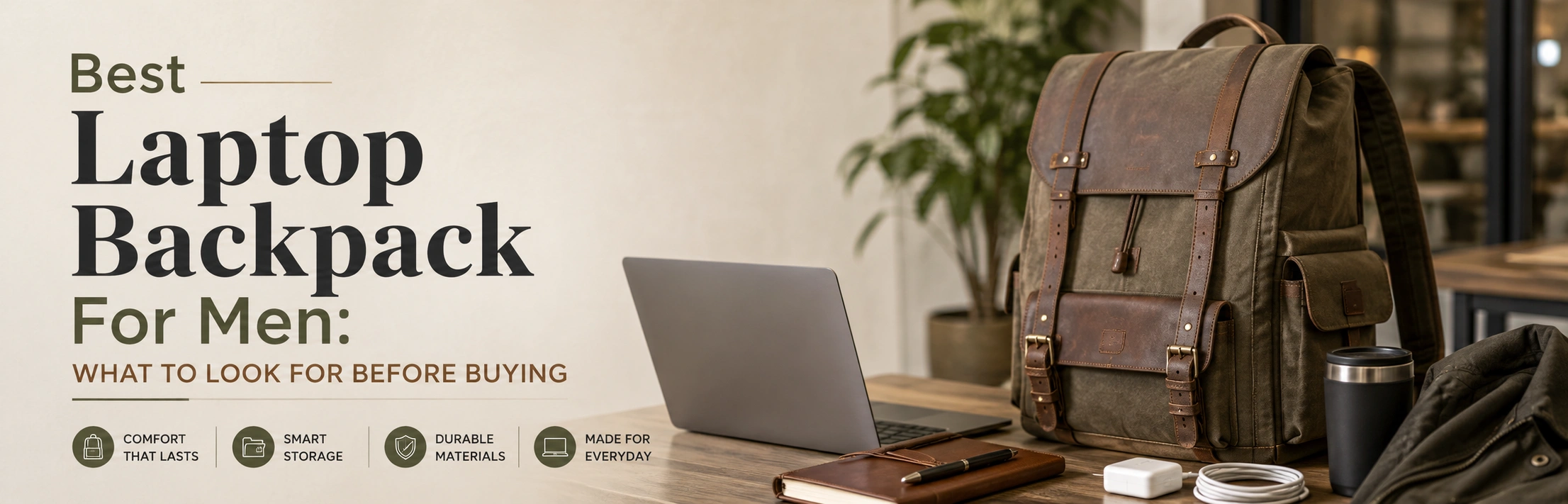
A good laptop backpack for men should do more than hold a computer. It should protect the laptop, carry daily essentials without feeling bulky, stay comfortable on the shoulders, and look mature enough for work, travel, and everyday outfits.
The best choice is not always the largest backpack or the most technical-looking one. For most men, the better choice is a balanced daily backpack that fits a laptop securely and still works with normal clothes.
That means looking beyond the product photos.
Laptop compartment dimensions, usable capacity, shoulder strap design, pocket layout, material, and overall shape all affect how useful a backpack feels once it becomes part of your daily routine.
Quick Answer: What Makes A Good Laptop Backpack For Men?
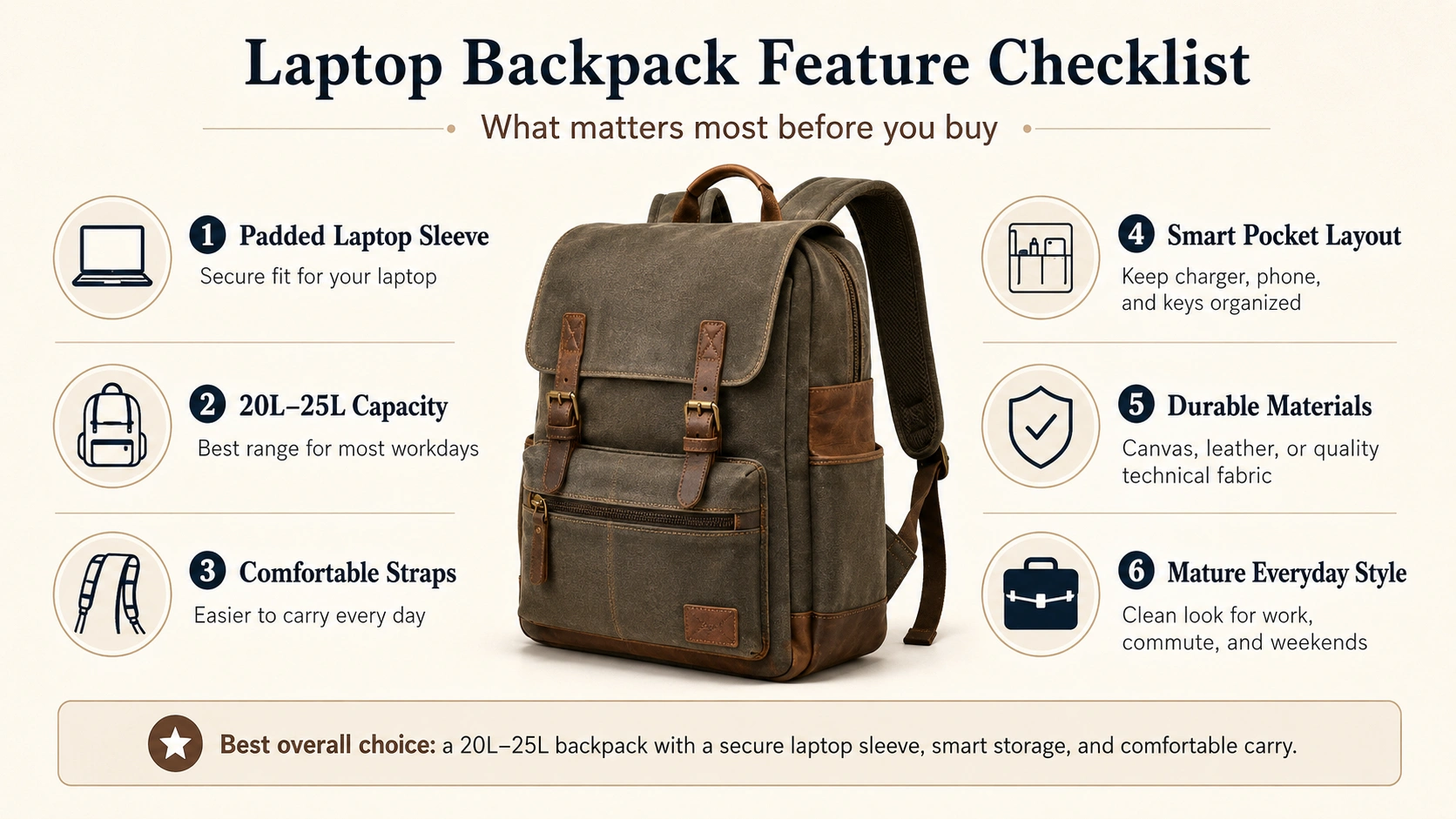
The best laptop backpack should balance protection, comfort, organization, and appearance.
| Feature | What To Look For |
|---|---|
| Laptop fit | A padded sleeve that matches your laptop dimensions |
| Capacity | 20L–25L for most daily work use |
| Comfort | Wide adjustable straps and balanced weight distribution |
| Pocket layout | Separate space for a charger, notebook, wallet, phone, and keys |
| Material | Durable canvas, leather, nylon, or polyester depending on your routine |
| Style | Mature enough for work, commuting, and everyday outfits |
A backpack does not need dozens of compartments or a long list of technical features to work well. It needs the right features in the right places.
For most men, a 20L–25L backpack with a padded laptop compartment is the safest everyday choice.
The Right Laptop Compartment Matters More Than Capacity
Backpack capacity is usually measured in liters, but liters alone do not tell you whether a laptop will fit properly.
A backpack can be large in liters but still be poor for laptop carry if the sleeve is too small, too loose, or not padded well enough.
A 25L backpack designed mainly for clothing, sports gear, or travel may have plenty of total space but no secure place to hold a computer. Meanwhile, a smaller 18L work backpack may carry a laptop more safely because the internal sleeve was designed around it.
The laptop compartment should be one of the first things you check.
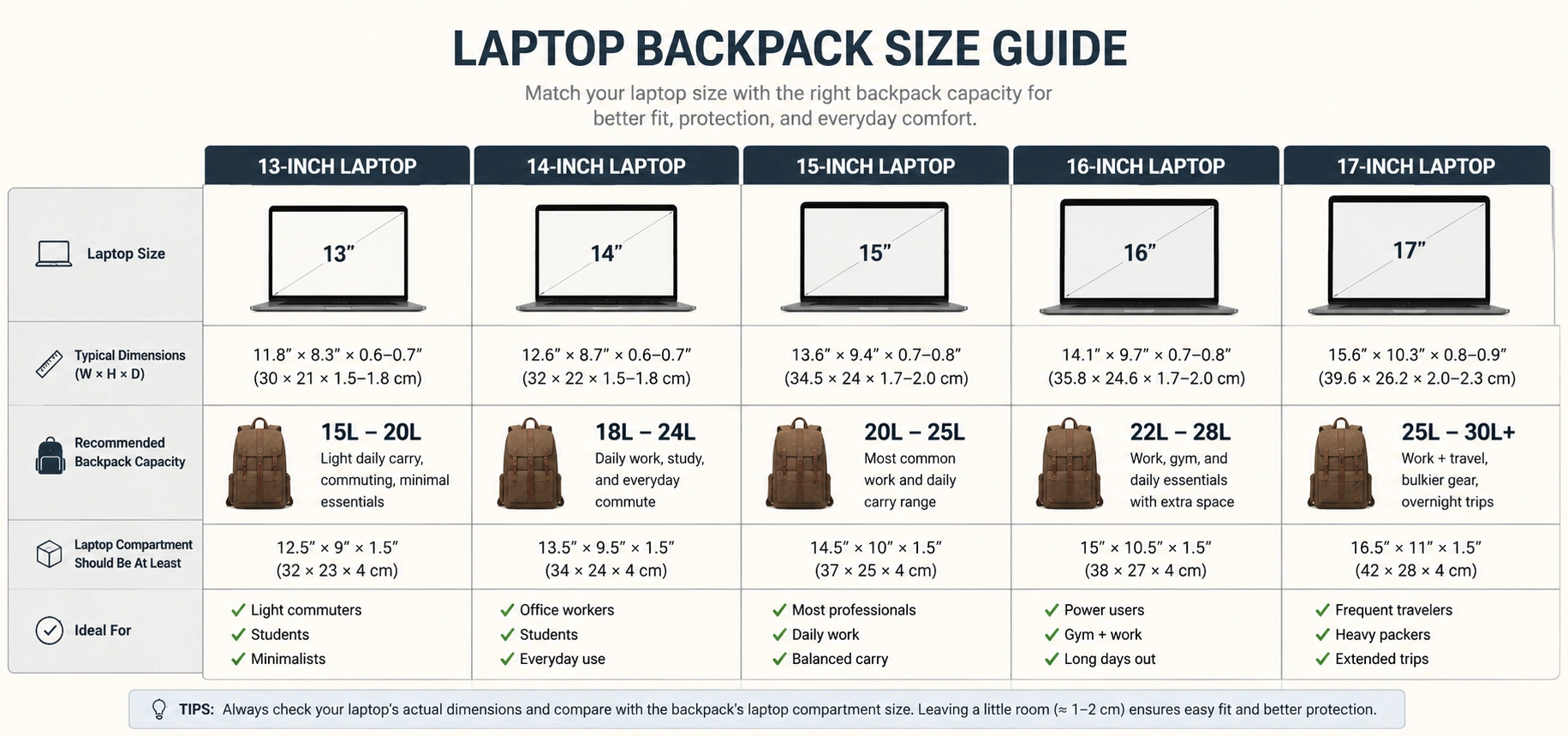
13-Inch Laptops
Most compact laptop backpacks can accommodate a 13-inch laptop.
This size usually works well with smaller 15L–20L bags intended for light commuting, coffee shop work, or minimal daily carry.
There should still be enough padding around the base and sides. A small laptop sliding around inside an oversized sleeve is not necessarily well protected.
14-Inch Laptops
A 14-inch laptop fits inside many modern work and commuter backpacks.
It is one of the easiest laptop sizes to pair with a daily backpack because it provides a larger screen without requiring an especially large bag.
A backpack in the 18L–25L range will usually offer enough space, but the published compartment dimensions should still be checked.
15-Inch Laptops
A 15-inch laptop normally requires a more clearly defined padded sleeve.
Do not assume that every medium-sized backpack will fit one. Some product descriptions use “laptop compartment” as a general term even when the sleeve is better suited to a smaller device.
Check both the height and width of the compartment, especially if the laptop has a thick case or protective cover.
16-Inch Laptops
A 16-inch laptop needs more careful measurement.
The advertised screen size does not describe the full dimensions of the computer. Two 16-inch laptops can have different widths, thicknesses, and bezel designs.
For this size, compare the actual laptop dimensions with the internal laptop compartment dimensions. Leaving a small amount of room is helpful, but the computer should not move freely from side to side.
The sleeve should also be easy to access. Forcing a large laptop through a narrow opening every morning will quickly become frustrating.
You can use our backpack size guide to compare common backpack capacities and understand how much space different daily loads usually require.
What Size Laptop Backpack Is Best For Men?
The ideal size depends on what travels with the laptop.
A man carrying only a computer, charger, phone, and notebook needs far less space than someone combining work, gym, and overnight travel in the same bag.
15L–20L: Best For Light Commuting
A 15L–20L laptop backpack is suitable for a light daily routine.
It can normally carry:
- A tablet or small laptop
- A charger
- A notebook
- A wallet
- A phone
- Keys
- A few small accessories
This size feels compact on public transportation and does not project far from the back. It can also look cleaner with casual work clothes than a large travel-style backpack.
The limitation is flexibility.
Once you add a large water bottle, bulky lunch box, jacket, headphones, or change of clothes, a 15L bag can become crowded. It works best when the daily load is predictable and minimal.
20L–25L: Best For Most Workdays
For most men, 20L–25L is the most practical laptop backpack range.
It normally provides space for:
- A laptop
- A charger and mouse
- A notebook or document folder
- A water bottle
- Headphones
- A small umbrella
- A light jacket
- Personal daily essentials
This capacity is large enough to handle changing workdays without immediately looking like a travel pack.
It also leaves enough space around individual items that the backpack is easier to organize. You are less likely to place a heavy charger directly against the laptop or crush small accessories under a water bottle.
20L–25L is usually the best laptop backpack size for daily work and commuting.
25L–30L: Best For Work And Extra Gear
A 25L–30L backpack makes sense when work is only part of the load.
This size is more suitable for:
- Work and gym gear
- Work and a one-night trip
- Extra clothing
- A camera
- Larger headphones
- Travel accessories
- A larger lunch box
- Additional tools or equipment
The trade-off is bulk.
A 30L backpack may feel useful when full, but it can look unnecessarily large during a normal commute. Larger bags also tend to encourage overpacking. The extra space often gets filled simply because it is available.
When deciding between these capacities, consider what you carry on an ordinary Tuesday rather than what you might carry once or twice a year.
For a more detailed comparison, see our backpack size guide.
Comfort: Shoulder Straps, Back Panel, And Weight
A laptop may look slim, but it adds concentrated weight close to the back. Add a charger, water bottle, notebook, and other daily items, and the backpack can become noticeably heavier.
This is where shoulder strap design matters.
Narrow straps can create pressure points, especially when the bag is carried for longer walks or through airports and train stations. Wider straps distribute weight across a larger area and usually feel more stable.
The padding should also have enough structure.
Very soft padding may feel comfortable when you first touch it, but it can compress quickly under weight. Once compressed, the strap may begin to fold or dig into the shoulder.
Adjustability is equally important. The backpack should sit close to the back rather than hanging low and pulling backward. Loose straps can make even a reasonably light bag feel awkward.
The back panel deserves attention as well.
If the padding is too thin, the edge of the laptop, charger, or notebook may press against your back. A structured back panel helps separate the contents from the body and can prevent the backpack from collapsing when it is partially empty.
The weight of the empty backpack also matters.
Full leather bags can look refined, but the material and hardware may add significant weight before anything is packed. Lightweight technical bags reduce this starting weight, although they may not offer the appearance every man wants.
The best laptop backpack should feel comfortable after the laptop is inside, not only when the backpack is empty.
Pocket Layout: What Should A Laptop Backpack Carry?
A laptop backpack often carries more small items than large ones.
A normal workday may involve:
- A laptop
- A charger
- A mouse
- A notebook
- Pens
- A phone
- A wallet
- Keys
- Sunglasses
- A water bottle
- A small umbrella
- Headphones
The main compartment may technically hold all of these items, but that does not mean it will hold them well.
When everything is placed inside one large space, smaller objects settle at the bottom. Cables wrap around notebooks. Keys rub against other items. The charger becomes difficult to find, and the whole bag has to be opened to retrieve a wallet.
A useful pocket layout creates separation without becoming complicated.
The laptop sleeve should ideally be separated from the loose contents of the main compartment. This reduces direct contact between the computer and harder items such as chargers, keys, or metal water bottles.
A quick-access pocket is useful for items that are handled repeatedly throughout the day. A phone, wallet, transit card, sunglasses, or keys should not require unpacking the main compartment.
Smaller internal pockets can hold a charger, mouse, cables, and pens. They do not need to be individually shaped around every accessory. They simply need to prevent small items from disappearing into the bottom of the bag.
An external bottle pocket can also be practical, provided it does not make the backpack look unbalanced or overly sporty.
Some men prefer a clean exterior and keep the bottle inside. Others value fast access more than a minimal shape. Neither choice is automatically better, but the pocket should hold the bottle securely when the backpack is moving.
A good pocket layout saves time because you do not have to dig through the whole bag just to find a charger, wallet, or keys.
Material: Canvas, Leather, Nylon, Or Polyester?
Material affects more than durability.
It changes the weight, structure, weather resistance, maintenance requirements, and overall appearance of the backpack.
The right material depends on how the backpack will be used and what kind of clothing it needs to work with.
Nylon Laptop Backpacks
Nylon is common in technical, travel, and outdoor backpacks.
Its advantages include:
- Low weight
- Good flexibility
- Strong performance for its weight
- Frequent use of water-resistant coatings
- A wide range of technical fabrics
Nylon works well for men who prioritize performance, frequent travel, or wet-weather commuting.
The disadvantage is appearance.
Some nylon backpacks look too sporty or technical for a business-casual environment. Extra compression straps, reflective details, mesh pockets, and oversized logos can make the bag resemble hiking or travel gear.
A clean nylon design can still work for the office, but the material alone does not guarantee a mature appearance.
Polyester Laptop Backpacks
Polyester is widely used because it is affordable, light, and easy to manufacture.
Its advantages include:
- Lower cost
- Low weight
- Easy cleaning
- Many colors and finishes
- Reasonable daily durability
Quality varies considerably.
A well-made polyester backpack can work for years, while a low-quality version may develop peeling coatings, broken zippers, weak seams, or a shiny appearance that feels inexpensive.
The fabric should not be judged alone. Zippers, lining, stitching, straps, and hardware often reveal more about the overall quality.
Leather Laptop Backpacks
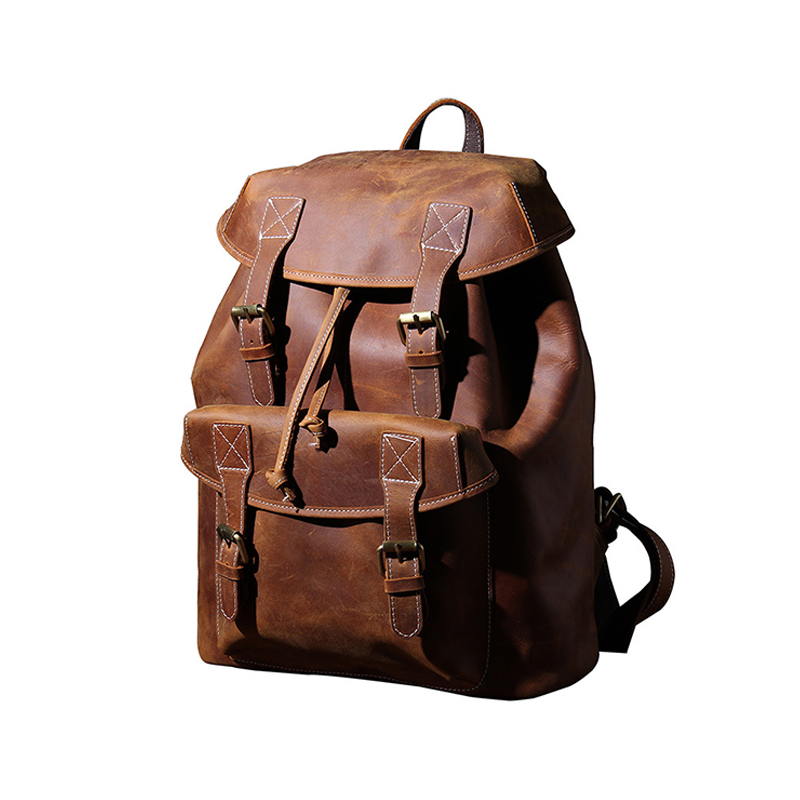
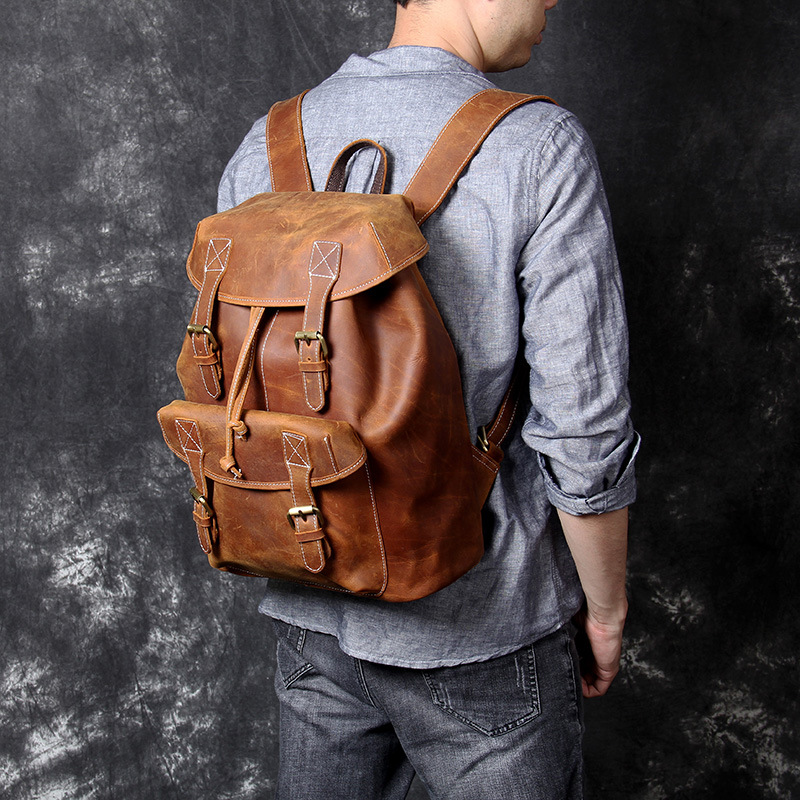
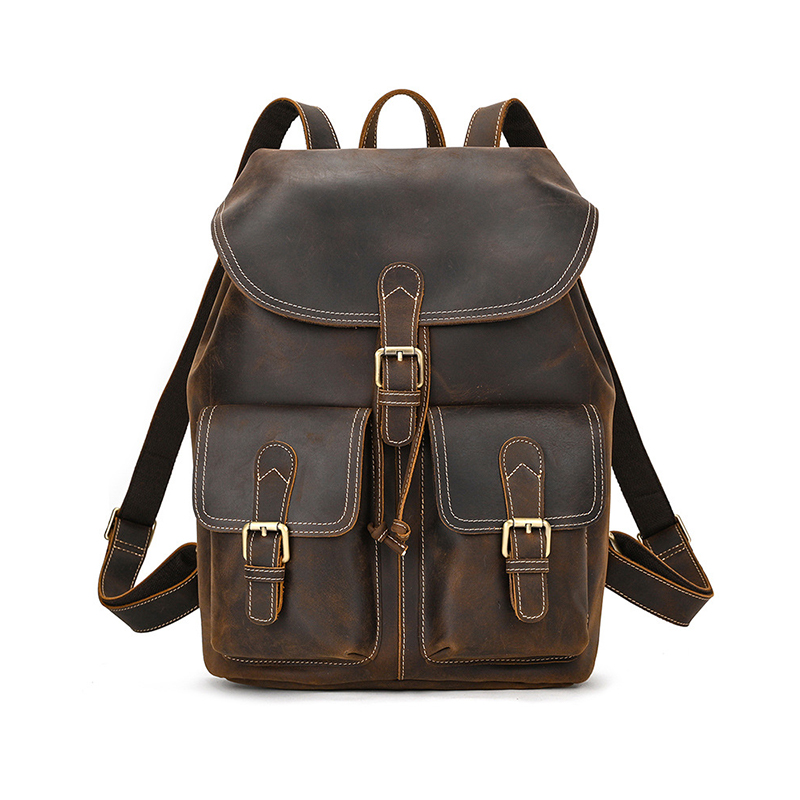
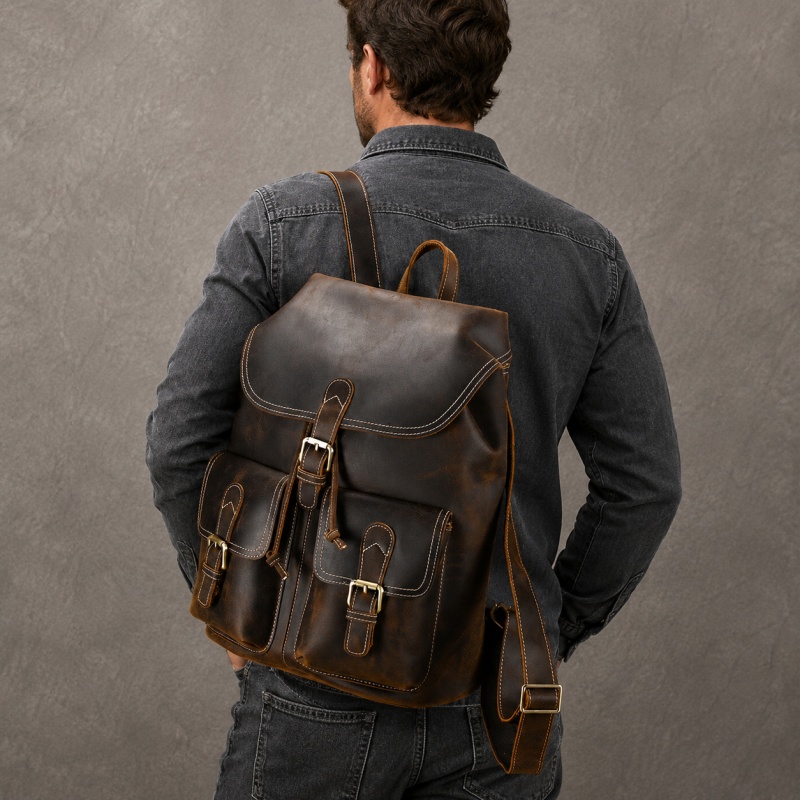
Leather offers a mature and more formal appearance.
Its advantages include:
- A structured shape
- A premium feel
- Natural texture
- Compatibility with business and smart-casual clothing
- The ability to develop character with age
Leather also has practical limitations.
A full leather laptop backpack is usually heavier than a canvas or nylon alternative. It may require conditioning and more careful storage. Some leather bags also feel stiff when new and offer less flexibility when the load changes.
Leather works well for men who value appearance and do not need the lightest possible setup.
Canvas And Leather Laptop Backpacks
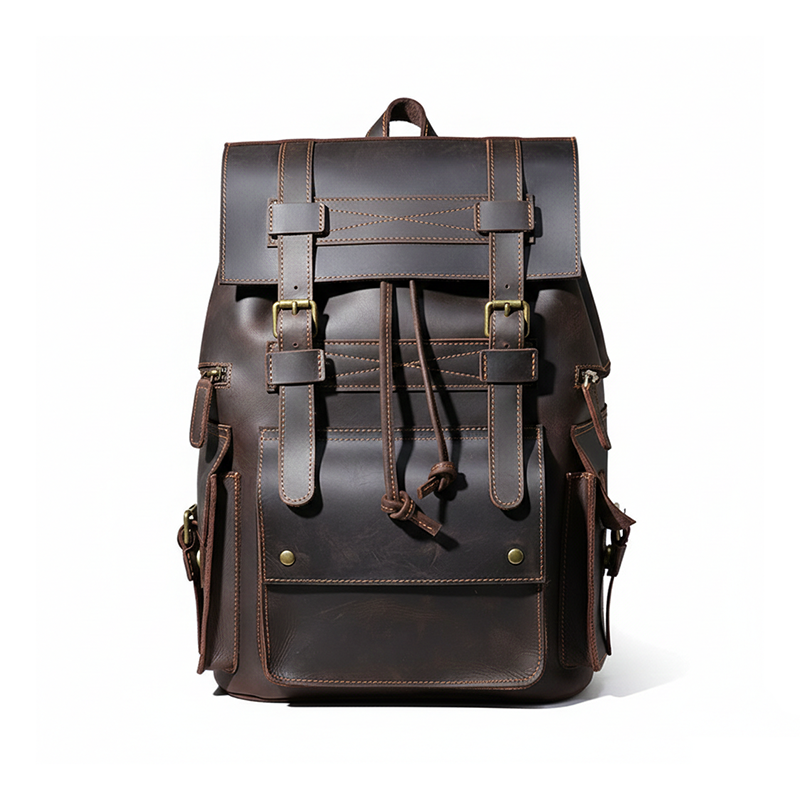
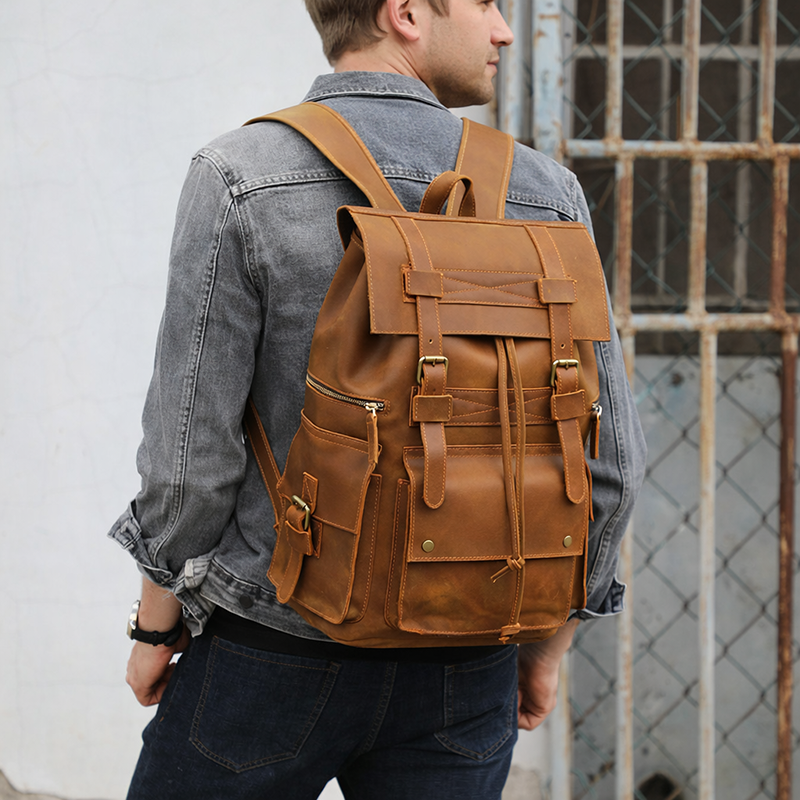
Canvas and leather combine a relaxed fabric body with more structured leather details.
This combination can offer:
- A mature appearance without looking overly formal
- More texture than a basic synthetic backpack
- A natural match with jeans, boots, jackets, and workwear
- Less visual bulk than many technical travel bags
- A more relaxed feel than a full leather backpack
- Good everyday versatility
The canvas body usually keeps the backpack more flexible, while leather trim can reinforce handles, straps, flap edges, or high-contact areas.
This does not automatically make every canvas and leather backpack durable. Fabric weight, stitching, reinforcement, lining, hardware, and construction still matter.
However, the material combination is particularly useful for men who want a daily laptop backpack that does not resemble school gear or an outdoor pack.
For men who want a laptop backpack that feels mature without looking too formal, canvas and leather is one of the strongest everyday material combinations.
To understand the differences between common backpack fabrics, read what backpacks are made of and our comparison of canvas backpack vs nylon backpack.
Weather Resistance: Can It Handle Daily Commutes?
A daily laptop backpack does not need to perform like a waterproof expedition bag.
It should, however, provide reasonable protection during ordinary commuting conditions.
Light rain, wet sidewalks, accidental splashes, and brief exposure while walking between buildings are normal parts of daily use. A very thin fashion backpack with an open top or weak lining may not provide enough protection for electronics.
The term “water-resistant” should also be understood carefully.
Water resistance depends on several parts of the backpack:
- The fabric
- Any wax or surface coating
- Seams
- Zippers
- Closures
- Lining
- Construction around the base
A water-resistant outer fabric does not make the entire backpack waterproof. Rain can still enter through zipper openings, seams, flap edges, or unprotected pockets.
Canvas performance varies as well.
Untreated canvas may absorb water more quickly. Waxed or coated canvas usually handles light moisture better, although coatings can change with wear and may require maintenance.
Leather trim should not remain soaked for long periods. Repeated exposure without proper drying and care can affect the surface and shape.
For valuable electronics, an additional protective sleeve can provide useful insurance. It also protects the laptop when it is removed from the backpack and carried separately.
During heavy rain, the safest approach is still to use an umbrella, rain cover, or additional internal protection.
A laptop backpack does not need to be a full outdoor dry bag, but it should handle light daily exposure better than a thin fashion backpack.
Read are canvas backpacks waterproof for a more detailed explanation of canvas, coatings, seams, and rain protection.
Style: Avoid Looking Too Student, Too Sporty, Or Too Tactical
Function is important, but a laptop backpack is also part of an outfit.
This matters more for mature men who want one bag to work for commuting, casual meetings, coffee shop work, weekend walks, and short trips.
Some backpacks perform well but are difficult to wear outside their intended setting.
A school-style backpack may have useful pockets but look too youthful. A gym backpack may appear too soft or sporty. A hiking pack may include technical straps and bright details that feel out of place in an office.
Tactical backpacks create a different problem. Heavy webbing, patch panels, oversized buckles, and rigid shapes can dominate otherwise simple clothing.
The same applies to travel backpacks with large compression systems and suitcase-style proportions. They may be excellent for airports but unnecessarily bulky for an ordinary workday.
A mature everyday laptop backpack usually has:
- A relatively clean shape
- Restrained branding
- Neutral or natural colors
- Hardware that does not appear overly technical
- Enough structure to hold its shape
- Materials that work with normal casual clothing
Canvas, leather, matte nylon, and textured fabrics tend to look more natural with adult wardrobes than shiny synthetic materials.
The bag should work with clothing such as:
- Jeans
- Boots
- A waxed jacket
- A leather jacket
- Workwear
- A casual blazer
- A button-down shirt
- A sweater or overshirt
It should also make sense in the places where it will actually be carried: the train, office, coffee shop, airport, hotel, or weekend market.
The best laptop backpack for men should look natural with normal outfits, not like it only belongs in a classroom, gym, or hiking trail.
For a broader look at daily style, capacity, and comfort, see our guide to choosing the best everyday backpack for men.
Work Backpack vs Travel Backpack: What Is The Difference?
Work backpacks and travel backpacks often share features, but they are designed around different priorities.
Work Backpacks
A work backpack usually focuses on daily organization.
Common features include:
- A cleaner exterior
- A padded laptop sleeve
- Space for notebooks and documents
- Smaller overall capacity
- Quick-access pockets
- A more professional or business-casual shape
- Less external webbing and fewer compression straps
Most work backpacks fall between approximately 18L and 25L.
They are designed to carry a predictable daily load without taking up too much space on public transportation or beside a desk.
Travel Backpacks
A travel backpack is normally designed to hold clothing and larger personal items.
Common features include:
- A larger capacity
- More compartments
- Space for clothes and shoes
- Compression straps
- Heavier construction
- A wider or deeper shape
- Openings designed for packing rather than quick daily access
Travel backpacks commonly start around 25L and can become much larger.
Some include laptop compartments, but the rest of the bag may still feel excessive for daily commuting.
If the main purpose is carrying a laptop to work, choose a work-oriented backpack.
If the backpack regularly needs to handle a laptop, clothing, toiletries, and travel accessories for one or two nights, a 25L–30L design offers more flexibility.
The important point is to choose around the most common use.
Buying a large travel backpack for occasional trips can leave you carrying unnecessary bulk every weekday.
Canvas And Leather Laptop Backpacks: A Strong Everyday Choice
A canvas and leather laptop backpack sits between a technical commuter bag and a formal leather briefcase.
That middle position is useful.
It can carry work essentials without looking like office equipment. It can also move into weekend use without appearing overly formal or business-focused.
This type of backpack works particularly well for:
- Daily work
- Commuting
- Coffee shop work
- Casual meetings
- Weekend travel
- Mature casual outfits
- Men who do not want a sporty backpack
- Men who prefer natural texture and understated materials
Canvas can soften with use and develop subtle wear patterns. Leather trim may deepen in color and gain character over time, depending on the type of leather and finish.
This aging process is different from damage.
Fading at contact points, small marks, and changes in texture can make the bag feel more personal. Weak stitching, torn fabric, broken hardware, and peeling synthetic coatings are construction problems, not desirable patina.
A well-designed canvas and leather backpack should still include the practical features required for laptop use. Material and appearance cannot replace a secure compartment, comfortable straps, or useful organization.
If you want a laptop backpack that feels practical without looking too technical, a canvas and leather backpack is a strong everyday choice.
Explore our collection of canvas and leather backpacks for work, commuting, and relaxed weekend use.
Final Verdict: What Laptop Backpack Should Men Choose?
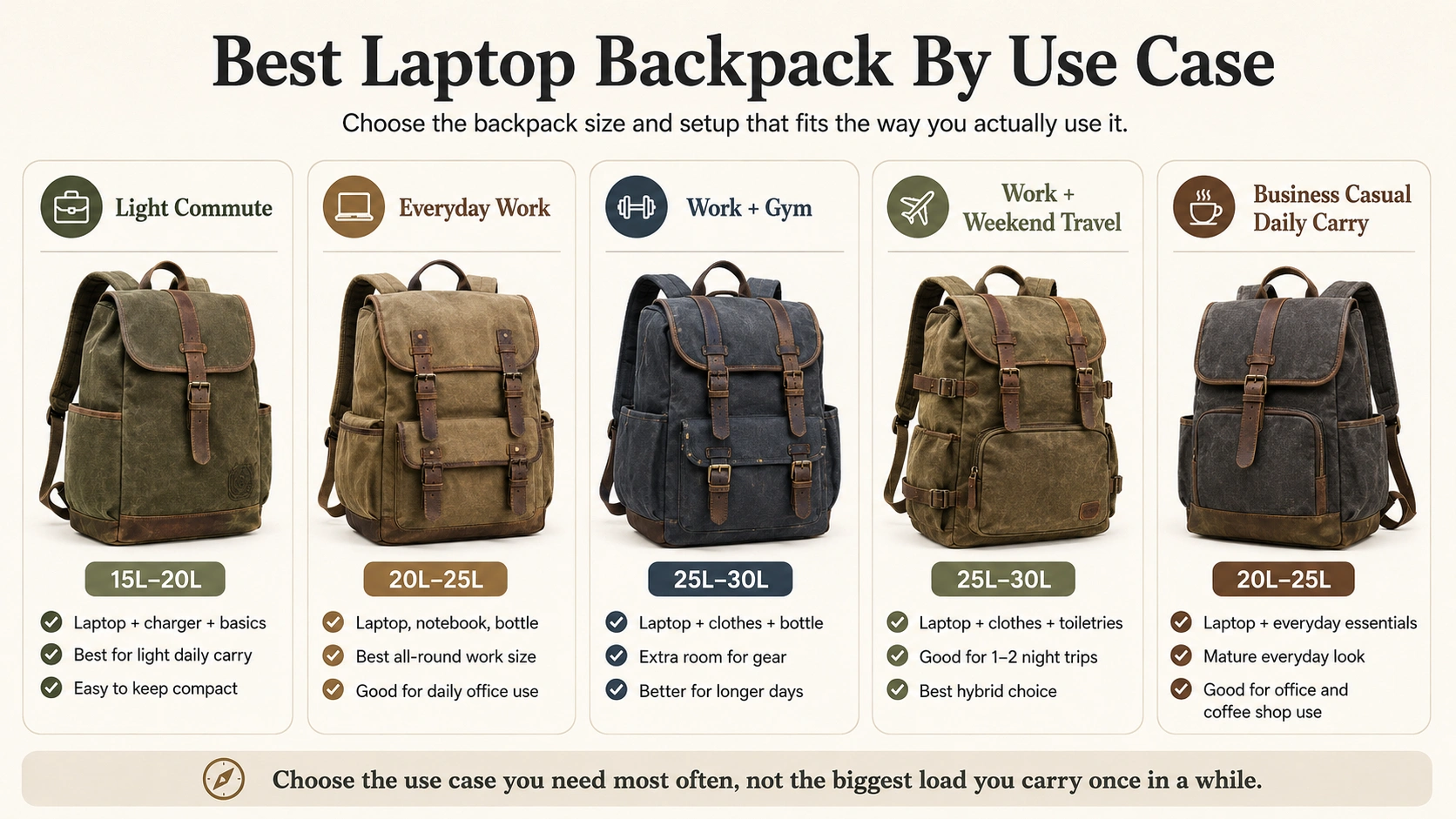
Start with what you carry most often.
For a light commute involving a small laptop, charger, phone, wallet, and notebook, a 15L–20L backpack may be enough.
For most office and commuting routines, 20L–25L provides the best balance. It offers enough space for a laptop and normal daily essentials without creating the bulk of a travel bag.
For work combined with gym gear, extra clothing, photography equipment, or short trips, 25L–30L provides more flexibility.
Capacity, however, should not be the first decision.
Check the laptop compartment before the total number of liters. Confirm that the sleeve fits the actual dimensions of the computer, provides padding, and prevents excessive movement.
After that, consider how the backpack feels when loaded.
The straps should distribute weight comfortably. The back panel should prevent hard objects from pressing against the body. The pockets should separate frequently used items without making the design unnecessarily complicated.
Finally, consider whether the backpack looks appropriate for the way you dress.
A highly technical pack may be useful but feel out of place with everyday workwear. A formal leather backpack may look refined but feel heavier than necessary. Canvas and leather offers a useful middle ground for men who prefer a mature, casual appearance.
Do not buy the largest backpack simply because it can hold more. Do not buy on appearance alone either.
For most men, the best laptop backpack is a 20L–25L backpack with a secure laptop compartment, comfortable straps, smart pockets, and a mature everyday look.
Frequently Asked Questions
What Size Backpack Is Best For A Laptop?
The best size depends on the laptop and the other items carried with it.
A 15L–20L backpack can work for a small laptop and a minimal daily load. A 20L–25L backpack is usually more practical for a laptop, charger, notebook, water bottle, headphones, and light jacket.
The laptop compartment dimensions are more important than capacity alone.
Is A 20L Backpack Enough For A Laptop?
Yes. A 20L backpack is usually enough for a laptop and basic work essentials.
It can normally hold a laptop, charger, notebook, phone, wallet, keys, and a few accessories. It may feel limited if you also carry bulky food containers, clothing, gym equipment, or travel items.
Is A 25L Backpack Good For Work?
A 25L backpack is a practical size for work.
It provides enough space for a laptop, documents, electronics, water bottle, headphones, and a light layer without becoming as bulky as a large travel backpack.
For men whose daily load changes from one day to another, 25L offers useful flexibility.
What Is The Best Laptop Backpack Size For Men?
For most men, the best laptop backpack size is between 20L and 25L.
This range suits normal work and commuting needs while remaining compact enough for daily use. Men who carry very little may prefer 15L–20L, while those combining work with gym or travel gear may need 25L–30L.
Are Canvas Backpacks Good For Laptops?
Canvas backpacks can be good for laptops when they include a padded compartment, secure closure, strong stitching, and a supportive back panel.
Canvas alone does not protect a computer. The internal construction matters more than the outer fabric.
For additional protection, especially during wet weather, use a separate laptop sleeve.
Is Leather Or Canvas Better For A Laptop Backpack?
Leather usually offers a more formal appearance and greater structure, but it is also heavier and may require more maintenance.
Canvas is normally lighter, more flexible, and more casual. A canvas and leather backpack combines the relaxed body of canvas with more structured leather details.
The better choice depends on whether you prioritize formality, weight, flexibility, or everyday versatility.
What Should I Look For In A Work Laptop Backpack?
Look for a padded laptop compartment that fits your computer, comfortable adjustable straps, a supportive back panel, practical pockets, durable materials, and a capacity suited to your normal daily load.
The backpack should also look appropriate with your usual work and casual clothing.
Can A Laptop Backpack Be Used For Weekend Travel?
Yes. A laptop backpack between 20L and 25L can usually handle a light overnight trip if you pack carefully.
For a laptop, clothing, toiletries, and additional travel gear, a 25L–30L backpack will provide more space. Larger capacities are useful for travel but may feel bulky during normal weekday commuting.