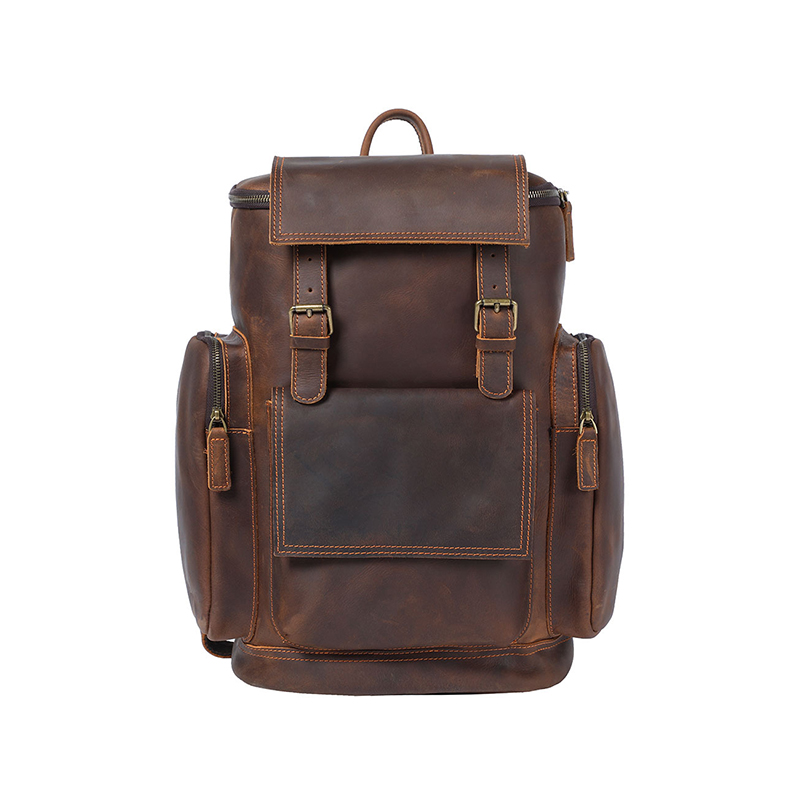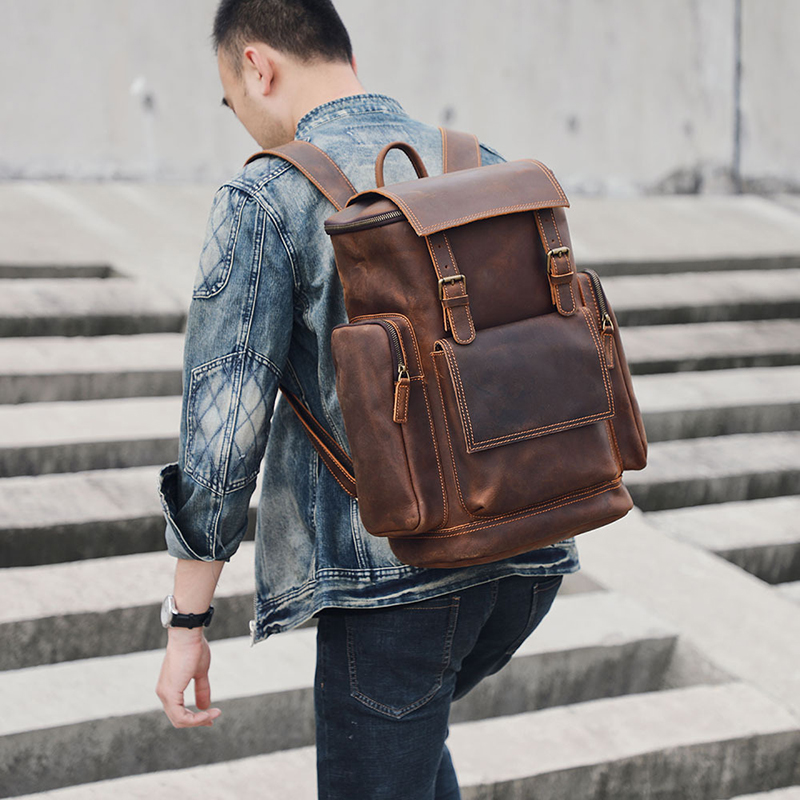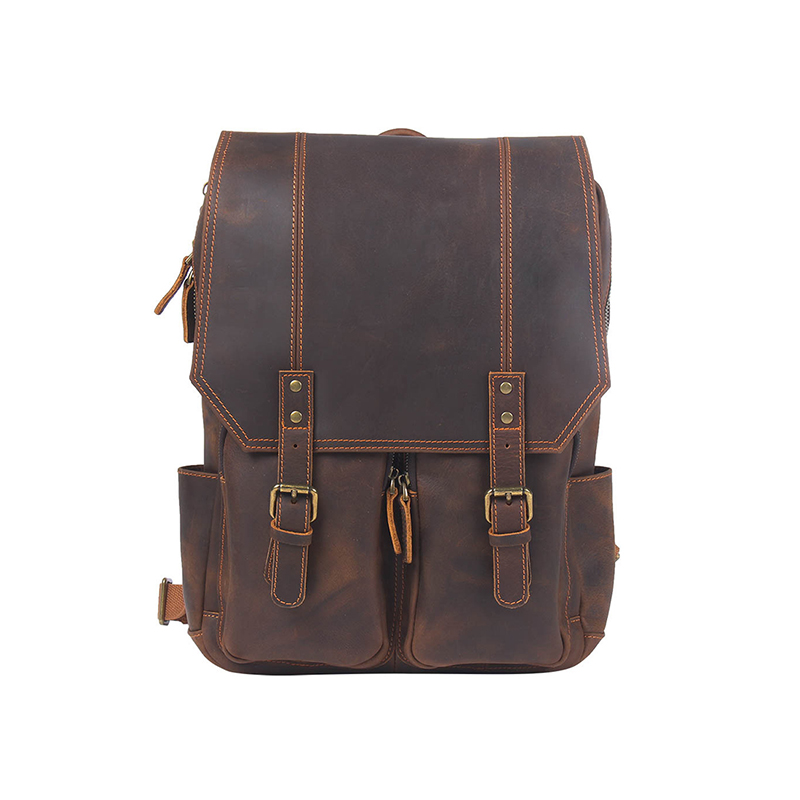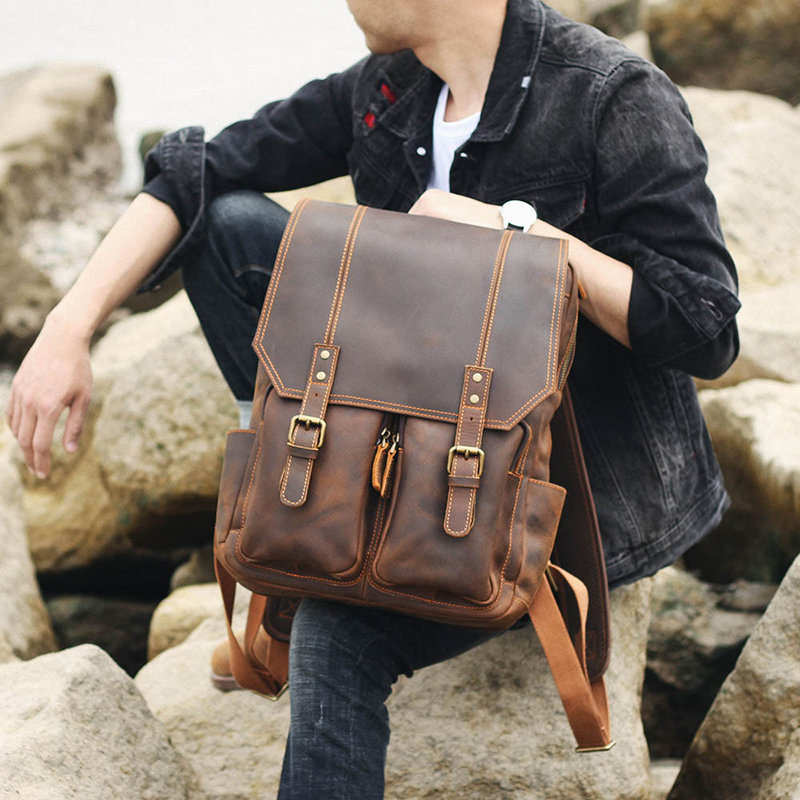
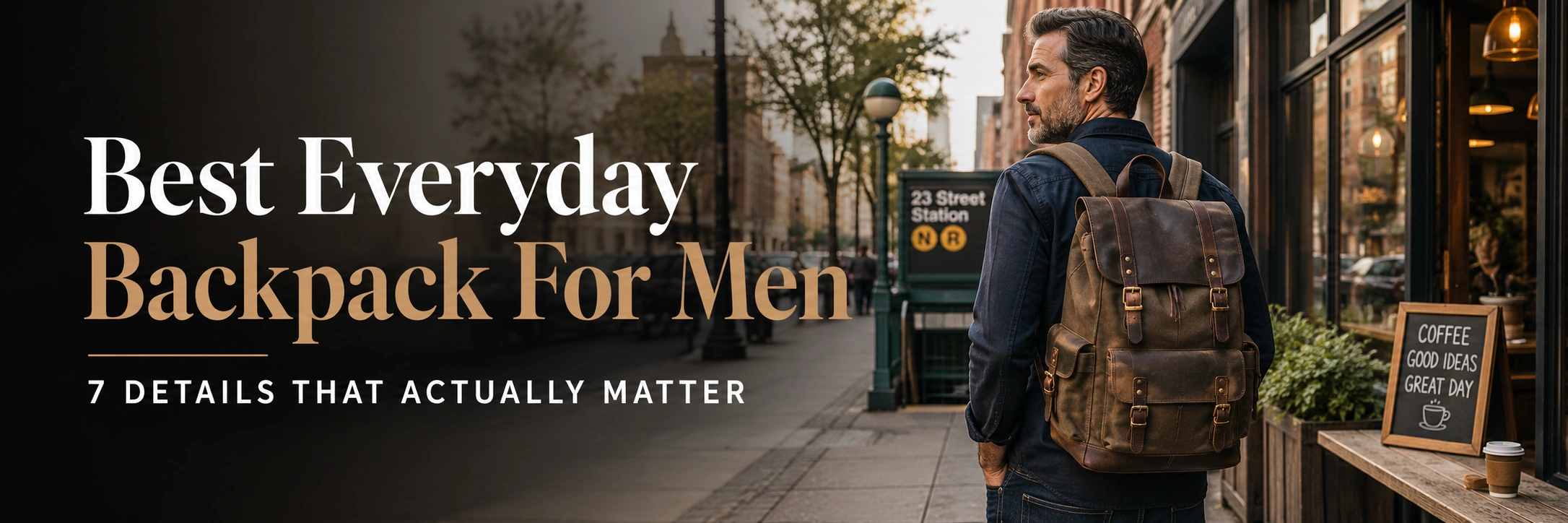
The best everyday backpack for men is not the one with the most pockets — it is the one you can carry every day without thinking twice.
That sounds obvious until you're standing in front of a shelf of bags trying to figure out which one you'll actually still be reaching for in three years. The backpack that looks right in a product photo doesn't always survive contact with a real commute, a real wardrobe, or a real week of carrying actual things. And for men — particularly past the stage where a student-looking pack or a sports bag feels like the natural default — the options that look promising on the outside often turn out to be too specialized, too casual, too formal, or just slightly wrong for how life actually works.
The details that separate an everyday backpack that stays in rotation from one that gets quietly retired are usually the same seven things. Here's what they actually are.
What Makes A Backpack Good For Everyday Use?
The brief for an everyday backpack is deceptively broad: it has to work on a commute, feel useful in an office or coffee shop, carry everything you need without being a burden, and look natural with whatever you're wearing that day. Most bags optimize for one or two of those things. The good ones manage all of them.
The failure modes are predictable. Too large and it becomes a nuisance to carry on public transit and looks disproportionate with everyday clothing. Too small and it can't hold a laptop, a water bottle, and a jacket at the same time. Too sporty and it looks out of place in anything but casual settings. Too structured and it feels stiff for a Saturday.
A good everyday backpack should feel practical on a commute, useful on a weekend, and natural with the clothes you actually wear. It's a tighter design brief than a hiking pack or a briefcase, and it's why so many bags that seem reasonable in theory end up underperforming in practice.
1. The Right Size For Daily Carry
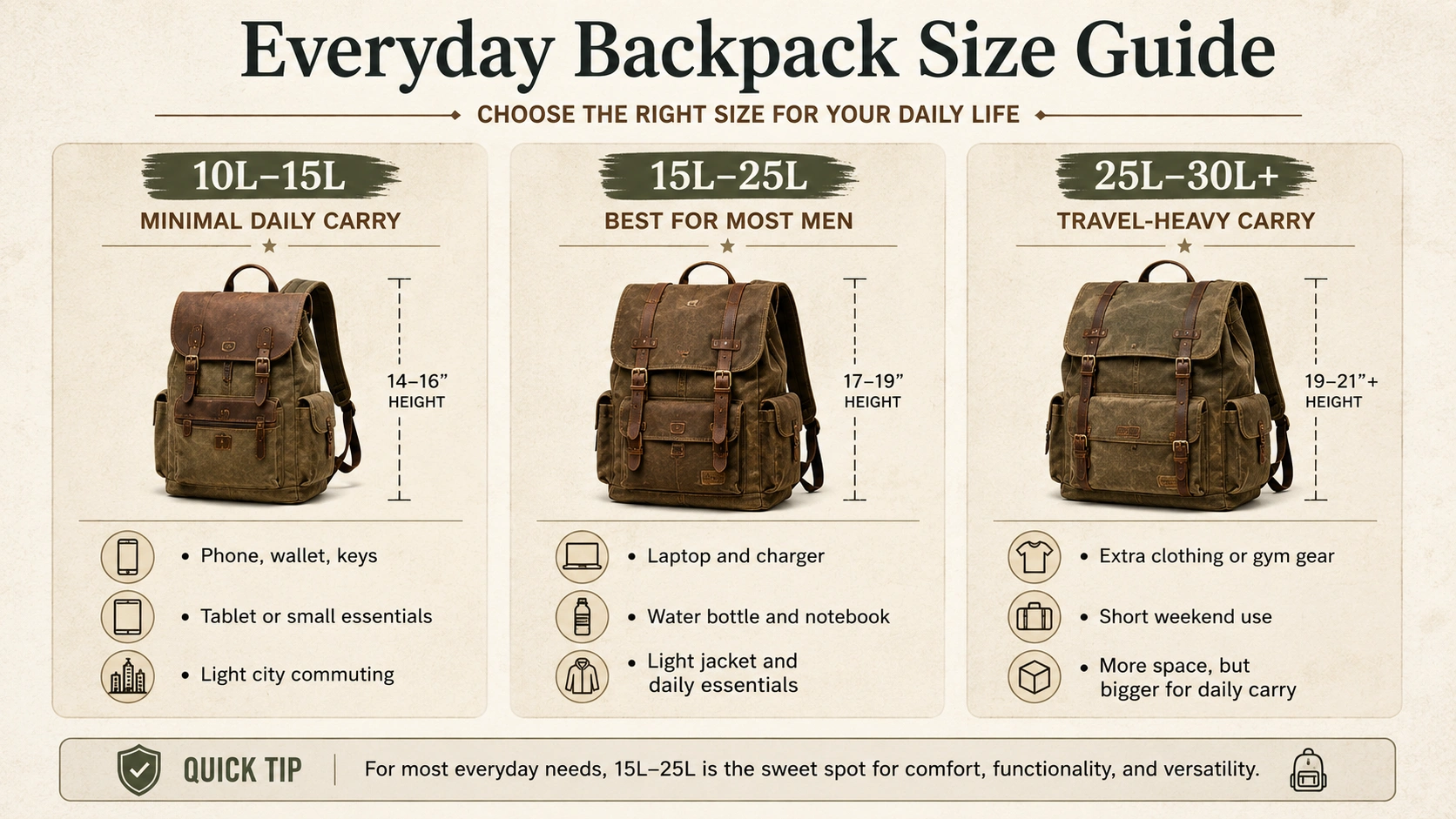
10L–15L: Minimal Daily Carry
At the lower end, you're carrying the essentials and not much else — phone, wallet, keys, a tablet or thin notebook, a small water bottle. It works for light commutes and city errands where the bag barely needs to open. The constraint shows up fast when a laptop needs to fit, or when a change of clothes or a light jacket goes in. This size suits a specific kind of carry discipline; it doesn't suit most people's actual day.
15L–25L: The Right Range For Most Men
This is where most good everyday backpacks land, and the reason is practical: it accommodates a laptop and charger, a notebook, a water bottle, a light jacket, and the usual daily miscellany without the bag looking or feeling oversized. A 20L bag sits comfortably on a commute, doesn't dwarf a normal frame, and still has enough room to serve on a weekend overnight if needed.
For the majority of men looking for one bag to use every day, 15L to 25L is the range to focus on rather than defaulting to as large as possible.
25L–30L And Above: Better For Travel Than Daily Carry
Beyond 25L, the bag starts to tip toward travel territory — which isn't necessarily wrong, but it changes the character of the daily experience. A bag that size packed for a workday is mostly empty, which causes it to lose its shape and feel slack. Packed fuller, it becomes heavier than a daily carry needs to be. If short weekend trips are a regular part of life and you want one bag to handle both, 25L–30L can still work — just with an awareness that it's slightly oversized for a standard daily commute. For a fuller look at sizing for trips, see best backpack for weekend travel.
2. Durable Material That Matches Your Lifestyle
Canvas
Canvas is the material that makes the most sense for men who want an everyday backpack that works with real clothing rather than just functional gear. It's durable against abrasion, develops natural character with use, and has a weight and visual presence that suits workwear, jeans, jackets, and casual outfits in a way synthetic materials don't quite replicate.
The trade-off is water resistance — plain canvas absorbs moisture more readily than synthetics, which is worth managing but not a deal-breaker for most everyday use.
Waxed Canvas
Waxed canvas is canvas with the water-resistance problem significantly reduced. The wax coating sheds light rain and moisture, and it gives the fabric a slightly richer texture and appearance. Over time, waxed canvas develops its own patina in a way plain canvas already does, but more deliberately.
Worth stating clearly: waxed canvas is water-resistant, not waterproof. It handles a commute in the rain. It doesn't handle being left out in a downpour. For everyday use, the distinction rarely matters — for heavier weather, a rain cover closes the gap.
Nylon
Nylon's main advantages are weight and rain performance. A nylon bag at the same capacity as a canvas bag is almost always lighter, and coated nylon handles wet conditions better than canvas does. For someone whose daily life includes a lot of active movement, gym sessions, or commuting in consistently wet climates, nylon is the more practical answer.
The limitation is stylistic. Nylon reads as sporty and technical, which fits active contexts well but sits less naturally with the kind of wardrobe most men actually wear day to day. It's a functional choice that doesn't always look intentional with more considered everyday clothing.
Leather
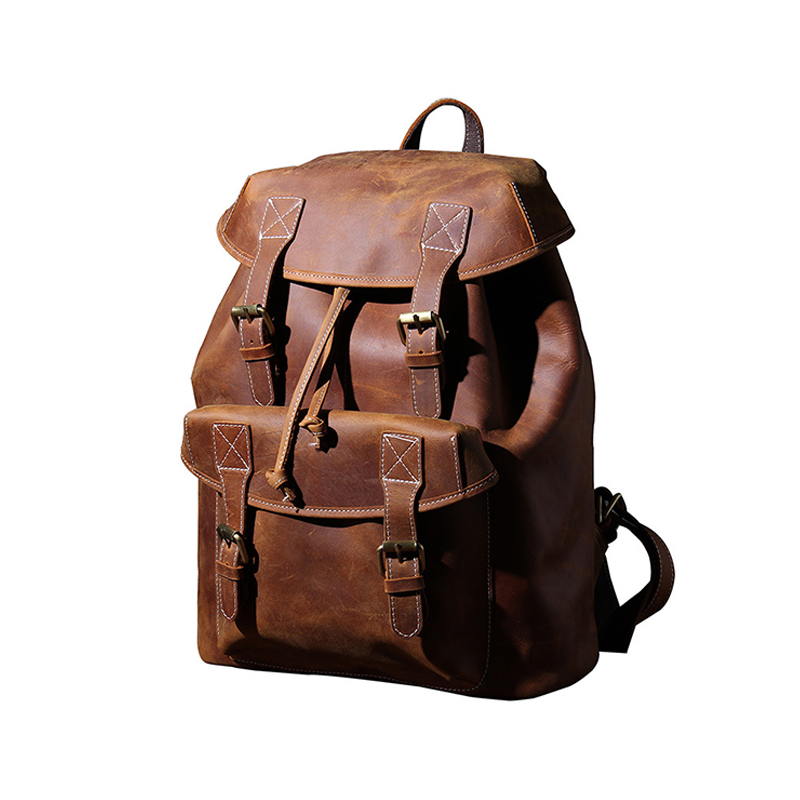
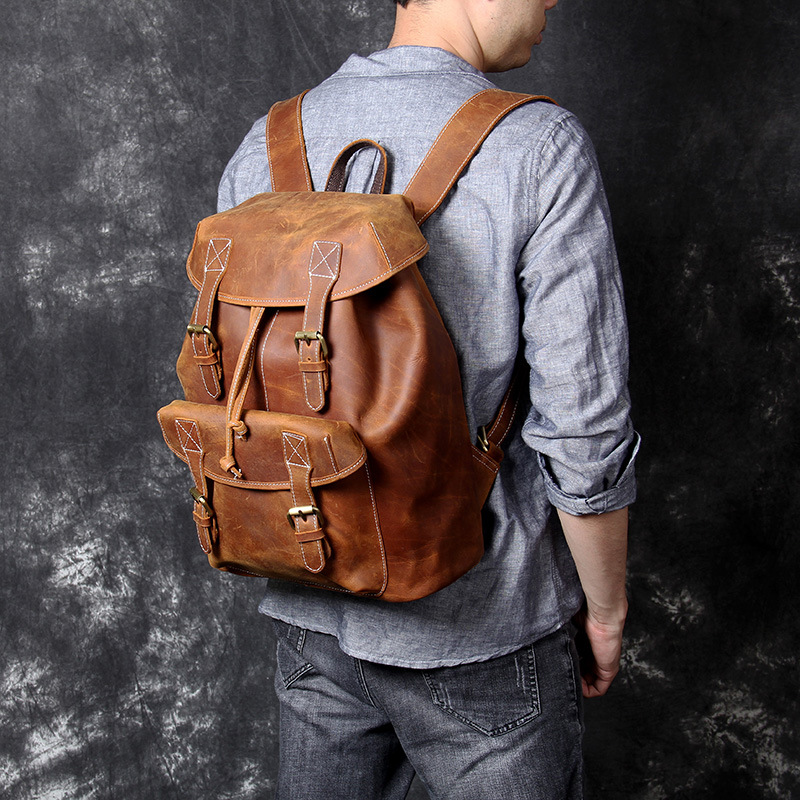
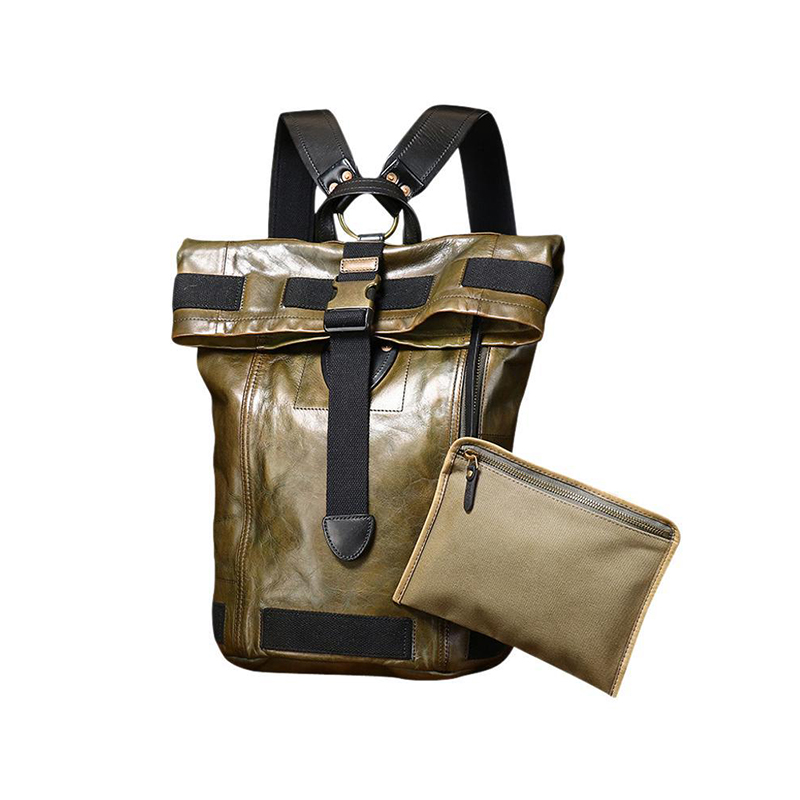
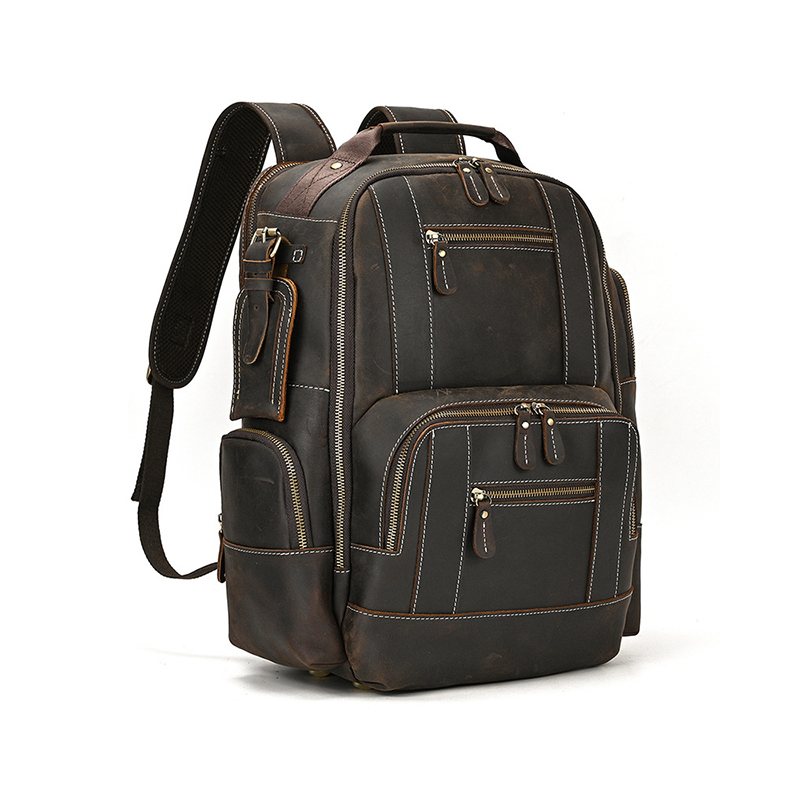
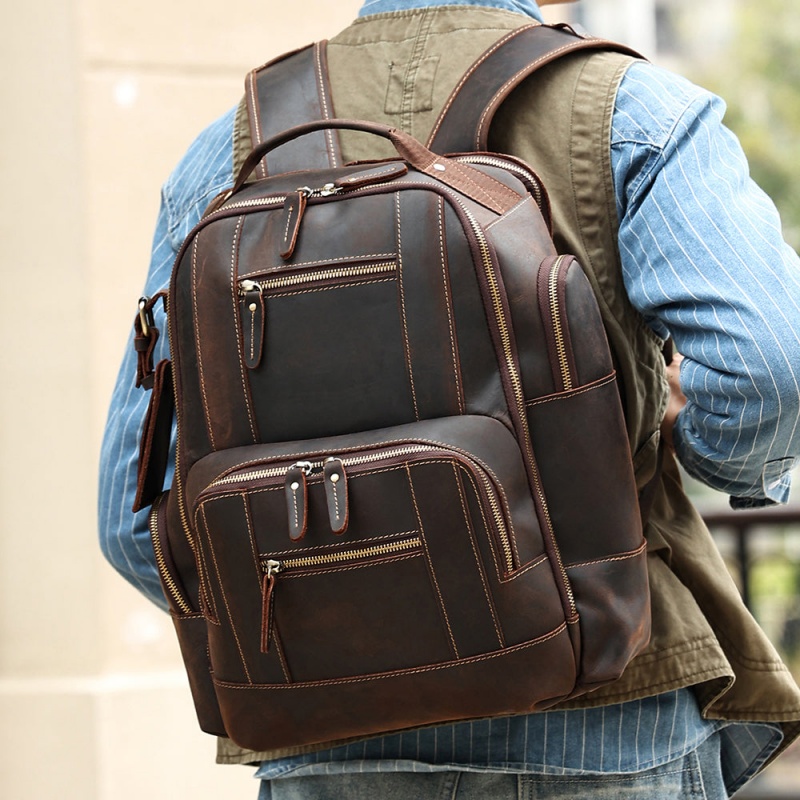
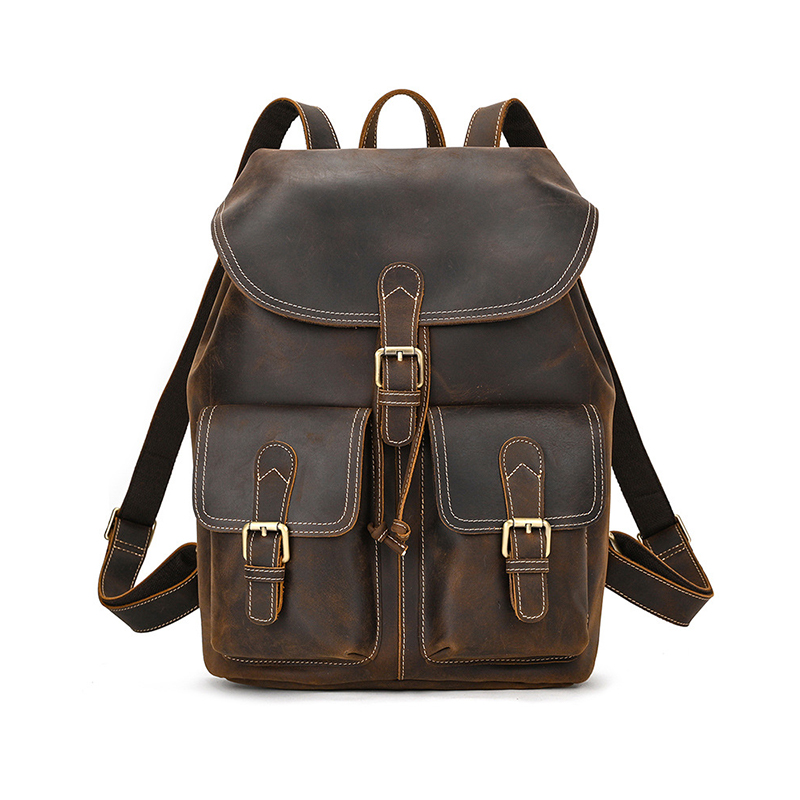
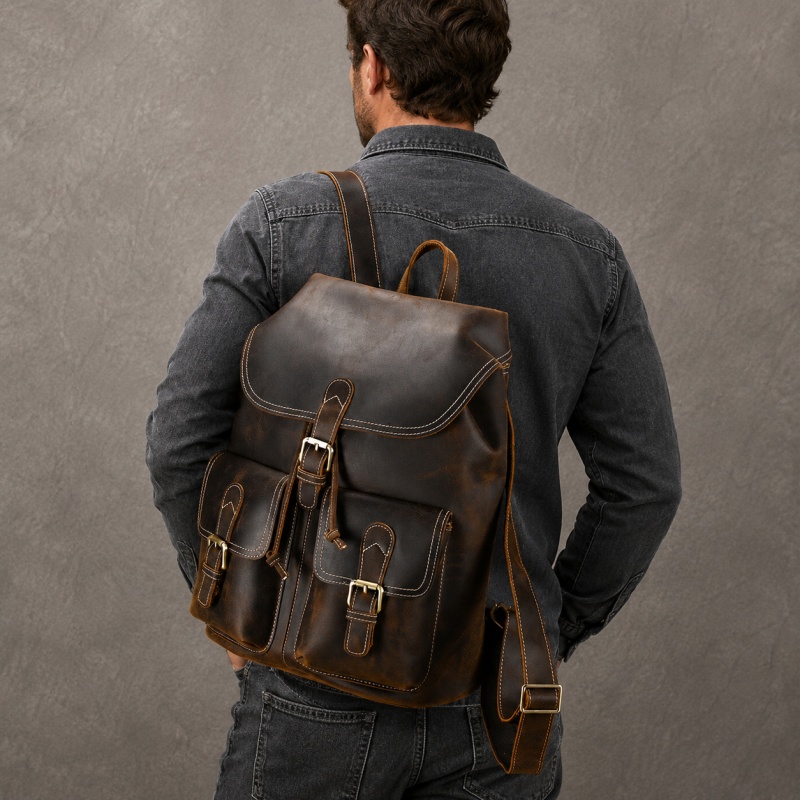
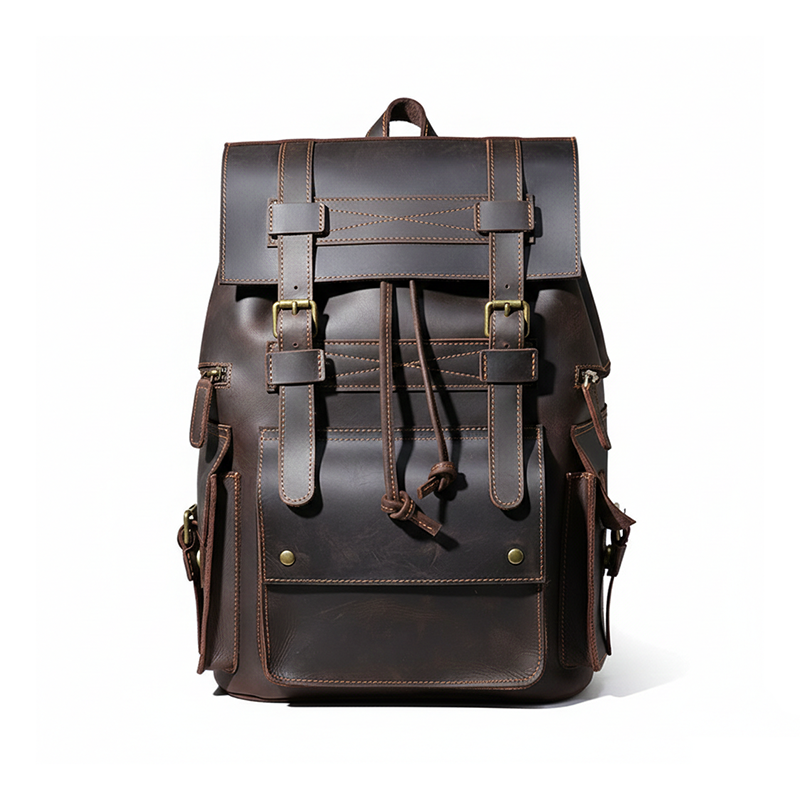
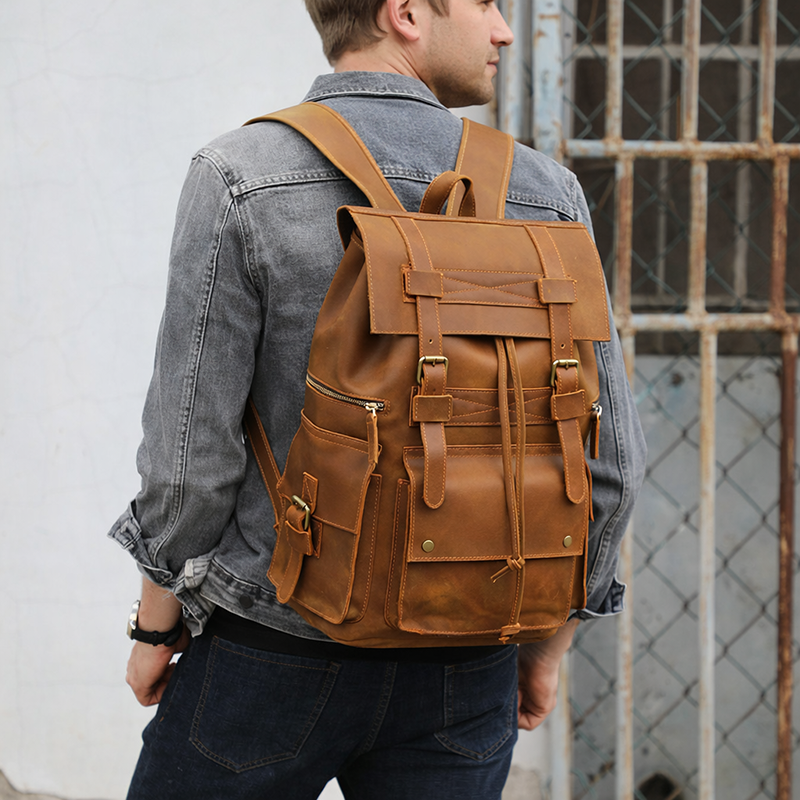
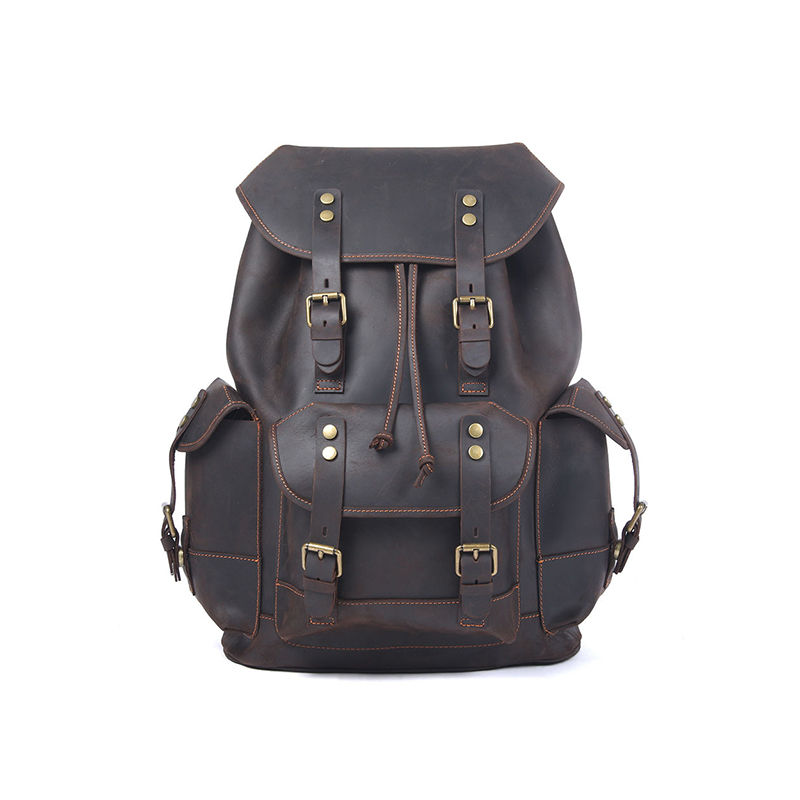
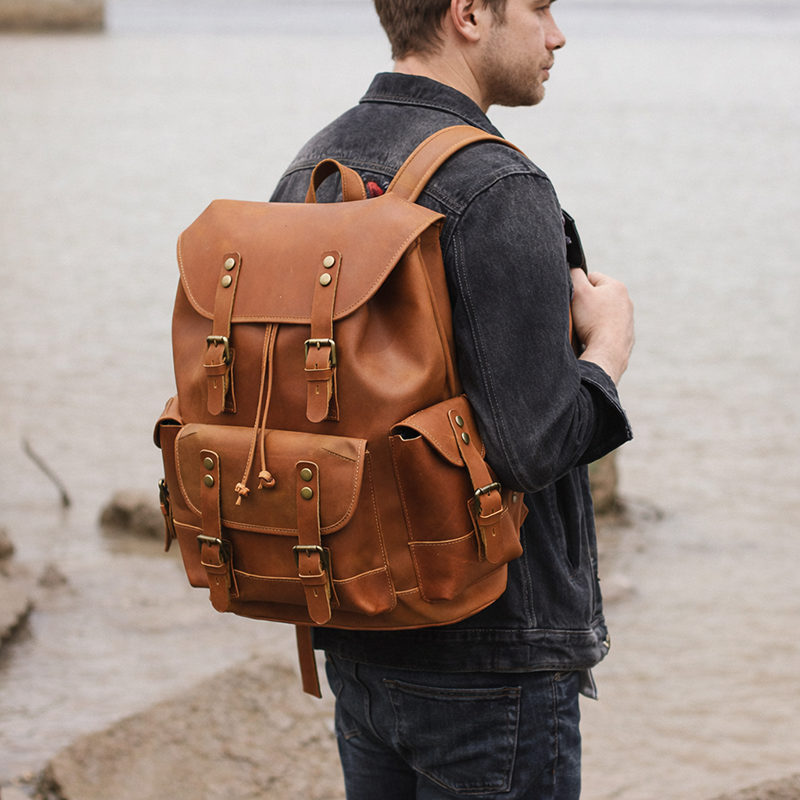
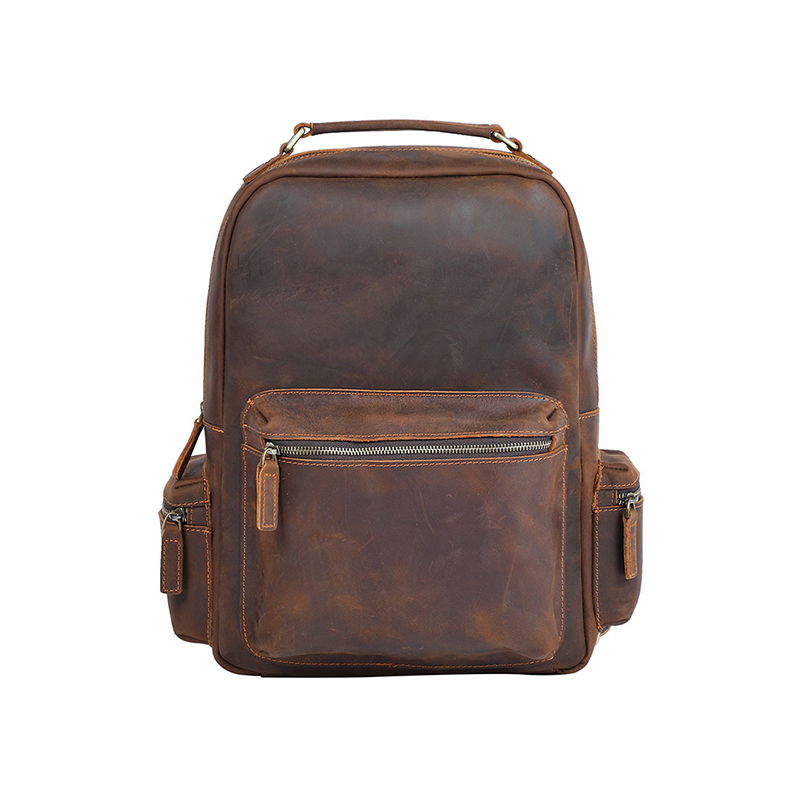
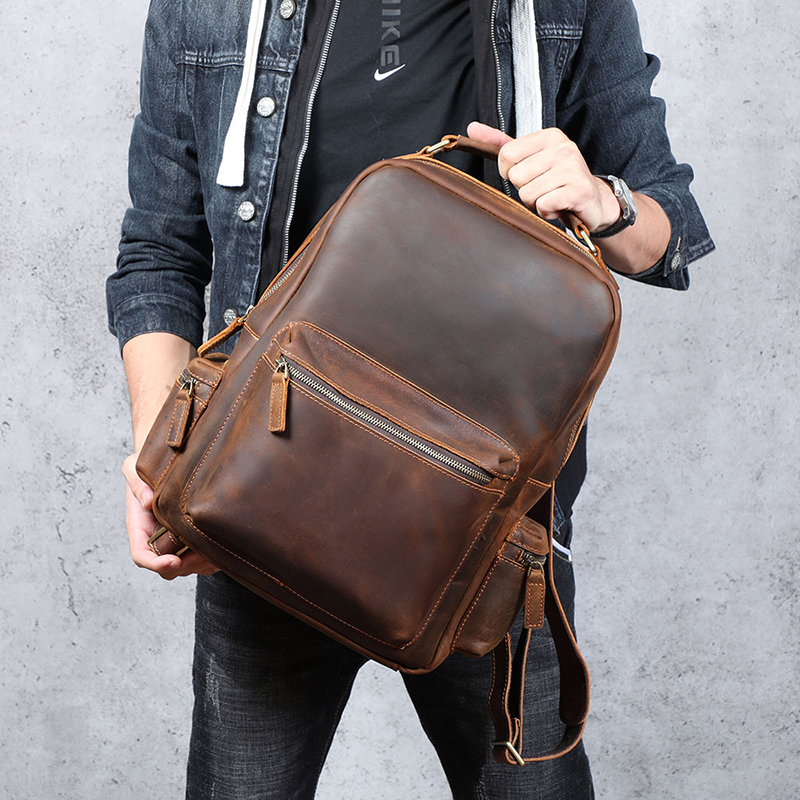
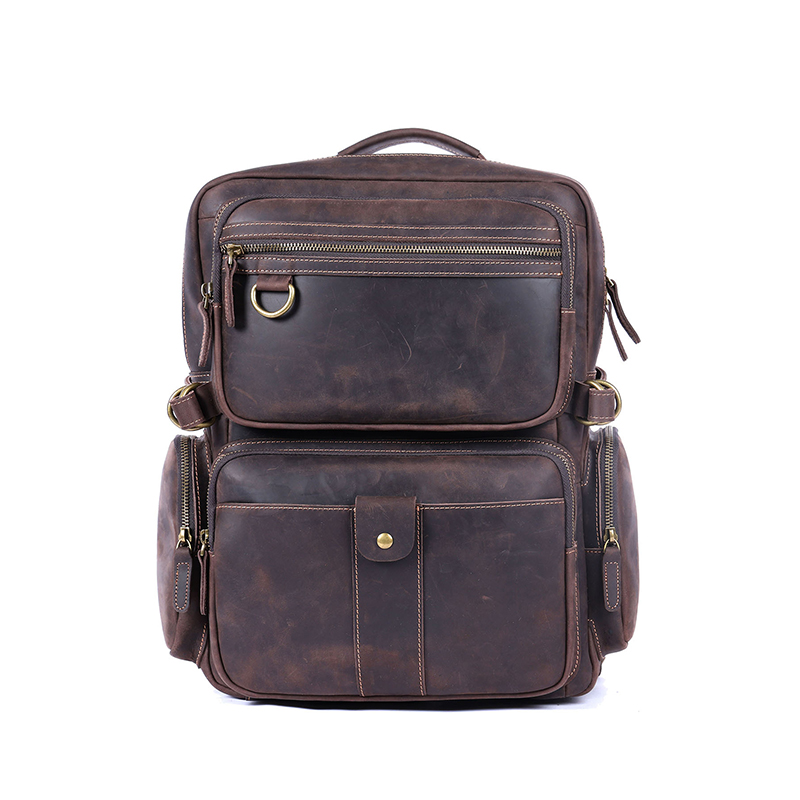
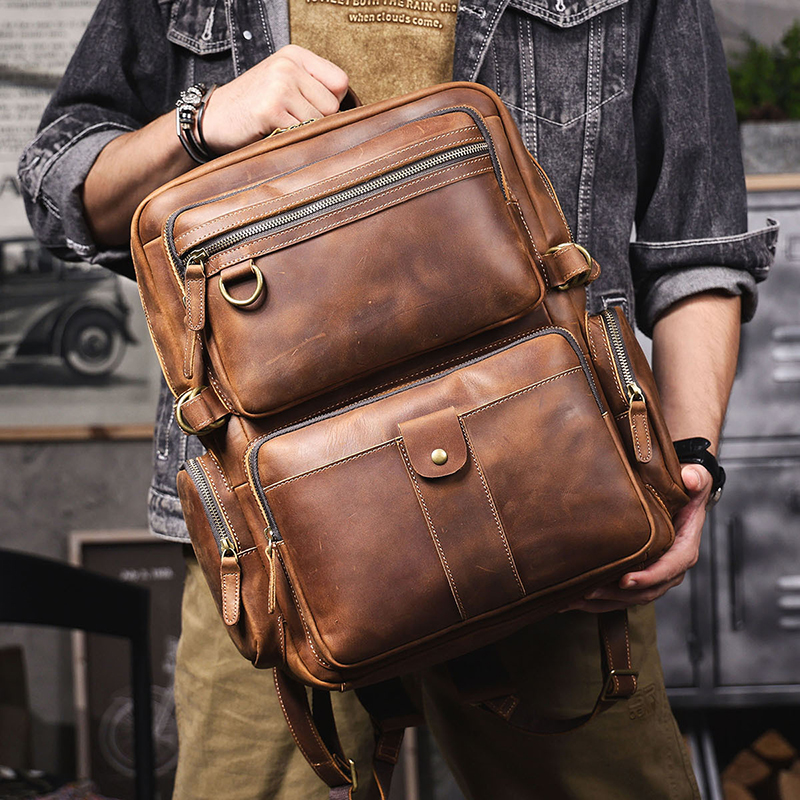
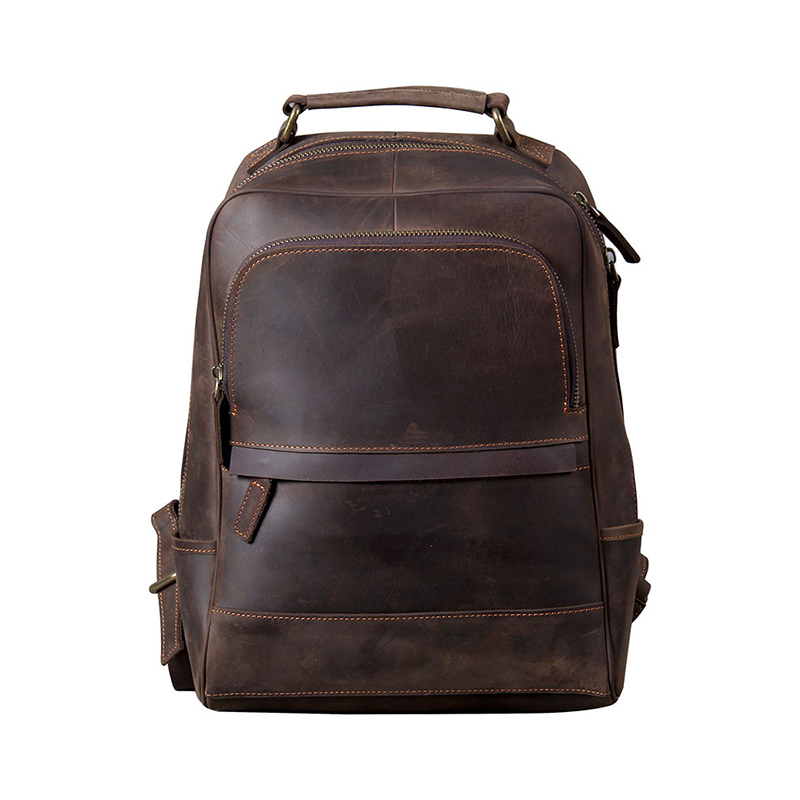
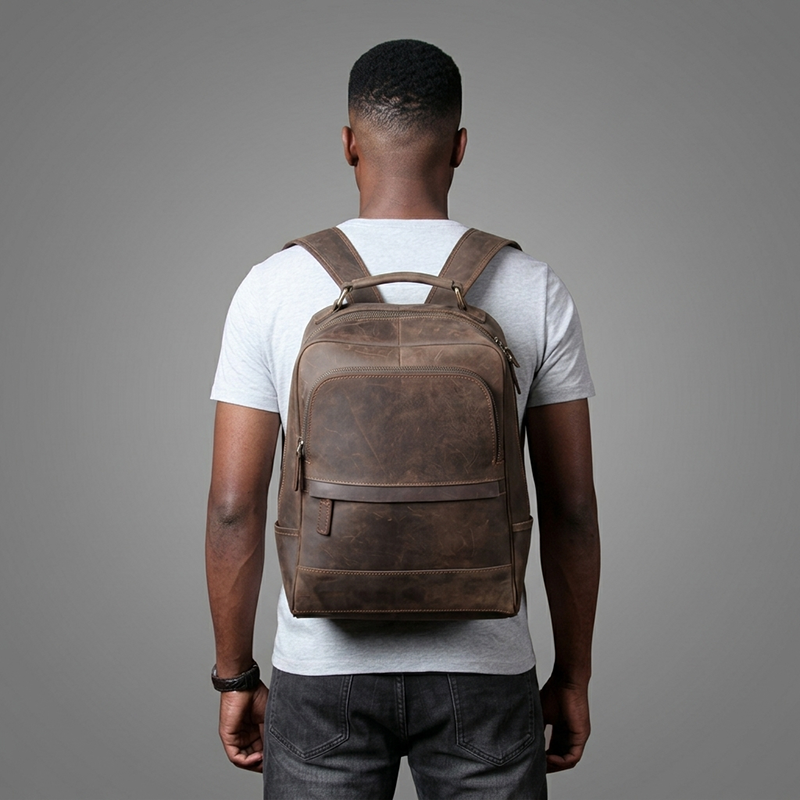
Full leather is the right material for men who want a polished, formal carry — business travel, office settings where appearance carries specific weight, contexts where the bag is as much a statement as a tool. The trade-offs are weight and care: leather backpacks are heavier, need more maintenance, and require more care around moisture than canvas does.
Canvas And Leather
A canvas body with leather trim captures what makes each material useful without the main drawback of either. The canvas handles the everyday durability and keeps the weight reasonable; leather at the straps, base, and trim adds structure and a more refined visual character. For men who want one bag that works across workdays, weekends, and casual travel without being obviously sporty or obviously formal, this combination tends to cover the most ground. For a detailed comparison of these materials against each other, see canvas backpack vs nylon backpack.
3. Comfortable Shoulder Straps
This is the detail most likely to determine whether you still use the bag a year after buying it.
A backpack that's slightly the wrong shape, slightly the wrong color, or slightly the wrong capacity still gets used. A backpack with straps that dig into your shoulders after twenty minutes of carrying it gets abandoned. The carrying experience is more fundamental than almost any other feature, and it's the one thing you can't evaluate properly from a product page.
Width and padding are the key variables. Narrow straps concentrate weight in a small area, which becomes uncomfortable quickly when the bag is loaded. Padded straps distribute the load more evenly and make a real difference over the course of a commute or a long day of carrying. Adjustability matters too — a strap that fits right at your height and frame sits the bag in the right position on your back, where the weight is distributed well.
The stress points where straps attach to the bag body are worth checking separately. These carry the most concentrated load and are where structural failure tends to start on poorly made bags. Reinforced attachment points are a sign that the bag was designed to be carried rather than just to look good hanging on a wall.
4. Smart Pocket Layout
Laptop Sleeve
A padded, dedicated laptop sleeve is the organizational feature that matters most for most men's everyday carry. Having the laptop separate from everything else protects it and makes it easy to pull out at security or a coffee shop without unpacking the rest of the bag.
Front Pockets
The front pocket is where daily-use items live — phone, wallet, keys, earbuds, a pen, transit card. A well-designed front pocket keeps these things accessible without having to open the main compartment every time you need one of them. How easy it is to zip, unzip, and reach into while the bag is on your back or sitting on a table matters more than it seems.
Side Pockets
Side pockets are often the feature that reveals whether a bag was designed by someone who actually carries things daily. A side pocket that comfortably holds a water bottle or umbrella without the bag tipping or the item falling out is genuinely useful. A side pocket that's too shallow or too stiff to use with one hand is an annoyance that repeats itself every day.
Quick-Access Zipper
A zipper pocket that's accessible without taking the bag off — usually at the top or back — handles the items you reach for constantly. Transit tickets, sunglasses, a small notebook, anything that needs to be in and out multiple times a day.
Main Compartment
The main compartment is where the volume lives, and its usefulness depends on how it opens as much as how large it is. A compartment that opens wide enough to see and reach everything without difficulty makes packing and unpacking easy. One that only partially opens requires excavating the bottom for anything that isn't right at the top.
The best pocket layout is not the one with the most pockets — it is the one that keeps your everyday items easy to reach. A bag with twelve pockets, none of which are quite the right size or in the right place, is harder to use than a bag with five well-placed ones.
5. A Style That Works With Your Wardrobe
The bag you carry every day is visible in every setting your day passes through — commute, office, coffee shop, lunch, evening. Whether it looks intentional in those contexts matters in a way that an occasional-use bag doesn't have to worry about.
For many men, particularly past their mid-twenties, a heavily sporty backpack or a clearly student-oriented design creates a slight mismatch with their actual clothing and life. Not wrong, but slightly incongruous — the kind of thing that works fine but doesn't look considered.
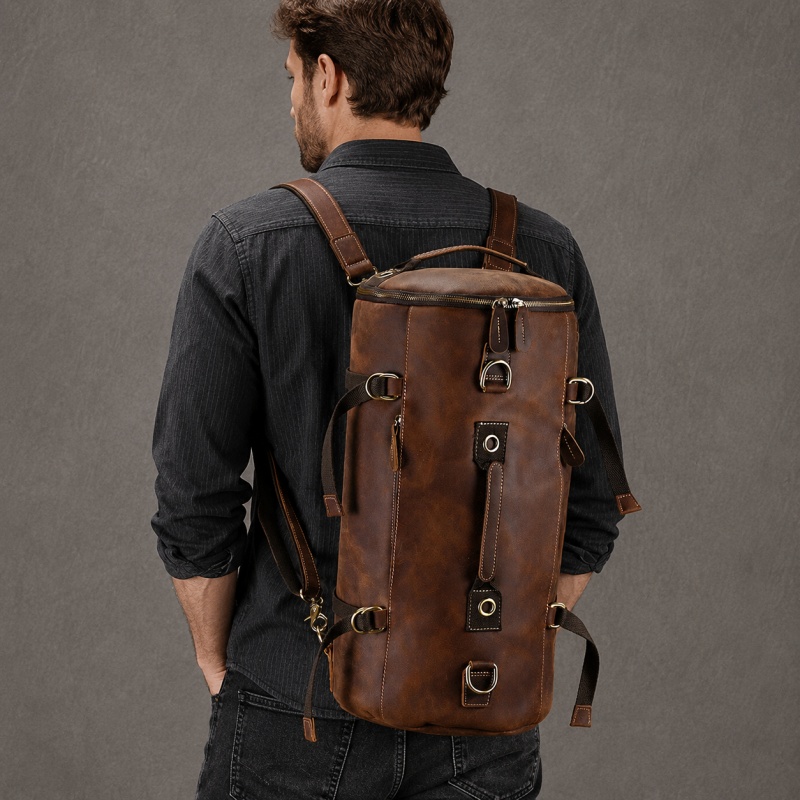
Canvas, and particularly canvas and leather, tends to sit naturally with the wardrobe most men actually wear: jeans, boots, Oxford shirts, chinos, jackets of various kinds, workwear-influenced and casual pieces. It has the visual weight and character that suits adult everyday clothing without looking like it was designed for a specific functional purpose.
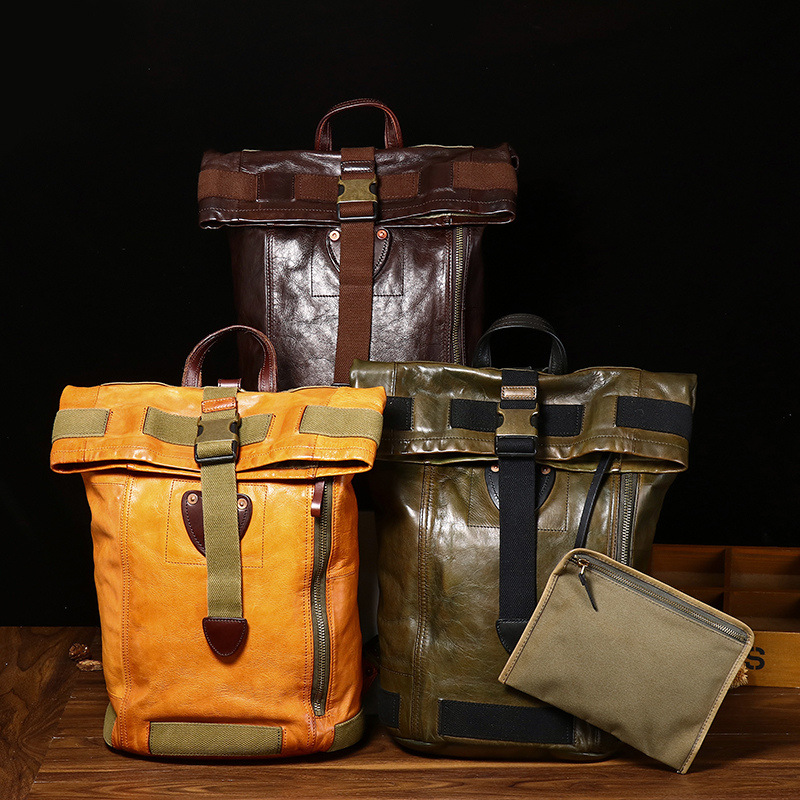
Colors that travel well across contexts without announcing themselves: coffee brown, dark khaki, black, olive, natural canvas tones. These work with the widest range of clothing without competing with what you're wearing.
For many men, a vintage canvas backpack looks more natural with everyday clothes than a technical-looking pack. The bag that looks most at home with what you wear is the one you'll reach for most consistently.
6. Weather Resistance For Real Life
An everyday backpack doesn't need to be fully waterproof — but it should handle the everyday weather most commutes involve without requiring special treatment or causing anxiety every time clouds appear.
Waxed canvas handles light rain and incidental moisture well. Water beads on the surface rather than soaking through immediately, and for the usual walk from the car to the building or a few minutes in a drizzle, it's fine without any special preparation. The coating does wear down over time and benefits from occasional re-waxing.
For heavier rain or extended outdoor exposure, a rain cover adds a layer that waxed canvas alone doesn't provide. This is the same practical approach most people take with leather bags — the base material handles everyday conditions, and an accessory covers the edge cases.
Whatever the outer material, a padded laptop sleeve inside the bag is worth treating as a second line of protection for the most valuable item in the bag. The bag's weather resistance keeps most moisture out; the sleeve handles the gap. For a fuller look at how canvas performs in rain, are canvas backpacks waterproof covers the specific distinctions.
7. Build Quality That Holds Up Over Time
Strong Stitching
The seams at the strap attachments, around the base, at the handles, and at the front pocket joins are the places most likely to show structural failure over time. Clean, tight stitching that doesn't pull or gap when the bag is loaded is the baseline; reinforced stitching at the specific points that carry the most stress is the standard worth looking for.
Durable Hardware
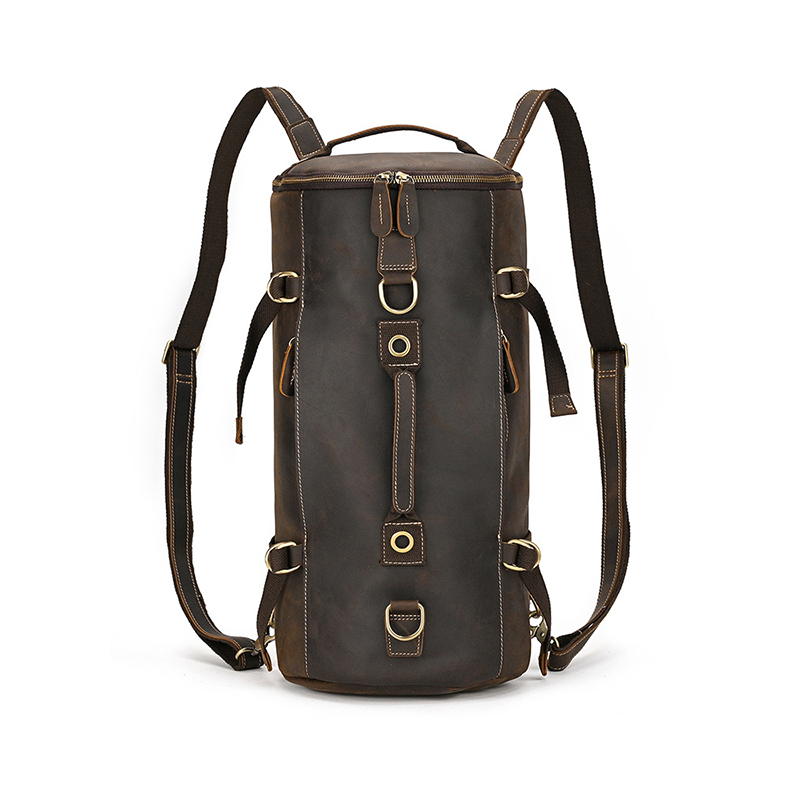
Zippers, buckles, D-rings, and rivets determine the day-to-day experience more than any other hardware detail, because they're the mechanisms you interact with every time you open the bag. Zippers that catch or stick become an irritant almost immediately. Buckles that don't close positively create small anxieties about whether the bag is actually secure. Solid hardware that operates smoothly and doesn't corrode is the difference between a bag that's pleasant to use and one that becomes a minor source of frustration.
Reinforced Stress Points
The points that bear the most concentrated load — strap attachment points, the base corners, buckle connection points — are where quality construction is most visible. Reinforcement at these locations is what separates a bag built to carry things daily for years from one that's built to pass inspection in a showroom.
Solid Bottom Structure
The base of a bag sits on every surface it's set down on — floors, desks, platforms, car boots. A base that holds its shape and has enough structure to keep the bag upright when set down is a practical feature that becomes obvious in its absence. Leather base panels on canvas bags serve this function particularly well.
Quality Straps And Handles
Straps and handles are the highest-wear components on any bag. The stitching that attaches them, the hardware that adjusts them, and the padding that makes them comfortable all degrade faster than the bag body itself. A well-made strap on a well-made bag can last the life of the bag; a poorly attached strap can fail within a year.
A good everyday backpack should not just look good on day one — it should still feel dependable after years of use.
Canvas And Leather Backpacks: A Strong Everyday Choice
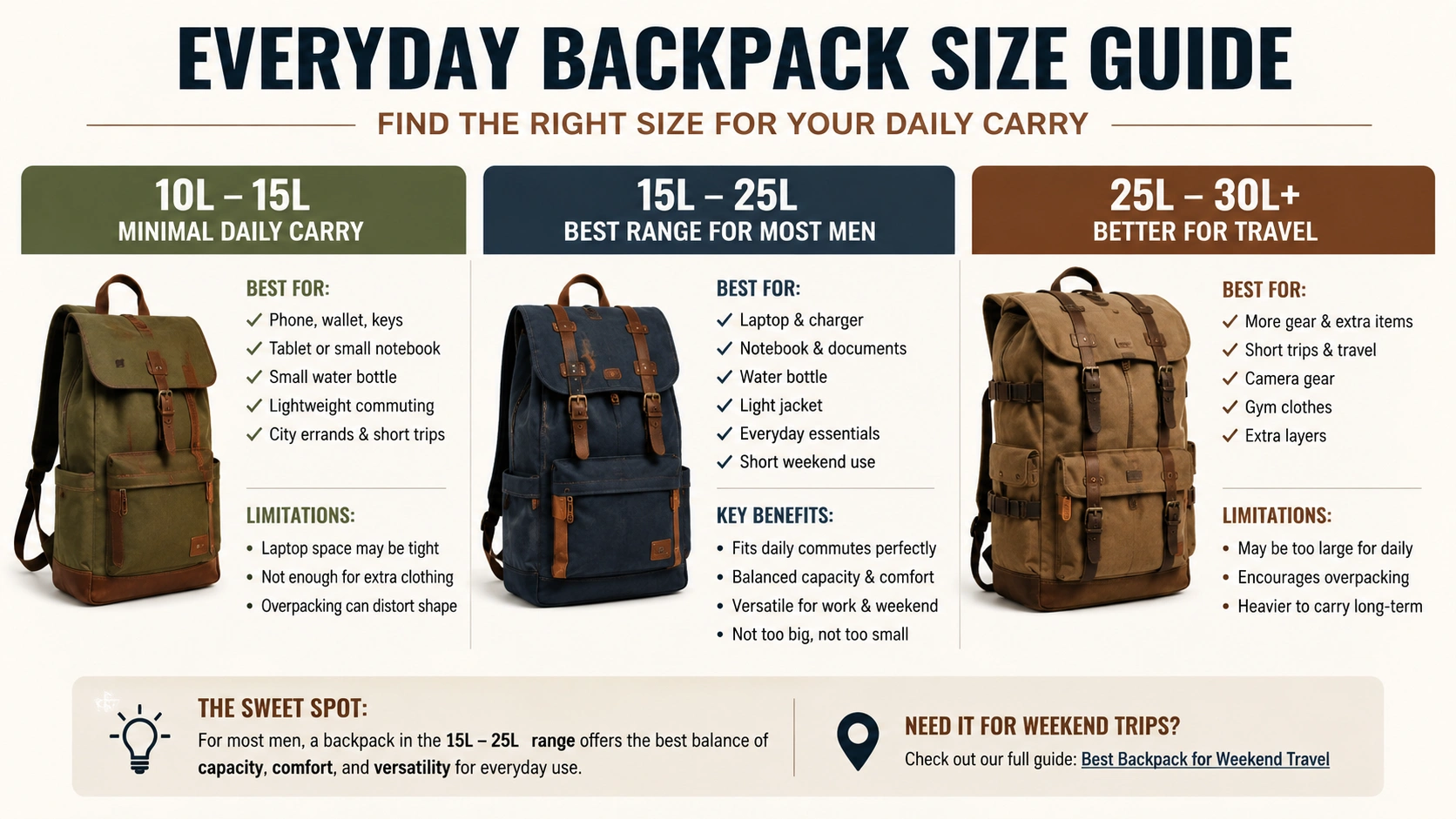
For men who want one bag that works across commuting, casual outfits, and short trips without looking too specialized, canvas and leather backpacks offer a strong balance of function and character.
The canvas body provides durability and everyday practicality — it handles abrasion and wear well, stays lighter than full leather, and develops natural character with use rather than simply looking older. The leather trim provides structure, visual refinement, and a more mature finish that canvas alone doesn't always achieve.
The combination sits naturally in the range between workwear and smart casual that most men's wardrobes actually occupy. It's not a hiking pack and it's not a briefcase — it's a bag that works for the kinds of days most men actually have.
Everyday Backpack vs Work Backpack vs Travel Backpack
These categories overlap more than they're often presented as, but the distinctions are worth understanding.
An everyday backpack is the daily carry generalist. Medium capacity, good organization, comfortable to wear, appropriate across a wide range of contexts. It should be useful on a workday and still make sense on a weekend.
A work backpack optimizes specifically for professional use — more emphasis on laptop protection, document storage, and a polished appearance that suits an office or client-facing setting. Often more structured and more formal-leaning than an everyday bag.
A travel backpack optimizes for capacity and organized packing — more volume, better strap support for carrying over distances, more attention to how clothing and gear are organized. Usually too large for daily commuting to be comfortable.
An everyday backpack sits between the latter two and should be useful for both without being fully specialized for either. The sweet spot is a bag that can handle a workday and still be reached for on a Sunday.
Final Verdict: What Is The Best Everyday Backpack For Men?
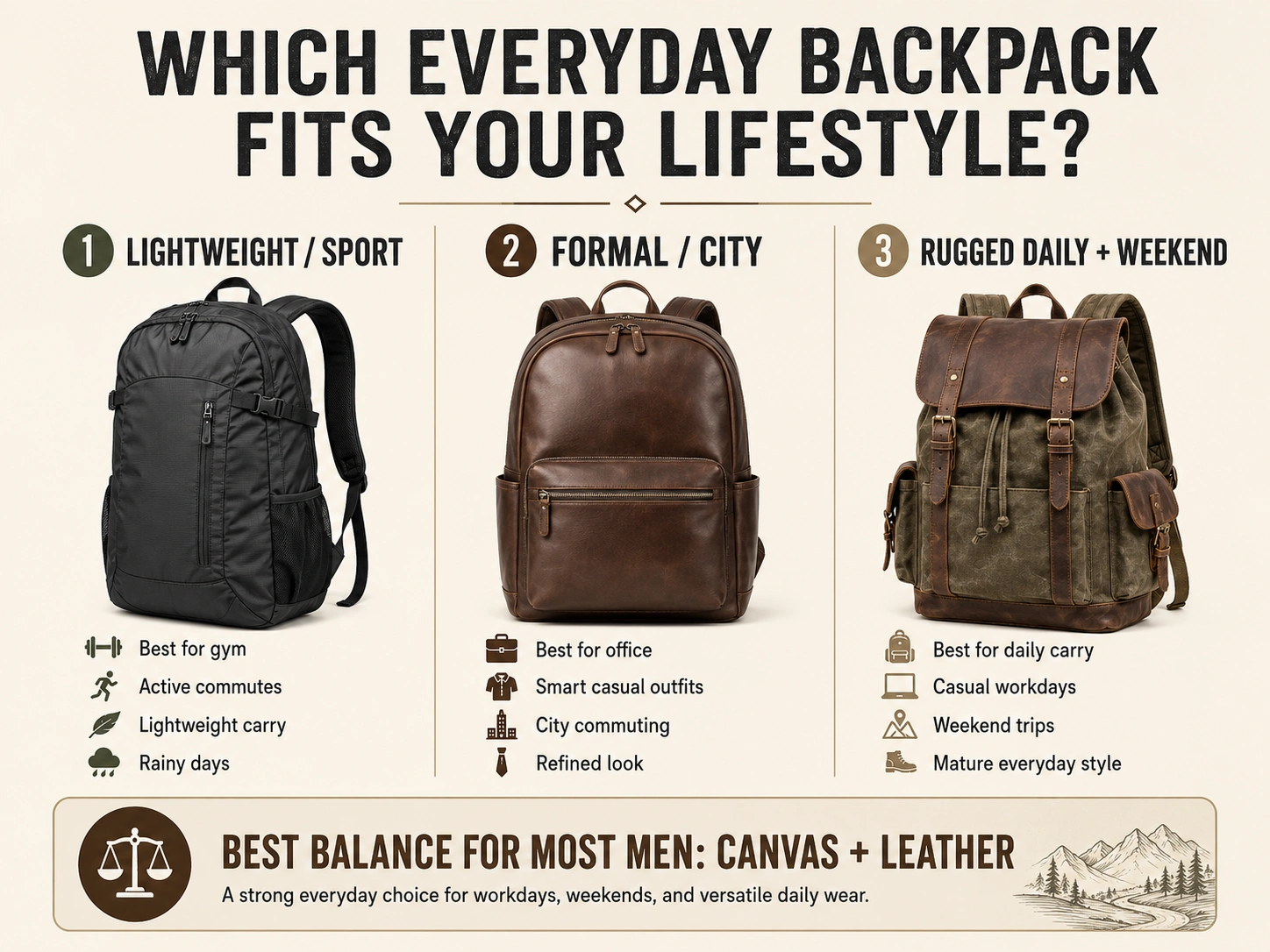
The best everyday backpack for most men is in the 15L–25L range, built from durable material, with wide enough straps to be comfortable over time, a pocket layout that keeps daily-use items accessible, a style that works with how you actually dress, and construction quality that holds up through years of real use.
For men who want lightweight function and don't mind a technical aesthetic, nylon is practical. For men who want a polished, formal everyday carry, leather works. But for the men who want one bag that's rugged enough for daily wear, refined enough for the city, and natural enough with everyday clothing to reach for without thinking — a canvas and leather backpack is consistently the strongest everyday choice.
Frequently Asked Questions
What size backpack is best for everyday use?
For most men, 15L–25L is the practical range for everyday carry. This handles a laptop, charger, water bottle, light jacket, and daily essentials without being too large to carry comfortably. If you regularly carry more or need the bag to double as a travel pack for short trips, 25L–30L is worth considering — with the trade-off that it's slightly oversized for a standard commute.
Is canvas good for everyday backpacks?
Yes. Canvas is durable against everyday abrasion, develops natural character with use, and suits a wide range of everyday clothing styles better than technical synthetic materials do. Waxed canvas adds meaningful water resistance for commuting in light rain. The main limitation is that plain canvas absorbs water more readily than synthetic materials, which matters in heavier rain.
What backpack material lasts the longest?
High-quality canvas, waxed canvas, nylon, and leather can all last for many years when well-made. The material matters less than the construction quality — stitching, hardware, and reinforcement at stress points are more reliable predictors of longevity than the fabric itself. How the bag ages also differs: canvas develops character; nylon shows use; leather deepens and patinas.
Are leather backpacks good for daily use?
They work well for professional and formal daily carry. The trade-offs for general everyday use are weight — leather backpacks are heavier than canvas — and care requirements. A canvas and leather backpack captures leather's visual quality while keeping the weight closer to canvas. For daily use across mixed contexts, that combination tends to work better than full leather.
What should men look for in an everyday backpack?
In order of practical importance: the right capacity for how much you actually carry, shoulder straps that are wide and padded enough to be comfortable over time, a pocket layout that keeps frequently-used items accessible without digging, material appropriate for your climate and usage, style that works with your wardrobe, and construction quality at the strap attachments and stress points.
Is a backpack better than a messenger bag for daily carry?
For loads that include a laptop and more than a few items, a backpack distributes weight more comfortably across both shoulders. Messenger bags work well for lighter carries and shorter distances, and suit more formal or minimal everyday styles. The choice depends more on how much you carry and how far you walk than on any universal preference.
Can an everyday backpack work for weekend travel?
Yes, in the 20L–25L range. At that size it carries enough for one to two nights of normal packing without being oversized for daily use. For three-day trips, winter clothing, or anything requiring more capacity, a larger dedicated travel bag or duffle handles it better.