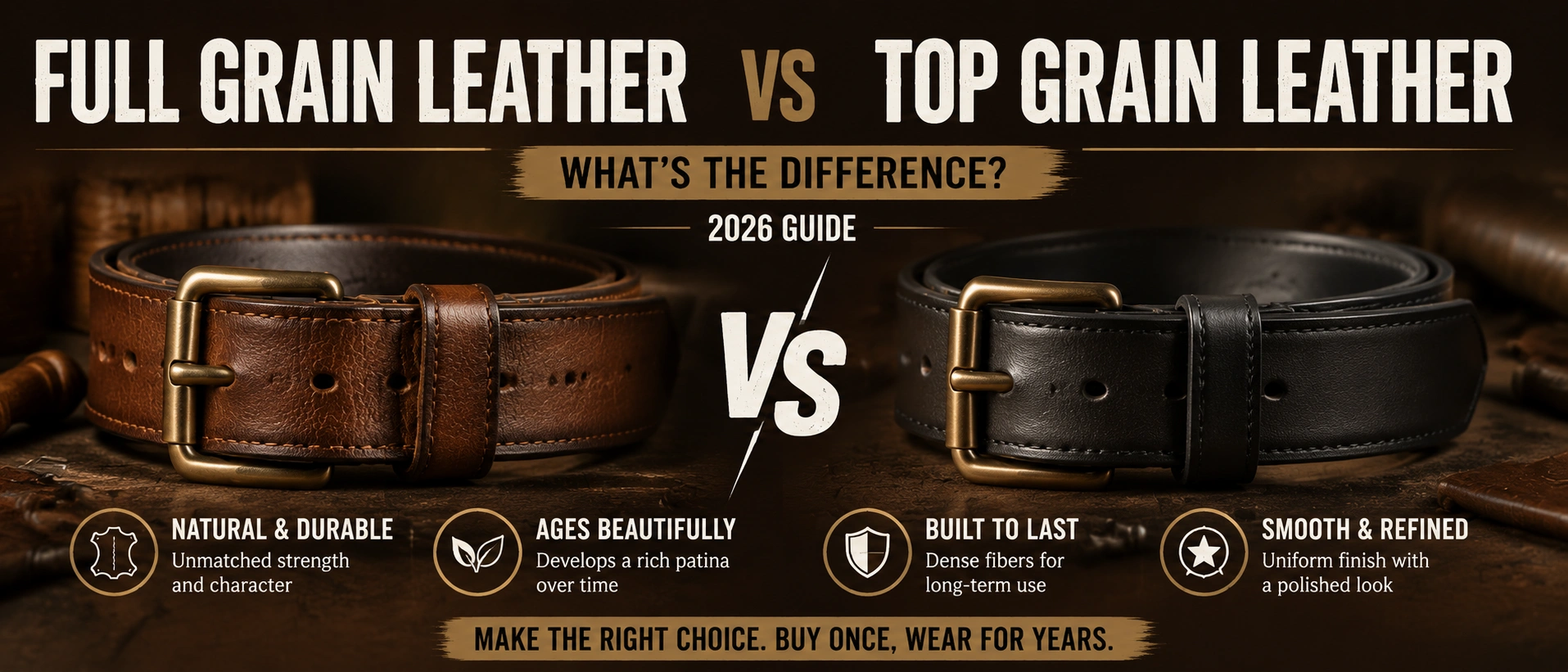
Many people assume top grain leather is automatically better because the word "top" sounds premium. It's a reasonable assumption — "top" usually means "the best."
The reality is a little more complicated.
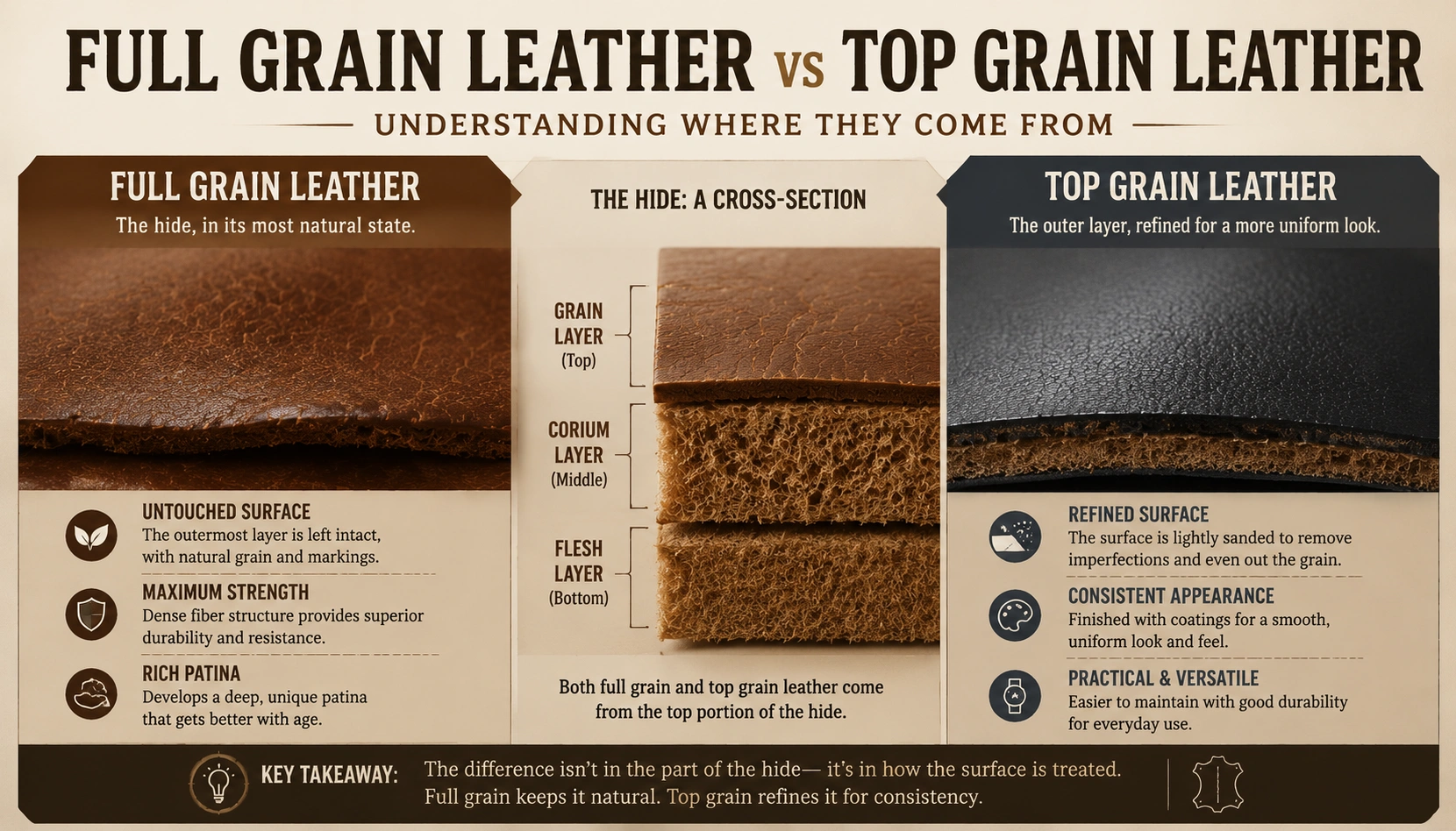
Both full grain and top grain leather come from the upper portion of the hide — the strongest, most valuable part. In that sense, they're closer cousins than most people realize. But what happens to that upper layer after it's separated from the hide is where the two diverge, and that difference shapes everything else: how the leather looks, how it ages, how it holds up under daily use, and yes, how much it costs.
This isn't a "one is fake and one is real" situation. Both are genuine leather, both can be excellent materials, and both show up in quality products. The question worth answering isn't which one is "real" — it's which one fits what you actually want from a piece of leather.
A Quick Answer: Which One Is Better?
If you need the short version before digging in: full-grain leather generally offers greater durability and develops a stronger, more distinctive patina over time. Top-grain leather tends to have a more uniform appearance and a softer finish right out of the box.
Neither of those is automatically "better" — they're different outcomes, and which one matters more depends on what you're using the leather for and what you want it to look like in five years versus what you want it to look like on day one.
For something like a belt — an item that gets bent, flexed, and put under tension every single day — that distinction starts to matter quite a bit. We'll get to that.
What Is Full Grain Leather?
Full grain leather is the outermost layer of the hide, used exactly as it comes off the animal. Nothing sanded. Nothing buffed. Nothing corrected.
That last part is the important one. The surface of a hide isn't perfectly smooth — it has natural texture, slight variations, the occasional mark. Full grain leather keeps all of that. The grain pattern you see is the grain pattern that was always there.
Why does this matter to a buyer? Because that untouched surface is also the densest part of the hide — the fibers here are tightly packed and interwoven in a way that nothing below this layer can match. Density is what gives leather its strength, its resistance to stretching, and its ability to take a beating over years without falling apart.
It's also why full grain leather develops the kind of rich, deepening patina that people associate with "good" leather aging well. The surface is open enough to absorb oils, light, and the residue of daily handling — and all of that shows up as color change over time.
If you're also comparing full grain leather with lower leather grades, our full grain vs genuine leather guide explains that difference in more detail.
What Is Top Grain Leather?
Here's where a lot of people are surprised: top grain leather is essentially full grain leather that's been touched up.
It still comes from the upper portion of the hide — the same general area as full grain. But the surface has been lightly sanded or buffed to remove imperfections, and then a finish is applied to even out the color and texture. The result is a more uniform, more "consistent" looking material.
Not necessarily worse, by the way. Top grain leather is real leather, from a good part of the hide, and the corrected surface gives it a smoother, more polished feel — which is exactly why it's so common in higher-end fashion goods, furniture, and accessories where a clean, even appearance matters.
What it gives up, though, is some of that dense surface structure. Sanding removes the tightest part of the grain. The finish that goes on afterward sits on top of the leather rather than being part of it — which changes how the material responds to wear, to oils, and to time.
So: is top grain "fake"? No. Is it "full grain, but nicer"? Also no, even though that's how it's often marketed. It's full grain with the top layer modified — and that modification is a trade. You get more consistency. You give up some of the raw structure underneath.
Full Grain vs Top Grain: Side-by-Side Comparison
| Full Grain Leather | Top Grain Leather | |
|---|---|---|
| Appearance | Natural variation, visible grain, slight imperfections | Smooth, even, consistent surface |
| Durability | Higher — dense fiber structure resists stretching and tearing | Good, but sanded surface is less dense |
| Patina | Strong, deepens significantly with age | Mild — finish limits how much the surface changes |
| Scratch Resistance | Scratches often blend into the patina over time | Scratches can be more visible against the uniform finish |
| Maintenance | Benefits from periodic conditioning | Generally lower-maintenance |
| Cost | Higher — less material yield, more selective hides | Lower — more hides qualify, more usable per hide |
A few things jump out from a table like this. Full grain wins on durability and aging — that's not really in dispute. But top grain isn't just "full grain's weaker sibling" across the board. It has a real advantage in consistency and lower maintenance, which matters for some products and some people.
How They Age Over Time
This is the section most comparisons gloss over, and it's honestly the most interesting part.
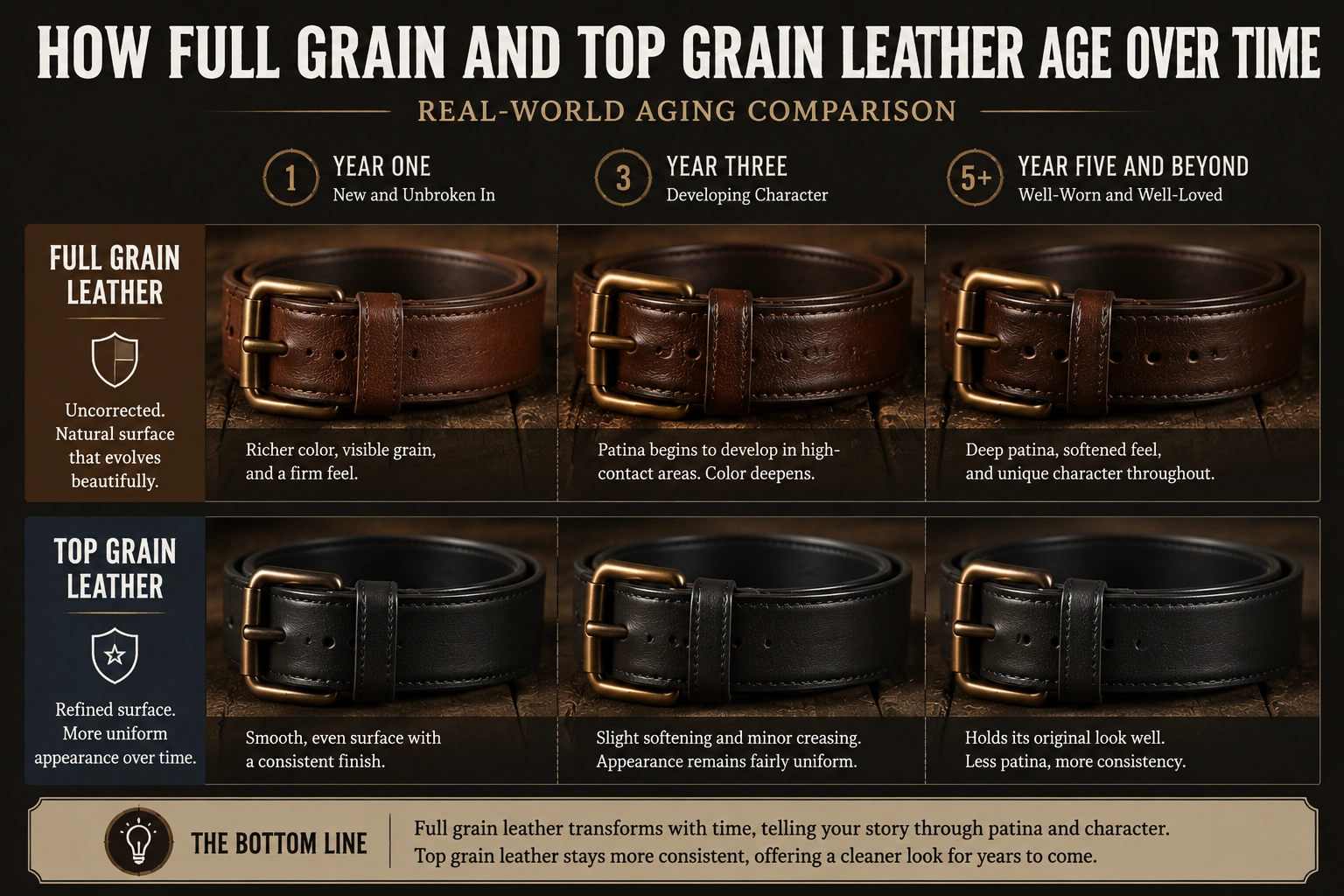
Year one. A full grain piece often looks slightly rougher than a top grain piece fresh out of the box — more texture, more visible grain, maybe a small natural mark or two. Top grain looks cleaner, more "finished." If you put them side by side on day one, a lot of people would pick the top grain piece as the nicer-looking one.
Year three. This is where things start to shift. The full grain piece has picked up color in the places it gets handled most — a noticeably darker tone around the edges, the buckle area, anywhere it's been touched repeatedly. It's developing depth. The top grain piece looks... pretty similar to year one, honestly. Maybe slightly softer. The finish is doing its job, which is staying consistent.
Year five and beyond. The gap widens. Full grain leather at this point often has a richness that's genuinely hard to replicate any other way — color variation that tells the story of how the piece has been used, edges that have rounded and darkened, a surface that feels different to the touch than it did when new. Top grain leather, meanwhile, has usually held its shape and color reasonably well, but it hasn't transformed. It's aged more like furniture than like a living material.
One thing leather owners often notice — usually around year two or three — is that the full grain piece they almost passed over for looking "less polished" in the store is now the one that looks more expensive. That's not really an exaggeration. Patina reads as quality, and patina is exactly what full grain leather is built to develop.
Is Full Grain Always Better?
Not necessarily.
This is where a lot of leather marketing oversimplifies things, and it's worth pushing back on a little.
If what you want is a piece that looks the same on day 500 as it did on day one — minimal visible marks, a clean and even surface, predictable appearance — top grain leather can genuinely be the better fit. Some people don't want their wallet or bag to "tell a story." They want it to look the way it looked when they bought it, for as long as possible.
There's also a softness factor. The finish on top grain leather often gives it an immediately supple, smooth feel that some people prefer right out of the box, without waiting for a break-in period.
And realistically, for products that don't experience much daily stress — a wallet that sits in a pocket, a small accessory that's handled gently — the durability gap between full grain and top grain matters less. Both will probably outlast your interest in them.
Where the gap starts to matter a lot more is in products that get put through real, repeated mechanical stress. Which brings us to belts.
Which Leather Is Better for Belts?
For belts specifically, full grain leather has a meaningful edge — and it's not a close call.
A belt isn't a passive object. Every time you put it on, it flexes at the buckle. Every time you fasten it, the buckle pin pushes through the same hole, putting localized stress on a small area of material. Throughout the day, it's under constant low-level tension from the weight of whatever's in your pockets, plus your own movement.
That's a lot of repeated mechanical stress concentrated in a few specific places — the buckle fold and the most-used hole, especially.
Full grain leather's dense fiber structure is exactly what holds up best under that kind of repetition. The tightly packed fibers resist stretching at the holes, resist cracking at the fold line, and generally absorb daily flexing without the material breaking down structurally.
Top grain leather can still make a decent belt — plenty of belts on the market use it, and they're not bad products. But the sanded, corrected surface has given up some of that raw fiber density, and over years of the kind of stress a belt experiences daily, that difference tends to show up sooner — typically as cracking at the buckle fold or stretching at the most-used hole.
If you want the deeper dive into exactly what separates a belt that lasts from one that doesn't — thickness, construction, hardware, all of it — that's covered in what makes a good leather belt. And if you're wondering what realistic lifespan actually looks like for different leather grades, how long do leather belts last goes into that in detail. Cracking specifically — what causes it and what it looks like before it becomes a real problem — is covered in why do leather belts crack.
Why Full Grain Leather Costs More
This part isn't marketing spin — it comes down to how much usable material you actually get from a hide.
Every hide has imperfections. Insect bites, scarring, variations in thickness, marks from the animal's life. For top grain leather, sanding and finishing can correct a lot of that — which means a much larger percentage of any given hide can be used. A hide with surface flaws that would disqualify it for full grain can often still produce excellent top grain leather, because the corrective process hides those flaws.
Full grain leather doesn't have that safety net. If the surface isn't already in good shape, it can't be used as full grain — there's no sanding step to fall back on. That means full grain production is more selective about which hides qualify in the first place, and even on a hide that does qualify, sections with marks or imperfections often get cut away rather than corrected.
The net result: less usable material per hide, more selective sourcing, and a production process with fewer ways to compensate for natural variation. That's reflected in the price — not because full grain is "marked up" more, but because there's genuinely less of it to go around relative to demand.
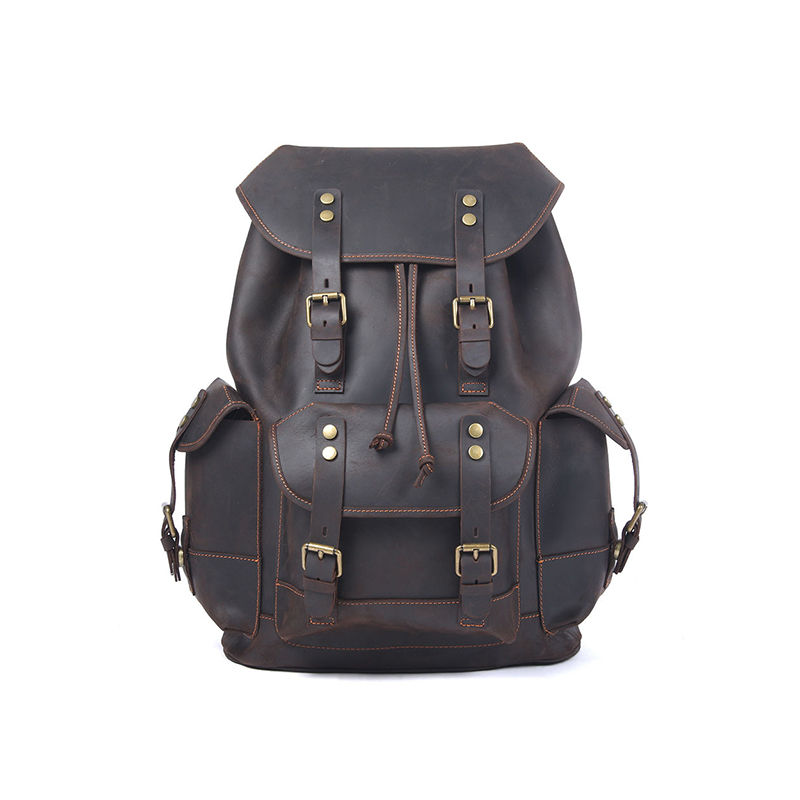
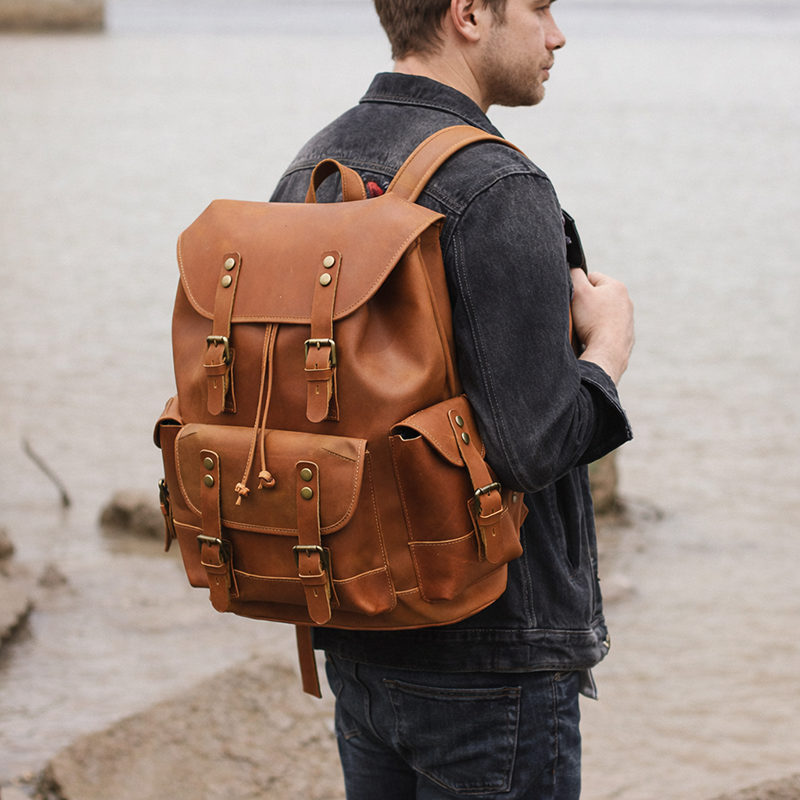
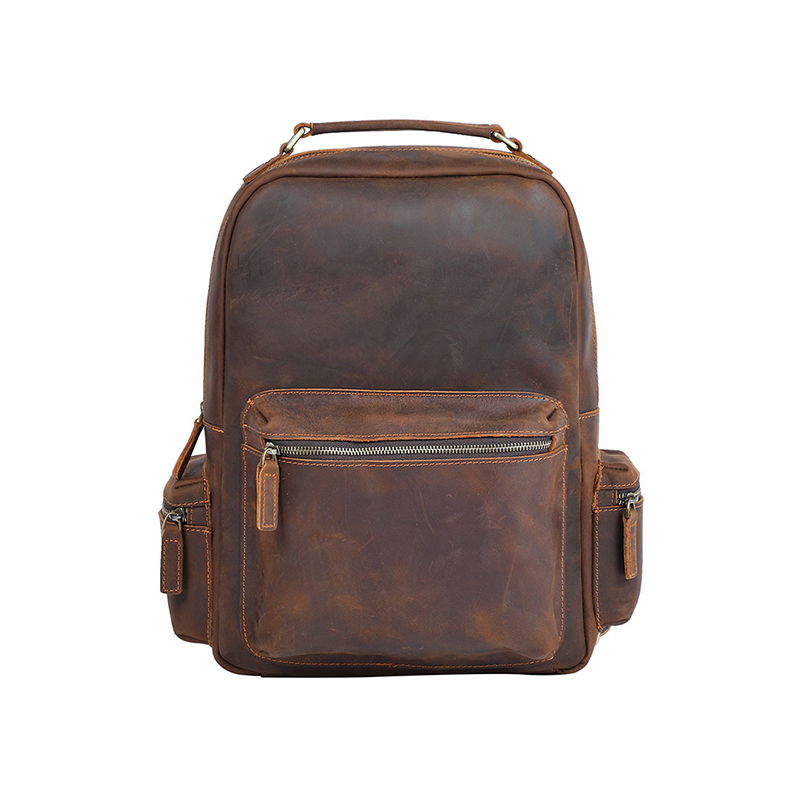
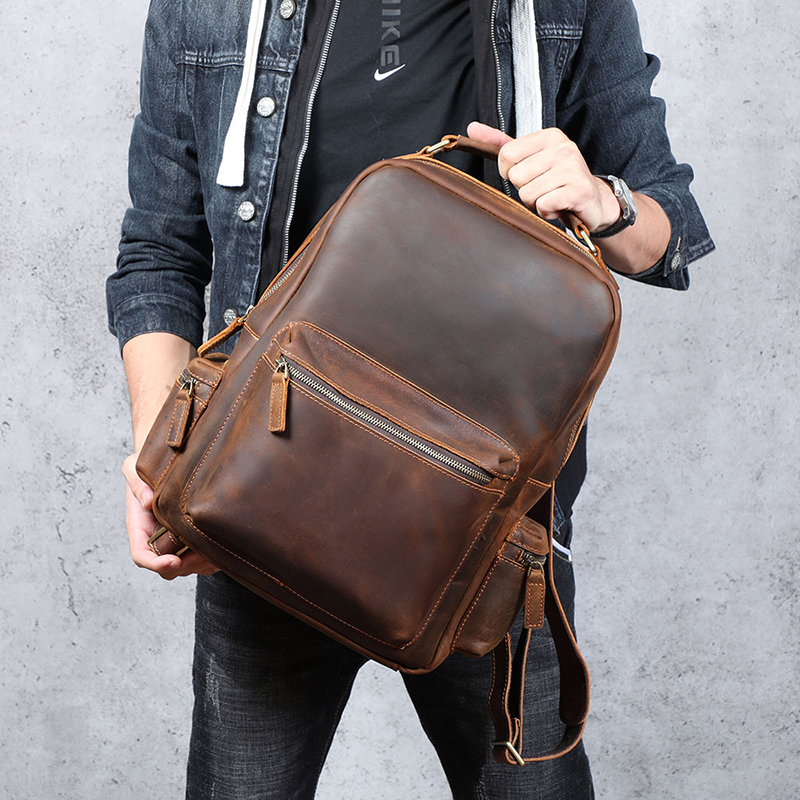
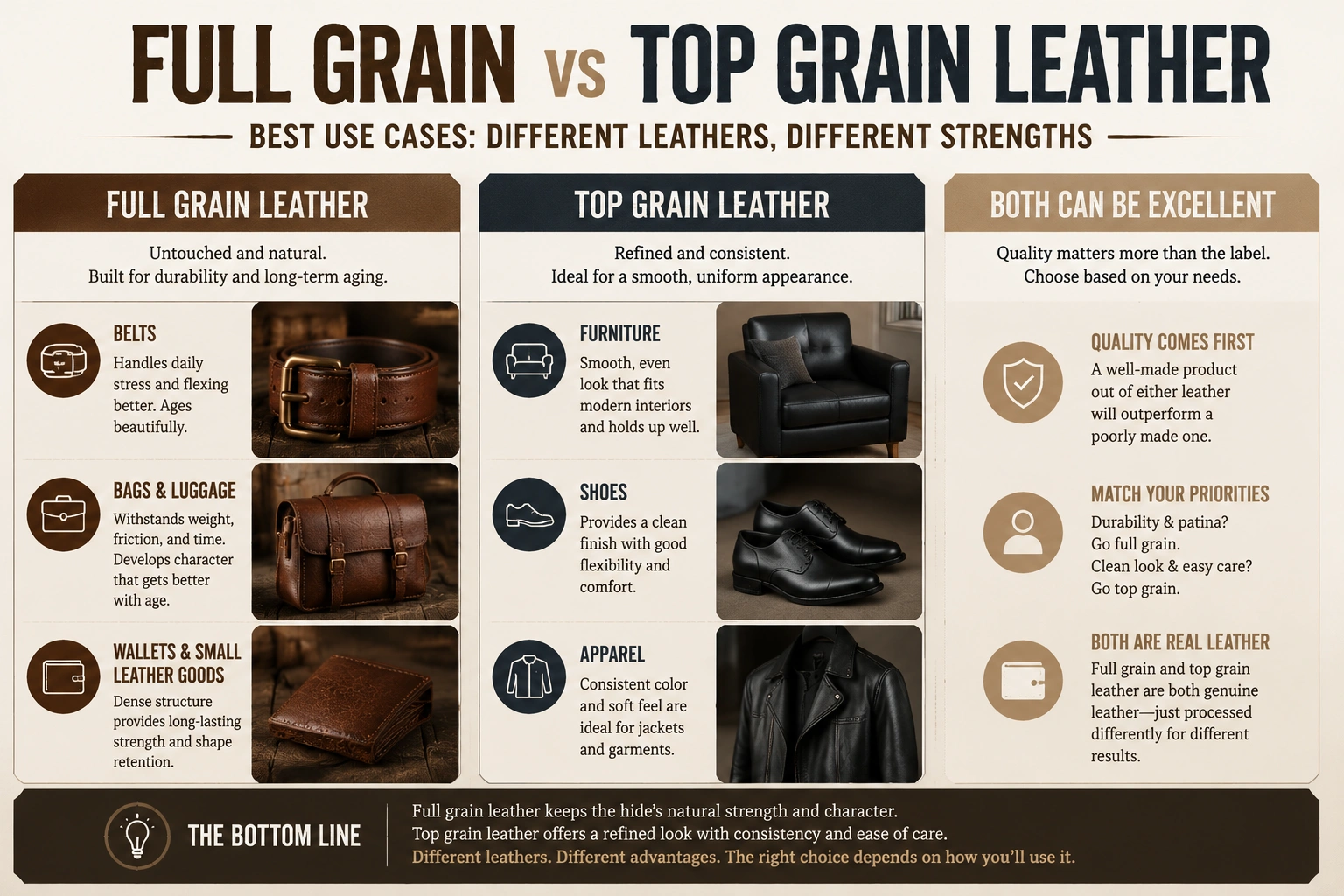
It's also worth noting where each type tends to show up. Full grain is most common in belts, boots, and other heavy-use leather goods where durability under stress is the priority. Top grain shows up a lot in bags, wallets, and fashion accessories where a smooth, consistent look and lighter daily wear make the trade-off make sense.
Which One Should You Choose?
Choose full grain if:
You want a piece that gets better with age rather than just holding steady. You're buying something that will see daily, repeated use — especially anything that flexes or bears tension, like a belt. You don't mind (or actually like) visible character developing over time — marks, color variation, a surface that looks different at year five than it did at year one. You're thinking of this as a long-term piece, not something you'll replace in a year or two.
Choose top grain if:
You want a clean, consistent look that doesn't change much over time. You prefer a softer feel from day one without a break-in period. The item won't see heavy daily mechanical stress — more occasional use, lighter contact. You're prioritizing a polished, uniform appearance over the development of character.
Neither choice is wrong. They're just optimized for different things — and being clear about which of those things you actually care about makes the decision a lot easier than it sounds.
Final Thoughts
The difference between full grain and top grain leather isn't that one is real leather and the other isn't. Both are genuinely leather, both come from a good part of the hide, and both can be made into quality products.
The difference is how much of the hide's original character remains by the time it reaches you.
Full grain keeps all of it — the texture, the density, the imperfections, the potential for change over time. Top grain smooths some of that away in exchange for consistency. One isn't a "downgrade" of the other so much as a different decision about what to preserve and what to correct.
For something that just sits in a drawer, that decision might not matter much either way. For something that goes through the daily grind of being worn, flexed, and fastened — a belt, especially — the leather that kept more of its original structure tends to be the one still doing its job a decade later, and usually looking better for having done it.
Frequently Asked Questions
Is full grain leather better than top grain?
For durability and long-term aging, generally yes — full grain leather's denser, untouched fiber structure holds up better under repeated stress and develops a stronger patina over time. But top grain leather has real advantages in consistency, lower maintenance, and an immediately smooth appearance. "Better" depends on whether you're prioritizing longevity and character or uniformity and a polished look from day one.
Does top grain leather crack?
It can, though typically more slowly than lower grades like genuine or bonded leather. The sanded surface and applied finish on top grain leather give up some of the dense fiber structure that resists cracking, so under sustained stress — particularly at flex points like a belt's buckle fold — top grain leather may show cracking sooner than full grain leather would under the same conditions.
Which leather lasts longer?
Full grain leather generally lasts longer, especially in products that experience repeated mechanical stress like belts. Its dense, unaltered fiber structure resists stretching, cracking, and general fatigue better than the sanded surface of top grain leather. For lighter-use items, the difference in practical lifespan may be smaller.
Why is full grain more expensive?
Mainly because of material yield. Full grain leather can't be corrected to hide surface imperfections, so hides need to be more selective from the start and usable sections per hide tend to be smaller. Top grain leather's finishing process can correct minor flaws, allowing more of a hide — and more hides overall — to be used. Less usable full grain material relative to demand is reflected in the price.
Is top grain leather real leather?
Yes. Top grain leather comes from the same upper portion of the hide as full grain leather — it's genuine leather, just with the surface lightly sanded and refinished for a more uniform appearance. It's a different grade from full grain, not a different material category.
What leather is best for belts?
Full grain leather is generally the better choice for belts, because of the repeated flexing, buckle stress, and hole stress a belt experiences daily. Its dense fiber structure resists the stretching and cracking that show up sooner in lower grades under that kind of repeated load. Top grain can still make a functional belt, particularly for lighter or occasional use, but full grain tends to hold up better over years of daily wear.