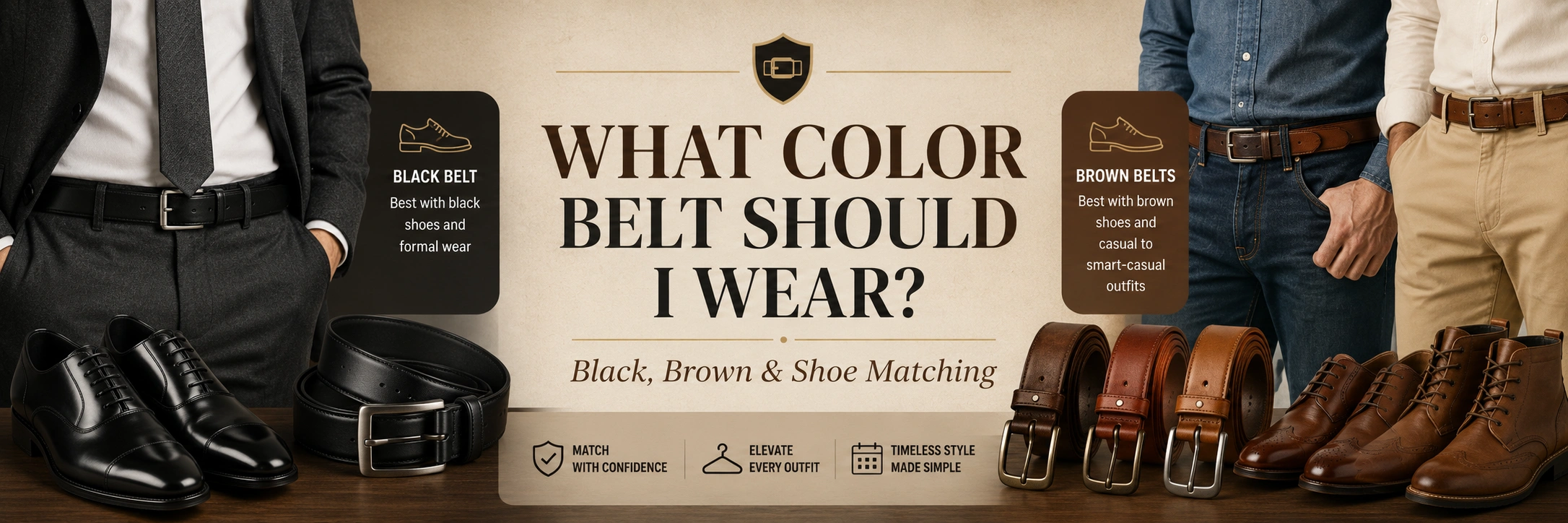
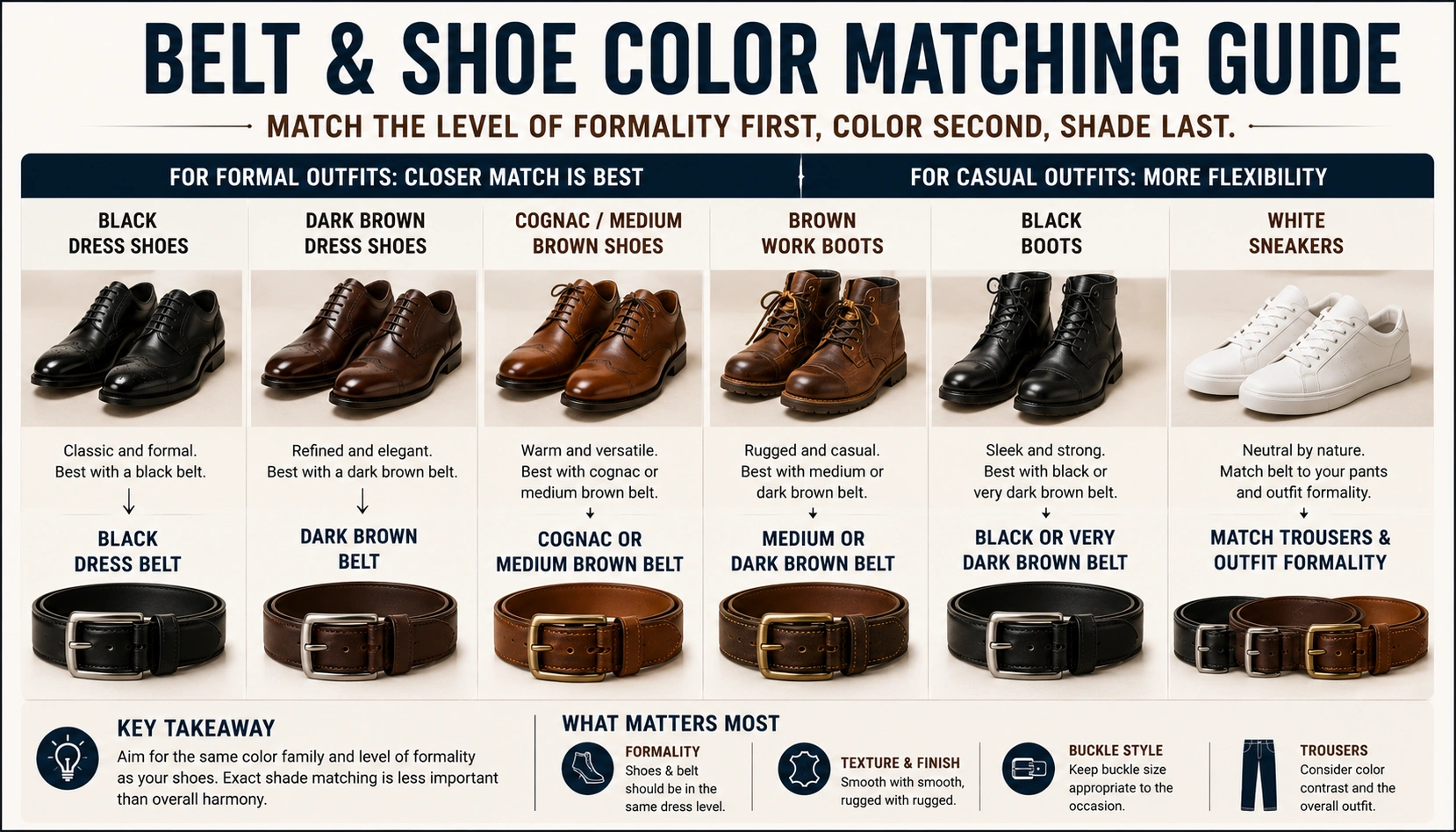
For formal outfits, choose a belt close to the color and level of polish of your shoes. For casual outfits, the belt does not need to match exactly, but its color, leather texture, and buckle should still feel natural with the shoes and trousers.
You do not need to find the exact same shade of brown for your belt and shoes. A small color difference usually looks fine when both pieces have a similar finish and level of formality.
The opposite is also true. A distressed dark brown belt may look out of place with highly polished dark brown dress shoes, even though the colors are technically similar.
Match the level of formality first, the color family second, and the exact shade last.
Quick Answer: What Color Belt Should You Wear?
Use the shoes to establish the general color family, then consider the trousers and the formality of the outfit.
| Shoes or Outfit | Safer Belt Choice |
|---|---|
| Black dress shoes | Black dress belt |
| Dark brown dress shoes | Dark brown belt |
| Medium brown shoes | Medium or dark brown belt |
| Cognac shoes | Cognac or medium brown belt |
| Brown work boots | Medium or dark brown casual belt |
| Black boots | Black or very dark brown belt |
| White sneakers | Match the trousers and outfit formality |
| Dark jeans | Black, dark brown, or cognac |
| Light jeans | Medium brown, tan, or cognac |
| Khaki chinos | Dark brown, medium brown, cognac, or tan |
| Grey trousers | Black or dark brown |
| Navy trousers | Dark brown, cognac, or black |
Formal outfits usually benefit from closer shoe-and-belt matching. Casual outfits allow more variation in shade, texture, and hardware.
These are practical starting points rather than absolute rules. The same navy trousers may call for a dark brown dress belt with polished shoes or a cognac casual belt with loafers and a relaxed shirt.
Should Your Belt Match Your Shoes Exactly?
No. Your belt and shoes should usually belong to the same color family and level of formality, but they do not need to be an exact shade match.
Formal Outfits
Formal clothing benefits from closer coordination.
The safest combinations include:
-
Black shoes with a black belt
-
Dark brown shoes with a dark brown belt
-
Smooth leather shoes with a smooth, refined belt
-
Polished footwear with a belt that has a similar level of shine
-
A small, understated buckle with formal shoes
Color is only part of the match.
A thick, rugged belt with visible grain and an aged brass buckle may not work with polished dress shoes, even when both are dark brown. The belt adds too much texture and visual weight.
Formal outfits generally look better when the belt supports the shoes and trousers without becoming a separate focal point.
Casual Outfits
Casual clothing allows more flexibility.
A medium brown boot can work with a dark brown belt. Cognac leather can complement several warm shades of brown. Dark jeans can be worn with black, dark brown, or cognac depending on the shoes and upper clothing.
White sneakers do not require a white belt. In most cases, the belt should coordinate with the trousers and the overall outfit instead.
A close match in formality and texture is usually more important than an exact match in shade.
Our guide to choosing between a dress belt and a casual belt explains how width, thickness, leather finish, and buckle size affect formality.
Black Belt vs Brown Belt: Which Is More Versatile?
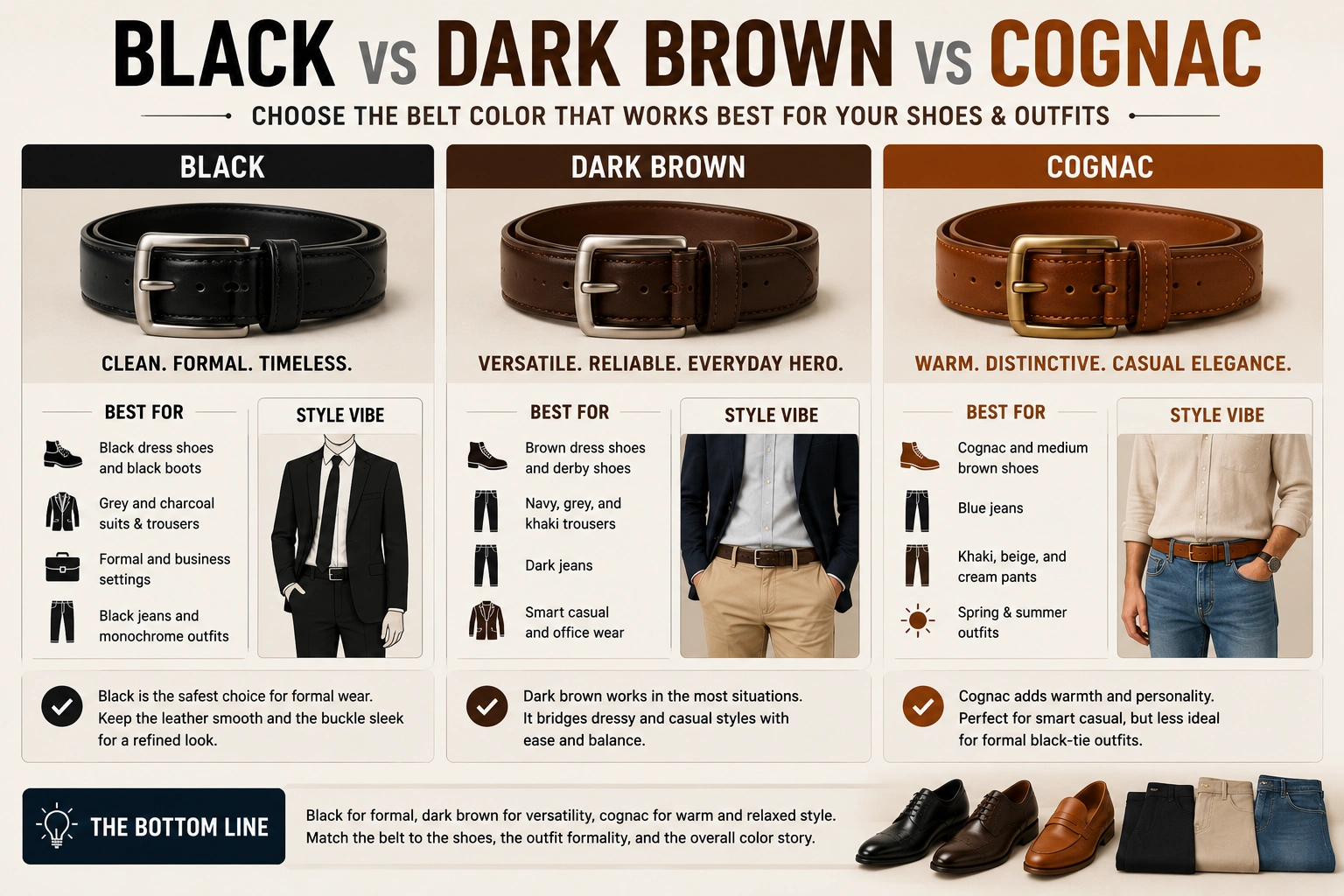
Black and brown belts serve different wardrobes. Neither color is universally more versatile.
Black Belt
A black belt is the safest choice for:
-
Black dress shoes
-
Black boots
-
Charcoal trousers
-
Grey suits
-
Black jeans
-
Monochrome outfits
-
Formal business clothing
Black creates a clean and controlled line. It is especially useful when the outfit already includes black footwear or dark, cool-toned trousers.
Its limitation is casual flexibility.
A shiny black dress belt may look too formal with faded jeans, tan boots, or relaxed khaki chinos. Even a casual black belt can create strong contrast against light earth tones.
Black is most versatile for someone who regularly wears black shoes, formal trousers, or dark monochrome clothing.
Brown Belt
Brown belts work naturally with:
-
Brown shoes and boots
-
Blue jeans
-
Chinos
-
Navy trousers
-
Khaki pants
-
Olive clothing
-
Earth-tone outfits
-
Smart-casual footwear
Brown is available in more visible shades, from nearly black espresso to warm cognac and light tan. This makes it easier to adjust the belt to the formality and color temperature of the outfit.
A dark brown belt can look refined enough for office trousers while still working with dark denim. A lighter brown belt creates more contrast and generally feels more casual.
Black is usually the safer formal choice, while dark brown is often the more flexible everyday choice for jeans, chinos, boots, and smart-casual clothing.
Which Shade of Brown Belt Should You Choose?
Different shades of brown do not serve exactly the same purpose.
Dark Brown
Dark brown is usually the most adaptable brown belt color.
It works with:
-
Dark brown shoes
-
Brown boots
-
Navy trousers
-
Grey trousers
-
Dark jeans
-
Khaki chinos
-
Casual office clothing
Dark brown is softer than black but more restrained than cognac or tan. It can move between casual and smart-casual outfits without creating too much contrast.
For someone buying only one brown belt, dark brown is usually the safest starting point.
Cognac or Medium Brown
Cognac and medium brown belts have a warmer, more visible appearance.
They pair naturally with:
-
Cognac shoes
-
Medium brown shoes
-
Tan boots
-
Blue jeans
-
Navy chinos
-
Khaki pants
-
Beige clothing
-
Relaxed smart-casual outfits
Cognac creates an attractive contrast against blue and navy. It also works well with warmer clothing colors and lighter trousers.
However, it is not the most universal choice for highly formal clothing. A warm cognac belt will usually stand out too much with a black suit or very formal black shoes.
Tan or Light Brown
Tan and light brown belts feel the most casual.
They are most suitable for:
-
Light blue denim
-
Beige chinos
-
Summer clothing
-
Casual boots
-
Cream trousers
-
Relaxed daytime outfits
Light brown creates noticeable contrast against dark trousers. That can look intentional in a casual outfit but distracting in formal clothing.
The darker the brown, the easier it usually is to move toward dressier outfits. Lighter browns create more contrast and generally feel more casual.
Matching Belt Colors With Pants and Shoes
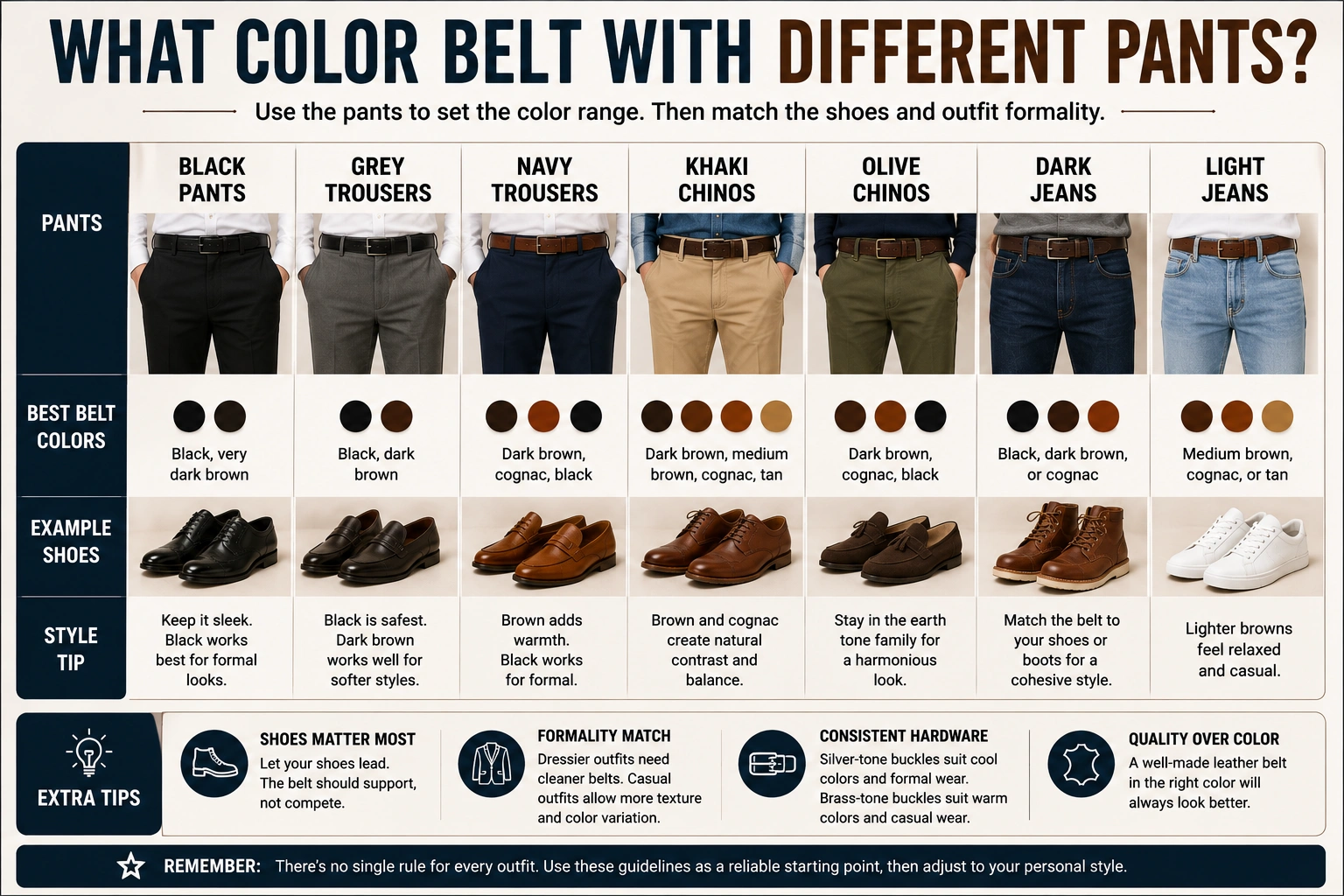
Use the trousers to choose a practical color range, then use the shoes and formality to make the final decision.
| Pants | Recommended Belt Colors | Notes |
|---|---|---|
| Black pants | Black; sometimes very dark brown | Black is safest for formal outfits |
| Charcoal trousers | Black or dark brown | Match the shoes and formality |
| Light grey trousers | Black, dark brown, or cognac | Cognac works better for smart casual |
| Navy trousers | Dark brown, cognac, or black | Brown creates a warmer contrast |
| Khaki chinos | Dark brown, medium brown, cognac, or tan | Choose according to the shoes |
| Olive chinos | Dark brown, cognac, or black | Brown supports earthy colors |
| Dark blue jeans | Black, dark brown, or cognac | Match the shoes and upper clothing |
| Light blue jeans | Medium brown, cognac, or tan | Lighter browns feel more relaxed |
| White or cream pants | Tan, cognac, medium brown, or black | Consider the overall contrast |
Black dress shoes should usually be worn with a black belt, particularly with suits, formal trousers, and business clothing.
Brown shoes do not require an exact brown match. Dark brown shoes work best with dark brown belts, while medium brown or cognac shoes allow a little more variation.
Rugged brown boots usually look more natural with a textured casual belt than with a narrow polished dress belt.
Black casual boots can work with black or very dark brown leather, depending on the trousers. Formal black boots should generally stay with black.
White sneakers are neutral. Choose the belt according to the trousers:
-
White sneakers and dark jeans: black, dark brown, or cognac
-
White sneakers and khaki chinos: medium brown or cognac
-
White sneakers and black pants: black is usually safest
-
White sneakers and light jeans: tan or medium brown can work well
The same trousers can require different belts in different outfits.
Dark jeans worn with a blazer and polished loafers call for a smoother, more refined belt. The same jeans worn with work boots and an overshirt can support thicker leather, visible texture, and a larger buckle.
If You Only Buy One or Two Belt Colors
The most practical colors depend on the clothes and shoes already in your wardrobe.
If you wear mostly formal clothing:
-
Black
-
Dark brown
This pair covers black and brown dress shoes, most suits, dress trousers, and business outfits.
If you wear mostly jeans and chinos:
-
Dark brown
-
Black or cognac
Choose black as the second belt if you often wear black boots, black jeans, or dark monochrome clothing.
Choose cognac if you usually wear brown boots, blue jeans, navy chinos, khaki pants, and warmer casual colors.
If you want one crossover belt:
Choose dark brown with:
-
Medium width
-
Moderate thickness
-
A simple buckle
-
Smooth or lightly textured leather
-
Refined but not overly formal edges
Dark brown can work with jeans, chinos, navy trousers, and many brown shoes. It will not replace a true black dress belt when formal black shoes are required.
Dark brown is often the safest single color for a smart-casual wardrobe, while black remains essential when formal black shoes are worn regularly.
How to Choose the Right Belt Color
Use this order:
-
Start with the shoes.
-
Decide whether the outfit is formal or casual.
-
Choose the nearest practical color family.
-
Compare the leather texture and level of polish.
-
Check how much contrast the belt creates against the trousers.
-
Coordinate the buckle with other visible metal.
-
Choose the color you will actually wear most often.
The buckle does not need to match every watch, ring, or accessory exactly.
Silver-tone buckles work naturally with black, dark brown, and cooler outfits. Brass-tone buckles often complement brown leather, boots, denim, and warmer colors. Black hardware can suit modern casual or workwear-inspired clothing.
A consistent warm or cool metal direction generally looks more intentional than several strongly conflicting finishes.
Avoid these common mistakes:
-
Matching the shade while ignoring formality
-
Wearing a distressed belt with polished dress shoes
-
Assuming white sneakers require a white belt
-
Using a light tan belt with every dark formal outfit
-
Choosing black only because it seems universally safe
-
Ignoring buckle size, leather texture, and trouser fabric
Color matching works only when the belt’s width, finish, buckle, and level of formality also fit the outfit.
After choosing the color, confirm that the belt will fit the trousers and your body. Review how to choose the correct belt width and choose the right belt size before ordering.
Leather type also affects appearance. Our guide helps you compare leather belt materials without assuming that color alone determines quality.
Do not buy a belt for one theoretical outfit. Choose the color that works with the shoes and trousers you already wear most often.
Explore our leather belt collection and compare black, dark brown, cognac, and other finishes by width, buckle material, leather texture, and intended use.
Natural leather may show slight color variation, and the appearance on a screen can differ according to lighting and display settings.
Final Verdict
Formal outfits usually need closer coordination between the belt and shoes. Black dress shoes are safest with a black belt, while dark brown dress shoes work best with dark brown leather.
Casual outfits allow more variation. Dark brown is the most flexible everyday option for many wardrobes because it works with jeans, chinos, navy trousers, brown boots, and smart-casual shoes.
Cognac is warmer and more visible, making it a strong choice for blue denim, khaki pants, and medium brown footwear. Tan works best in lighter, more relaxed outfits.
Do not judge the belt by color alone. Texture, shine, width, buckle size, and formality should also belong with the outfit.
Choose a belt that belongs to the same visual world as your shoes and trousers. The colors do not need to match perfectly, but the formality, texture, and overall contrast should feel intentional.
Frequently Asked Questions
Should Your Belt Match Your Shoes Exactly?
No. The belt and shoes should usually share a similar color family and level of formality, but the shades do not need to be identical. Matching texture and polish is often more important than finding the exact same brown.
Can You Wear a Brown Belt With Black Shoes?
It is generally better to wear a black belt with formal black shoes. A very dark brown belt may work with casual black boots in some relaxed outfits, but brown is usually not the safest choice with black Oxfords or formal loafers.
What Color Belt Goes With Blue Jeans?
Dark blue jeans work with black, dark brown, or cognac belts. Light blue jeans usually look more natural with medium brown, cognac, or tan. Use the shoes and upper clothing to decide how refined or rugged the belt should be.
What Color Belt Goes With Grey Pants?
Black and dark brown are the safest choices. Black works especially well with formal grey trousers and black shoes. Dark brown creates a softer effect. Cognac can work with light grey trousers in a smart-casual outfit.
What Color Belt Goes With Navy Pants?
Dark brown and cognac create a warm contrast with navy. Black also works when worn with black shoes or a more formal outfit. Choose a smoother belt for dress trousers and a more textured design for casual navy chinos.
What Color Belt Should You Wear With White Sneakers?
White sneakers do not require a white belt. Choose according to the trousers and overall outfit. Black works with black pants, dark brown or cognac works with jeans, and medium brown or cognac pairs naturally with khaki chinos.