One day you put on your belt and notice something strange.
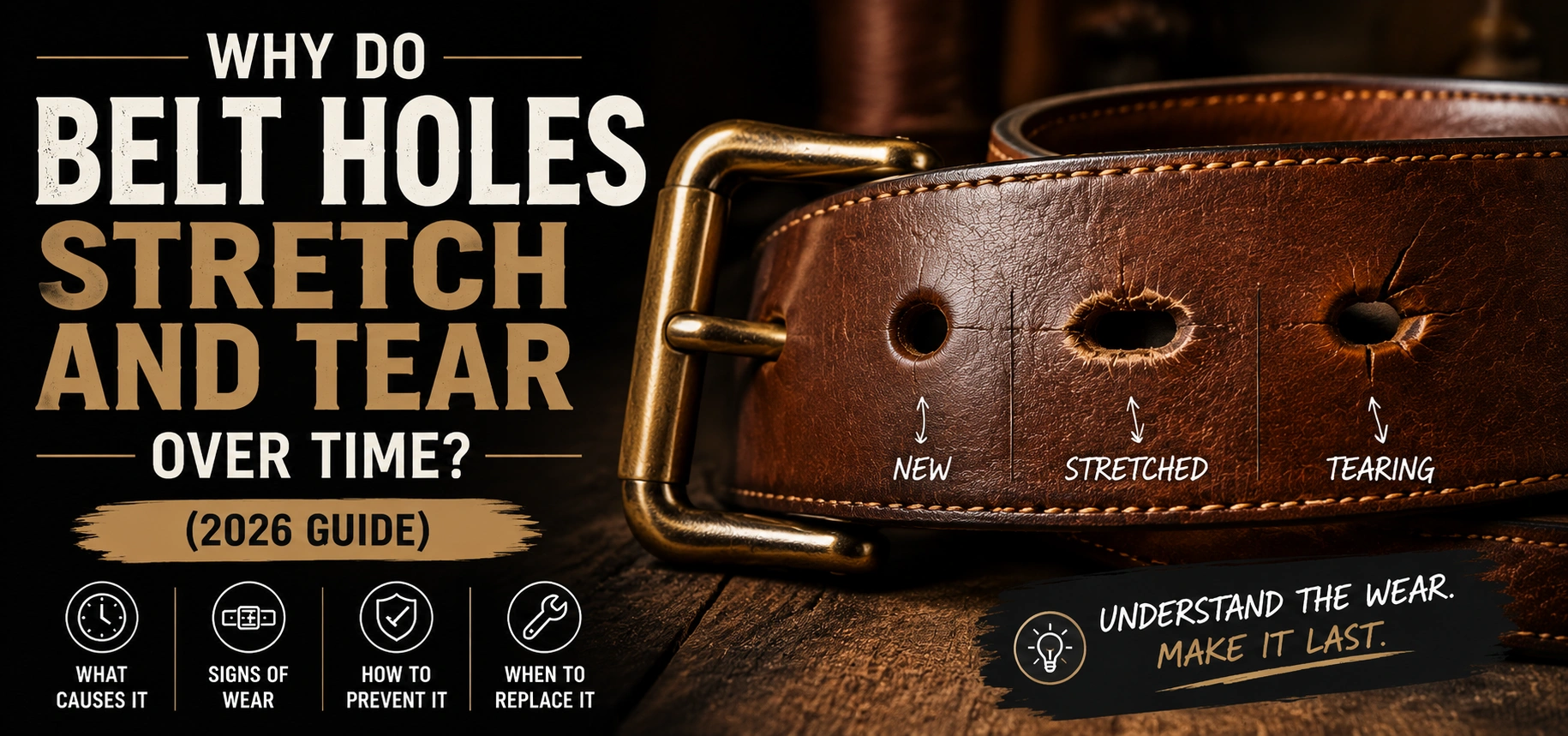
The hole you've used every day for the past two years doesn't look quite round anymore. It's slightly oval. The edges look compressed, maybe a little rough. There might even be a small tear beginning to form at one side, pulling away from the center like a crack in dry mud.
Is the belt failing? Did you buy something defective?
Not necessarily. In most cases, this is one of the most predictable forms of leather wear there is — and whether it happens fast or slow tells you more about how the belt was built than about anything you did wrong.
A Quick Answer: Why Do Belt Holes Stretch?
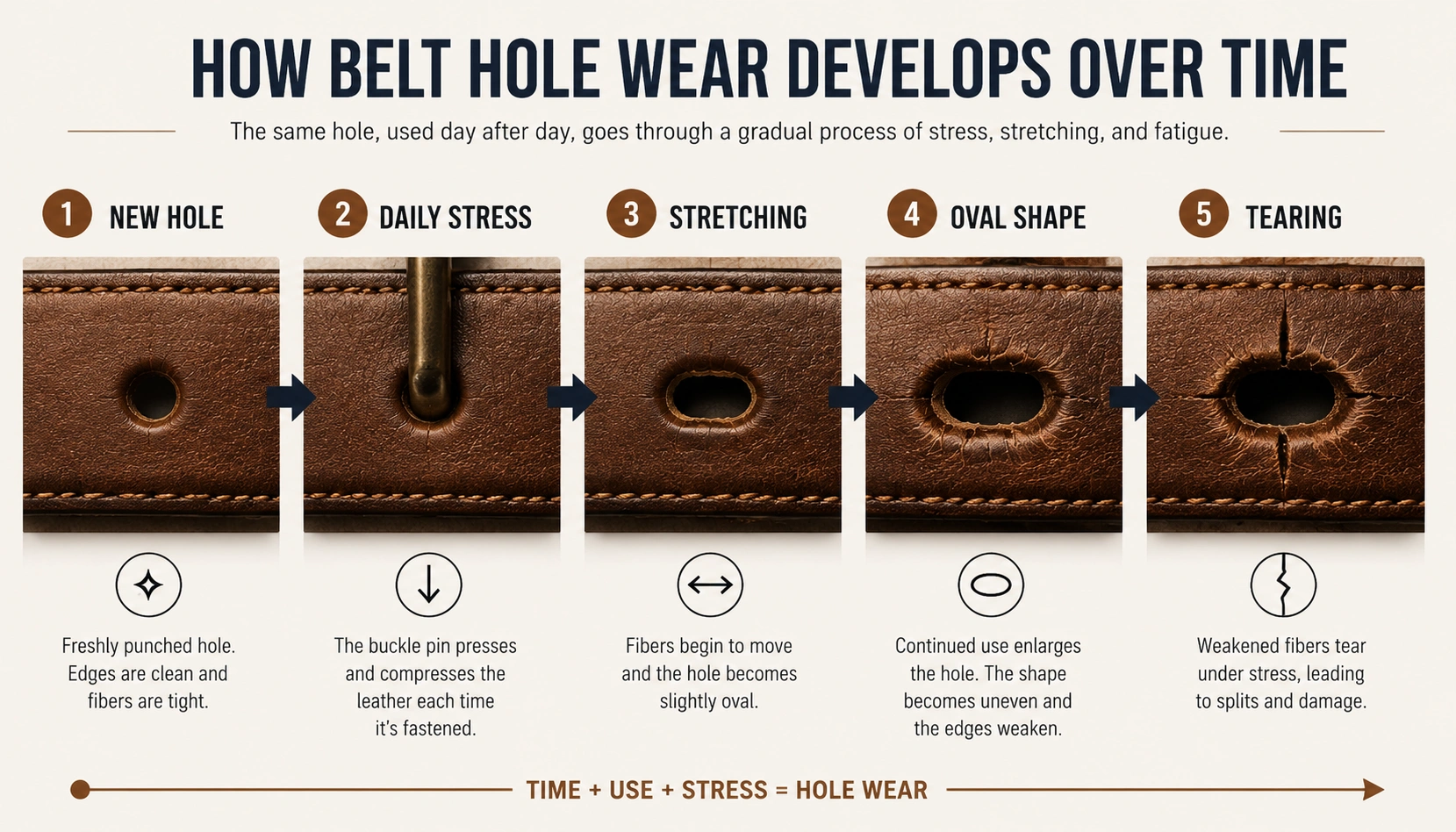
Belt holes stretch because the buckle pin applies localized pressure to the same small area of leather thousands of times over the belt's life. Every fastening pushes the pin through the same hole, compressing the fibers around it. Every time the belt bears load — weight of pants, tools, anything on the belt — that hole is the point where all of that tension concentrates.
Over time, the fibers around that hole gradually deform. The leather compresses and shifts outward, turning a clean round hole into something more oval. Left long enough, or under heavy enough use, that oval becomes a tear.
How quickly this happens depends almost entirely on two things: the quality and thickness of the leather surrounding the hole, and whether the belt is being worn at the right fit.
What Actually Happens To Leather Around A Belt Hole?
Leather isn't rigid. Even dense, well-made full-grain leather has some give — that's part of what makes it comfortable to wear and what lets it develop a patina rather than just wearing out. But that same capacity for movement is what allows hole damage to develop.
When the buckle pin passes through a hole, it doesn't just go through the leather cleanly and sit there. It pushes against the bottom edge of the hole as the belt tightens, bearing the full load of the tension pulling the belt closed. That's a concentrated pressure point — a relatively large force applied to a very small area of material.
Do this once and nothing visible happens. Do it every day for two years and the fibers in that specific area have been compressed and pushed outward hundreds of times. They don't spring back fully after each compression. The cumulative deformation builds up gradually, almost imperceptibly, until one day the hole looks noticeably different from the ones you rarely use.
The holes on either side of your most-used hole — the ones you almost never touch — look exactly like they did when the belt was new. That comparison is the clearest sign that what you're seeing is use-related wear, not a defect.
Is Belt Hole Stretching Normal?
Yes, in most cases. Some degree of hole deformation over years of daily use is normal — it's what happens when the same mechanical force is applied to the same spot repeatedly for a long period.
The question worth asking isn't whether it's happening, but how fast — and what that rate suggests.
Normal wear looks like this: after two to three years of daily use, the most-used hole is slightly more oval than the others. The deformation is visible up close but doesn't affect how the belt functions. The hole still holds the buckle pin securely, the belt fastens cleanly, and the change is cosmetic as much as structural.
Accelerated wear looks different. The hole becomes noticeably oval within the first year. The edges start to fray or crack. In more severe cases, the leather tears from the hole outward — a thin split running toward the belt edge. This is the kind of wear that points to something specific: leather that's too thin, a belt that's the wrong size, or both.
Early structural failure — tearing rather than just stretching, happening within months of purchase — is the version that genuinely suggests a quality problem, usually thin or lower-grade leather that didn't have enough fiber depth to resist the stress. This doesn't always mean the belt was cheap; sometimes it means it was the wrong thickness for how it's being used.
Why Some Belts Stretch Faster Than Others
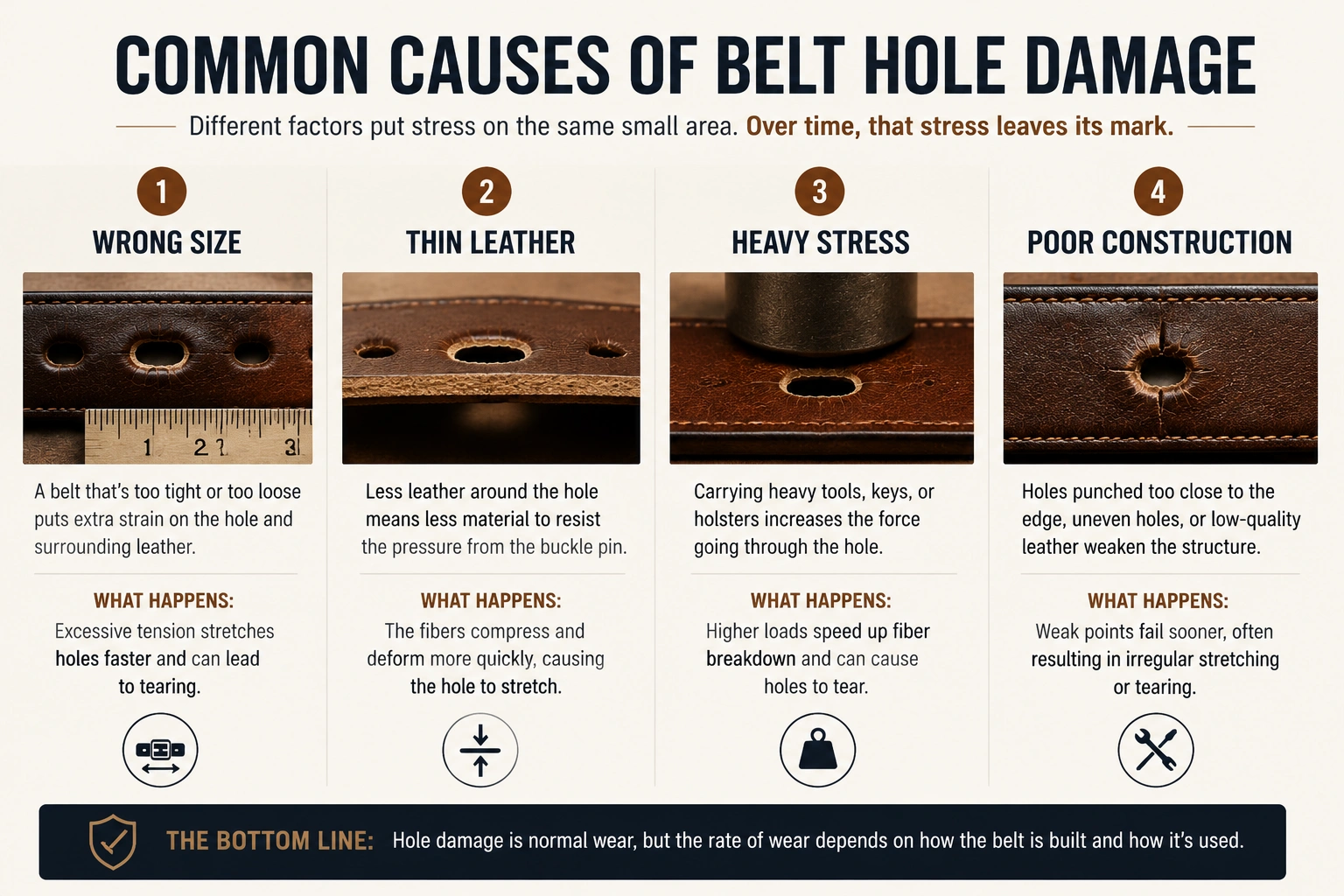
The leather grade and thickness at the hole point are the primary factors. Not the quality of the stitching, not the finish, not the buckle — the material directly surrounding where the pin goes through.
Leather grade matters because denser fiber structure resists compression better. Full-grain leather, with its tightly interlocked outer-hide fibers intact, holds its shape at the hole longer than split leather or corrected-grain leather with looser fiber structure. The hole in a full-grain belt compresses slowly and uniformly. The hole in a lower-grade belt may compress unevenly or tear rather than deform cleanly, because the fiber structure doesn't have the same cohesion.
Leather thickness may matter even more at the hole specifically. The hole is a structural weak point — it's a gap in the material, and the leather around it has to carry the load that the hole itself can't. Thicker leather means more fiber depth surrounding that gap, which means more material absorbing the buckle pin's pressure before the hole edge begins to deform.
I've seen 3mm belts with decent leather show hole wear within a year of daily use. The same design in 4mm from the same hide lasts considerably longer at the holes, because there's simply more material to work with before the deformation becomes visible. It's not subtle — it's the single most practical argument for choosing appropriate thickness for how a belt is actually used.
Usage frequency is the multiplier. A belt worn every day accumulates thousands of fastenings per year. The same belt worn twice a week accumulates roughly a quarter of that. This is why rotating between two belts — even loosely — meaningfully extends the life of the holes on each, not because the leather is "resting" in any mystical sense, but because it's receiving fewer compression cycles per year.
Can Wearing The Wrong Size Cause Hole Damage?
Yes — and this is the factor most people don't consider.
A belt worn at the wrong hole position puts the buckle pin in the wrong mechanical relationship with the leather, and this accelerates hole damage in specific, predictable ways.
Too tight — fastening consistently at the first hole, the tightest available position — means the belt is under more tension than it would be at the middle hole. More tension means more force on the hole edge with every movement, every step, every time you sit down and the belt flexes. The leather is working harder than it needs to.
Too loose — fastening consistently at the last hole — means the buckle is sitting in the wrong position relative to where it was designed to sit. The tail length is off, the buckle pulls slightly differently, and depending on how the belt is constructed, the leather at that hole may be absorbing stress at a different angle than the design intended.
The ideal fit puts the buckle pin at or near the middle hole, which is where the belt was designed to fasten. At that position, the surrounding leather has the most even fiber density — you're not at the edge of where the leather was punched — and the belt's proportions work as intended. This is covered in more detail in the belt size chart and what size belt do I need guides, but the short version is: if you're always on the first or last hole, the belt is the wrong size.
⚠️ Note: Even a well-made belt in quality leather will show accelerated hole wear if it's consistently fastened at the very edge of its hole range. Correct sizing isn't just about comfort — it's about putting the stress where the leather is built to handle it.
How Belt Thickness Affects Hole Wear
This is where the numbers become practical rather than abstract.
At 3mm, a leather belt has a relatively thin cross-section surrounding each hole. For dress belts and formal wear — where the belt is worn less frequently and the mechanical load is light — this is often adequate. For a belt worn daily under normal casual-wear conditions, 3mm is where hole deformation tends to show up earlier than most people would want.
At 4mm, there's meaningfully more fiber depth at the hole edges. Daily casual wear and everyday jeans use is where 4mm earns its reputation as the practical sweet spot — the hole holds its shape through years of regular use before showing the kind of deformation that 3mm shows within the first year. It's not that 4mm leather is dramatically stronger, it's that there's more of it around the point that matters.
At 5mm, the hole essentially becomes the least likely failure point on the belt. Work belts and heavy-duty applications are where this matters — the extra material at the hole handles real load, including the weight of tools and equipment, without the hole becoming the limiting factor in the belt's lifespan.
The full breakdown of what each thickness actually feels like and what it's suited for is in the leather belt thickness guide. But for hole wear specifically, the practical takeaway is this: choose a thickness that matches how often and how hard the belt will be used, not just how it looks or feels new.
Can A Stretched Belt Hole Be Repaired?
Sometimes — and the honest answer depends on how far the damage has progressed.
Mild oval deformation with no tearing is mostly cosmetic. The hole still functions; the buckle pin sits securely, the belt holds its position. At this stage, there's nothing to repair in any structural sense. Some people use a leather punch to carefully re-round a slightly oval hole, which cleans up the appearance without addressing the underlying cause. It works if done carefully.
Visible fraying or early tearing at the hole edge is more serious. The fibers have separated and the structure of the hole is compromised. Leather filler can sometimes stabilize very minor tearing, but results vary considerably depending on the leather type and how the tear is oriented. This is the stage where "repair" starts meaning "extended lifespan" rather than "fully restored."
A significant tear running outward from the hole is generally the end of that hole's functional life. You can punch a new hole nearby — which works well if the tear hasn't spread too far and the surrounding leather is still sound — but the original hole is done. The decision at this point is whether the belt overall is still worth wearing, which usually comes down to how the leather elsewhere is holding up.
What I'd suggest before attempting any repair: add a new hole one inch tighter or looser than the damaged one and see how the belt fits from there. If that works and the rest of the belt is in good shape, you've extended its useful life without any complicated repair work.
How To Prevent Belt Holes From Stretching
Most of this comes down to decisions made at purchase rather than habits after the fact. But both matter.
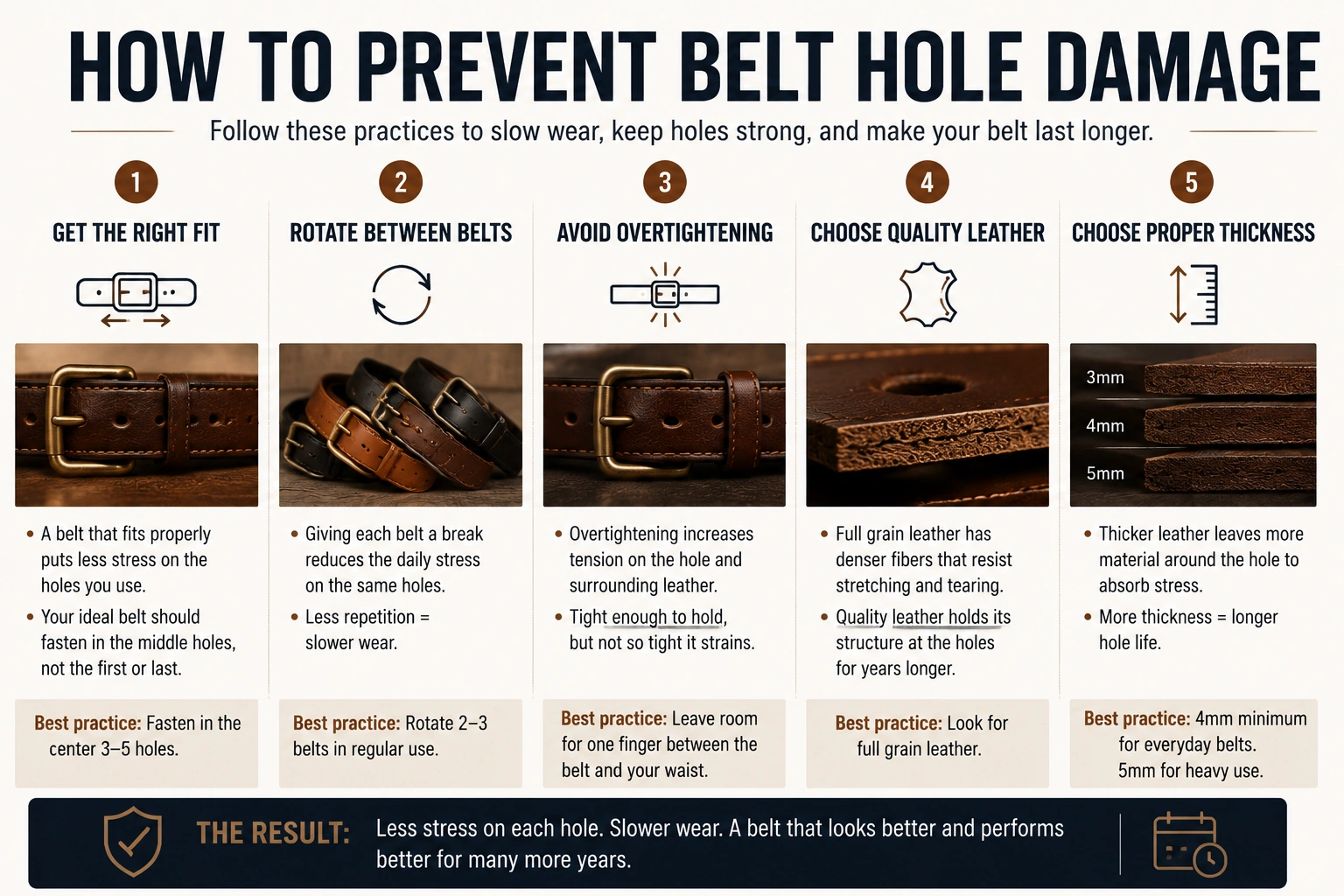
Get the size right from the start. A belt that fastens at the middle hole is under less mechanical stress at that hole than one consistently fastened at either extreme. It's also more comfortable, which means you're less likely to loosen it throughout the day — which in turn means fewer tension cycles on the hole. The belt size guide walks through how to measure correctly.
Choose appropriate thickness for actual use. If you're wearing a belt daily, 4mm is the minimum worth considering for hole longevity. If you're doing anything with tools or equipment, 5mm makes more practical sense. A dress belt at 3mm worn twice a month is fine; the same thickness worn daily under any real load isn't set up to succeed at the holes.
Choose quality leather at the hole specifically. Full-grain leather resists hole deformation longer than lower grades, because the fiber density at the outer hide layer is greater. That density is what's doing the work at the hole edge — not the finish, not the color, not the buckle. See full grain vs genuine leather for more on why the material grade matters here.
Avoid overtightening. Some people habitually fasten their belt one hole tighter than comfortable, then loosen it after sitting down. Every extra cycle of tightening-and-loosening that goes beyond the comfortable fit is adding mechanical stress to the hole. It compounds over years.
Rotate between belts if possible. Even alternating between two belts a few times a week reduces the number of annual fastenings each hole takes. The math is simple but the effect is real over a two-to-three year span.
When Is It Time To Replace A Belt?
The distinction between normal aging and functional failure is worth being clear about, because a lot of people replace belts earlier than they need to and keep them longer than they should.
Cosmetic wear is not a reason to replace. A hole that's slightly oval, leather that's darker at the contact points, edges that have rounded and softened — these are signs of use, not damage. A belt showing these changes after three years of daily wear is aging normally. It doesn't need to be replaced; it needs to be recognized for what it is.
Functional damage is different. When a hole tears far enough that the buckle pin no longer sits securely, or when the leather around the hole has thinned enough that there's risk of further tearing with normal use, the belt's practical life at that position is over. Whether the overall belt is worth keeping — by punching a new hole nearby or accepting that it's reached the end — depends on the condition of the leather everywhere else.
A reasonable rule: if the leather away from the damaged area is still supple and structurally sound, the belt has life left. If the leather throughout is dried out, cracking, or showing the same kind of wear at multiple points, the belt as a whole is done. The leather belt lifespan guide covers this distinction in more detail, along with what realistic timelines look like for different leather grades.
Final Thoughts
The hole you use every day is doing more work than the rest of the belt combined. It takes the full mechanical load of every fastening, every movement, every hour of wear — concentrated into a small circle of leather that was punched through and asked to hold everything together indefinitely.
Some wear is inevitable. The goal isn't to keep that hole looking new forever.
The goal is to slow the wear enough that the belt outlasts the years you expect from it — and that outcome is determined mostly by three decisions made before you ever put the belt on: the leather grade, the thickness, and the size. Get those right, and the holes tend to take care of themselves.
Frequently Asked Questions
Why do belt holes stretch?
The buckle pin applies concentrated pressure to the same small area of leather thousands of times over a belt's life. The fibers around the hole gradually compress and deform outward under this repeated stress, changing the hole from round to oval. How quickly this happens depends primarily on the leather's thickness and density at the hole point, and whether the belt is the correct size for the wearer.
Is belt hole stretching normal?
Yes, to a degree. Some deformation of the most-used hole over years of daily wear is expected — it's the result of cumulative mechanical stress rather than a manufacturing defect. What's not normal is significant oval distortion or tearing within the first year of use, which usually points to leather that's too thin or a fit problem causing the hole to absorb more stress than it should.
Can a stretched belt hole be repaired?
Mild oval deformation is mostly cosmetic and doesn't require repair — the hole still functions. A leather punch can re-round a slightly stretched hole if the deformation is minor. Visible tearing is harder to address; adding a new hole nearby is usually more practical than attempting to repair the damaged one. Significant tears that compromise the belt's function generally indicate it's time to evaluate the belt's overall condition.
Does thicker leather prevent stretching?
Yes, meaningfully. Thicker leather means more fiber depth surrounding the hole, which gives more material to absorb the buckle pin's pressure before the hole edge begins to deform. A 4mm belt consistently outperforms a 3mm belt at hole longevity under the same daily use conditions. The thickness matters specifically at the hole, not just for overall durability.
Does full-grain leather stretch less at holes?
Generally yes. Full-grain leather's denser fiber structure — from the outermost, unaltered layer of the hide — resists compression and deformation better than lower grades. The hole in a full-grain belt tends to compress slowly and uniformly; the hole in split leather or bonded leather may deform more quickly or tear rather than stretching cleanly.
How do I stop my belt holes from tearing?
The most effective prevention is making sure the belt is the right size — fastening at the middle hole rather than at either extreme — and choosing leather thick enough for how the belt will actually be used (4mm minimum for daily casual wear). Rotating between two belts, even loosely, also reduces the number of annual stress cycles each hole takes. These decisions at purchase do more to prevent hole damage than anything you can do afterward.