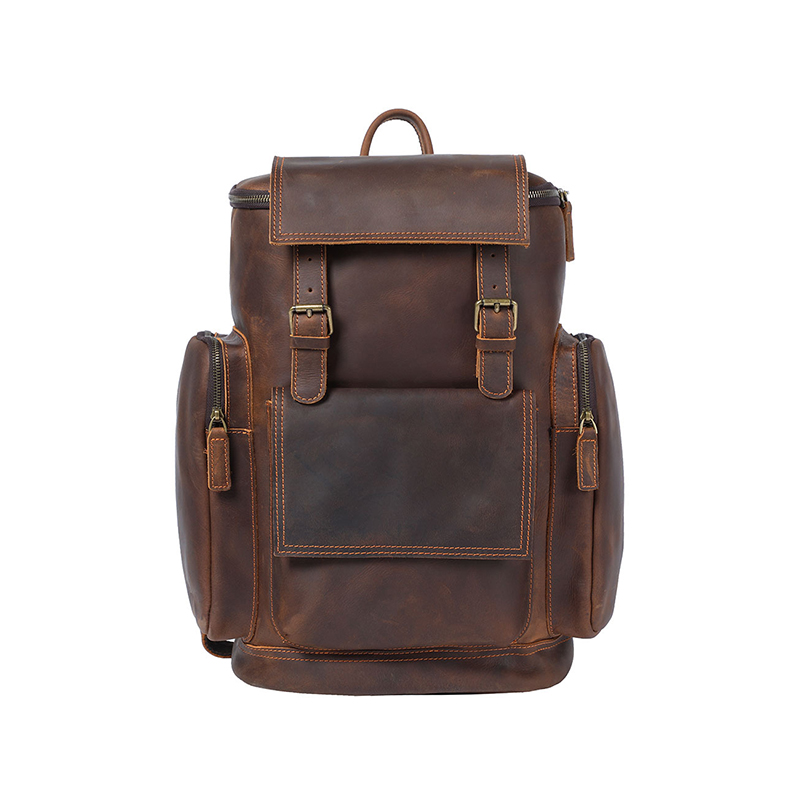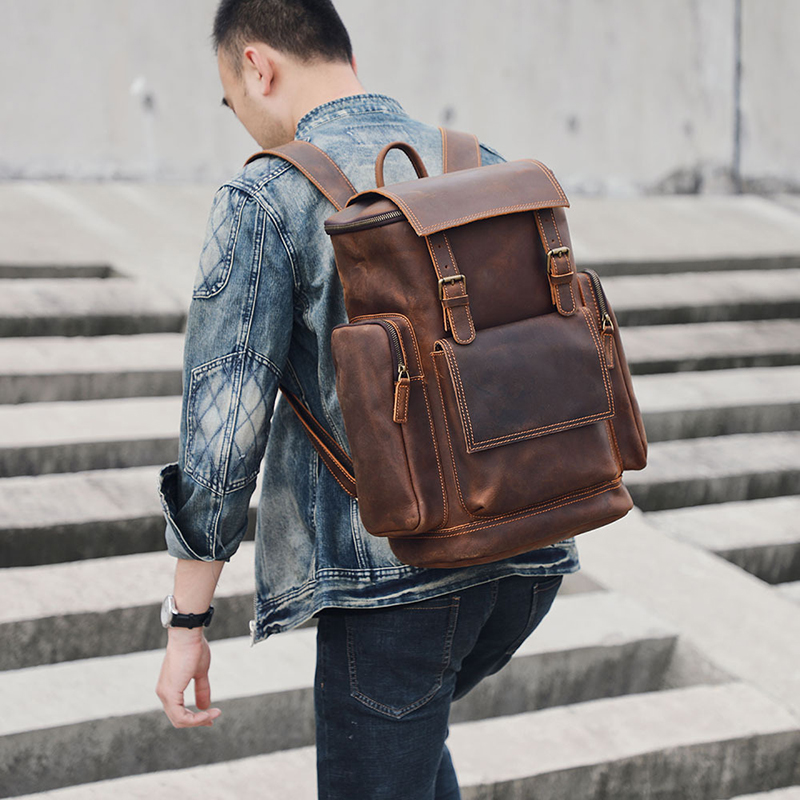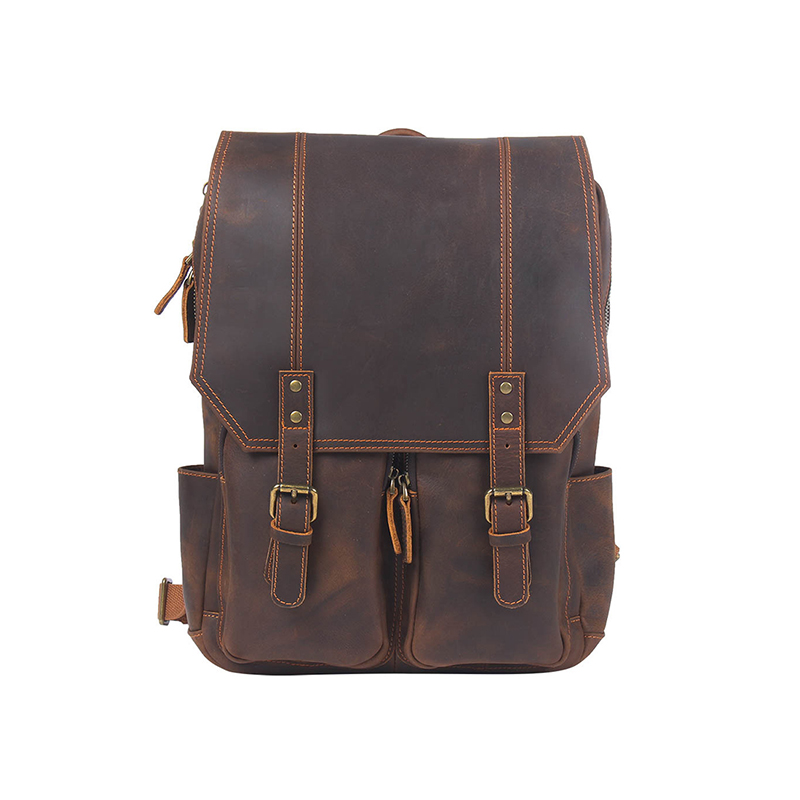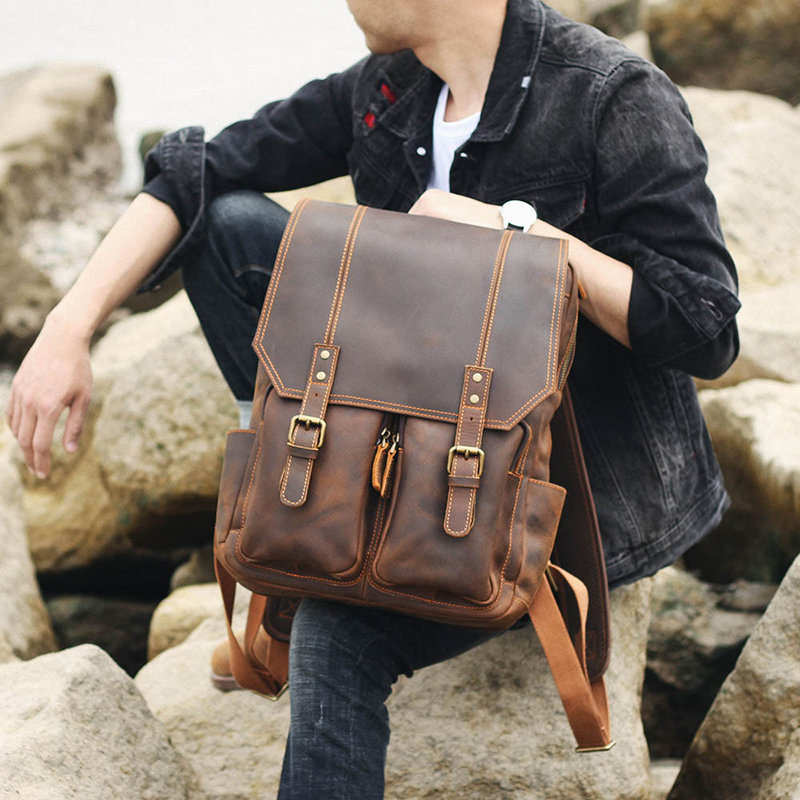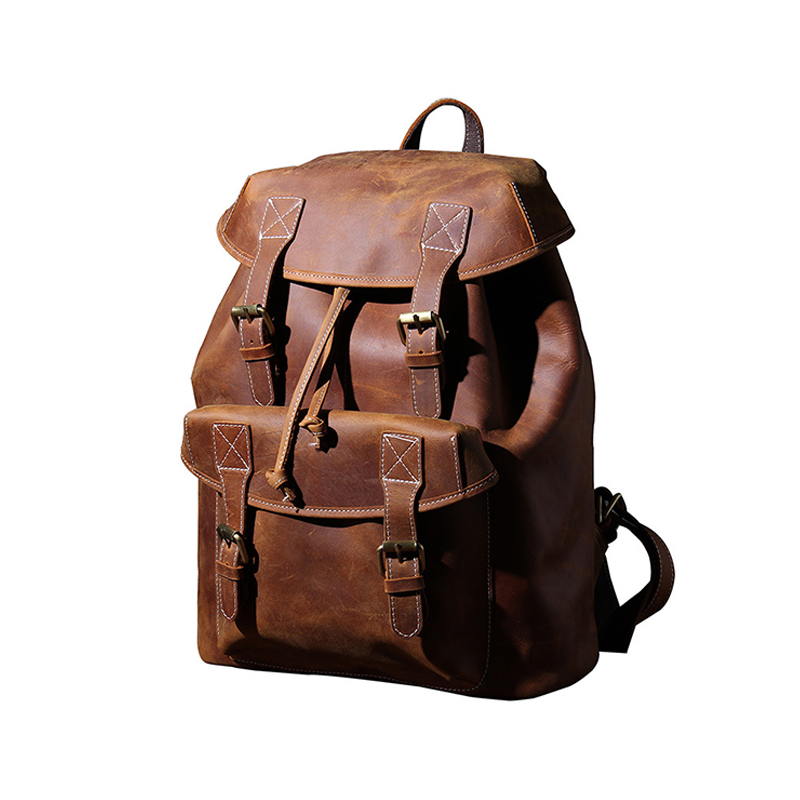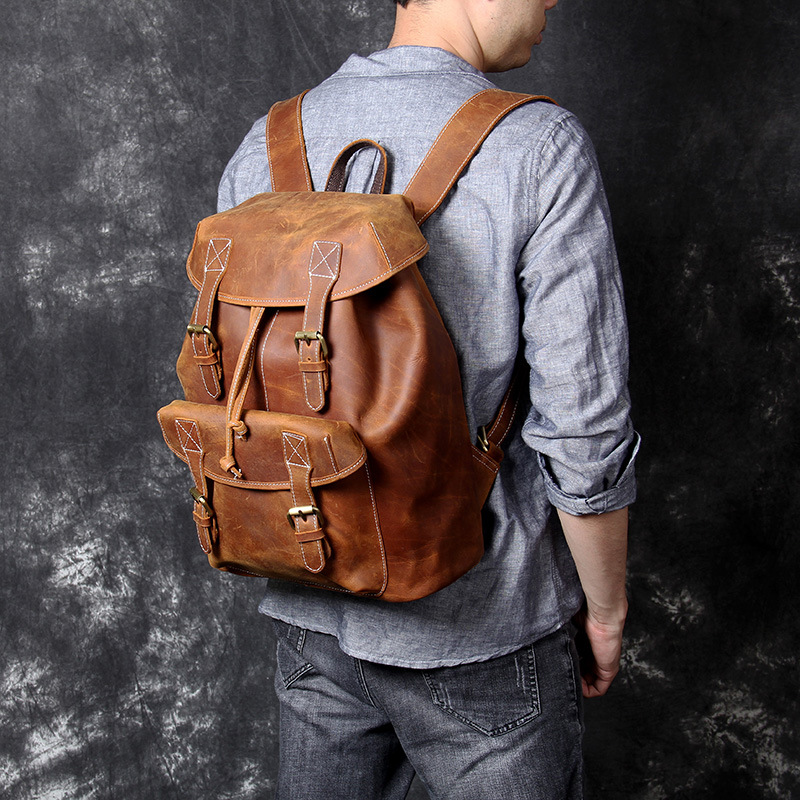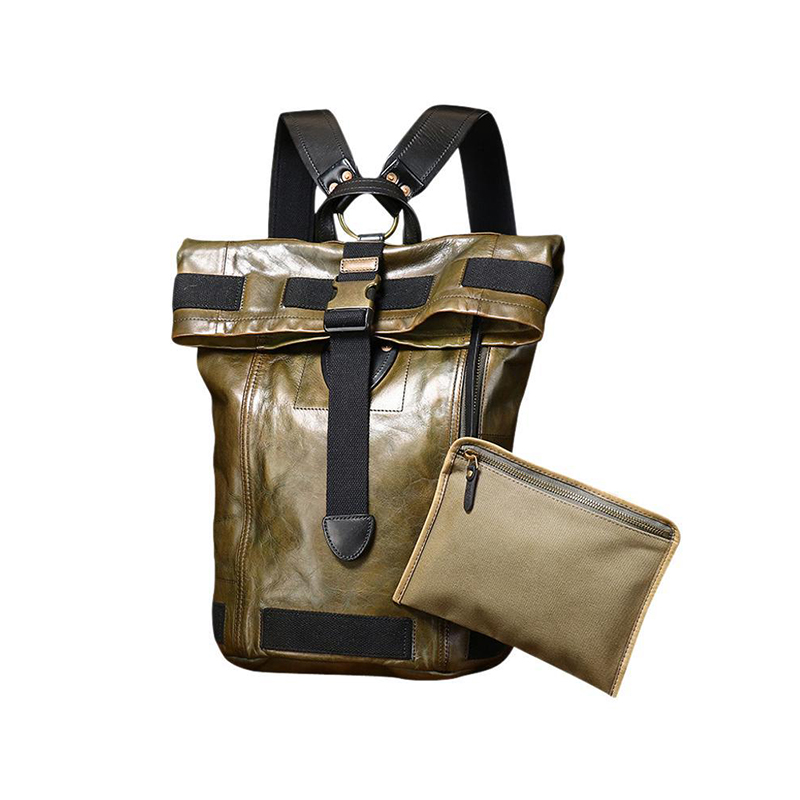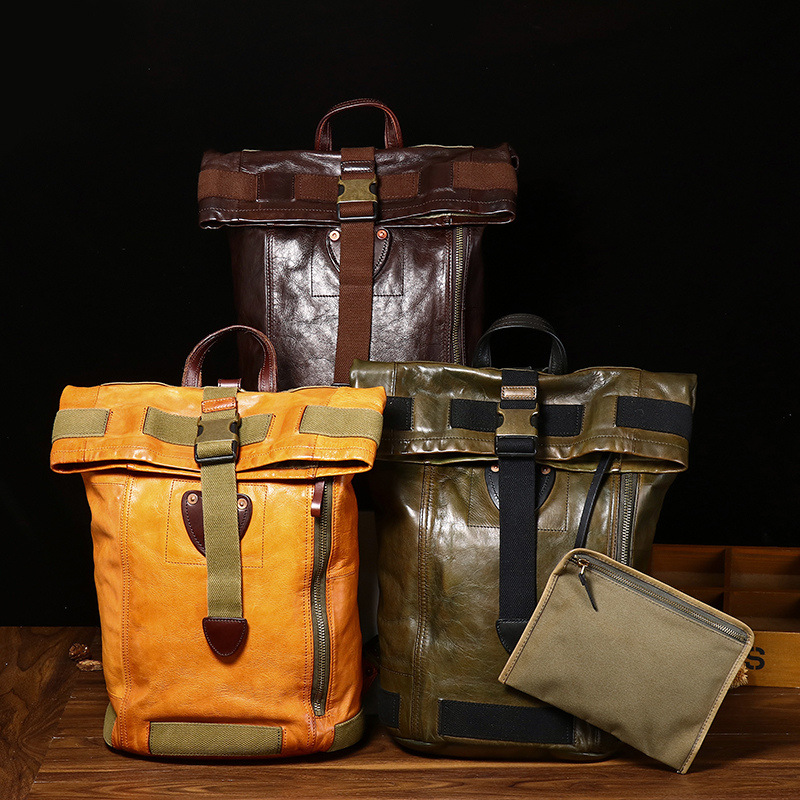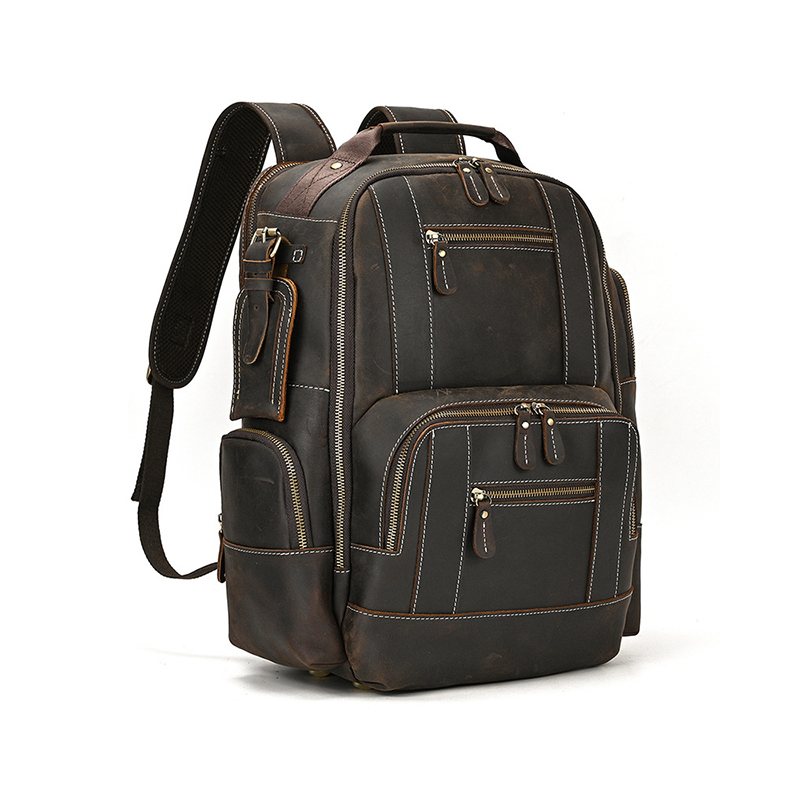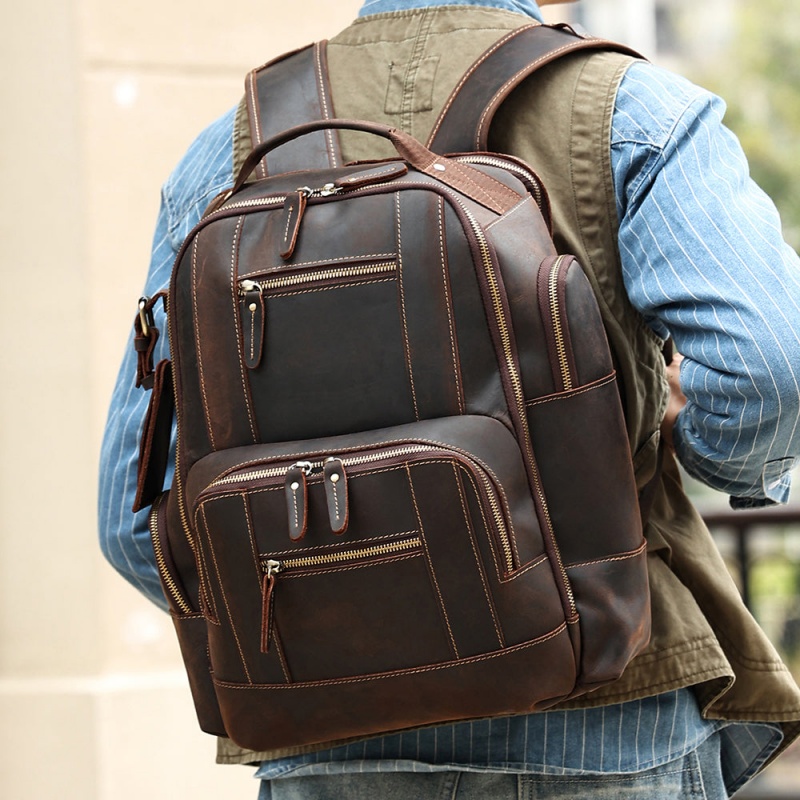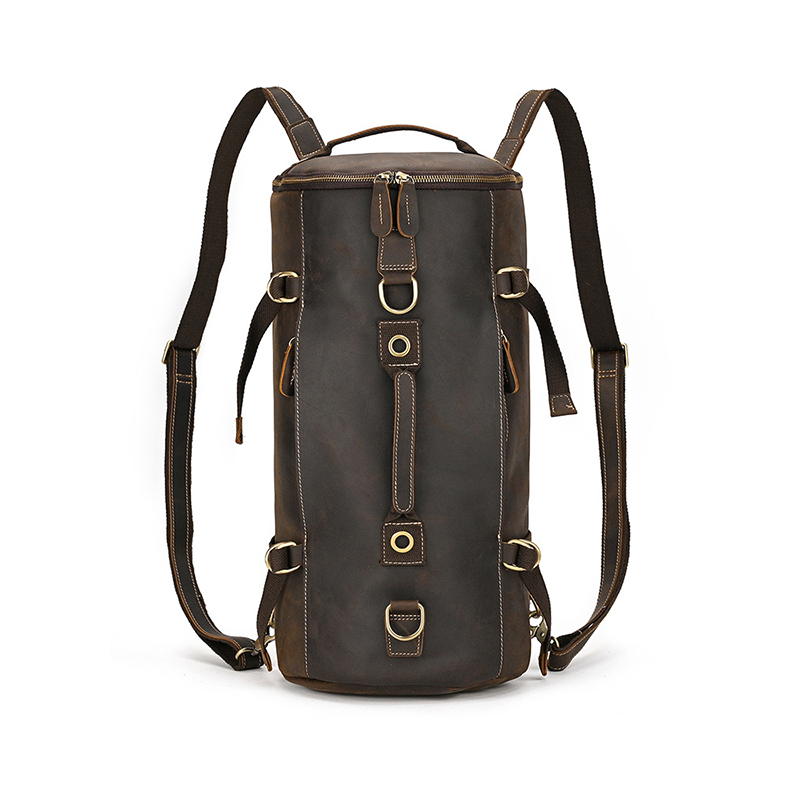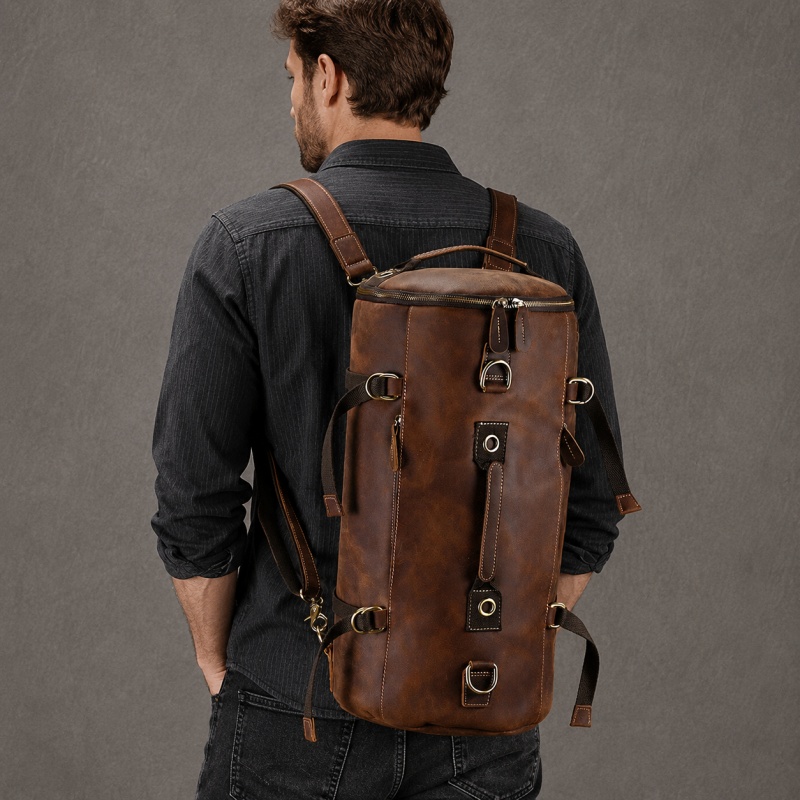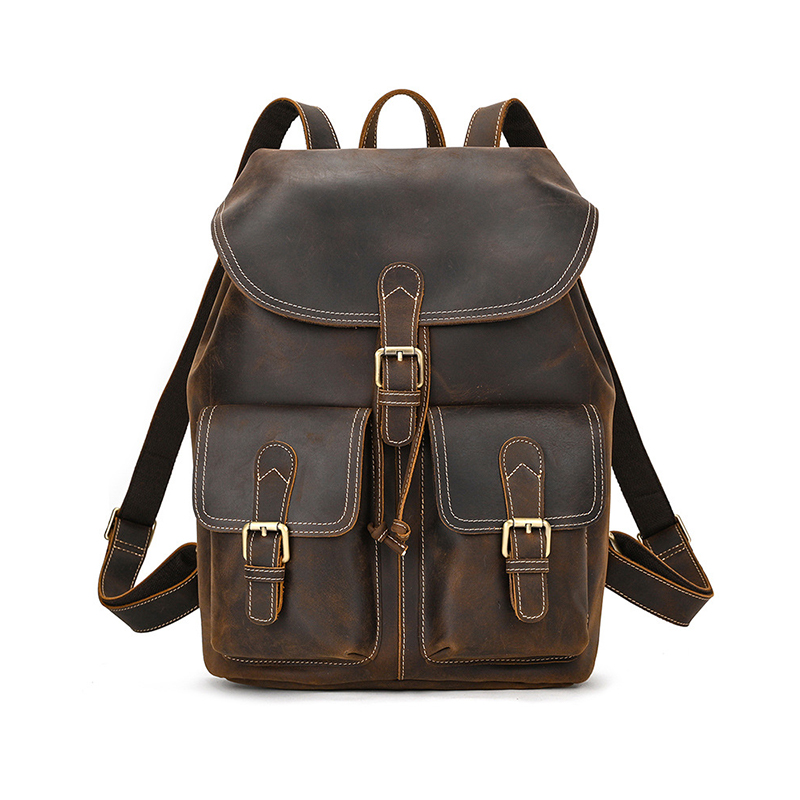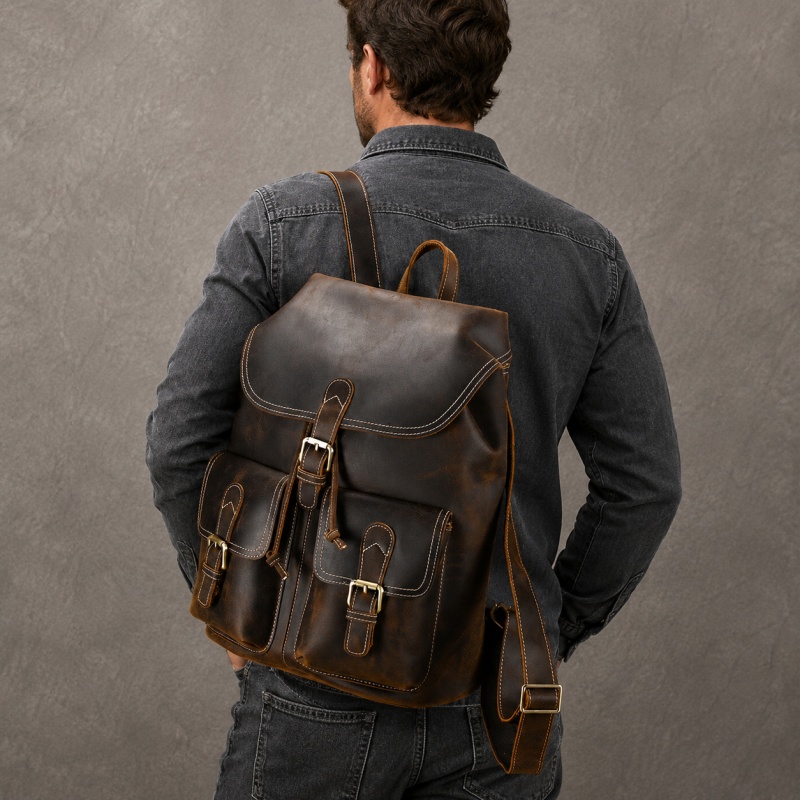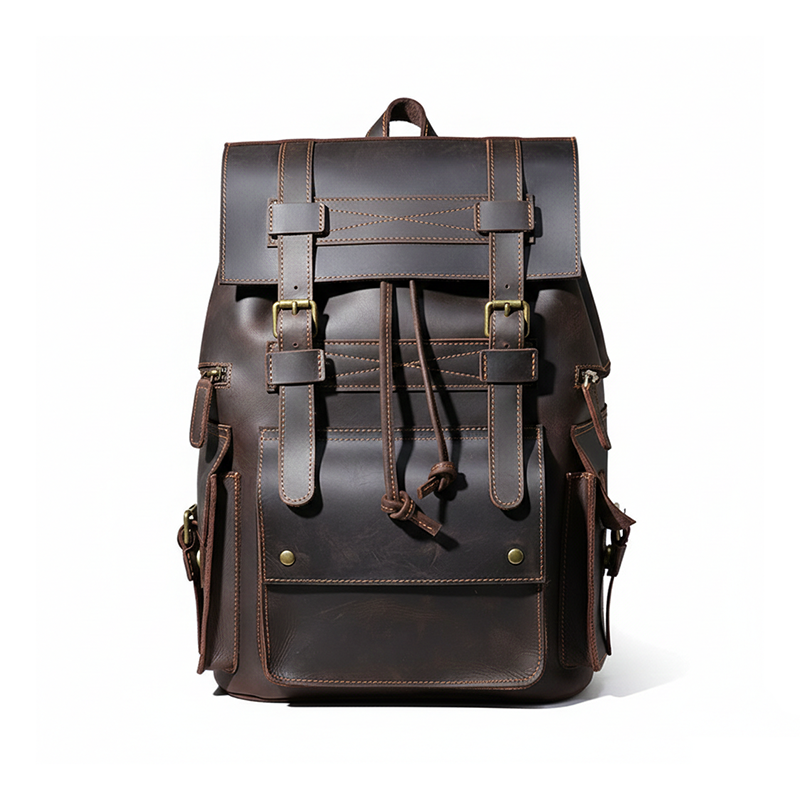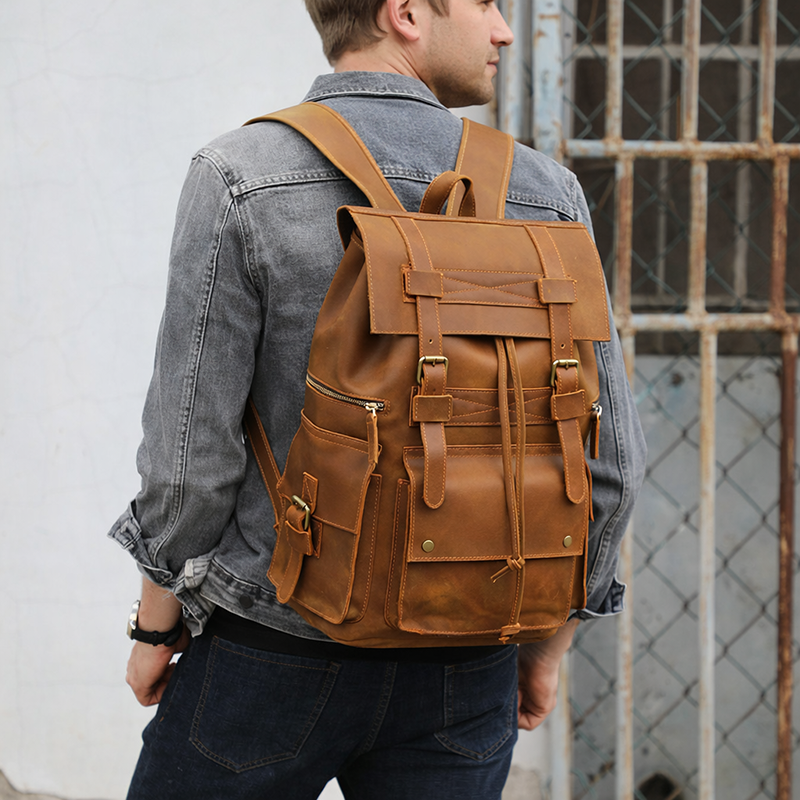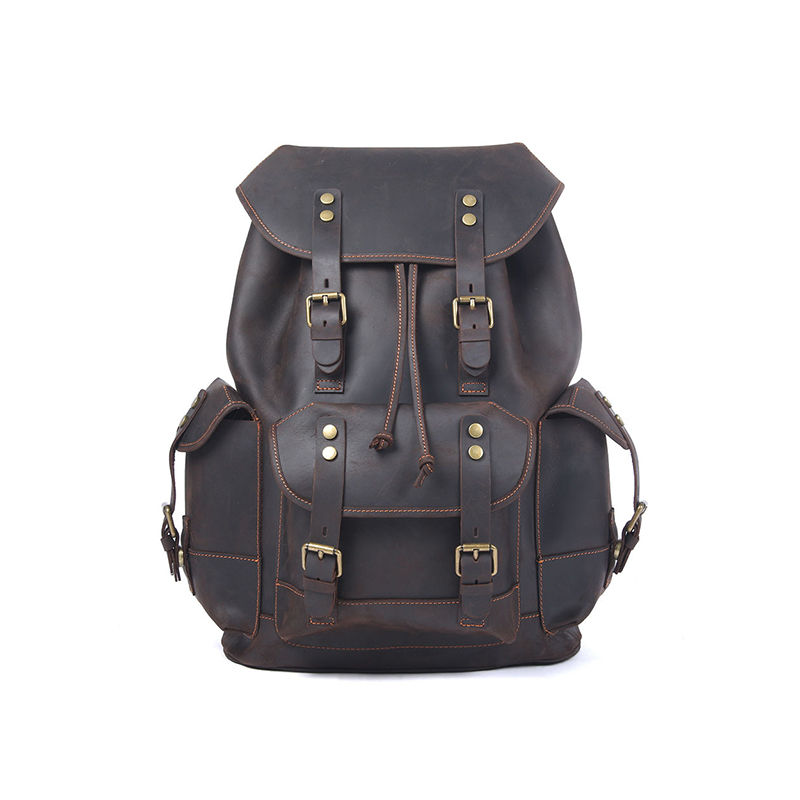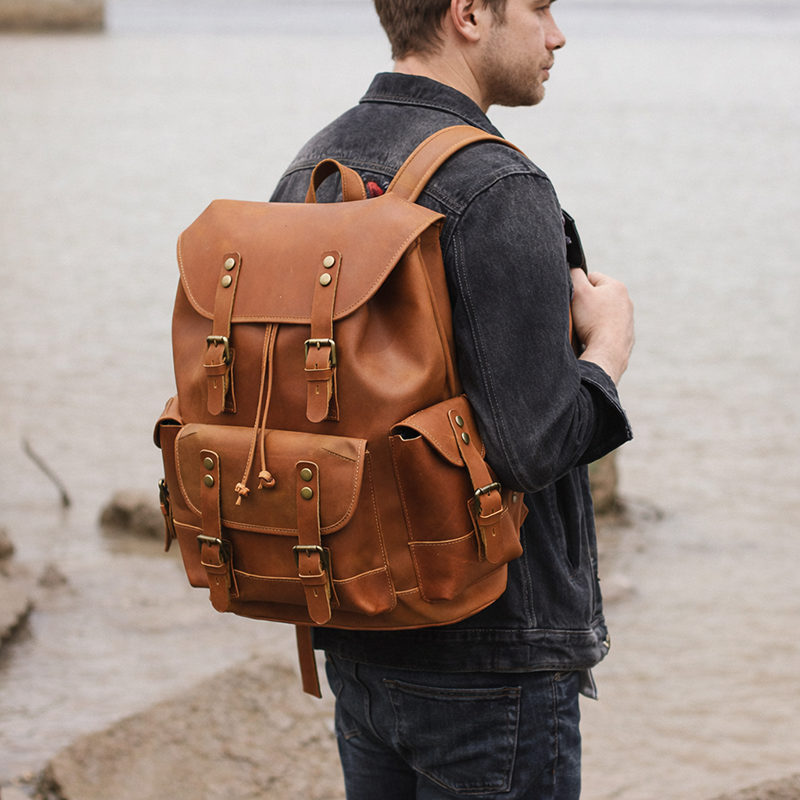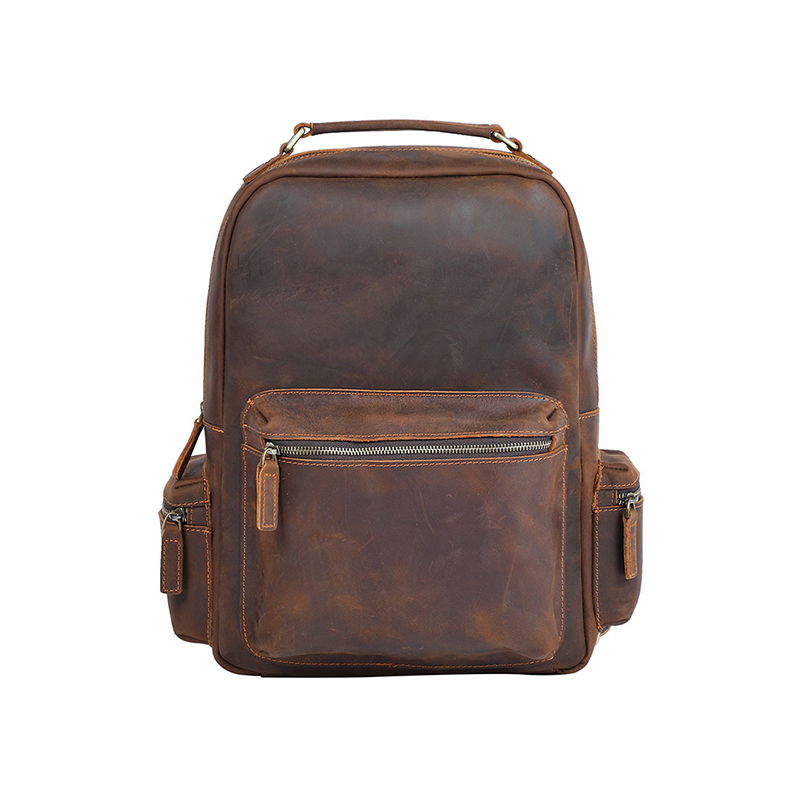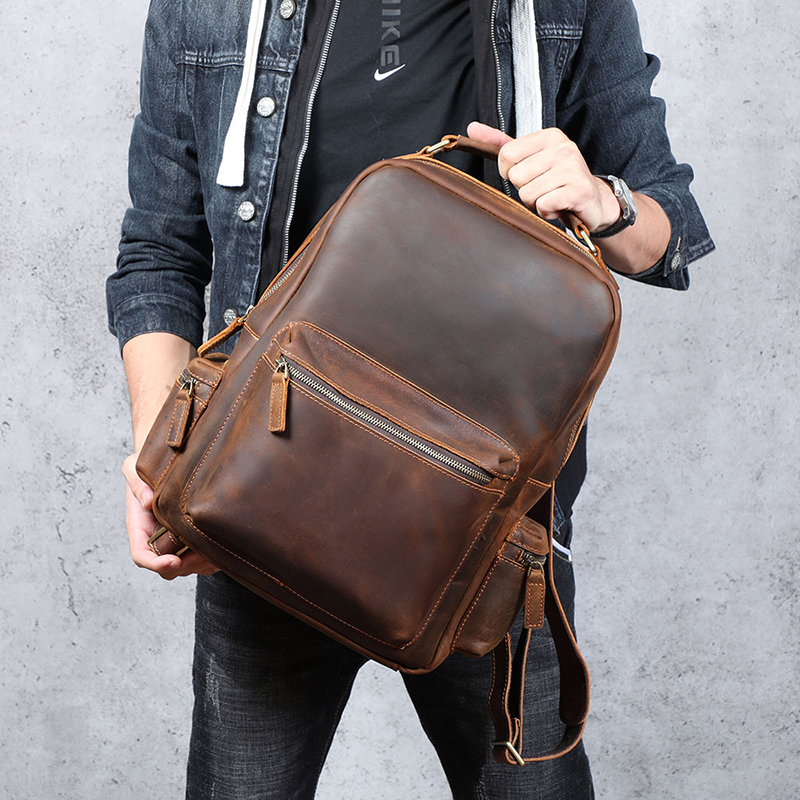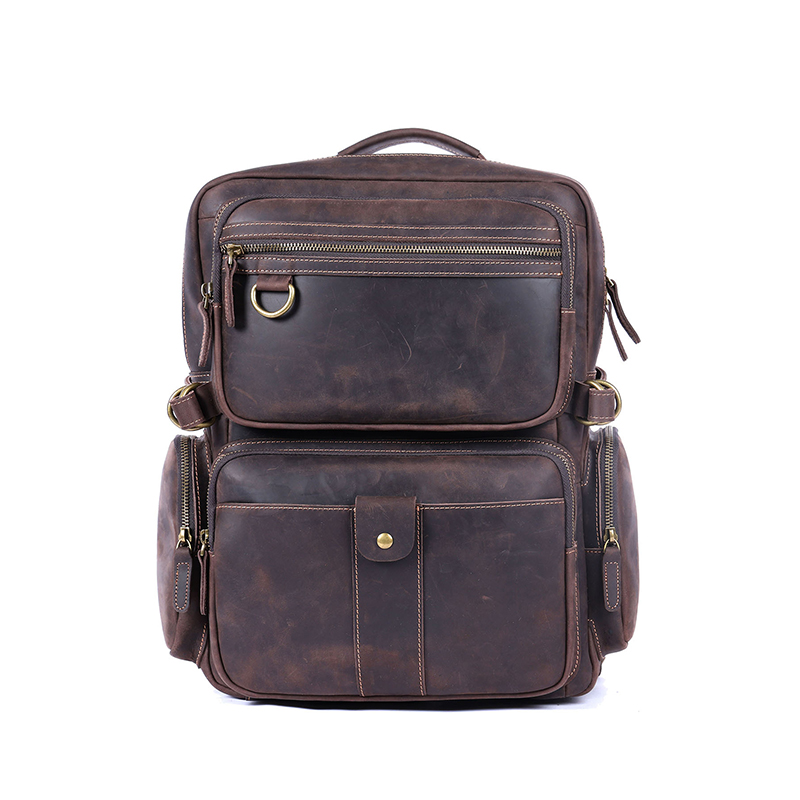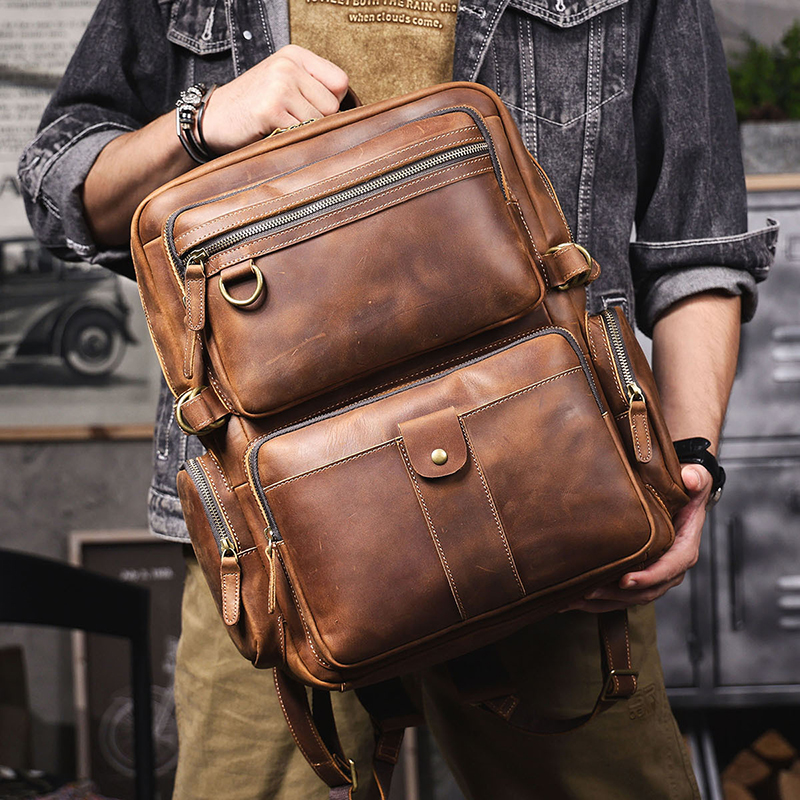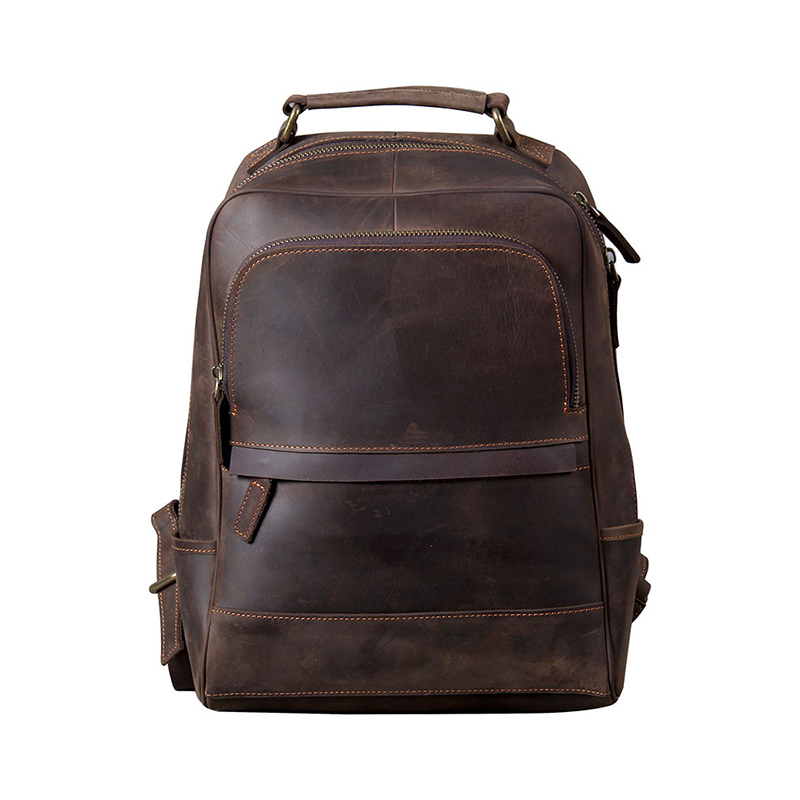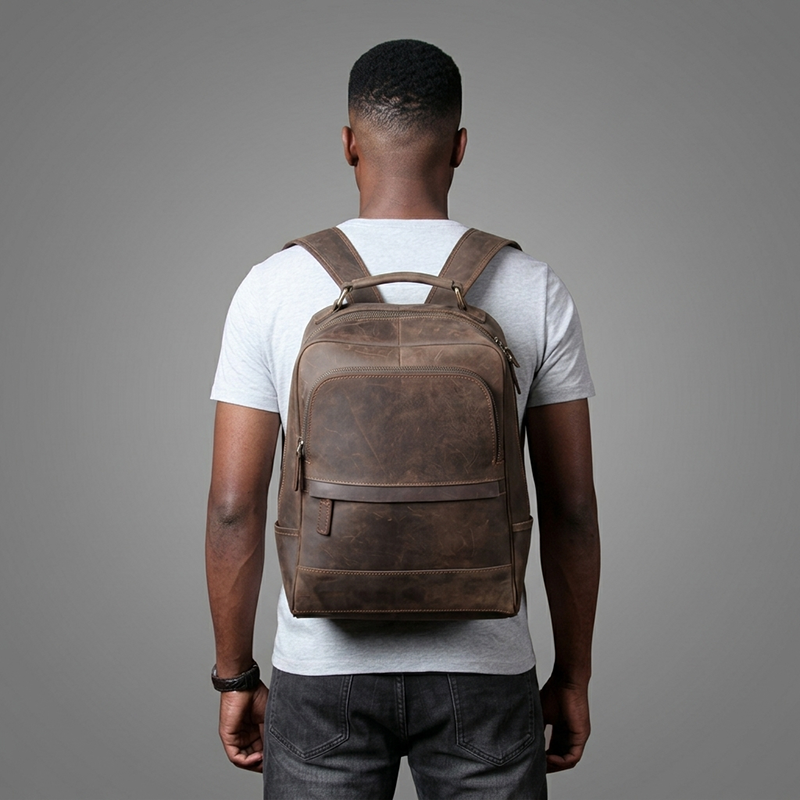
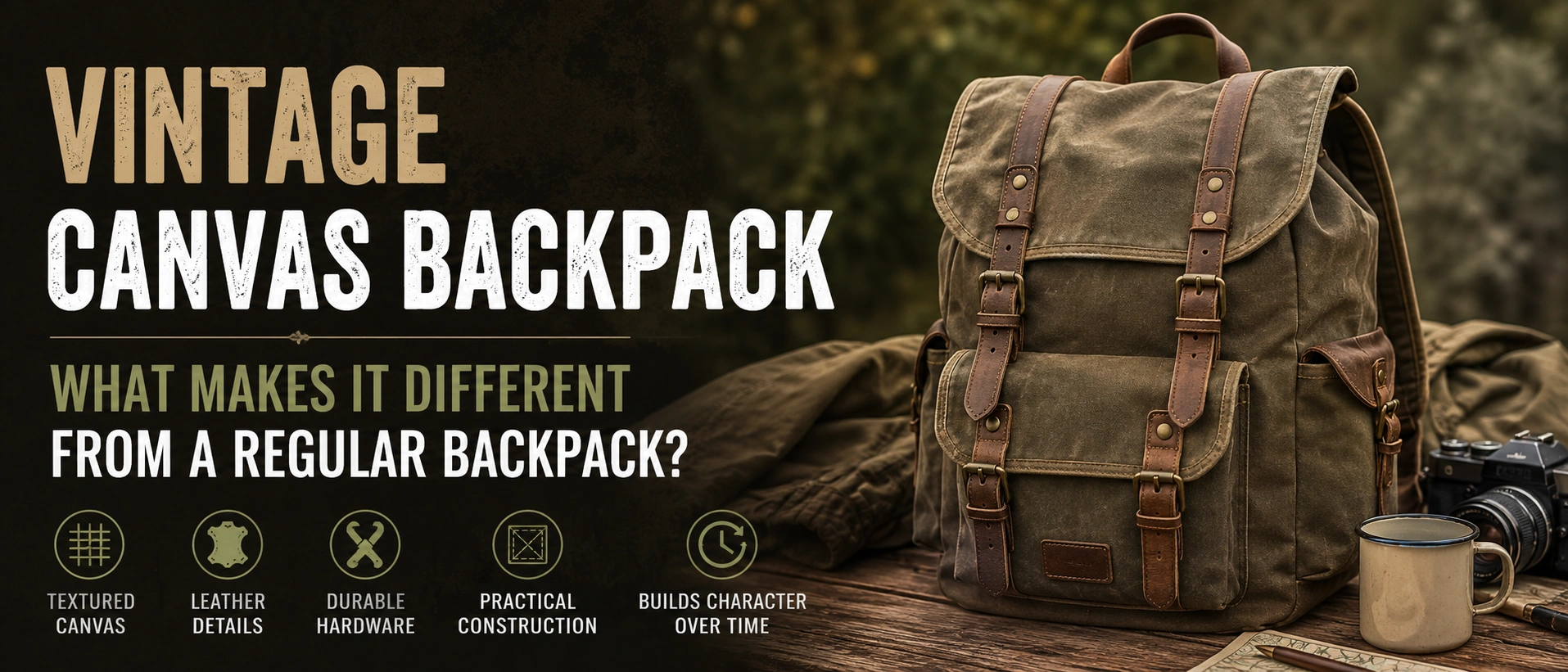
A vintage canvas backpack is different from a regular backpack because of its textured materials, natural colors, leather details, practical construction, and the way it develops character through normal use.
“Vintage” does not simply mean brown, distressed, or made to look old.
Some backpacks use faded colors, decorative straps, and antique-style hardware while the fabric, construction, and internal layout remain similar to those of an ordinary fashion backpack.
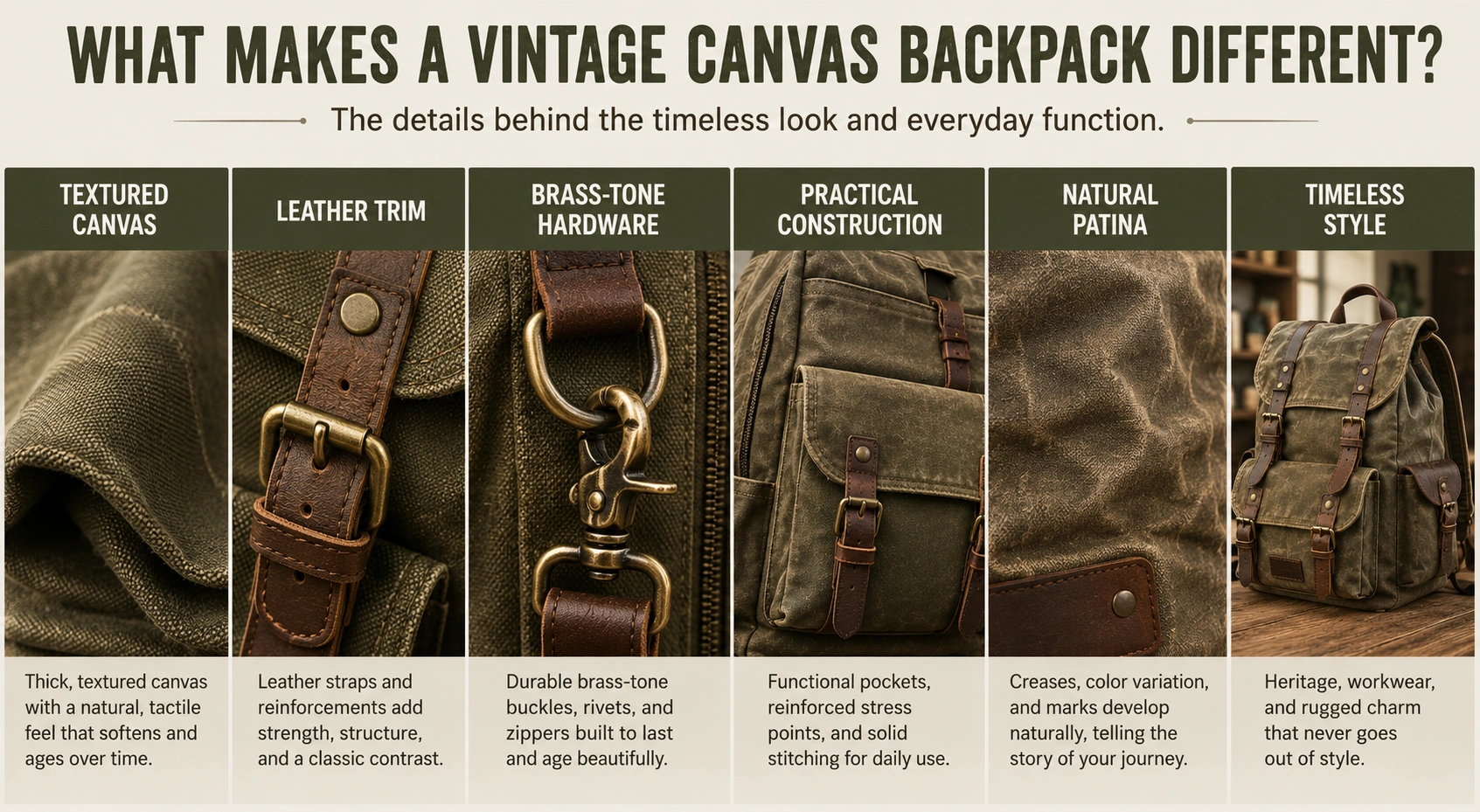
A convincing vintage canvas backpack usually gets its character from several details working together:
-
Visible canvas texture
-
Muted, natural colors
-
Leather reinforcement
-
Brass-tone or dark metal hardware
-
Practical pocket and closure design
-
Natural changes that appear through regular use
Appearance matters, but it is only one part of the decision.
A backpack still needs comfortable straps, reliable closures, useful organization, reinforced seams, and enough protection for the items carried inside.
Quick Answer: What Is A Vintage Canvas Backpack?
A vintage canvas backpack is a backpack made around textured canvas, traditional-looking hardware, practical construction, and a mature casual style.
It may use regular canvas, waxed canvas, leather trim, or a combination of these materials.
| Feature | Vintage Canvas Backpack |
|---|---|
| Main material | Textured canvas or waxed canvas |
| Trim | Leather straps, handles, tabs, or reinforcement |
| Hardware | Brass-tone or dark metal buckles and zippers |
| Colors | Olive, khaki, brown, charcoal, navy, or faded black |
| Style | Heritage, workwear, rugged, or mature casual |
| Aging | Develops creases, fading, and surface character |
| Typical use | Work, commuting, laptop carry, and weekend travel |
A vintage backpack should not depend entirely on decorative buckles or artificial distressing.
It should still work as a backpack.
That means checking:
-
Shoulder strap comfort
-
Capacity
-
Zipper quality
-
Laptop storage
-
Pocket layout
-
Reinforced stitching
-
Overall weight
A true vintage canvas backpack should feel practical first and decorative second.
What Makes A Canvas Backpack Look Vintage?
No single detail creates a vintage appearance.
It normally comes from the relationship between fabric, color, leather, hardware, and construction.
Textured Canvas
Canvas has a visible woven surface.
Unlike smooth nylon or shiny polyester, it does not always appear completely uniform. The weave catches light differently across folds, seams, and high-contact areas.
Depending on the fabric and finish, canvas may develop:
-
Light creases
-
Subtle color variation
-
Softened contact areas
-
Small surface marks
-
Visible weave texture
-
Gradual fading around edges
These changes make the material feel less industrial and more tactile.
That does not mean every mark is desirable. Thin, weak canvas may wrinkle or wear quickly without becoming more attractive.
The quality of the material still matters.
Natural And Muted Colors
Vintage canvas backpacks often use colors associated with workwear, military field equipment, outdoor utility, and older travel gear.
Common choices include:
-
Olive green
-
Khaki
-
Sand
-
Brown
-
Charcoal
-
Navy
-
Faded black
These colors are usually less saturated than bright sports or school backpack colors.
They also work naturally with common adult clothing:
-
Jeans
-
Chinos
-
Boots
-
Work jackets
-
Overshirts
-
Sweaters
-
Casual shirts
A muted color does not automatically make a backpack vintage, but it helps the material and hardware feel more cohesive.
Leather Details
Leather is often used around the parts of a canvas backpack that receive repeated handling or tension.
Common leather details include:
-
Shoulder strap attachments
-
Carry handles
-
Flap straps
-
Zipper pulls
-
Pocket trim
-
Base reinforcement
-
Buckle tabs
Leather can add contrast and structure to a flexible canvas body.
It can also reinforce areas that would otherwise depend entirely on fabric and stitching.
Over time, some leather becomes darker at contact points, develops small surface marks, or softens through use. These changes can complement the way canvas ages.
However, leather should not be added everywhere simply to make the bag appear more expensive.
Leather details work best when they reinforce real stress points rather than simply making the backpack look more expensive.
Brass-Tone Or Dark Metal Hardware
Hardware has a strong effect on the overall appearance.
Vintage-style backpacks commonly use:
-
Buckles
-
Rivets
-
Zipper pulls
-
D-rings
-
Hooks
-
Snap buttons
Brass-tone, gunmetal, matte black, or darkened metal usually feels more natural with canvas and leather than bright polished hardware or lightweight-looking plastic parts.
The finish is not the only consideration.
Hardware should also be thick enough for its job, securely attached, and easy to operate. A decorative buckle that bends easily adds very little practical value.
Practical Construction
Many vintage canvas backpacks borrow construction details from older work, travel, outdoor, or field bags.
These may include:
-
Flap closures
-
Front utility pockets
-
Leather buckle straps
-
Drawstring openings
-
Reinforced corners
-
Rectangular main compartments
-
External attachment points
-
Simple internal organization
These features originally existed for practical reasons.
A front pocket gave quicker access to tools or small items. A flap added coverage over the opening. Leather tabs reinforced closure points.
When those features still serve a purpose, the vintage appearance feels natural.
When they are added only as decoration, the backpack may look complicated without becoming more useful.
The vintage appearance usually comes from honest materials and practical construction, not from adding decorative details everywhere.
Vintage Canvas Backpack vs Regular Synthetic Backpack
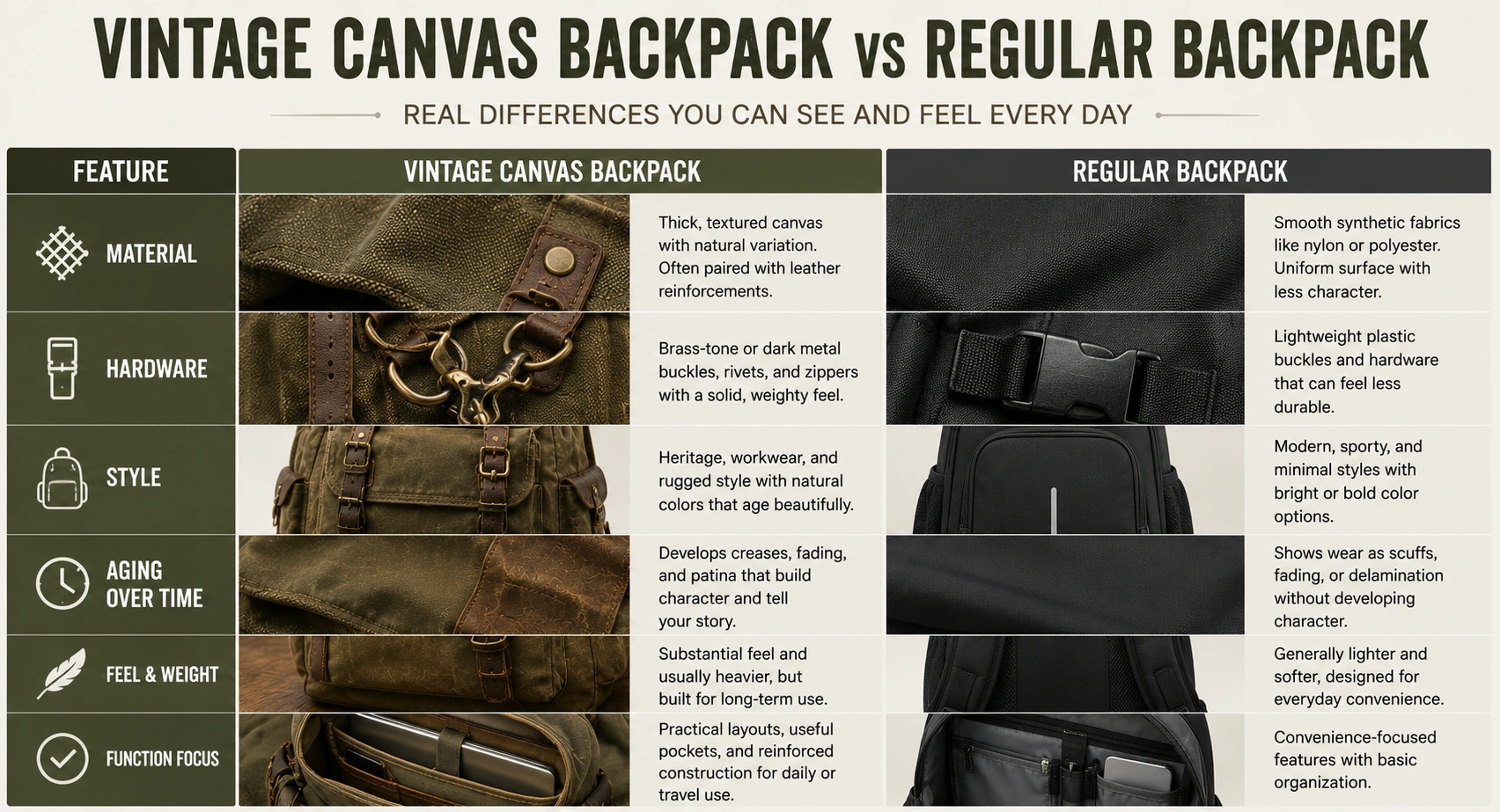
A vintage canvas backpack and a regular synthetic backpack may serve similar daily purposes, but they usually feel different in weight, texture, maintenance, and style.
| Feature | Vintage Canvas Backpack | Regular Synthetic Backpack |
|---|---|---|
| Main material | Canvas, waxed canvas, and leather trim | Nylon or polyester |
| Appearance | Textured, natural, heritage-inspired | Smooth, sporty, school, travel, or technical |
| Weight | Often slightly heavier | Usually lighter |
| Weather performance | Depends on treatment and construction | Often easier to coat for rain resistance |
| Aging | Develops creases, fading, and character | Usually remains uniform or shows surface wear |
| Style | Mature casual, workwear, heritage | Sport, school, travel, or technical |
| Cleaning | Requires gentler care | Often easier to wipe or wash |
| Structure | May feel more substantial | Often lighter and more flexible |
Neither type is automatically better.
A synthetic backpack may be the stronger choice when the priorities are:
-
Minimum weight
-
Technical weather performance
-
Easy cleaning
-
Sports use
-
Hiking support
-
Frequent exposure to wet conditions
A vintage canvas backpack may be more suitable when the priorities are:
-
Natural material texture
-
A mature everyday appearance
-
Workwear or heritage styling
-
Visible character over time
-
Less technical-looking daily carry
A smooth nylon bag may perform better in heavy rain while feeling out of place with the owner’s normal clothing.
A canvas and leather backpack may look more natural every day while requiring more careful cleaning.
The better choice depends on which trade-offs matter.
Read our full canvas backpack vs nylon backpack comparison for a closer look at weight, water resistance, durability, and everyday use.
Regular Canvas vs Waxed Canvas
Regular canvas and waxed canvas are often discussed as though they are the same material.
They are related, but the surface treatment changes how they look, feel, and handle moisture.
Regular Canvas
Regular canvas has a visible woven texture and a relatively natural fabric feel.
Its common characteristics include:
-
Flexible construction
-
A softer surface
-
Breathable fabric
-
Casual appearance
-
Visible weave
-
Easier folding and movement
Untreated canvas may absorb water faster than coated or waxed fabric.
How quickly that happens depends on the fiber, weave density, fabric weight, and any factory-applied finish.
Regular canvas works well for:
-
Daily carry
-
Dry-weather commuting
-
Casual work use
-
Coffee shop work
-
Weekend errands
-
Light travel
It may also be easier to spot clean than heavily treated canvas, although dark colors and certain dyes should still be tested first.
Waxed Canvas
Waxed canvas has a wax treatment applied to the fabric.
This treatment usually gives the surface:
-
A darker or richer appearance
-
Greater resistance to light moisture
-
More visible creasing
-
A firmer or slightly waxy hand feel
-
Distinctive marks where the material bends
The creases are often called pull-up or break marks, depending on the finish. They appear because bending redistributes the wax and changes how light reflects from the surface.
Some people value these marks because they make the bag look more personal over time.
Others may prefer a cleaner, more uniform appearance.
Waxed canvas also requires specific care. Detergent, machine washing, high heat, and aggressive scrubbing can remove or disturb the wax finish.
The surface may eventually need rewaxing, especially in high-contact or high-exposure areas.
Waxed canvas is more resistant to light moisture than untreated canvas, but it is not automatically waterproof.
Waxed canvas changes how the fabric handles light moisture and surface wear, but seams, zippers, openings, and construction still matter.
Our guide to waxed canvas backpack vs leather backpack compares the two materials in weight, structure, aging, maintenance, and daily use.
For weather performance specifically, see are canvas backpacks waterproof.
What Role Does Leather Play?
Leather is one of the features most commonly associated with a vintage canvas backpack.
Its role should be both visual and structural.
Leather may be used to:
-
Reinforce handles
-
Protect flap edges
-
Strengthen strap connections
-
Support buckles and rivets
-
Add shape to flexible canvas
-
Create stronger zipper pull tabs
-
Reinforce pocket openings
-
Protect high-contact corners
These uses make practical sense because the leather is placed where the backpack receives repeated handling or tension.
A leather handle attachment, for example, may distribute force across a larger area of canvas. A leather buckle tab may prevent the metal buckle from pulling directly against the fabric.
Leather also creates contrast.
Canvas is soft, woven, and flexible. Leather is denser, smoother, and more structured. The difference between the two materials gives the backpack more depth than a single-material design.
There are trade-offs.
Leather details can:
-
Increase the empty weight
-
Make machine washing unsuitable
-
Require separate cleaning
-
Darken after conditioning
-
Stiffen if soaked and dried incorrectly
-
Need occasional maintenance
Leather trim should therefore be judged by location and function.
A large amount of thin decorative leather is not necessarily better than a smaller amount placed at genuine stress points.
Patina vs Damage: What Is The Difference?
One reason people choose vintage-style materials is that they do not always remain visually unchanged.
Canvas, leather, and metal hardware can develop surface character through normal use.
That character is often described as patina.
However, patina should not be used as an excuse for weak construction or product failure.
Normal Patina And Character
Normal changes may include:
-
Soft creases in canvas
-
Subtle fading at high-contact areas
-
A softer fabric feel
-
Light surface marks
-
Darker leather around handles
-
Small leather scratches
-
Brass-tone hardware becoming less bright
-
Slight variation in waxed canvas
These changes affect appearance without preventing the backpack from working properly.
The straps still hold securely. The zipper still closes. The fabric remains intact. The laptop compartment still protects the computer.
Actual Damage
Damage includes changes that weaken the backpack or make it harder to use.
Examples include:
-
Torn canvas
-
Broken or pulled stitching
-
Cracked load-bearing leather
-
Missing rivets
-
Broken hardware
-
Missing zipper teeth
-
Torn zipper tape
-
Peeling synthetic coating
-
A badly warped base
-
Shoulder strap attachments pulling apart
-
A lining that has separated from the bag
A ripped seam is not patina.
A cracked load-bearing strap is not desirable character.
A zipper that repeatedly separates is not evidence of authentic aging.
Patina changes the appearance while the backpack remains strong and functional. Damage weakens the construction or makes the bag harder to use.
When evaluating an older or well-used backpack, ask whether the change is cosmetic or structural.
That distinction matters more than how “vintage” the backpack looks.
Are Vintage Canvas Backpacks Durable?
Some vintage canvas backpacks are durable.
Others only use vintage styling.
The word “vintage” is not a material specification or quality certification.
Durability comes from the actual components and the way they are assembled.
Canvas Weight And Density
Thicker canvas can feel more substantial, but thickness alone does not tell the whole story.
Check whether the fabric:
-
Feels dense rather than loose
-
Holds its shape appropriately
-
Is reinforced at high-friction areas
-
Shows excessive light through the weave
-
Feels too thin for the intended load
A lightweight canvas backpack may be perfectly suitable for books, clothing, and light daily carry.
A heavier laptop or travel load requires more structure and reinforcement.
Stitching
The most important stitching is not always the most visible.
Inspect:
-
Shoulder strap attachments
-
Carry handle attachments
-
Zipper ends
-
Pocket corners
-
Base seams
-
Leather-to-canvas connections
-
Areas around rivets or buckles
These points carry more stress than the middle of a flat fabric panel.
Reinforced stitching, bar tacks, rivets, layered material, or larger attachment panels can help distribute the load.
Hardware
Check the quality and function of:
-
Buckles
-
Zippers
-
Snap buttons
-
Rivets
-
D-rings
-
Hooks
Hardware should not feel unnecessarily thin, loose, or difficult to use.
A large buckle may look strong while being made from weak material. A smaller well-made buckle can be more reliable.
Shoulder Straps
Shoulder straps affect both comfort and durability.
Consider:
-
Width
-
Padding
-
Adjustability
-
Stitching
-
Attachment area
-
How the strap joins the body
A durable bag with narrow uncomfortable straps may still be a poor daily backpack.
Base Construction
The base carries the load and regularly contacts floors, seats, pavement, and other surfaces.
Look for:
-
Dense canvas
-
Reinforced seams
-
Additional panels
-
Leather or fabric reinforcement
-
Enough structure to support the contents
The bottom does not need to be completely rigid, but it should match the weight the backpack is expected to carry.
Durability comes from material weight, stitching, reinforcement, hardware, and construction — not from the word “vintage” in the product title.
To understand how fabric, lining, padding, leather, hardware, and reinforcement work together, read what backpacks are made of.
Are Vintage Canvas Backpacks Waterproof?
Most vintage canvas backpacks should not automatically be treated as waterproof.
Untreated canvas can absorb water.
Waxed or coated canvas usually handles brief moisture better, but other parts of the backpack may still allow water inside.
Possible entry points include:
-
Zippers
-
Seams
-
Flap edges
-
Drawstring openings
-
Pocket openings
-
Stitching holes
-
Areas where materials join
Leather trim also requires care after getting wet.
Brief exposure to light rain may not cause a problem when the backpack is dried properly. Long exposure, heavy rain, or complete soaking is different.
When carrying a laptop, camera, documents, or other moisture-sensitive items, additional internal protection is sensible.
A vintage canvas backpack may handle brief light rain, but it should not automatically be treated as a waterproof bag.
Read are canvas backpacks waterproof for a fuller explanation of untreated canvas, waxed canvas, coatings, seams, and closures.
Are Vintage Canvas Backpacks Good For Laptops?
A vintage appearance does not guarantee laptop protection.
Some traditional backpack designs were created before laptop compartments became common. They may have large main compartments but little internal padding or structure.
Before using a vintage canvas backpack for a computer, check:
-
Padded laptop sleeve
-
Internal sleeve dimensions
-
Back-panel structure
-
Protection around the base
-
Zipper or secure closure
-
Separation from a water bottle
-
Space for a charger and mouse
-
Position of the laptop close to the back
The sleeve should match the actual dimensions of the laptop.
A large backpack can still be unsuitable if the compartment is too small, too loose, or poorly padded.
Capacity should also match the daily load.
15L–20L
Suitable for:
-
A small laptop or tablet
-
Charger
-
Notebook
-
Wallet
-
Phone
-
Light daily items
20L–25L
Suitable for most workdays:
-
Laptop
-
Charger and mouse
-
Notebook
-
Water bottle
-
Headphones
-
Light jacket
-
Daily essentials
25L–30L
Suitable for:
-
Work and gym
-
Work and short travel
-
Extra clothing
-
Camera equipment
-
Larger daily loads
Choose the laptop compartment first and the vintage appearance second.
See our guide to choosing the best laptop backpack for men for more detail on laptop fit, capacity, straps, pocket layout, and work style.
Vintage Canvas Backpack vs Full Leather Backpack
Vintage canvas and full leather backpacks can both provide a mature appearance, but they feel different in daily use.
Vintage Canvas Backpack
Common advantages include:
-
Generally lighter than full leather
-
More flexible
-
More relaxed appearance
-
Natural fit with workwear
-
Easier use for casual daily carry
-
More forgiving when packing changing loads
Possible disadvantages include:
-
Less formal
-
Variable water resistance
-
Canvas may show dust
-
Fabric may soften or fade
-
Mixed materials require different cleaning methods
Full Leather Backpack
Common advantages include:
-
More formal appearance
-
Greater structure
-
Rich leather texture
-
Strong leather patina
-
Natural fit with smarter clothing
Possible disadvantages include:
-
Higher empty weight
-
Higher cost
-
More leather care
-
Less flexibility
-
Potentially too formal for relaxed daily use
A canvas and leather backpack sits between the two.
It offers more structure and visual depth than a basic canvas backpack while remaining more relaxed and usually lighter than a full leather design.
That middle ground is one reason the combination works well for work, commuting, and weekend use.
Who Is A Vintage Canvas Backpack Best For?
A vintage canvas backpack is particularly suitable for someone who wants practical daily function without a school, sports, or highly technical appearance.
It may be a good choice for:
-
Mature users who dislike student-style backpacks
-
Workwear and heritage-style clothing
-
Daily commuting
-
Coffee shop work
-
Laptop carry
-
Weekend travel
-
Casual office environments
-
People who appreciate natural material changes
-
Anyone wanting something less technical than nylon
-
Anyone wanting something more relaxed than full leather
It may not be the best choice for someone who prioritizes:
-
The lowest possible weight
-
Heavy-rain performance
-
A formal business briefcase appearance
-
Advanced hiking support
-
Easy machine washing
-
A completely uniform, mark-free surface
A person who expects a backpack to look exactly the same after several years may not enjoy the way canvas, leather, and wax finishes change.
A person who values natural texture may consider those same changes part of the appeal.
A vintage canvas backpack is best for someone who values practical daily function and natural material character more than technical minimal weight.
How To Style A Vintage Canvas Backpack
A vintage canvas backpack works best when it feels like a natural part of the outfit rather than a costume accessory.
It pairs easily with:
-
Jeans
-
Chinos
-
Boots
-
Work shoes
-
Chore jackets
-
Waxed jackets
-
Leather jackets
-
Overshirts
-
Sweaters
-
Casual button-down shirts
The backpack does not need to match every leather item exactly.
A brown leather trim can work with black boots, and dark hardware can work with a brown belt. The overall level of formality matters more than creating a perfect color match.
Common combinations include:
-
Olive canvas with brown leather
-
Khaki canvas with dark brown leather
-
Charcoal canvas with black or brown leather
-
Navy canvas with tan leather
-
Brown canvas with brass-tone hardware
Avoid turning every part of the outfit into a vintage statement.
A rugged backpack usually looks more natural when the clothing remains simple.
How To Care For A Vintage Canvas Backpack
Vintage canvas backpacks usually benefit from light, consistent care rather than frequent deep cleaning.
Brush Dry Dirt First
Use a soft brush to remove dust, dry mud, and surface debris.
Dry cleaning should come before adding water.
Spot Clean Stains
Use cold or lukewarm water with a small amount of mild soap.
Test a hidden area first, especially on dark, dyed, or waxed canvas.
Clean Leather Separately
Wipe leather with a soft, slightly damp cloth.
Avoid soaking it with the canvas cleaning solution. Condition only when the leather actually feels dry.
Avoid Soaking
Full soaking can affect:
-
Leather trim
-
Padding
-
Lining
-
Hardware
-
Adhesive
-
Bag structure
-
Wax or coatings
Do Not Machine Wash Structured Backpacks
A washing machine may shrink canvas, distort the shape, damage leather, and deform padded compartments.
Air Dry In The Shade
Open the pockets and zippers, reshape the bag, and let it dry in a ventilated area.
Avoid dryers, radiators, hair dryers, and long exposure to strong sunlight.
Rewax Only When Needed
Waxed canvas may eventually lose some of its surface treatment.
Rewaxing may help restore the finish, but it should not be done every time the backpack is cleaned.
Gentle maintenance preserves the contrast between canvas, leather, hardware, and natural wear.
For a complete cleaning process, read how to clean a canvas backpack.
Before using a washing machine, see can you machine wash a canvas backpack.
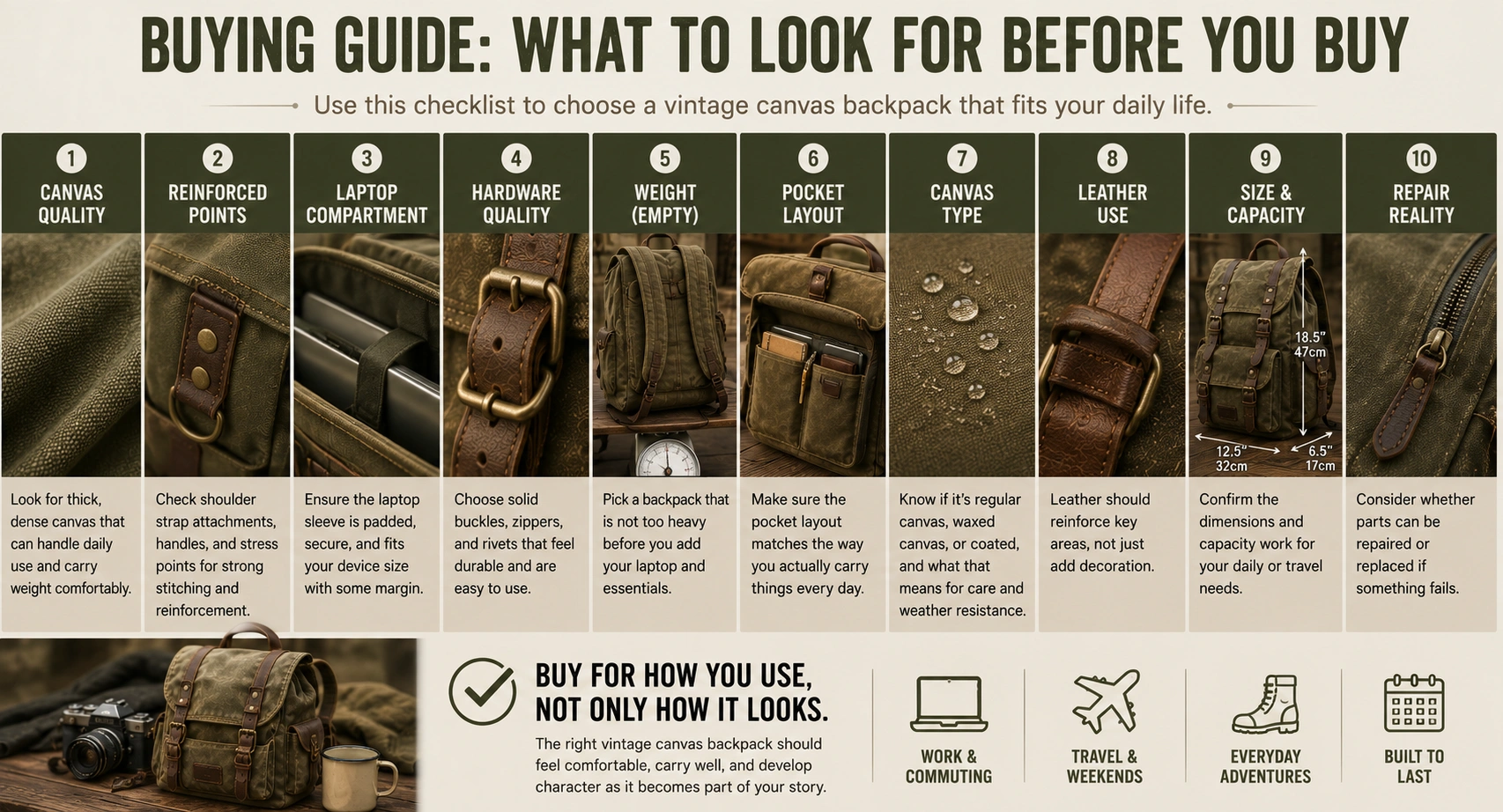
What To Look For Before Buying
A vintage canvas backpack should be evaluated as a practical object, not only as a style choice.
Before buying, ask:
-
Is the canvas thick enough for the intended use?
-
Are the shoulder strap attachments reinforced?
-
Is the handle securely attached?
-
Does the backpack have a padded laptop compartment?
-
Does the laptop sleeve fit the actual computer dimensions?
-
Are the zippers, buckles, and snaps easy to use?
-
Is the empty backpack already too heavy?
-
Does the pocket layout match the daily load?
-
Is the canvas regular, waxed, or coated?
-
Are the leather parts structural or decorative?
-
Can the backpack handle the intended capacity?
-
Are the shoulder straps wide and adjustable?
-
Is the base reinforced?
-
Can the materials be cleaned realistically?
-
Would a zipper or buckle be repairable if it failed?
Think about the backpack when full, not only when empty in a product photograph.
A thick canvas bag with heavy hardware may look impressive but feel tiring during a long commute.
A backpack with multiple front pockets may look practical but provide less usable internal space.
A flap and buckle closure may create the desired appearance while being slower to access than a zipper.
These are not necessarily flaws.
They are trade-offs that should match the owner’s routine.
Buy for the way you carry, not only for the way the backpack looks in product photos.
Canvas And Leather Backpacks: A Practical Vintage Choice
Canvas and leather work well together because each material contributes something different.
Canvas provides:
-
Natural woven texture
-
Flexible storage
-
A relaxed everyday appearance
-
Lower weight than full leather
-
Visible character through use
Leather can provide:
-
Reinforced attachment points
-
Stronger handles and tabs
-
Greater structure
-
Contrast around pockets and closures
-
A mature visual finish
A well-designed canvas and leather backpack can support:
-
Daily work
-
Commuting
-
Laptop carry
-
Coffee shop work
-
Weekend travel
-
Casual office clothing
-
Workwear and heritage-inspired outfits
It offers a less technical appearance than many nylon backpacks and a less formal, lighter feel than many full leather designs.
Material alone is not enough.
The bag still needs useful storage, comfortable straps, secure closures, and construction suited to its intended load.
A well-designed canvas and leather backpack offers the texture and character associated with vintage materials while still providing the storage, organization, and comfort required for modern daily use.
Explore our collection of canvas and leather backpacks for work, commuting, laptop carry, and weekend travel.
Final Verdict: What Makes A Vintage Canvas Backpack Different?
A vintage canvas backpack is not simply a regular backpack produced in brown or olive fabric.
Its character usually comes from:
-
Visible canvas texture
-
Muted natural colors
-
Leather reinforcement
-
Brass-tone or dark metal hardware
-
Practical closure and pocket design
-
Natural changes that develop through use
Those features also create real trade-offs.
Canvas and leather may weigh more than lightweight synthetics. Waxed surfaces need specific care. Leather trim prevents machine washing. Water resistance varies according to fabric treatment, seams, zippers, and construction.
Patina should also be separated from damage.
Soft creases, fading, leather darkening, and surface marks may be normal. Torn canvas, broken stitching, cracked structural leather, and missing zipper teeth are failures that require attention.
The word “vintage” does not guarantee durability.
Before buying, check the canvas, stitching, hardware, shoulder straps, base, laptop compartment, capacity, and empty weight.
The best vintage canvas backpack combines natural materials and practical construction with the comfort, organization, and protection required for everyday use.
Frequently Asked Questions
What Is A Vintage Canvas Backpack?
A vintage canvas backpack is a backpack that uses textured canvas, muted colors, traditional-looking hardware, leather details, and practical heritage-inspired construction.
It may be made from regular canvas or waxed canvas and is commonly used for work, commuting, laptop carry, and weekend travel.
What Makes A Backpack Look Vintage?
Canvas texture, natural colors, leather reinforcement, brass-tone or dark metal hardware, flap closures, utility pockets, and natural surface wear can all contribute to a vintage appearance.
The most convincing designs use these features for practical reasons rather than decoration alone.
Are Vintage Canvas Backpacks Durable?
They can be, but “vintage” is a style description rather than a quality guarantee.
Durability depends on canvas weight, weave density, stitching, reinforcement, hardware, shoulder strap construction, and the strength of the base.
Is Waxed Canvas Better Than Regular Canvas?
Waxed canvas usually offers better resistance to light moisture and develops more visible creases and surface marks.
Regular canvas is often softer, more breathable, and easier to handle.
The better option depends on preferred texture, weather exposure, and willingness to maintain the wax finish.
Are Vintage Canvas Backpacks Waterproof?
Most are not fully waterproof.
Waxed or coated canvas may handle brief light rain, but water can still enter through seams, zippers, flap edges, and openings.
Use additional internal protection for laptops, cameras, and important documents.
Are Canvas Backpacks Good For Laptops?
Canvas backpacks can be good for laptops when they include a padded sleeve, supportive back panel, secure closure, and enough space to separate the computer from chargers, bottles, and hard accessories.
The vintage appearance alone does not provide protection.
Does Canvas Develop A Patina?
Canvas can develop creases, fading, softened contact areas, and small surface marks over time.
Waxed canvas often shows these changes more clearly. Whether this is called patina or normal wear depends on the material and finish.
What Is The Difference Between Patina And Damage?
Patina changes the appearance while the backpack remains functional.
Damage weakens the bag or interferes with use. Torn canvas, broken stitching, cracked load-bearing leather, missing hardware, and broken zipper teeth are damage rather than patina.
How Do You Clean A Vintage Canvas Backpack?
Brush off dry dirt first, then spot clean the canvas with mild soap and a damp cloth.
Clean leather separately, avoid soaking the bag, and let it air dry naturally in the shade.
Structured canvas and leather backpacks should generally not be machine washed.
Are Canvas And Leather Backpacks Heavy?
They are usually heavier than lightweight nylon or polyester backpacks but lighter than many full leather backpacks.
The final weight depends on canvas thickness, leather coverage, hardware, padding, and internal structure.
What Should I Look For When Buying A Vintage Backpack?
Check canvas density, reinforced stitching, shoulder strap comfort, hardware quality, laptop protection, capacity, empty weight, pocket layout, base construction, and whether the materials suit your normal weather and care routine.
Buy according to how the backpack will be used, not only how it looks in photographs.