Leather Belts
-
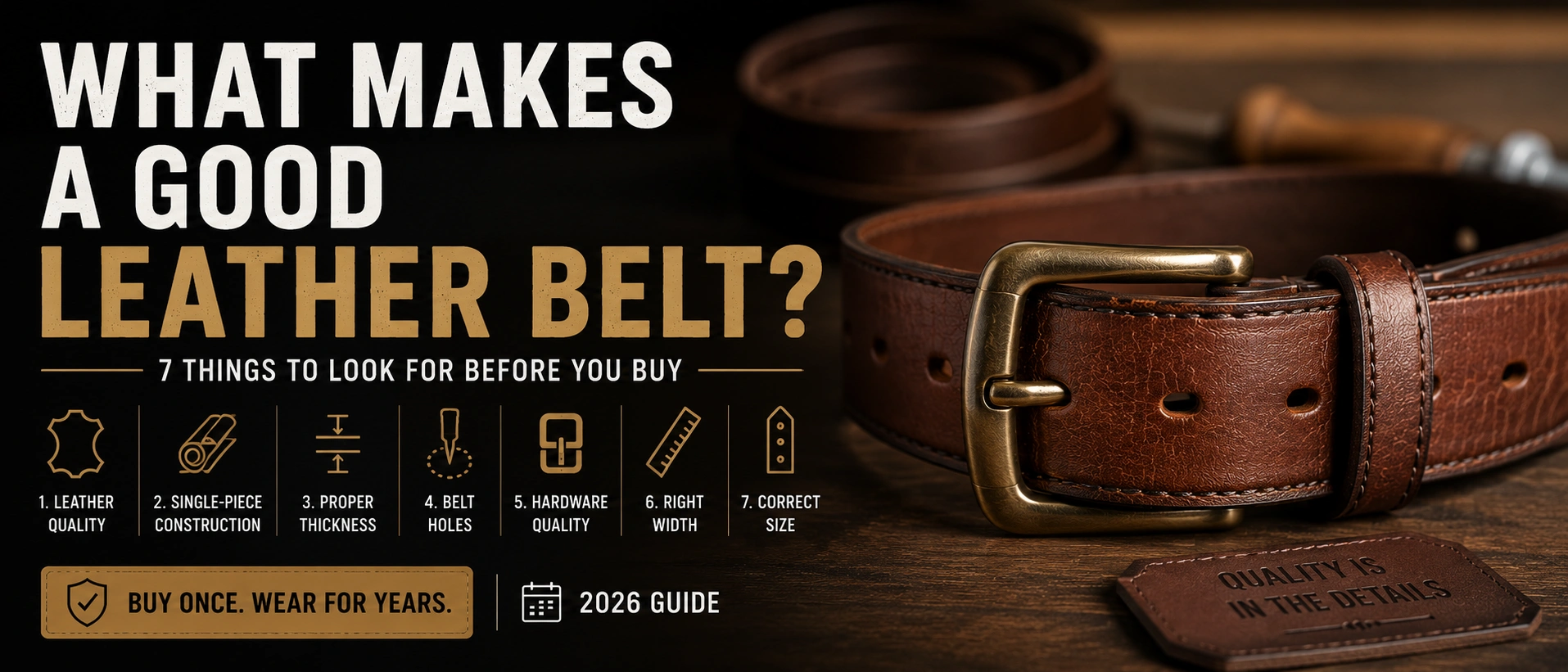
What Makes a Good Leather Belt? 7 Things to Look For Before You Buy (2026 Guide)
12 juin 2026
KKICO
A good leather belt is built from full-grain leather at least 3.5mm thick, cut as a single piece, fitted with solid metal hardware, and finished with cleanly cut, evenly reinforced holes. A belt meeting that standard is designed to stay in daily service for ten years or more — not one or two.
-
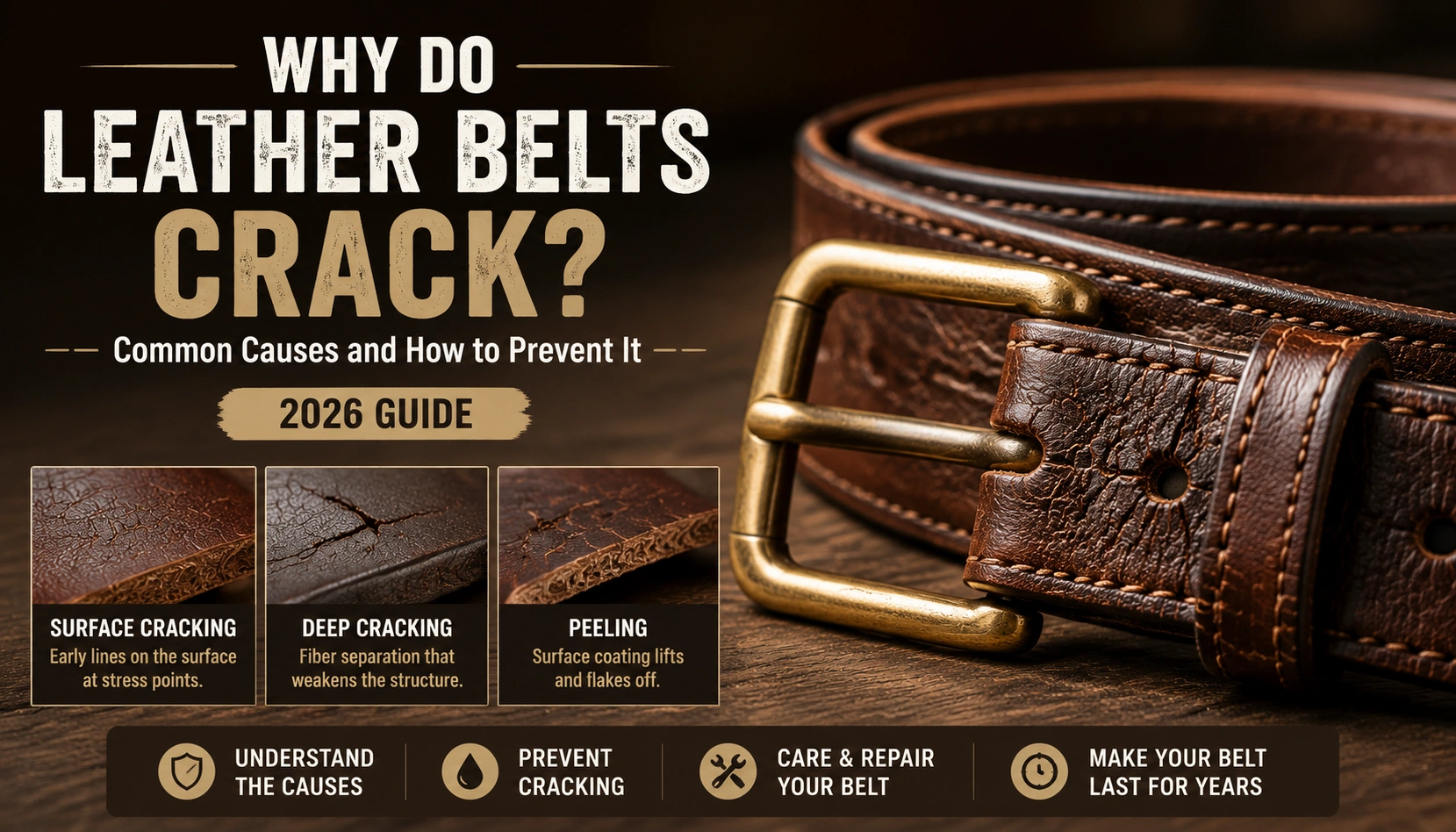
Why Do Leather Belts Crack? Common Causes and How to Prevent It (2026 Guide)
12 juin 2026
KKICO
Leather belts usually crack because of low-quality leather, excessive dryness, repeated stress at the buckle fold and belt holes, or a surface coating that's reached the end of its lifespan. In most cases, more than one of these is happening at once.
-
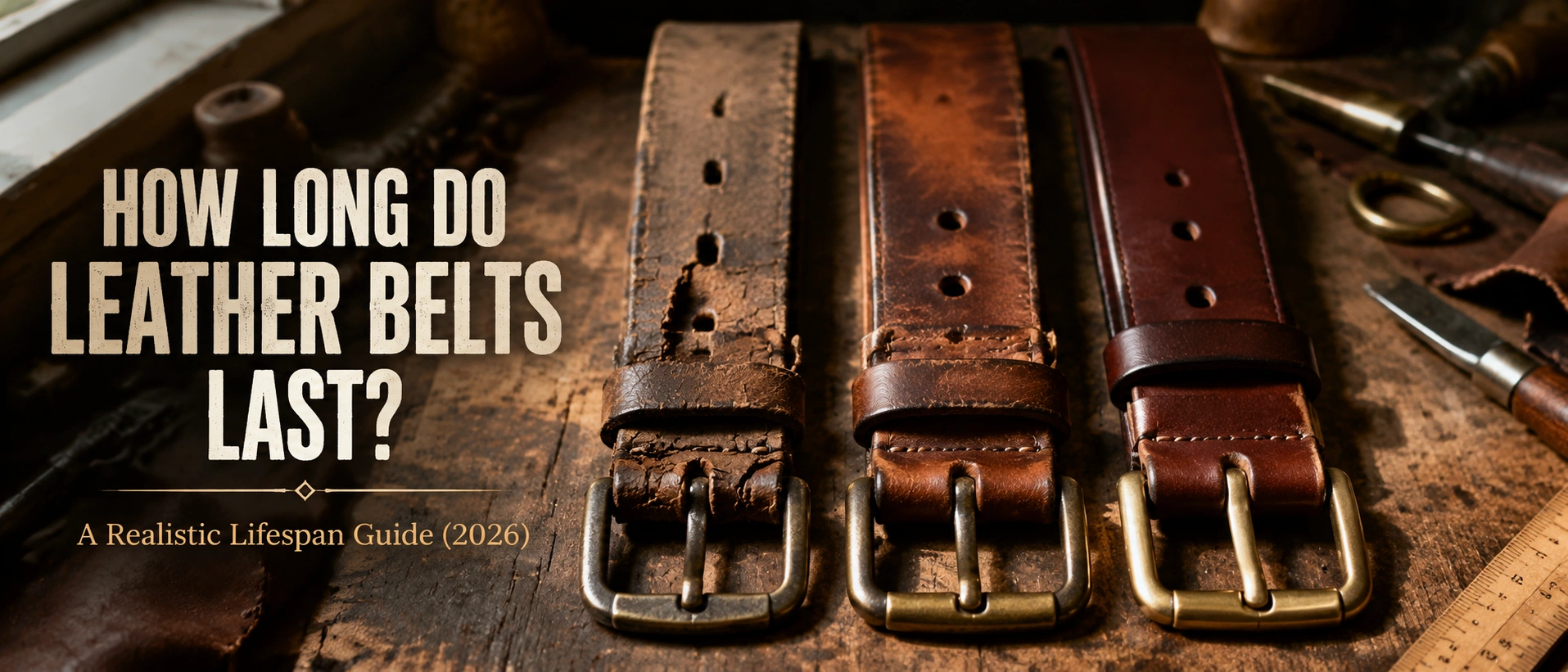
How Long Do Leather Belts Last? A Realistic Lifespan Guide (2026)
14 juin 2026
KKICO
If you've ever had one leather belt last a decade while another started cracking after a year or two, you've probably wondered: how long is a leather belt actually supposed to last? Most people assume the answer is a number. Five years. Ten years. Maybe a lifetime, if the marketing copy is feeling ambitious. The reality is messier than that. A leather belt's lifespan depends far less on age and far more on what it's made from, how it's built, how it's worn, and whether anyone ever bothers to take care of it. So here's the honest short version: a well-made leather belt can often last many years — sometimes well over a decade — while a poorly made one may show real wear within the first year or two. Same product category. Same general appearance on day one. Completely different outcomes. Here's the problem: nothing about that difference is visible on day one.
-
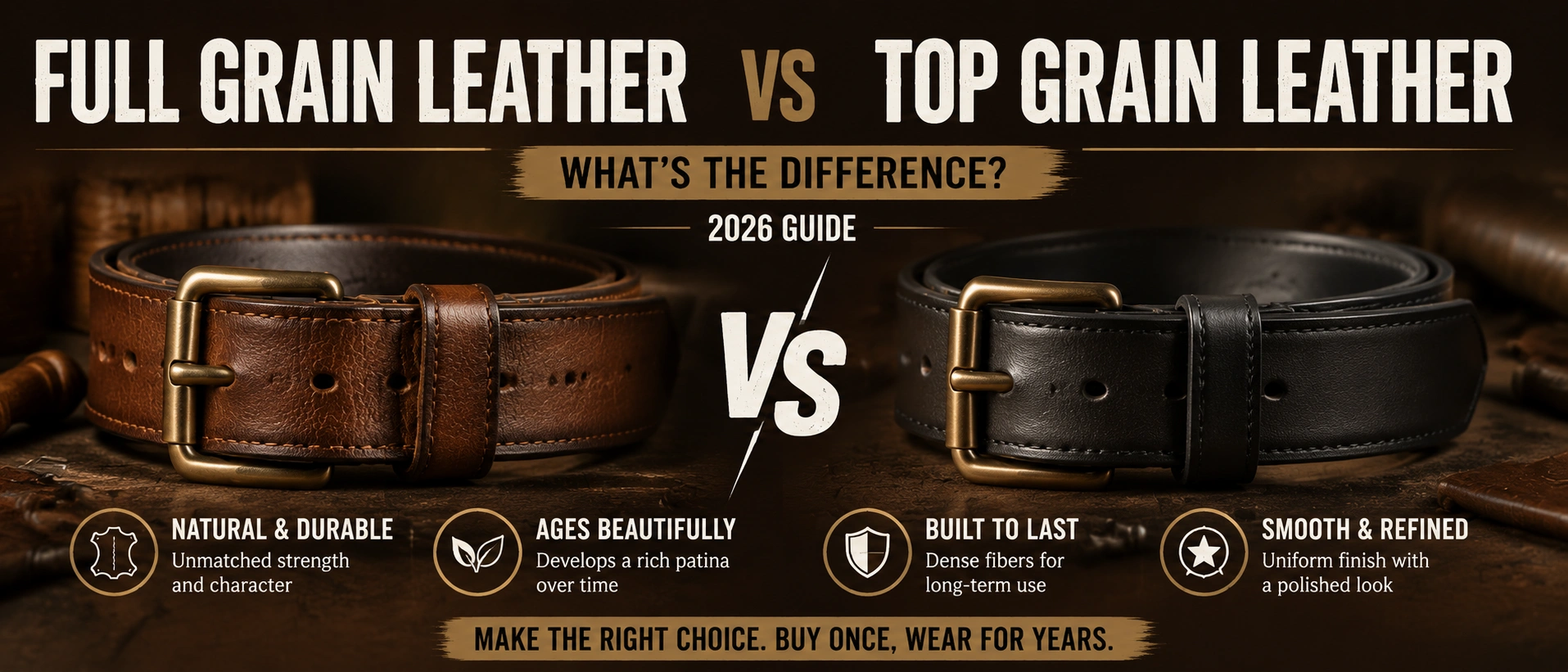
Full Grain Leather vs Top Grain Leather: What's the Difference? (2026 Guide)
14 juin 2026
KKICO
Many people assume top grain leather is automatically better because the word "top" sounds premium. It's a reasonable assumption — "top" usually means "the best." The reality is a little more complicated. Both full grain and top grain leather come from the upper portion of the hide — the strongest, most valuable part. In that sense, they're closer cousins than most people realize. But what happens to that upper layer after it's separated from the hide is where the two diverge, and that difference shapes everything else: how the leather looks, how it ages, how it holds up under daily use, and yes, how much it costs. This isn't a "one is fake and one is real" situation. Both are genuine leather, both can be excellent materials, and both show up in quality products. The question worth answering isn't which one is "real" — it's which one fits what you actually want from a piece of leather.
-
What Is Genuine Leather? The Truth Behind the Label (2026 Guide)
15 juin 2026
KKICO
Many people see the words "genuine leather" on a product tag and assume they're looking at a premium material. That seems logical. After all, if it's genuine, it must be good. "Genuine" is a word we associate with authenticity — a genuine diamond, a genuine signature, the genuine article. The reality is a little more complicated. In the leather industry, "genuine" doesn't mean what most shoppers think it means. It's not a quality rating. It's barely even a description. So what does it actually tell you — and why does a phrase that sounds so reassuring end up causing so much confusion?
-
How To Care For A Leather Belt: 7 Simple Ways To Make It Last Longer (2026 Guide)
15 juin 2026
KKICO
Some leather belts seem to improve with age. The color deepens, the surface softens, the edges round off in a way that looks genuinely better than new. Others start cracking after only a few years. Why? Most people assume it's purely about leather quality — that the first belt was simply made from better material, and the second one was cheap. Sometimes that's true. Not necessarily, though. We've seen plenty of decent leather belts develop problems early, and plenty of mid-range belts hold up far longer than expected. The material sets the ceiling, sure. But how a belt is treated — quietly, in the background, day after day — often has more influence on the outcome than people realize. This isn't a cleaning checklist. It's more about understanding what actually wears a belt down, so the things you do (or don't do) actually move the needle.